
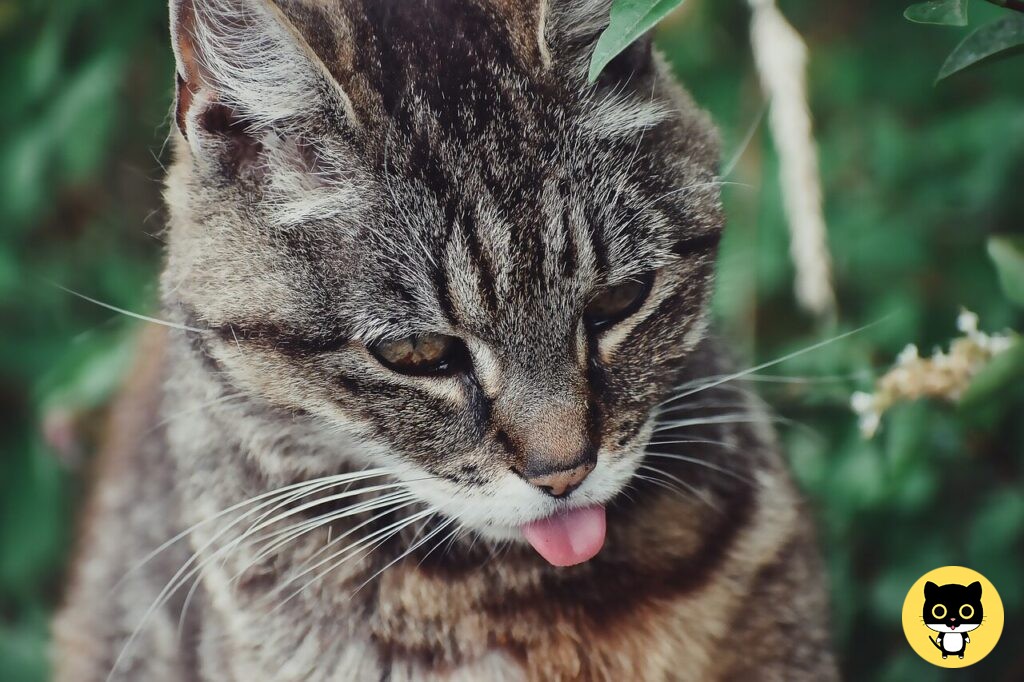
The American Wirehair is easiest to understand as a familiar companion cat with an unusually textured coat. Its hair may feel dense, springy, crimped, hooked, bent, spiked or even curly, and the same texture can appear in the whiskers and facial hair. That makes the breed visually distinctive without giving it an exotic body plan: underneath the coat is a balanced, muscular, medium-boned cat built much like a practical, athletic domestic companion.
Quick Facts
| Quick fact | American Wirehair |
|---|---|
| Coat | Dense, springy and variably crimped or bent; texture may extend to the whiskers |
| Build | Medium-boned, muscular and balanced |
| Temperament commonly described | Calm, curious, playful, companionable and somewhat independent |
| Grooming | Usually light and individualized; vigorous brushing may damage the texture |
| Recognition | Recognized by CFA and TICA; listed as non-recognized in FIFe’s EMS system |
| Estimated lifespan | Approximately 12–16 years in one U.S. consumer guide; this is an estimate, not a population-survival study |
What makes an American Wirehair an American Wirehair?
The coat is the defining feature. Unlike the soft waves associated with some Rex breeds, the American Wirehair’s hair has a wiry, spring-loaded quality. Individual hairs may be bent, hooked or irregularly crimped rather than uniformly curled. A close look can reveal the texture around the face and in the whiskers as well as across the body.
The rest of the cat is comparatively moderate. A broad head, full chin, medium-short muzzle, medium ears and wide-set eyes sit on a solid, well-proportioned body. Males are generally larger and may develop particularly noticeable cheeks and chest. The breed can continue maturing physically until about three or four years, so a young cat may not yet show its eventual head shape or substance.
Traditional colors and patterns occur, including tabby and tabby-with-white presentations. Color classification is not identical everywhere. CFA excludes specified chocolate, lilac and certain pointed or hybrid-associated combinations, while other standards may organize allowable presentations differently. Eye color should likewise be checked against the relevant standard rather than guessed from photographs; a universal breed-specific eye-color chart is not established here.
Recognition also depends on the organization involved. CFA and TICA recognize the American Wirehair, while FIFe currently lists it as non-recognized in its EMS system. CFA’s rules also provide a championship pathway for straight-coated American Wirehairs, so “wirehair” does not automatically describe a single show status in every registry. Anyone planning to show or register a cat should read the rules of the organization they intend to use.
History, identity and the importance of paperwork
The American Wirehair belongs to the American family of pedigreed cats and has a close relationship with the American Shorthair. That relationship matters because appearance alone cannot reliably distinguish a documented American Wirehair from a domestic cat with an unusual coat. American Shorthairs are also an allowable CFA outcross, which helps explain why pedigree and registry rules are more informative than visual resemblance by itself.
A shelter cat with crimped whiskers or a steel-wool-like coat may be delightful and genuinely wire-textured without being a pedigreed American Wirehair. A shelter label is not proof of ancestry. For a purchase, registration records, a traceable breeder, a pedigree and consistent family information provide stronger evidence than a photograph or a coat description.
This distinction is not merely technical. A person adopting a textured domestic cat can appreciate the cat exactly as it is, while a person seeking a recognized American Wirehair may need documented lineage and eligibility under a particular registry. Those are different expectations, and clarifying them prevents disappointment for both caregiver and cat.
Living with the wire-textured coat
The coat looks as though it should demand intensive grooming, but the practical approach is usually more restrained. Vigorous or frequent brushing can break hairs or disrupt the texture. Gentle removal of obvious loose hair and small tangles is generally more appropriate than imposing a rigid daily grooming routine.
Inspection is more useful than a calendar. Check whether the particular cat develops grease, brittleness, irritation, loose hair or mats, then adjust the grooming method accordingly. Some coats may need little intervention; another may need more careful attention in areas where hair catches. A comb or brush should support the coat rather than trying to make it behave like a conventional short coat.
A wire texture does not make the American Wirehair non-shedding or hypoallergenic. Hair that lies close, breaks into less conspicuous pieces or is simply harder to notice can still end up on furniture and clothing. The coat also does not establish lower exposure to Fel d 1, the principal cat allergen. Anyone with allergies should spend time with the individual cat before making a commitment.
Temperament and the kind of companionship to expect
American Wirehairs are commonly described as calm, moderately active, curious and playful. They may follow household activity, investigate what people are doing and enjoy interactive games without needing constant entertainment. Their reported affection often has a social but not necessarily clingy quality.
That distinction is important. A cat can seek its caregiver’s company, settle nearby and participate in family life while declining to sit on a lap for long periods. People-oriented behavior does not guarantee a willingness to be carried, restrained or petted continuously. A household that values voluntary proximity may find this temperament appealing; someone who specifically wants a reliably cuddly lap cat should meet the individual before deciding.
Play can include chasing toys, fetching and watching insects or birds. Provide interactive sessions, scratching surfaces, elevated observation points and places where the cat can retreat. These are ordinary feline provisions rather than special demands, but they help channel curiosity and give an independent cat control over contact.
The breed’s reported balance of sociability and independence can work well in many homes, including apartments, provided the indoor environment is secure and enriched. There is no evidence-based rule that an American Wirehair must live in a house rather than an apartment, nor is there a breed-specific safe limit for time spent alone. The meaningful questions are whether the cat has adequate resources, stimulation and social contact, and whether the caregiver understands its individual routine.
Children, dogs, cats and small pets
A respectful child, a calm cat-safe dog or another compatible cat may be a good companion for an American Wirehair, but the breed name cannot guarantee a successful match. Introductions should be gradual, with barriers at first and supervision thereafter. Each animal needs access to separate food, water, litter and resting areas, along with escape routes that the other animals cannot block.
Small vulnerable pets require stricter management. Interest in birds, rodents, reptiles and insects is compatible with gentleness toward people, but it still represents predatory interest. Secure enclosures and physical separation are appropriate even when a cat appears unusually mild.
Children should be taught not to chase, corner, pull at the coat or insist on holding the cat. Meeting an adult cat is the clearest way to assess its tolerance for touch and household activity. With a kitten, observing the mother and littermates can offer useful clues, but it cannot predict every adult preference.
Health questions for buyers and caregivers
The most clearly breed-relevant inherited-disease signal identified for the American Wirehair is the autosomal-recessive CEP290/rdAc variant associated with progressive retinal atrophy. An affected cat can develop progressive blindness, while a carrier is not affected simply because it carries the variant. The existence of this test does not establish that American Wirehairs commonly develop the disease.
For a pedigreed kitten, ask for the family’s health information, veterinary records and any relevant eye or DNA-test documentation. If a result is provided, note the laboratory, the exact test and its interpretation. A DNA test answers a particular genetic question; it is not a complete health guarantee and does not replace ordinary veterinary care.
The breed’s balanced conformation does not present the obvious extreme flat face, severely shortened limbs or heavy skin folds associated with some deliberately exaggerated forms. That may be reassuring from a functional-design perspective, but it does not substitute for evaluating the individual cat, its parents and the breeding program.
Routine care remains routine: preventive veterinary visits, vaccination decisions made with a veterinarian, parasite control, dental attention, weight management, suitable nutrition and prompt investigation of changes in vision, appetite, mobility or behavior. No complete breed-specific disease profile should be inferred from the single rdAc question.
Cost, availability and longevity
U.S. purchase figures published in 2026 illustrate a range rather than a market average. One guide gives approximately $800–$1,200, while another gives approximately $1,200–$2,500 for a pet-quality kitten from a responsible, health-tested breeder. These are U.S. asking or guide figures, not verified completed-sale prices. Region, pedigree, registration, breeding rights, transport and included veterinary care can change the amount substantially. One current price example is available through this breeder guide, while another U.S. guide discusses the lower range.
Adoption is usually less expensive at the point of placement. A U.S. adoption guide estimates approximately $75–$150, although the exact fee varies by organization and what care has already been provided. An adoption search displayed no exact-location American Wirehair when checked in 2026, but that result should not be treated as a national availability statistic. Rescue listings change quickly, and an “American Wirehair” label in a shelter does not necessarily establish pedigree.
No defensible American Wirehair-specific total for recurring ownership costs is available. A realistic budget includes food, litter, routine veterinary care, parasite prevention, scratching and enrichment supplies, grooming equipment and emergency treatment. Location, age, insurance choices and individual health needs will matter more than the breed label for many of these expenses.
A U.S. consumer guide updated in September 2026 gives an estimated lifespan of 12–16 years. This is a guide estimate, not a documented population-survival figure or a promise for an individual cat. Genetics, preventive care, body condition, environment and disease all influence how long a cat lives.
Is the American Wirehair a good fit?
The American Wirehair may suit someone who wants a distinctive coat but does not want a highly specialized body type or an elaborate care routine. The right caregiver will be comfortable inspecting the coat rather than brushing it aggressively, providing ordinary feline enrichment and allowing affection to take different forms. A cat that sits beside its person may be just as companionable as one that spends hours on a lap.
It may be a poor fit for someone seeking a guaranteed hypoallergenic cat, a completely non-shedding home, a predictable lap temperament or automatic safety with children and other animals. Those expectations cannot be supplied by the breed name. The most useful assessment comes from meeting the individual, watching its response to touch and play, and asking the breeder or rescue organization specific questions about behavior and health.
For a buyer, the sensible sequence is to verify identity, inspect the pedigree and records, ask about the rdAc question where relevant, observe the cat’s social preferences and understand exactly what registration the seller is offering. For an adopter, the breed label matters less than the cat’s actual needs and personality. In either case, the strongest match is a caregiver willing to adapt rather than assume that an unusual coat predicts the whole animal.
What owners and caregivers say
Owners and caregivers describe rewarding relationships with American Wirehairs, but the useful pattern is not that every cat behaves alike. The breed material combines calmness, curiosity and family interest with independence, and those traits can coexist comfortably. A cat may greet its people, follow activity and enjoy play while choosing a nearby chair instead of a lap.
One public caregiver account captures why “affectionate” needs interpretation: close companionship does not necessarily mean prolonged holding or constant physical contact. For a prospective caregiver, the question is not simply whether the cat is friendly. It is whether that cat’s preferred distance, handling tolerance and style of play fit the household.
An adopter once described an approximately five-year-old shelter cat with crinkled whiskers and a steel-wool-like coat as exceptionally affectionate, chatty and apparently low-shedding. Because the cat’s ancestry was unknown, that story is best understood as an individual experience with a textured-coated domestic cat, not as proof about pedigreed American Wirehairs. It also illustrates why visible shedding and allergy safety should not be confused: less noticeable hair is still not the same as no hair or no allergen.
Breeder and registry descriptions likewise point to variation in coat feel, coat quality, grooming response, independence and everyday behavior. That variation is not a reason to dismiss the breed; it is a reason to meet the cat and learn its preferences. The American Wirehair is best approached as a coat-specialist breed with a flexible, companionable reported temperament—not as maintenance-free, hypoallergenic or temperament-guaranteed.
 English