
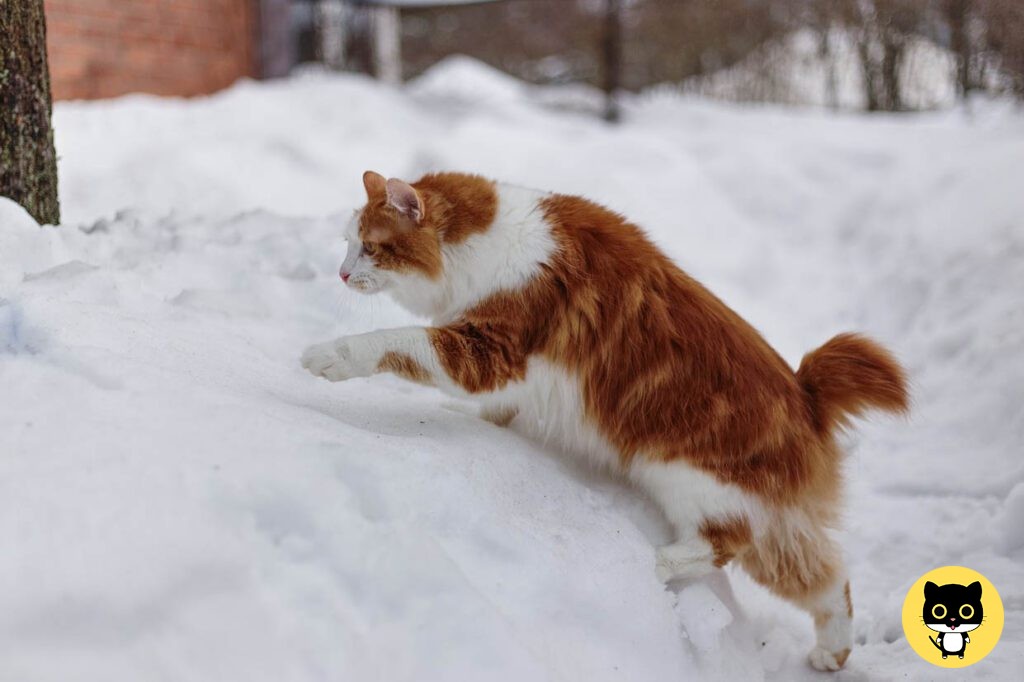
The Kurilian Bobtail is a substantial, active cat with a distinctive short tail and a relationship style that may be more self-directed than constantly cuddly. It can be affectionate, observant and deeply attached to its household, but prospective caregivers should be comfortable with a cat that chooses when to approach, play, climb or accept handling. The most useful question is not simply whether the breed is “friendly,” but whether you want an engaged companion whose affection may come through proximity and participation rather than uninterrupted lap time.
Quick Facts
| Feature | What to expect |
|---|---|
| Origin | A natural bobtail associated with Sakhalin and the Kuril Islands |
| Build | Medium to large, strongly built and semi-cobby |
| Coat | Short or semi-long, soft and generally non-matting |
| Tail | Short, bushy and individually variable in shape |
| Activity | Playful, curious, athletic and fond of climbing |
| Grooming | Weekly brushing is a reasonable starting point |
| Reported lifespan | Approximately 15–20 years; an estimate, not a guarantee |
| Availability | Limited in parts of North America and dependent on country and registry |
Identity, origin and recognition
The Kurilian Bobtail is recognized as an independently developed natural bobtail breed associated with Sakhalin and the Kuril Islands. Its short tail should not be treated as evidence that the breed is a documented cross between a Siberian and a Japanese Bobtail. Short tails have appeared in more than one feline population, but visual similarity does not establish shared ancestry, and it does not justify importing health assumptions from another breed.
Recognition depends on the registry and on the coat form being discussed. TICA recognizes Kurilian Bobtail and Kurilian Bobtail Longhair as championship breeds. FIFe uses the names Kurilean Bobtail Shorthair and Kurilean Bobtail Longhair. The current CFA breed list does not include the breed, while WCF provides a Kurilian Bobtail Longhair standard. Someone buying a cat for showing or registration should therefore ask which organization’s rules apply rather than assuming that a name, color or coat category has the same status everywhere.
This matters practically when a breeder describes a kitten as “registered.” The registration may be valid within one organization but not transferable to another, or the organization may recognize a different coat code or color range. Ask to see the actual pedigree, registration details and parent information before treating a label as proof of eligibility.
Build and the signature tail
A mature Kurilian Bobtail is medium to large, strongly built and semi-cobby, with substantial bone and a broad chest. The head has rounded contours, triangular ears and walnut-shaped eyes. Males may reach about 15 pounds (6.8 kg), while females are commonly described in the range of 8–11 pounds (3.6–5.0 kg). These are broad breed figures, not goals. Muscle, body condition and veterinary assessment tell a caregiver more than a weight expectation based on sex.
The tail is short, bushy and highly individual. It may appear whisk-like, spiral-shaped or snag-like, among other forms described by standards. Tail length, structure and terminology vary between registries, so photographs alone may not settle whether a cat meets a particular standard. For ordinary companionship, however, the more important questions are whether the cat moves comfortably, uses the litter box normally and tolerates gentle handling around the hindquarters.
A short, kinked tail is defining conformation, not by itself a diagnosis. Current evidence does not establish that Kurilian tails are inherently harmful, but it also does not justify promising that every tail is free of spinal or neurological concern. Pain, unusual sensitivity, weakness, altered gait, or urinary or bowel difficulty warrants veterinary attention. Manx-syndrome findings should not be transferred automatically to this breed simply because both can have short tails.
Coat, colors and everyday grooming
The breed occurs in shorthaired and semi-longhaired forms. The coat is generally described as soft and silky, with a tendency not to mat easily. The semi-long coat may have a developed topcoat with relatively little undercoat, along with furnishings such as a frill, bib, breeches and ear tufts. Those longer areas, especially around the tail and hind legs, may need more attention than the body.
Weekly brushing is a sensible starting routine. Increase combing when loose hair collects, furnishings tangle or seasonal shedding becomes noticeable. A coat that feels light and manageable can still leave hair around furniture and clothing. It also does not make the breed hypoallergenic: all cats produce allergens, and easy grooming is not the same as reduced household allergen exposure.
Traditional solid and tabby colors, including combinations with white, are described in breed materials. The permitted range is not universal, however. The cited FIFe and WCF standards exclude pointed, chocolate, cinnamon, lilac and fawn combinations, while other descriptions use broader color categories. If color or show eligibility matters, check the standard of the specific registry rather than relying on a general breed photograph.
A social, athletic household companion
Kurilian Bobtails are commonly portrayed as active, playful, curious, intelligent and trainable. Their reported interest in climbing and jumping makes vertical territory especially valuable. A sturdy cat tree, secure shelves, interactive toys and places to investigate can turn limited floor space into a more satisfying home. A large house is not automatically better if it offers little to do; an apartment can work when it provides safe height, play, exploration and quiet retreat spaces.
Human sociability does not necessarily mean constant physical availability. A Kurilian may follow someone from room to room, greet at the door, sleep nearby or ask for petting, while still objecting to being picked up or held at an inconvenient moment. One owner described a sturdy, loving male who stayed close and accepted affection on his own terms but disliked being grabbed by visiting children. Another described a female who greeted her person and remained affectionate without becoming constantly demanding.
These experiences fit together rather than contradict one another. A cat can want company without wanting control taken away from it. That distinction is important for families who imagine a cat that will tolerate enthusiastic carrying, frequent restraint or unlimited handling by visitors. Children should be taught to invite contact, read withdrawal signals and leave the cat alone when it retreats. Meeting an adult cat is particularly useful because it reveals that individual’s response to touch, strangers and household activity more reliably than a breed description can.
Some caregivers describe Kurilians as unusually bonded, clever or “cat-dog” in their willingness to interact. Others emphasize a nearby but independent companion. A breeder has described cats remaining kitten-like and exceptionally affectionate for longer than average, but that is her experience of the cats she bred rather than a reliable timetable for the whole breed. Expect engagement and individuality, not a guaranteed personality script.
Children, dogs and smaller pets
The breed may adapt well to children, dogs, cats and other household animals when introductions are gradual and the individuals are compatible. The practical work still matters: begin with separate spaces, exchange scents, provide separate food and litter resources, supervise early meetings and preserve escape routes. A confident cat and a calm dog may become good companions, while a rough, intense or predatory resident animal may make the same arrangement unsuitable.
Reported hunting and mousing ability adds a separate safety issue. Birds, rodents, rabbits and fish should be protected by secure physical barriers, regardless of how sociable the cat is with people or larger animals. A cat that sleeps beside a dog may still regard a small caged animal as prey.
Care, enrichment and routine health support
The Kurilian Bobtail does not require a distinctive diet or bathing protocol based on the information available. Feed a complete diet appropriate to the cat’s life stage, monitor body condition and arrange routine veterinary care. Dental care, nail maintenance and parasite prevention remain ordinary but important parts of responsible ownership. The coat may reduce the need for intensive grooming, but it does not replace these broader health routines.
Daily enrichment is likely to be more important than elaborate grooming. Rotate toys, offer opportunities to climb and observe, use interactive play that allows stalking and chasing, and provide secure places where the cat can withdraw. Because an active cat can become inventive when bored, enrichment is also a form of household management: it gives athletic curiosity an appropriate outlet.
Health evidence and the bobtail question
Breed-specific health evidence is limited. A Finnish survey included only 15 Kurilian Bobtails, a sample too small to establish dependable prevalence for heart disease, hip or joint problems, cancer or other conditions. The responsible conclusion is not that the breed has no health risks, nor that it carries a sweeping list of inherited diseases. It is that a caregiver should avoid claims that go beyond the available evidence.
The same caution applies to related breeds. A condition reported in another bobtail or in a geographically related cat population cannot simply be assigned to Kurilians without supporting evidence. Conversely, limited published information does not remove the value of ordinary veterinary observation. Ask about the health of parents and relatives, review the kitten’s veterinary and vaccination records, and request disclosure of screening performed in that particular line. No universally mandated Kurilian-specific genetic or cardiac test was established here, so a breeder’s clarity about what was and was not tested is significant.
Lifespan, availability and cost
A lifespan of approximately 15–20 years is reported for the breed. This is a registry estimate, not a validated population life-expectancy study and not a promise for an individual cat. Nutrition, preventive care, genetics, environment and chance all influence how long a particular Kurilian lives.
Availability can be limited, particularly in North America compared with long-established breeds. A prospective caregiver may encounter a small breeder pool, a waitlist, interstate transport or import requirements. Coat form and registry preference can narrow the search further. Limited availability is not a reason to skip documentation; it is a reason to allow more time for finding a transparent breeder or a suitable adult cat.
On August 21, 2026, cited asking or listing examples included USD $450–$1,700 from one Michigan seller’s listing history, USD $2,550 from a broker, GBP £500–£2,500 in the United Kingdom and CAD $1,200 in Canada. These figures are regional, dated examples rather than verified completed-sale averages or a universal market range. The listings can be checked through the Michigan price-history example, the broker listings, UK listings and Canadian listings. Adoption fees, transport, import paperwork, insurance and ordinary lifelong care can add substantially to the initial price.
Before committing funds, request the pedigree and registration information, veterinary and vaccination records, parasite history, family health information and details of early socialization. Ask what screening was performed on the parents and what the breeder observed in the kitten’s movement, tail comfort and handling response. A seller who makes sweeping guarantees about health, allergies or temperament is offering more certainty than the evidence supports.
Who is the Kurilian Bobtail suited to?
The strongest fit is an engaged household that enjoys an active cat and can provide daily interaction without demanding constant physical contact. This may be a family that teaches children respectful handling, a single person who wants a room-to-room companion, or a multi-cat home prepared to introduce animals carefully. The breed’s social possibilities are broad, but its individual preferences still determine whether affection looks like a lap session, a greeting at the door, a game of chase or quiet companionship from the next chair.
A less suitable home would be one that wants a decorative, low-interaction cat, expects a guaranteed lap cat, or cannot secure small prey animals and climbing routes. Someone seeking a hypoallergenic pet should also look elsewhere. The manageable coat may make grooming easier, but it does not promise low shedding or allergy safety.
Ultimately, the Kurilian Bobtail is best understood as a substantial, athletic and potentially devoted companion whose independence is part of the relationship rather than a failure of affection. Assess the individual cat’s movement, sociability and handling preferences, and judge the home by the enrichment it can provide. Those decisions are more reliable than buying promises about a tail, a color, a lifespan or a fixed personality.
What owners and caregivers say
Owners and caregivers describe rewarding relationships built around proximity, play and affection initiated by the cat. Some Kurilians follow people through the home, greet them after an absence or seek attention actively. Others prefer to remain close without sitting on a lap or accepting prolonged restraint. Together, these experiences suggest a companion that may be emotionally involved without being physically compliant at every moment.
An owner who lived with an affectionate female reported that she noticed when the household was away and remained warm without becoming demanding. The same account mentioned noticeable shedding about twice a year, a useful reminder that a silky, non-matting coat can still release hair seasonally. Another owner’s male was described as intelligent, sturdy and loving, but uncomfortable when visiting children tried to grab him. His tolerance of children did not mean unlimited tolerance of handling.
French adopters described Priya as sociable and affectionate while still selective about when contact occurred, whereas Igor was portrayed as highly playful, clever and strongly bonded. A separate account of two Kurilians forming a close companionship illustrates what can happen between particular cats, not a rule that every Kurilian needs or prefers another Kurilian.
The common practical thread is participation without coercion. These cats may reward caregivers who offer play, conversation, climbing space and invitations to interact, then allow the cat to decide how much contact to accept. For a household comfortable with that balance, the breed’s independence can make its affection feel especially personal. For someone wanting predictable handling tolerance or constant lap contact, meeting the adult cat before adoption is essential.
 English