
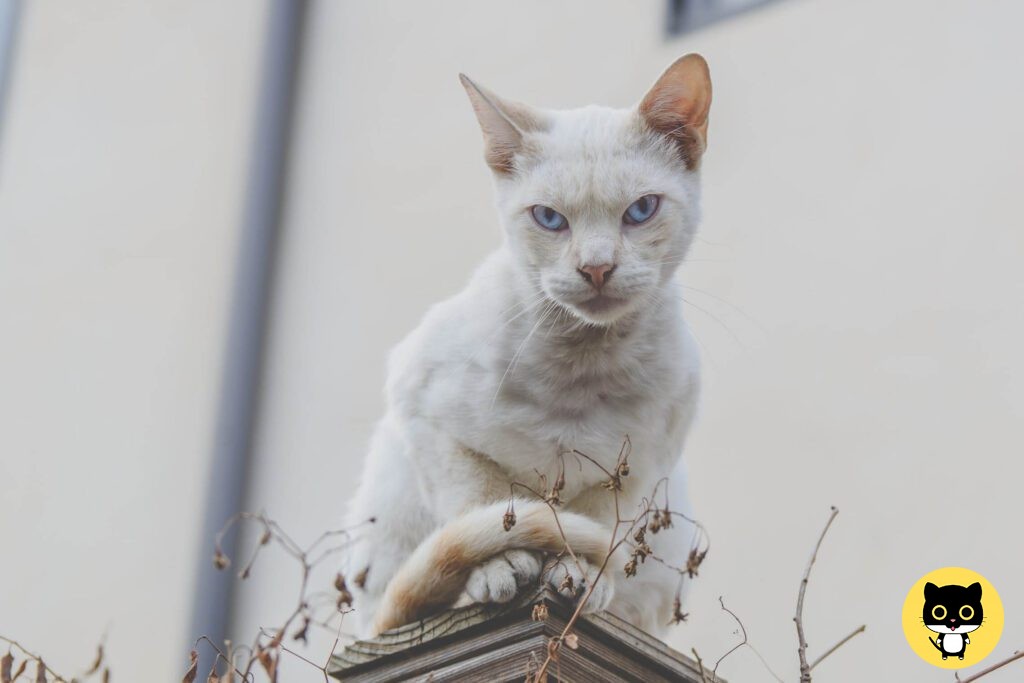
The Donskoy is best understood as an interactive companion with a changing coat, not simply as a cat without fur. Some are nearly bare; others retain a fine, velvety covering or a distinctly brush-like coat. That variation affects grooming, skin care, allergy expectations and even how a kitten may look as an adult.
Quick Facts
| Also known as | Don Sphynx; Russian Hairless |
|---|---|
| Origin | Russia, with development associated with Rostov-on-Don in the late 1980s |
| Size and build | Medium-sized, sturdy and muscular |
| Coat | May be rubber bald, flocked, velour or brush; coat can change with age and season |
| Estimated lifespan | 12–15+ years, according to a registry estimate rather than a population life table |
| Best suited to | A home that wants an engaged companion and can provide individualized skin, temperature and grooming care |
What the Donskoy is—and how it is recognized
The Donskoy, Don Sphynx and Russian Hairless are names used for the same breed identity, although the preferred name depends on the registry. TICA uses Donskoy, FIFe uses Don Sphynx with the breed code DSP, and WCF lists Don Sphynx/Donskoy. The breed developed in Russia, particularly around Rostov-on-Don, after a hairless cat became the foundation for further breeding in the late 1980s.
Recognition is not identical everywhere. TICA lists the Donskoy as a championship breed, with championship status from 2016. FIFe lists Don Sphynx as a fully recognized Category 4 breed, recognized in 2011, and WCF recognizes Don Sphynx/Donskoy. The Donskoy does not appear on CFA’s current recognized-breed list. These differences matter when a breeder advertises a “registered” cat: the name of the registry, the cat’s registration status and the pedigree behind an outcross should all be clear.
The Donskoy is also distinct from the Canadian Sphynx. They arose in different places and their hairlessness has different genetic foundations; testing has not found the common Sphynx KRT71 variant in Donskoys. A Donskoy should therefore not be treated as a Canadian Sphynx with another name, and health claims about the Canadian breed should not automatically be transferred to it.
Appearance: a solid cat with an unsettled coat
The body is medium-sized, strong and muscular rather than fragile. A Donskoy typically has a broad chest, substantial shoulders and hips, large high-set ears, almond-shaped eyes, oval paws and a tapering tail. Males are generally larger than females, but there is no well-established authoritative adult weight range that can usefully define the breed for buyers.
The coat is the feature most likely to surprise a new caregiver. Recognized types include rubber bald, flocked, velour and brush. A rubber-bald cat may have very little hair, while a flocked cat can feel like soft peach fuzz. Velour cats may keep a fine covering that recedes or changes, and brush-coated cats can have short, wiry or uneven hair. FIFe also retains longhaired and shorthaired variants for registration or breeding purposes, although those variants do not receive ordinary show certificates.
A kitten’s appearance is therefore not always a reliable forecast. One owner described a six-month-old velour Donskoy whose wire-like hair and peach fuzz were disappearing despite frequent brushing; littermates reportedly ranged from bald to thickly brush-coated. Another caregiver described a partly hairless cat that had lost most of the hair on its back by about three years old while keeping thin, soft hair on its extremities. These examples do not predict every Donskoy, but they show why adult relatives and previous offspring can tell a prospective buyer more than a kitten photograph.
Broad color and pattern groups are accepted, including white, solid, agouti, tortoiseshell, tabby and pointed patterns. Eye-color descriptions are not identical across registries: one standard relates eye color to skin or coat color, while another does not use the same table. Anyone choosing a Donskoy for a particular eye or color combination should check the standard and registration rules that actually apply to that cat.
Temperament and life with a Donskoy
The Donskoy is generally presented as active, curious, playful, friendly and interested in human company. In practical terms, this is a cat likely to benefit from interaction rather than being treated as decorative furniture. Wand toys, climbing structures, food puzzles, exploration and short training games can give its energy somewhere useful to go.
Social interest does not equal constant lap-seeking. A Donskoy may follow people from room to room yet dislike being restrained, dressed or held for longer than it chooses. It may enjoy play with another cat without welcoming every cat, dog or child. One owner described a young Donskoy as friendly with another cat, which is a positive individual example rather than a guarantee of universal compatibility.
Regular contact may be important for some individuals, particularly those that become distressed when left alone for long periods. There is no evidence-based safe-alone-hour limit and no universal requirement that a Donskoy have a second pet. The sensible approach is to assess the particular cat, provide predictable interaction and create places where it can withdraw from noise or unwanted handling.
Families should introduce children gradually and teach them to allow the cat to leave. Dogs and other pets need the same careful, supervised introductions used with any cat. Meeting an adult Donskoy is especially valuable for judging stranger response, handling tolerance, lap preference and comfort with ordinary household activity; breed reputation cannot answer those questions as precisely as the individual cat can.
Coat, skin and environmental care
Hairlessness changes maintenance rather than eliminating it. A nearly bare Donskoy may leave less conventional hair on furniture, but exposed or lightly covered skin can need attention for oil, irritation, soiling and temperature changes. A brush or changing velour Donskoy may leave fuzz or hair around the home and need grooming to manage loose or wiry strands.
There is no universal bathing or brushing timetable. Caregivers describe routines ranging from occasional wiping or no regular bath for a cat that is not oily, to warm-cloth cleaning or bathing every month, and in one case bathing a brush-coated cat every six to eight weeks. Ears, eyes, toes and the rear may need attention more often than the rest of the body. The cat’s skin, coat and response should determine the routine; frequent washing without a reason can itself be irritating.
Reduced coat coverage also makes the indoor environment more consequential. Provide warm resting places and protect bald or lightly coated cats from prolonged cold, strong sunlight and excessive heat. Indoor living, or outdoor access that is carefully controlled, is the safer default. Clothing is not automatically a solution: garments can rub the skin, restrict movement or cause overheating, so any use requires supervision.
A Donskoy is not reliably hypoallergenic. Allergens such as Fel d 1 are associated with skin, saliva, dander and household contamination rather than fur alone. A home may notice less visible hair, but that does not establish allergy safety. Anyone with allergy or asthma should spend time with the specific adult cat before committing and seek medical advice where appropriate.
Health, veterinary planning and longevity
There is not yet a sufficiently established Donskoy-specific disease profile to support a simple list of characteristic illnesses, prevalence figures or universal genetic screening requirements. A disease appendix includes glycogen storage disease in a Donskoy row, but the located material does not establish its prevalence, inheritance pattern, diagnostic criteria or a validated breed-specific test. This is a reason for careful questioning, not a reason to assume that every Donskoy carries the condition.
Canadian Sphynx findings should not be imported into Donskoys without evidence. The breeds differ genetically, and a disease reported in one should not become a presumed Donskoy risk merely because both may be hairless.
A prospective buyer can still take sensible steps. Ask for registration and pedigree records, veterinary and vaccination documentation, and a family history covering cardiac, skin, dental, neurological and unexplained early-death problems. If a breeder mentions a genetic test, ask which laboratory performed it, what variant was tested and what the result actually means. Voluntary cardiac examination or echocardiography may be worth discussing with a veterinarian, but it is not an established universal Donskoy requirement.
TICA gives the breed a life expectancy of 12–15+ years. That is a useful broad estimate, not a population life table or a promise for an individual cat. Genetics, early care, nutrition, veterinary attention, environment and plain individual variation all influence whether a Donskoy reaches or exceeds that range.
Price, availability and buying questions
U.S. asking-price examples checked in September–October 2026 ranged from $800 for Donskoy outcross kittens listed by Beeblebrox in Michigan and Wisconsin to $2,500 for most Donskoy pets and $3,500 for dominant-blue or odd-eyed Donskoys listed by Faolan or partner catteries. The latter page stated those fees as of June 28, 2025. These are seller-specific asking or adoption prices, not completed-sale data, and they should not be treated as a standard market value.
Availability appears limited in the U.S. listings checked. One cattery was accepting applications for a 2027 Donskoy waiting list, while other listings showed a small number of Donskoy outcross kittens and offered pickup in Michigan or Wisconsin with paid air delivery. An outcross, a straight-coated cat and a cat registered in an established breed registry may not be comparable products even when their advertisements use the same breed name.
Before comparing prices, ask what is included: registration, pedigree, vaccination, veterinary examination, microchipping, breeding rights, transport and any contract restrictions. Clarify the kitten’s coat type, the adult coats of its parents and older relatives, and whether the advertised cat is an outcross. A lower price may reflect a different registration or breeding status rather than a bargain on an otherwise identical cat.
No dependable Donskoy-specific shelter adoption-fee range or region- and date-qualified annual ownership budget is established. The ordinary costs of food, litter, preventive veterinary care and parasite control still apply. Some households may also spend more on skin supplies, grooming, temperature management or treatment of irritation. Those costs are individual rather than a fixed “hairless cat” surcharge.
Who is a good match for a Donskoy?
The Donskoy may suit someone who wants an unusual, people-oriented and active companion and is comfortable responding to the individual cat’s coat and skin. It is a good match for a caregiver willing to provide enrichment, respect handling preferences, monitor environmental comfort and accept that a kitten’s coat may not remain as expected.
It is a poorer match for someone seeking a maintenance-free coat, guaranteed allergy safety, a guaranteed lap cat or a pet that can routinely tolerate prolonged isolation. The central tradeoff is not simply bald versus furry. It is predictable convenience versus variation—in coat development, skin care, allergen exposure, social needs and temperament.
Meeting an adult from the line, examining the parents’ records and discussing the breeder’s experience with previous litters can make that tradeoff more visible. The right question is not “Is the Donskoy easy because it has little hair?” but “Can this household comfortably care for the particular Donskoy it is likely to bring home?”
What owners and caregivers say
Owners and caregivers describe rewarding relationships with Donskoys, but their experiences also make the breed’s variability concrete. A young velour cat was described as very friendly and deeply loved while still developing an uncertain coat. Other caregivers reported that one older Donskoy needed only occasional wiping, whereas a brush-coated cat was bathed every six to eight weeks. Those experiences fit together: the practical routine follows the individual skin and coat, not the breed label alone.
The most useful expectation is flexibility. A Donskoy may be affectionate without being a willing lap cat, social without needing a second pet, and nearly bare while still leaving fuzz around the home. Caregivers who can respond to those differences—rather than expecting the word “hairless” to guarantee a particular lifestyle—are more likely to find the breed a satisfying companion.
 English