
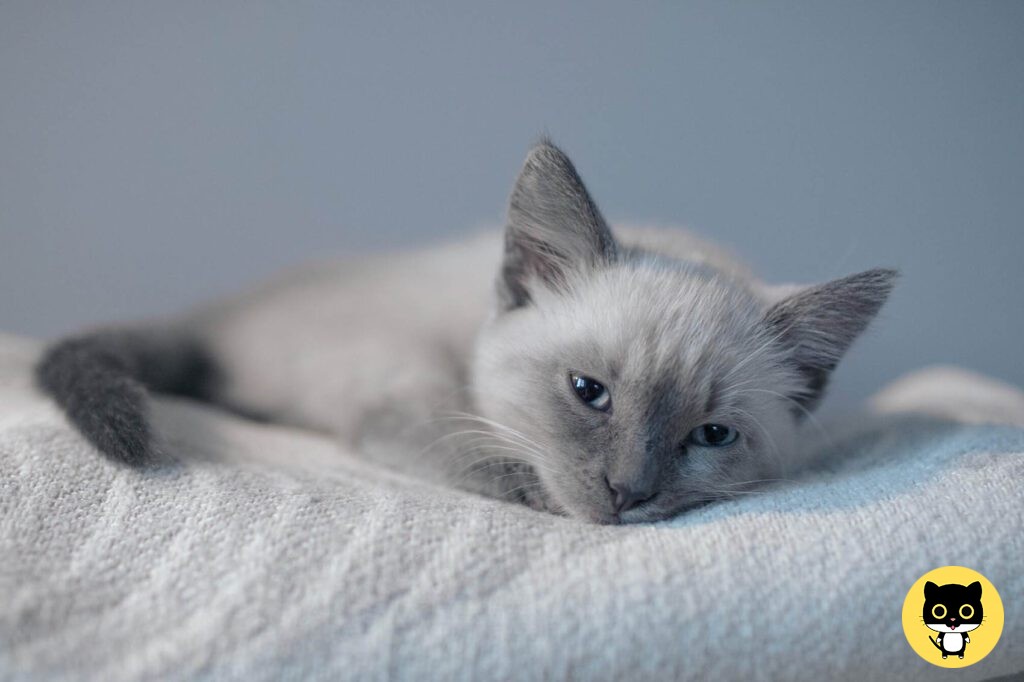
A Thai Lilac, Thai Blue Point or Thai Lilac Point can be an unusually involved companion: alert to household activity, ready to climb and play, and often eager to communicate with people. That appeal comes with a practical requirement. This is not a cat to assess by colour alone or to choose solely because it looks elegant in a photograph. The prospective caregiver needs to confirm which Thai framework the seller means, then decide whether the individual cat’s social needs suit the household.
Quick Facts
| Designation | Coat and pattern | Expected adult eye colour | GCCF EMS code |
|---|---|---|---|
| Thai Lilac | Solid warm pinky-beige/lilac with silver tipping | Clear green | TAI c |
| Thai Blue Point | Blue points | Clear blue | TAI a 33 |
| Thai Lilac Point | Lilac points | Clear blue | TAI c 33 |
Identity and recognition
These three names have a specific meaning in the GCCF system. Thai Lilac is a solid warm pinky-beige or lilac cat with silver tipping and clear green adult eyes. Thai Blue Point has blue points and clear blue adult eyes, while Thai Lilac Point has lilac points and clear blue adult eyes. Their GCCF registration designations are TAI c, TAI a 33 and TAI c 33 respectively.
The word “Thai” is not used identically by every registry. GCCF places these cats in a Korat-derived Thai Group, whereas TICA and FIFe use a Thai or Wichien Maat framework that should not automatically be treated as equivalent. A blue-eyed pointed cat, a lilac-coloured cat or a cat advertised simply as “Thai” may therefore resemble one of these descriptions without having the pedigree identity a buyer expects. Ask to see the issuing registry, pedigree and exact registration code before interpreting the cat’s appearance, rarity or health records. The GCCF breed description is a useful starting point, but it should be read alongside the documentation for the individual cat.
History and relationship to the Korat
The GCCF Thai Group is described as Korat-derived, which helps explain why these cats are discussed alongside Korat and Thai lines while still being given their own colour and point designations. Their relationship to the Korat is therefore part of their documented breed history, not a reason to treat every similarly coloured cat as a Thai Lilac or Thai point.
Registry history matters in practical terms because names, standards and registration rules determine what a pedigree means. A buyer comparing cats from Britain, continental Europe or North America should ask not only “What colour is this cat?” but also “Which registry recognises this cat, and under which standard?” Import arrangements and legal requirements will depend on the countries involved; there is no single global ownership rule that applies to every Thai-named cat.
Appearance and coat
The Thai Group has a moderate, athletic outline rather than an exaggerated one. The body is medium-sized, firm, lithe and muscular, with medium bone and a semi-cobby build. The head is heart-shaped, the eyes are large and rounded, the ears are broad and set high, and the tail tapers to a medium-length point. Males are generally larger and heavier than females.
GCCF gives an approximate adult weight of 8–10 lb, or 3.6–4.5 kg. That range is a rough profile, not a target to impose on every cat. Age, frame, neuter status and body condition are more useful when judging whether an individual is a healthy weight. A compact, muscular cat may look substantial without being overweight, while a cat within the published range may still carry excess fat.
The coat is fine, glossy and close-lying, generally described as short to medium in length. It should feel relatively light to maintain, and a grooming glove or rubber brush once or twice a week is the stated routine. That does not mean the home will be hair-free. A fine coat can still shed onto bedding and furniture, so grooming frequency should follow what the particular cat leaves behind and whether loose hair or small tangles are developing. The coat also offers no basis for calling these cats non-shedding or allergy-safe.
Young Thai Lilacs may not show their final eye colour immediately. Yellow, amber or amber-green eyes can occur in kittens and adolescents until as late as two years of age under the GCCF allowance. This is an allowance about eye development, not a promise that the cat’s behaviour, size or physical maturity will follow the same timetable.
Temperament and daily companionship
Life with this type of cat is likely to be active and interactive. Thai-related descriptions portray cats that are lively, curious, athletic and capable climbers. They may follow household activity, investigate cupboards and ledges, vocalise to people and turn ordinary routines into opportunities for participation. Some seek a lap; others show affection by staying close, answering voices or joining whatever their caregiver is doing.
That people-orientation can make a smaller home workable. Floor area alone is a poor measure of suitability if the cat has vertical territory, secure windows, climbing furniture, hiding places and daily interactive play. A well-arranged apartment may offer more useful stimulation than a larger but empty house. Wand toys, food puzzles, rotating toys and supervised exploration can help channel curiosity, while shelves and tall cat furniture give an athletic cat somewhere safe to climb.
The same sociability can be demanding for a household that is empty for long periods. Some Thai cats may dislike prolonged isolation, but no reliable maximum number of hours alone has been established. The sensible question is not whether a timetable falls below a fixed limit; it is whether the individual cat receives regular social contact, play and attention and whether its behaviour shows that the arrangement is working. A caregiver seeking a quiet, highly independent pet should meet an adult Thai and ask specifically how it handles separation.
“Affectionate” also needs unpacking. One cat may settle on a lap, while another may be deeply involved without enjoying prolonged restraint. Ask a breeder or current caregiver whether the cat welcomes handling, sleeps beside people, follows them from room to room, initiates play or prefers contact on its own terms. Meeting an adult cat provides better information about vocality, sociability and handling tolerance than a broad breed label.
Children, dogs and other cats
Thai cats may live successfully with children and dogs, but compatibility depends on the introduction and on the individuals involved. Children need to learn not to chase, corner, carry or disturb the cat while it is eating or resting. A cat-only retreat, high escape routes and adult supervision allow the relationship to develop without forcing contact.
Dogs should be introduced gradually and selected for temperament rather than size alone. A calm, responsive dog that can disengage is a better prospect than an excitable dog that treats movement as an invitation to chase. Secure separation should remain available even after apparently successful introductions.
Other cats require particular care. GCCF notes possible territorial behaviour and difficulty welcoming another cat. Some caregivers describe warm relationships with resident cats, while others describe an adjustment period when lively younger cats joined older ones. Separate food, litter and resting resources, gradual scent exchange, controlled visual contact and multiple escape routes are more reliable than assuming that a second cat will automatically provide companionship.
Individual reports of chasing, pouncing and toy-guarding are important household warnings, but they do not establish a breed-wide hunting rate. Birds, rodents and other prey-sized pets should be protected by secure physical separation. A cat that guards a toy or launches vigorous play at another cat may be entertaining in one home and stressful in another.
Care and enrichment
Routine grooming is usually straightforward. A rubber brush or grooming glove once or twice weekly can remove loose hair and provide an opportunity to check the skin. Increase attention if the cat is shedding heavily, developing tangles or resisting handling, and keep sessions brief and calm rather than treating grooming as a test of endurance.
Exercise is best supplied through several short, purposeful activities. Chase toys, climbing routes, puzzle feeders and clicker-style training can give an intelligent, active cat legal outlets for stalking, problem-solving and movement. Rotate toys instead of leaving every item available at once, and secure windows and balconies because a curious climber may investigate openings quickly.
No distinctive Thai-specific bathing, ear, eye, nutritional or climate routine has been established. The ordinary essentials still matter: preventive veterinary examinations, vaccination and parasite control as advised locally, dental care, nail care, body-condition monitoring and protection from excessive heat or cold. A fine coat does not remove the need for normal environmental care.
Health and buying documentation
Health records are especially important when buying within Korat and Thai lines. GCCF breeding controls address GM1 and GM2 gangliosidosis and require atherosclerosis testing or documented normal ancestry for relevant active-register breeding. These rules make identifiable family and test records worth requesting; they do not mean that every Thai pet has a high disease risk or that a pedigree guarantees lifelong health.
Ask for the parents’ and grandparents’ records, the cat’s microchip-linked DNA results where applicable, GM1 and GM2 status, current atherosclerosis status where relevant, veterinary records and the pedigree itself. Confirm that the documentation belongs to the advertised cat and that the cat is registered within the same framework described in the advertisement. The University of California, Davis veterinary genetics information explains the GM1 and GM2 testing context, while the GCCF registration policy sets out relevant breeding controls.
Health testing reduces uncertainty about specified inherited conditions, but it does not certify overall health. The buyer should still see the cat in an appropriate environment, check its general condition and obtain a veterinary examination after purchase according to the sale agreement and local practice.
Lifespan, availability and price
GCCF reports a longevity of 15 or more years, with many cats reaching their late teens and some exceeding 20. TICA gives late teens to early twenties for Thai cats generally. These are estimates from breed profiles rather than verified population life tables, so they describe a hopeful planning horizon rather than a promise for an individual cat. Anyone taking one home should be prepared for a long-term commitment involving changing veterinary, dietary and environmental needs.
Availability is likely to depend on specialist pedigree networks and on the terminology used by the relevant registry. A search for “lilac cat” or “blue point cat” may produce animals from unrelated breeding systems. Ask specialist breeders which registry they use, whether the cat is a companion or breeding prospect, whether it is registered under a GCCF Thai designation or another Thai framework, and whether import documentation is required.
No defensible, region- and date-specific purchase price or adoption-fee example is available for these three GCCF designations. That absence is more useful than borrowing a price from a different breed or an unrelated colourpoint listing. When comparing a future offer, record the currency, country or region, date, age, registration, pedigree, import status, breeding or companion status and whether the figure is an asking price or a completed sale. Also ask what is included: vaccinations, microchip, neutering terms, transport, insurance period and original health documents can substantially change the practical cost.
Is a Thai Lilac, Thai Blue Point or Thai Lilac Point right for you?
These cats are a strong possibility for a caregiver who wants an engaged, athletic companion and can provide daily interaction, climbing space, play and thoughtful introductions. They may suit a smaller home when the environment is enriched, and their close coat usually keeps routine grooming manageable.
They are less suitable for someone wanting a reliably quiet, solitary cat or an automatic solution to loneliness for another pet. Children, dogs and cats may become good companions, but the household must provide supervision, retreat spaces and gradual introductions. Before committing, verify the registry identity and health records, then observe the individual cat. The most useful assessment is whether its actual way of seeking affection, handling contact, vocalising and playing matches the life you can consistently offer.
What owners and caregivers say
Owners describe these cats as closely involved in household life. Some report affectionate cats that seek laps, answer with conversational meows and follow people from room to room. Others describe companionship expressed less through stillness and more through proximity, play and constant interest in household activity. Both experiences fit a cat that wants engagement, but they feel very different to a person choosing between a settled lap companion and an energetic conversational presence.
Curiosity is a recurring part of the relationship. Caregivers describe cats investigating drawers and ledges, joining family routines and throwing themselves into interactive play. That energy can be rewarding when the household enjoys participation and has suitable outlets. It can become tiring when toys, climbing spaces and attention are treated as optional.
Social outcomes vary. Some caregivers report rapid adjustment, calm behaviour with visitors, successful relationships with children and resident cats, and positive relationships with dogs, including both a miniature schnauzer and larger dogs. Other experiences involve a slower adjustment when a lively young cat joins older cats. One caregiver described toy guarding and pouncing on other cats, a reminder that affectionate behaviour toward people does not automatically mean easy sharing with animals.
The useful conclusion is not that one account is more “typical” than another. These experiences show why an adult meeting matters. Ask to see how the cat responds to handling, visitors, play being interrupted, other cats and ordinary household noise. The most promising match is not necessarily the cuddliest cat in a description; it is the individual whose social intensity, activity level and boundaries the household can understand and support.
Useful standards and health references
GCCF Thai breed description · TICA Thai profile · FIFe Thai information · UC Davis GM1/GM2 testing information
 English