
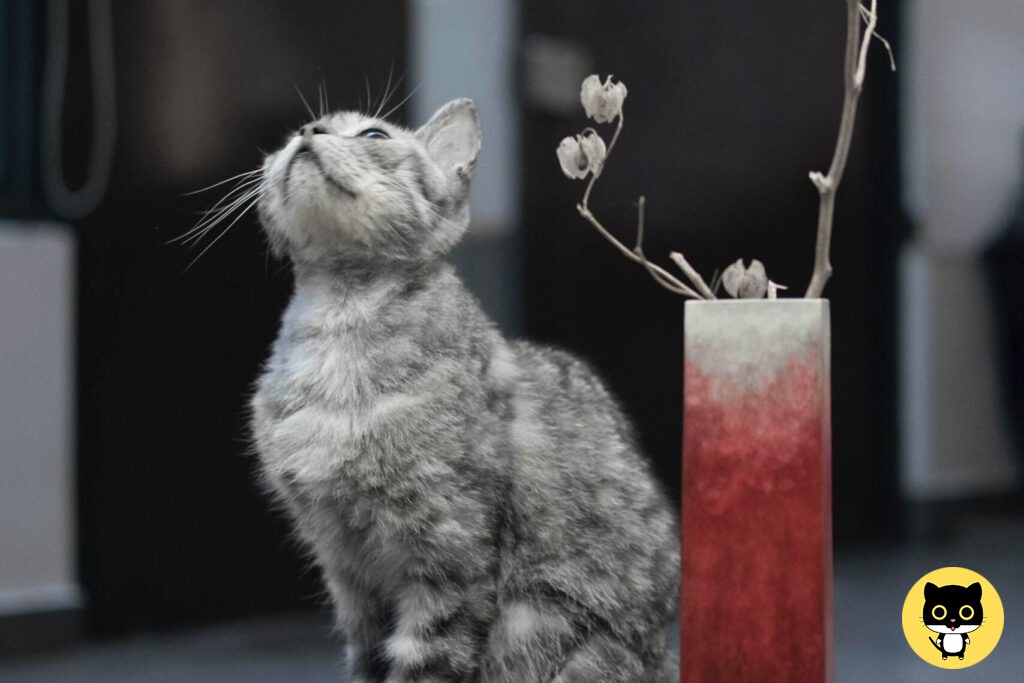
The Oriental Longhair is an expressive, athletic cat for a household that wants an involved companion rather than a decorative, self-sufficient pet. Its fine, silky coat may be easier to comb than a dense, heavily undercoated longhair, but the more important daily question is social: can you provide play, conversation, climbing space and predictable contact? The breed often suits people who enjoy a cat that participates in household life.
Quick Facts
| Characteristic | Practical meaning |
|---|---|
| Adult size | Approximately 5–8 lb for females and 8–12 lb for males, with individual frame, muscle and body condition more useful than a target number |
| Coat | Fine, silky, close-lying and semi-long to medium-length, with the most length usually on the tail |
| Activity and interaction | Active, curious, playful, vocal and socially engaged; needs daily enrichment and contact |
| Recognition | Associated with the Siamese/Oriental family, but classified differently by different registries |
| Expected lifespan | Breed profiles estimate roughly 10 or more years, with another estimate of 13–17 years; individual outcomes vary substantially |
Identity and recognition
“Oriental Longhair” is not interpreted identically by every cat registry. TICA places the breed in the Siamese Breed Group, CFA treats it as the Longhair Division of the Oriental breed, and FIFe lists OLH separately. Those are classification differences rather than three different kinds of cat, but they matter when a pedigree, registration number or breeder description is being checked. A listing that uses “Oriental,” “Oriental Longhair,” “Javanese” or a related family term should be matched to the specific registry and pedigree rather than accepted on appearance alone.
The breed belongs to the broader Siamese and Oriental family in the sense that its type and many of its expected qualities are considered alongside those cats. That relationship also explains why a breeder’s records may involve related pedigree discussions. It does not mean that health findings from every Siamese- or Oriental-group cat can be assigned automatically to an individual Oriental Longhair.
For a prospective caregiver, recognition is therefore more than a show-world technicality. It helps establish what the cat is, which standard is being used, what colors and patterns are accepted in that system, and whether health or breeding information belongs to the actual cat being offered.
Appearance and coat
The Oriental Longhair has a long, tubular outline that combines fine bones with visible muscle. Slim legs support the elongated body, while the tail tapers and carries the coat’s greatest length. The head forms a wedge, with a straight profile, large ears and almond-shaped eyes. These features create a refined, angular silhouette, but a pet does not need to resemble an extreme show ideal to be a healthy or properly identified Oriental Longhair.
The coat feels fine, silky and close to the body rather than plush and cottony. Descriptions range from semi-long to medium-length, and the CFA standard specifies no downy undercoat. That construction may make combing less demanding than it is for a heavily undercoated longhair, but it does not make the cat maintenance-free. Hair can still collect on furniture and clothing, and the tail furnishings can tangle. Weekly brushing is a sensible starting point; a particular cat may need more frequent combing if its tail mats, its coat loosens seasonally or its caregiver wants to reduce loose hair at home.
No established breed-wide shedding rate supports calling the Oriental Longhair non-shedding or low-shedding in a dependable sense. The same distinction matters for allergies. There is no evidence that this breed is hypoallergenic: cat allergens are associated with skin, saliva and fur, not simply with the amount of visible hair. Anyone with significant allergies should discuss the risk with an allergist and spend time with the specific cat before making a commitment.
Color and pattern possibilities are broad and depend partly on the registry. Oriental Longhairs may be solid, shaded, smoke, tabby, tortoiseshell, parti-color, bicolor or pointed, among other recognized combinations. Eye color also follows coat-category rules in some standards. Green, blue and odd eyes may all occur in the appropriate combinations, but green eyes should not be presented as universal. When color is important to a purchase or breeding decision, the registry standard and the pedigree should be checked together.
Development may continue until approximately 18–24 months. Adult weight ranges of about 5–8 lb for females and 8–12 lb for males are useful orientation points, not goals. A veterinarian should judge body condition by muscle, frame and fat coverage, with neuter status and the individual cat’s build taken into account.
Temperament and everyday companionship
Social involvement is one of the breed’s central considerations. Oriental Longhairs are commonly described as people-oriented, curious, vocal, playful and athletic. Many want to know what their caregiver is doing, request interaction and turn ordinary household events into opportunities for attention. That can feel wonderfully companionable to someone who enjoys communication from a cat; it can feel demanding to someone hoping for a quiet animal that disappears for most of the day.
Vocality is best understood as communication rather than a guaranteed volume level. One cat may offer frequent, insistent commentary, while another may be more selective. Likewise, “affectionate” does not necessarily mean “always a lap cat.” A cat may show attachment by following a person, sitting nearby, supervising activity, soliciting play or choosing brief physical contact. Meeting an adult cat is more informative about lap preference and handling tolerance than the breed name alone.
Activity and sociability also interact. A caregiver who provides only food, a litter tray and a scratching post may underestimate the breed’s likely workload. Indoor life is more successful when it includes sturdy climbing structures, secure high resting places, scratching surfaces, interactive play and puzzle or food-based activities. Fetch-like games and persistent requests for attention are possible, but they should be treated as individual behaviors rather than promises.
A smaller home is not automatically unsuitable. Vertical territory, well-placed resting areas, regular play and opportunities to watch household activity can make a compact home more useful to a cat than a large but empty space. Conversely, a large house does not compensate for long periods of social and behavioral under-engagement. Long absences are not automatically disqualifying, but they require a realistic plan for contact, enrichment and a calm routine.
Respectful children, other cats and cat-safe dogs may be good companions, but compatibility depends on the individuals and the introduction. Give each animal separate resources, provide escape spaces and supervise interactions. A second cat may help some Oriental Longhairs, particularly when temperaments are compatible, but it is not a universal requirement or a substitute for human care. Birds, rodents, reptiles and other vulnerable small pets should be kept securely separated. The breed’s athletic and playful nature justifies caution, but it does not establish a particular hunting rate for every cat.
Care that fits the breed
Coat care is usually manageable when it is made routine. Run a comb through the body and tail regularly, paying attention to friction points and any change in texture. A fine coat can hide an emerging tangle until it tightens, especially in the longer tail hair. Regular nail care, dental care as advised by a veterinarian and routine ear and eye checks complete the ordinary grooming picture.
Play should be active enough to involve both body and mind. Wand play, chase games, climbing, food puzzles and rotating toys can help prevent the household from becoming predictable. Secure windows, balconies and cat enclosures are particularly important for an agile cat that enjoys height. Training cooperative behaviors such as entering a carrier or accepting brief handling can make veterinary visits easier, provided it is done patiently.
Food should support a lean, muscular body rather than encourage a particular scale number. Portion size and body condition need adjustment as the cat matures, is neutered or changes activity. Because physical development can continue into the second year, a young cat should not be judged solely by its temporary proportions.
Health questions and veterinary planning
Health due diligence is especially useful when buying within a Siamese/Oriental-related pedigree. Familial systemic amyloidosis has been documented in Siamese/Oriental-group evidence, and MPS VI is relevant to some Siamese-derived pedigree discussions. These facts justify asking a breeder about family history, unexplained early deaths, liver disease, available DNA testing and veterinary records. They do not establish a prevalence estimate for Oriental Longhairs, prove that a particular cat is at risk, or provide a universal clearance test.
Ask to see the actual records for the cat and its parents rather than relying on a general statement that a line is “healthy.” A careful breeder should be able to explain what testing was performed, what it can and cannot detect, and which veterinary examinations or vaccinations are included. A veterinarian can then interpret those records in the context of the individual cat.
Anesthesia should also be discussed before surgery. TICA advises alerting the veterinarian to possible anesthesia sensitivity in this breed. That is a sensible planning point, not a quantified risk and not a direction that every Oriental Longhair requires an unusual anesthetic protocol. The appropriate response is to give the veterinary team complete information and allow them to choose and monitor the anesthetic plan.
Longevity figures are estimates rather than verified population survival statistics. One breed profile reports 10-plus years and notes that some cats live beyond 20, while another gives an estimate of 13–17 years. Genetics, disease, preventive care and chance all influence the outcome. These numbers are useful for planning a long commitment, not for promising a lifespan to a buyer.
Buying, availability and cost
Price information needs careful labeling because related breeds are often advertised together. A dated 2026 U.S. example lists an Oriental Shorthair at $4,500 USD from a cattery in Westminster, Maryland; it is an asking price, not a sale record and not an Oriental Longhair price. It should not be transferred to this breed as though it were a market average. A current inquiry should specify whether the cat is being sold as a pet, show or breeding prospect, and what veterinary care, registration, transport and contractual conditions are included. The example can be checked on the cattery’s pricing page.
No dependable current figure establishes an Oriental Longhair adoption fee, recurring ownership cost, waiting period or regional inventory. Availability may require patience or travel, but online search activity cannot establish a reliable rarity rate. Contact breeders or rescues directly, record the region and date of every quote, and ask whether the listed cat is registered as an Oriental Longhair under the relevant system.
Before paying a deposit, confirm the registry identity, pedigree, age, parentage, health records, vaccination status, return policy and transport arrangements. A beautiful longhaired Oriental-type cat may be a related breed, an unregistered cross or a cat described using informal terminology. Clear documentation protects both the buyer and the cat.
Is an Oriental Longhair a good match?
This breed is a strong match for a caregiver who wants an engaged, expressive companion and is prepared to provide regular play, climbing opportunities, grooming and social contact. It may work well in an apartment or a larger home when the environment is organized around the cat’s need for stimulation and secure territory.
It is a weaker match for someone seeking a silent, highly independent or allergy-safe cat. It is also a poor choice if “affectionate” must mean a guaranteed lap cat from the first day. The most useful assessment combines the breed tendency with the individual: meet an adult when possible, ask how the cat responds to unfamiliar people and handling, and request specific information about close relatives. Individual variation does not cancel the breed’s general profile; it is why responsible matching matters.
What owners and caregivers say
Some caregivers describe an Oriental as intensely people-oriented: following a favorite person, seeking physical involvement and vocalizing when attention is wanted. That picture is useful for someone imagining a cat that joins every part of the day, but it should not be turned into a promise that every Oriental Longhair will behave like a constant shadow.
Affection can also be quieter and less tactile. One caregiver described a cat that was loving without necessarily being a prolonged lap cat, showing how companionship may mean staying close, observing household activity or requesting interaction rather than accepting extended cuddling. For an adopter, the practical question is not simply “Is this breed affectionate?” but “What forms of affection does this particular cat offer, and do they suit me?”
Time can change the answer. An adopter assessing an adult after roughly two weeks was still unsure how cuddly the cat would become. Previous experience, age, environment and the stress of transition all affect early behavior. A cat that seems reserved in a new home may need time, while an established adult’s long-term preferences may be easier to read than a kitten’s.
Reports about unfamiliar people are similarly individual. One caregiver discussing an Oriental Longhair outcross line described cats that could become skittish with strangers when their main person was away. That is a line- and household-level observation, not a general rule, but it supports asking breeders about actual family behavior rather than relying on a temperament label.
Caregivers also describe climbing, persistent vocal requests, fetch and boredom when social or environmental stimulation is limited. These observations often concern Oriental Shorthairs or the wider Oriental family, so they illustrate possible experiences rather than predict every Oriental Longhair. Together, they reinforce the central decision: this can be a rewarding breed for someone who wants an active relationship with a cat, provided that the home is ready for communication, enrichment and individual personality rather than an idealized promise.
 English