
Activity level in Cat Breeds
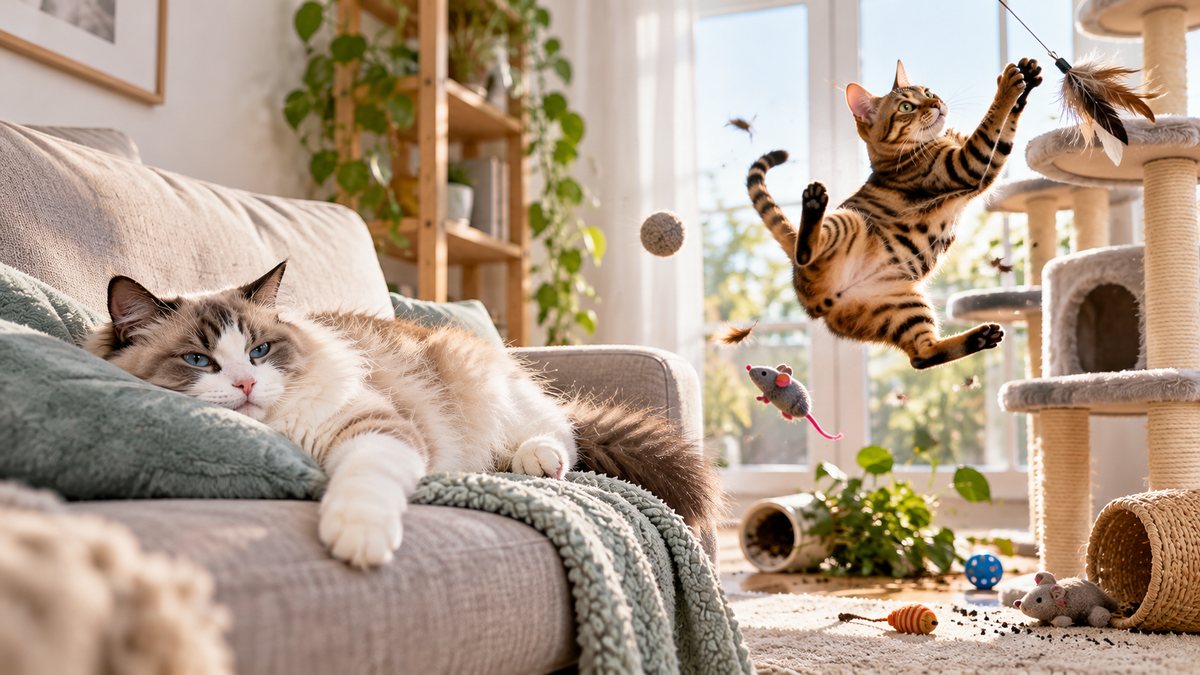
Compare breeds by activity level. The ordering follows the characteristic itself rather than the alphabet whenever a meaningful order exists.
Discuss Activity level in the forum
| # | Breed | Activity level |
|---|---|---|
| 1 | Very high | |
| 2 | Very high | |
| 3 | Very high | |
| 4 | Very high | |
| 5 | Very high Very high activity: the Siamese-derived temperament is energetic, agile and strongly inclined toward interactive play and exploration. | |
| 6 | Very high | |
| 7 | Very high Highly active and mischievous; boredom can become a problem when left without company or stimulation. | |
| 8 | Very high | |
| 9 | Very high Highlanders are high-energy cats whose active play helps build their powerful musculature. | |
| 10 | Very high | |
| 11 | Energetic and playful. | |
| 12 | Very high | |
| 13 | Very high | |
| 14 | Very high Same Siamese/Oriental breed group; coat length does not supply evidence of a different activity phenotype. | |
| 15 | Very high Lively, athletic and highly active. | |
| 16 | Very high | |
| 17 | Very high | |
| 18 | Very active and athletic. | |
| 19 | Moderately active, alternating short energetic play with plenty of relaxation. | |
| 20 | Very high | |
| 21 | Very high | |
| 22 | Very high | |
| 23 | Very high | |
| 24 | Very high Alert, agile and highly active, with a strong appetite for play and exploration. | |
| 25 | Moderate to high High activity is expected from its Oriental-derived type: energetic movement, exploration and frequent interactive play should be normal. | |
| 26 | Moderately active and playful rather than excessively energetic. | |
| 27 | Very high | |
| 28 | Very high | |
| 29 | Very high | |
| 30 | Very high | |
| 31 | Moderate to high Moderate to high activity is expected; the breed is social and playful, although warmth-seeking rest periods may interrupt bursts of energetic exploration. | |
| 32 | High Aegean cats are active and benefit from substantial daily play. | |
| 33 | Lively and active. | |
| 34 | Active and athletic. | |
| 35 | High Asian cats are lively and energetic. | |
| 36 | Lively and playful. | |
| 37 | Moderate to high Burmese are lively, intelligent cats that enjoy games and sustained interaction with their families. | |
| 38 | High The California Spangled is energetic and active. | |
| 39 | Moderate to high Moderate to high activity is expected from this robust island landrace, with good stamina and exploratory behavior rather than a sedentary temperament. | |
| 40 | High The Chinese Li Hua is lively and active. | |
| 41 | High | |
| 42 | High German Rex cats are lively and active. | |
| 43 | Lively and moderately active. | |
| 44 | High The Kanaani is an energetic breed that benefits from substantial daily activity. | |
| 45 | High | |
| 46 | High Energetic and active without being rough; interactive play remains important throughout life. | |
| 47 | Moderate to high Moderate to high activity is a reasonable estimate for this natural bobtail population, with agile exploration and hunting behavior likely to remain prominent. | |
| 48 | High | |
| 49 | High | |
| 50 | High The Mekong Bobtail is lively and benefits from regular active play. | |
| 51 | High | |
| 52 | High | |
| 53 | Moderate to high Historical Rex temperament descriptions support a moderately high activity level, although surviving breed-specific behavioral documentation is limited. | |
| 54 | Active and athletic. | |
| 55 | Moderate to high Moderate to high activity is expected for this naturally selected island cat, combining agility, exploration and practical hunting behavior. | |
| 56 | High Sam Sawets are lively and active cats. | |
| 57 | High | |
| 58 | High The Sokoke is lively and athletic rather than sedentary. | |
| 59 | High The Suphalak is an active cat that benefits from regular interactive play. | |
| 60 | High These cats are lively and active. | |
| 61 | Moderate | |
| 62 | Moderate Active and playful with daily exercise, but also settles readily; evidence supports moderate adult activity. | |
| 63 | Moderate Enjoys active play such as fetch but is also content to relax with the family. | |
| 64 | Moderate | |
| 65 | Moderately active. | |
| 66 | Moderately active. | |
| 67 | Moderate to high Moderately high activity is the best fit: this agile street-derived shorthair is alert, mobile and playful but not normally hyperactive. | |
| 68 | Moderate Playful and kitten-like into adulthood, but also mellow and laid-back; moderate overall activity. | |
| 69 | Balanced: capable of active play but also notably content to relax. | |
| 70 | Moderate | |
| 71 | Generally calm and easy-going but still playful. | |
| 72 | Active and playful. | |
| 73 | Moderate | |
| 74 | Moderately active, with a strong playful and hunting side. | |
| 75 | Moderate to high Moderate activity is expected: playful and curious, but the Exotic/Scottish background generally keeps energy below the most athletic Oriental types. | |
| 76 | Moderately active, balancing play with a relaxed temperament. | |
| 77 | Active and playful. | |
| 78 | Moderate | |
| 79 | Moderately active, with playful bursts rather than sustained high activity. | |
| 80 | Moderate Relaxed/easy-going adults commonly remain playful with encouragement; evidence supports moderate activity. | |
| 81 | Playful and active. | |
| 82 | Active and playful, though generally gentle rather than frantic. | |
| 83 | Moderate | |
| 84 | Moderately active. | |
| 85 | Moderate | |
| 86 | Moderate Playful and physically capable with retrieving/jumping/climbing, balanced by substantial quiet/alone time. | |
| 87 | Moderate | |
| 88 | Moderate | |
| 89 | Moderate | |
| 90 | Moderate | |
| 91 | Balanced and moderately active. | |
| 92 | Moderate to high Moderate activity is the best fit: playful and curious with good household energy, but generally less relentlessly active than Oriental-derived breeds. | |
| 93 | Low | |
| 94 | Low | |
| 95 | Low | |
| 96 | Low | |
| 97 | Low | |
| 98 | Low | |
| 99 | Low | |
| 100 | Low | |
| 101 | Low | |
| 102 | Low | |
| 103 | Low | |
| 104 | Low | |
| 105 | Low | |
| 106 | Very low |








































































































Breed comparisons describe tendencies, not guarantees about an individual cat. Approximate entries are kept separate from the canonical research record and can be refined as better evidence arrives.
 English