
Heat, cold & sun considerations in Cat Breeds
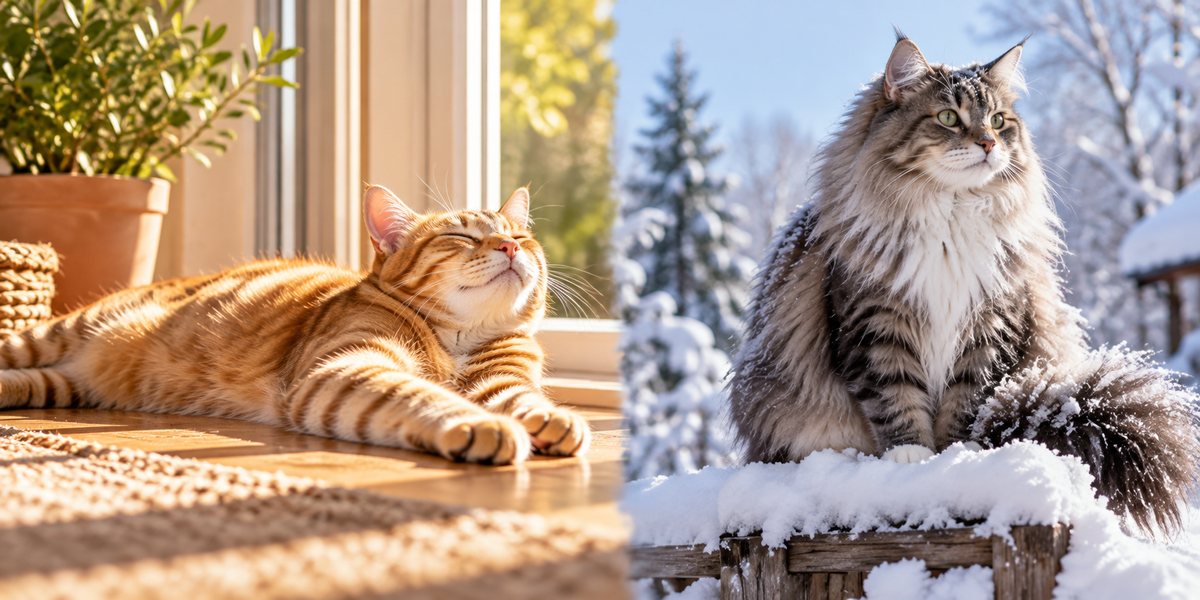
Compare breeds by heat, cold & sun considerations. The ordering follows the characteristic itself rather than the alphabet whenever a meaningful order exists.
Discuss Heat, cold & sun considerations in the forum
| # | Breed | Heat, cold & sun considerations |
|---|---|---|
| 1 | Brachy dense heat caution Exotic Shorthairs combine a dense plush coat with brachycephalic conformation in many lines, making heat management particularly important. Keep them cool and well hydrated in warm weather and avoid strenuous activity when temperatures are high. | |
| 2 | Cold adapted Dense weather-resistant coat is a clear adaptation to cold climates. | |
| 3 | Cold adapted Triple/semi-long weather-resistant coat reflects strong cold-climate adaptation. | |
| 4 | Cold adapted heat caution Kurilian Bobtails come from a cool, harsh island environment and often carry a substantial weather-resistant coat. They are well equipped for cold relative to many breeds, while sustained heat requires shade, water, airflow and cool resting areas. | |
| 5 | Cold adapted heat caution Maine Coons have a long, weather-resistant coat and large body suited to cold climates. They generally tolerate cool conditions well, but hot weather requires generous water, shade, airflow and access to cool surfaces, especially for very large individuals. | |
| 6 | Cold adapted heat caution Neva Masquerades share the Siberian's dense, weather-resistant coat and strong cold-climate adaptation. They handle cool conditions well but need active heat management in summer, including shade, water, airflow and cool resting surfaces. | |
| 7 | Cold sensitive Very short fine coat provides less insulation and increases preference for warmth. | |
| 8 | Cold sensitive Sparse/fine coat increases cold sensitivity relative to normally coated breeds. | |
| 9 | Cold sensitive · sun exposure caution Hairlessness reduces insulation and increases vulnerability to cold and direct sun exposure. | |
| 10 | Dense coat heat caution American Shorthairs have a dense, protective short coat that gives useful insulation in cool weather. In hot conditions they need shade, water and cool resting surfaces, particularly if overweight or less active. | |
| 11 | Dense coat heat caution The American Wirehair's springy, dense coat provides reasonable insulation, but can retain heat in warm weather. Provide cool shaded resting areas and water during heat, while ordinary indoor shelter is generally enough in cold conditions. | |
| 12 | Dense coat heat caution British Shorthairs have an exceptionally dense plush coat and sturdy body that cope well with cool conditions. They can be uncomfortable in sustained heat, so provide shade, water, ventilation and cool resting areas and avoid encouraging strenuous activity at peak temperatures. | |
| 13 | Dense coat heat caution Foldex cats usually carry a dense short or semi-long coat that gives reasonable cold insulation. Warm weather calls for shade, water and cool resting areas; mobility-limited individuals may need cooling resources placed especially close and accessibly. | |
| 14 | Dense coat heat caution Manx cats usually have a dense double coat that provides good insulation in cool weather. In sustained heat they need shade, water and cool resting areas; affected cats with mobility limitations should not have to travel far to reach them. | |
| 15 | Dense coat heat caution Minuets often have a dense Persian-derived coat, whether short or long. That insulation is useful in cool conditions but increases the importance of shade, hydration and cool resting places during heat. | |
| 16 | Dense coat heat caution Scottish Folds usually have a dense coat that offers good cool-weather insulation. During heat provide water and cool accessible resting places; cats with painful joint disease may be less able to relocate themselves comfortably and need resources close by. | |
| 17 | Dense coat heat caution Scottish Straights typically have a dense plush coat that handles cool conditions well. Warm weather calls for shade, hydration and cool resting areas, particularly in sedentary or overweight individuals. | |
| 18 | Dense curly heat caution Selkirk Rex cats have a dense curly coat that provides substantial insulation. They generally handle cool conditions well but need shade, water, airflow and cool resting surfaces during sustained heat. | |
| 19 | Dense longcoat heat caution British Longhairs have a very dense plush coat that insulates well in cool conditions but can make heat more burdensome. Summer management should emphasize shade, water, airflow and cool resting surfaces, especially in overweight cats. | |
| 20 | Dense longcoat heat caution Cymrics have a dense double coat that provides strong insulation in cool conditions. In warm weather they need shade, water and access to cooler resting areas, with grooming helping remove loose undercoat during seasonal shedding. | |
| 21 | Dense longcoat heat caution RagaMuffins have a substantial plush coat that insulates well in cool weather. Hot conditions require shade, hydration, airflow and cool resting places, particularly for large or overweight individuals. | |
| 22 | Dense semilong heat caution Nebelungs have a dense semi-long double coat that insulates well in cool conditions. They can become uncomfortable in sustained heat, so provide shade, water, airflow and access to cool quiet resting areas. | |
| 23 | Dense shortcoat heat caution Russian-type cats have a dense short double coat that provides notable insulation despite its length. They generally cope well with cool indoor conditions but benefit from cool shaded resting areas and good hydration during sustained heat. | |
| 24 | Dense weather coat heat caution Chartreux have a dense, woolly double coat that gives strong protection in cool weather. That insulation makes sustained heat the greater management concern: provide abundant water, shade, airflow and access to cooler surfaces. | |
| 25 | Hairless sun cold sensitive Bambinos have little or no protective coat, so they lose heat readily and exposed skin can burn in strong sun. Keep them warm in cool conditions, provide shade indoors and outdoors, and avoid prolonged direct sunlight or extreme temperatures. | |
| 26 | Hairless sun cold sensitive Donskoys are hairless or very sparsely coated, leaving them vulnerable to cold and direct ultraviolet exposure. They need reliable indoor warmth, shade from strong sun and careful temperature management rather than outdoor acclimatization. | |
| 27 | Hairless sun cold sensitive Dwelfs have little or no coat and therefore limited insulation or natural sun protection. Warm draft-free resting areas are important in cold weather, while direct strong sunlight and hot surfaces should be avoided. | |
| 28 | Hairless sun cold sensitive Ukrainian Levkoys are hairless and have little insulation or natural skin protection from strong sun. They require warm indoor shelter in cool weather and careful shade and temperature management during sunny or hot conditions. | |
| 29 | Heat adapted shortcoat Arabian Maus developed in the hot Arabian Peninsula and have a short coat suited to warm conditions. That background does not make extreme heat harmless: shade, plentiful water and cooler refuges remain essential, while cold weather may prompt a strong preference for warmth. | |
| 30 | Heat caution Heavy coat and brachycephalic conformation justify heat caution. | |
| 31 | Heat caution Brachycephalic conformation and heavy coat justify heat-management caution. | |
| 32 | Longcoat heat caution German Longhairs have a substantial long coat suited to temperate conditions and useful in cool weather. During heat they should have shade, water, airflow and cooler resting places, with regular grooming to remove loose seasonal coat. | |
| 33 | Mediterranean adaptable Cyprus cats come from a warm Mediterranean environment and are generally well suited to heat when they have water and shade. Seasonal coat changes still provide cooler-weather protection, but extreme sun and heat should never be treated as risk-free. | |
| 34 | Moderate coat adaptable Aegeans come from a Mediterranean island environment and generally handle warmth well when shade and water are available. Their seasonal coat still provides useful insulation in cooler weather, but they should always be able to retreat from intense summer sun. | |
| 35 | Moderate coat adaptable American Bobtails occur in short and semi-long coats with useful seasonal insulation. Most are broadly adaptable, but longhaired individuals need more heat relief and all cats require dry shelter from severe cold and shade in summer. | |
| 36 | Moderate coat adaptable American Curls have variable short or semi-long coats with relatively little undercoat, so they are not extreme cold specialists. Normal indoor climate control, shade and water are sufficient for most, with extra warmth in prolonged cold for lightly coated individuals. | |
| 37 | Moderate coat adaptable American Ringtails occur with ordinary short or longer coats and have no established extreme-climate specialization. Comfortable indoor temperatures, dry shelter, shade and water are appropriate, with adjustments based on the individual's coat density. | |
| 38 | Moderate coat adaptable Australian Mists have a short coat and were developed in a warm climate, so they generally manage normal household warmth well. They still require shade, water and protection from extreme heat, while cold weather calls for ordinary indoor shelter. | |
| 39 | Moderate coat adaptable Burmillas have a short, generally manageable coat without extreme climate specialization. Normal household temperatures suit them well, with ordinary feline precautions—shade and water in heat, warm dry shelter in cold. | |
| 40 | Moderate coat adaptable Highlanders generally have short to medium coats and no extreme climate specialization. Their high activity can increase heat load, so vigorous play is best shifted away from the hottest part of the day and cool water and shade should remain available. | |
| 41 | Moderate coat adaptable Munchkins occur in short- and longhaired forms, so insulation varies. Most need ordinary feline climate management, with shade and water in heat and warm dry shelter in cold; short-legged conformation itself does not provide climate protection. | |
| 42 | Moderate coat adaptable Ojos Azules were reported in both short- and longhaired forms and lack evidence for a distinctive climate specialization. Ordinary indoor temperature management, shade and hydration in heat, and warm dry shelter in cold are the best current guidance. | |
| 43 | Moderate coat adaptable The Serrade Petit lacks enough documentation for a special climate adaptation. Treat it as an ordinary domestic cat: comfortable indoor temperatures, dry shelter from severe cold and reliable shade and water in heat. | |
| 44 | Moderate coat adaptable The developing Transylvanian has no established extreme-climate specialization. A normal domestic-cat approach is appropriate: dry warm shelter during severe cold, shade and water during heat, and freedom to choose a comfortable resting temperature. | |
| 45 | Rex cold sensitivity German Rex cats have a short curly coat that can provide less insulation than a conventional dense coat. They often benefit from warm indoor resting places in cool weather and should also have shade and water during summer heat. | |
| 46 | Rex cold sensitivity Historical Oregon Rex cats had a short curly coat likely to offer less insulation than a dense conventional coat. The best current assessment is a preference for protected warmth in cold weather plus ordinary shade and hydration during heat. | |
| 47 | Seasonal coat adaptable Japanese Bobtails have a relatively light coat that changes seasonally and generally adapts well to ordinary household climates. They need normal shade and hydration in heat and warm dry shelter during cold weather, without a strong extreme-climate specialization. | |
| 48 | Seasonal coat adaptable Korean Bobtails are too sparsely standardized for a precise climate claim, but their natural domestic-cat background supports ordinary seasonal adaptability. Provide dry shelter and warmth in severe cold and reliable shade and water during heat. | |
| 49 | Seasonal semilong adaptable Turkish Vans have a seasonal semi-long coat that becomes fuller in winter and lighter in summer. This supports broad temperature adaptability, but hot conditions still require shade and water and severe cold calls for dry shelter. | |
| 50 | Seasonal shortcoat adaptable Dragon Li cats have a natural short coat expected to change seasonally and support broad temperate-climate adaptability. They still need dry shelter in severe cold and reliable shade and water in sustained heat. | |
| 51 | Seasonal shortcoat adaptable European Shorthairs retain a practical seasonal coat typical of traditional domestic cats and are broadly adaptable to temperate conditions. Severe cold still requires dry shelter, while summer heat calls for shade, water and cool resting places. | |
| 52 | Semilong heat caution The Tiffanie's semi-long coat offers useful insulation but is not a reason to tolerate high heat. In warm weather provide shade, plentiful water and cooler resting areas; indoor shelter readily covers ordinary winter conditions. | |
| 53 | Semilong heat caution Birmans carry a silky semi-long coat that provides insulation without the heaviest undercoat. They generally suit temperate indoor conditions; hot weather calls for cool resting areas and hydration, while prolonged cold should not be treated as harmless. | |
| 54 | Semilong heat caution Chantilly-Tiffany cats had a semi-long coat that offered useful insulation but could retain warmth. A temperate indoor environment, cool shaded summer resting places and dry warm winter shelter suit the likely coat profile. | |
| 55 | Semilong heat caution Cherubim carry a substantial semi-long coat that provides good insulation. They generally do well in temperate indoor climates, while hot weather calls for cool resting places, hydration and shade rather than assuming the coat is comfortable year-round. | |
| 56 | Semilong heat caution Ragdolls have a semi-long coat and large body, giving useful insulation but also increasing heat burden. They should have plentiful water, shade and cool resting surfaces in warm weather and should not be pushed into strenuous activity during heat. | |
| 57 | Semilong heat caution Somalis have a semi-long coat and very high activity level. They need access to cool shaded resting areas and water during warm weather, while their coat provides useful insulation in cooler conditions. | |
| 58 | Semilong heat caution York Chocolates had a semi-long coat that provided useful insulation without making them extreme cold specialists. Temperate indoor conditions suit the likely coat profile, with cool shaded areas in heat and warm dry shelter in cold. | |
| 59 | Semilong low undercoat Balinese have a silky semi-long coat with relatively little undercoat, giving less cold insulation than their length suggests. They usually prefer comfortable indoor temperatures and should have shade and water in heat plus warm retreats in cold weather. | |
| 60 | Semilong low undercoat Oriental Longhairs have a fine semi-long coat without the dense insulation of heavy double-coated breeds. They generally prefer protected indoor temperatures, with warm resting places in cold conditions and normal shade and hydration in heat. | |
| 61 | Semilong low undercoat Turkish Angoras have a silky semi-long coat with little undercoat, making them less heavily insulated than their appearance suggests. They adapt well indoors but need warm retreats in severe cold and normal shade and hydration during heat. | |
| 62 | Semilong low undercoat Turkish Vankedisi cats have a silky semi-long coat with relatively little undercoat, so they are not as cold-insulated as dense northern breeds. Warm dry shelter in cold weather and shade and water in heat are appropriate. | |
| 63 | Shortcoat adaptable California Spangled cats have a short coat and athletic build without a strong extreme-climate adaptation. They generally suit temperate indoor conditions, with warm shelter in cold weather and shade and water during heat. | |
| 64 | Shortcoat heat activity caution Bengals have a short coat and generally tolerate ordinary warmth well, but their intense activity can raise heat load quickly. In hot weather provide abundant water, shade and cool surfaces and shift vigorous play to cooler parts of the day. | |
| 65 | Shortcoat heat activity caution Chausies have a short coat and ancestry associated with warm regions, but their large size and very high activity can create substantial heat load. Shade, water and cooler resting areas are important, and strenuous play should be limited during extreme heat. | |
| 66 | Shortcoat heat activity caution Ocicats have a short coat but are highly athletic and active. They generally handle ordinary warmth well, yet vigorous play during high temperatures can increase heat load, so provide cool resting areas, shade and plentiful water. | |
| 67 | Shortcoat heat activity caution Savannahs have a short coat and generally tolerate ordinary warmth, but their high activity can generate substantial heat during play. Provide shade, water and cooler resting areas and avoid intense exercise during extreme temperatures. | |
| 68 | Shortcoat heat activity caution Serengetis have a short coat and long athletic body, so coat insulation is modest while activity is high. They suit normal warmth but need hydration, shade and reduced peak-heat exercise, plus warm indoor shelter in cold weather. | |
| 69 | Shortcoat heat activity caution Toygers have a short coat and athletic build. They handle ordinary household warmth well, but active play can add heat load, so summer management should include shade, water, cool surfaces and activity during cooler hours. | |
| 70 | Shortcoat sun caution Khao Manees have a short coat suited to a warm climate, but white-coated individuals can be more vulnerable to ultraviolet damage on lightly pigmented skin, especially ears and nose. Provide shade and limit intense sun exposure while maintaining normal hydration. | |
| 71 | Shortcoat warm climate Abyssinians have a close short coat and lean athletic body, so they generally favor warm, dry conditions over prolonged cold. Provide warm indoor retreats in winter and shade, water and reduced exertion during extreme summer heat. | |
| 72 | Shortcoat warm climate Kanaani cats have a short, athletic natural-type coat and ancestry associated with a warm region. They generally handle warmth well when hydrated and shaded, but should have protected warm shelter during cold weather. | |
| 73 | Shortcoat warm climate Korn Ja cats come from Thailand and are generally represented as short-coated, supporting a warm-climate profile. They still need protection from extreme heat and direct sun, while cooler climates call for warm dry indoor shelter. | |
| 74 | Shortcoat warm climate Mekong Bobtails have a short coat and Southeast Asian background that suit warm indoor climates. They may seek extra warmth in cold conditions, while hot weather still requires shade, water and freedom to rest in cooler areas. | |
| 75 | Shortcoat warm climate Sam Sawet cats are Thai domestic-type cats with a short coat and warm-climate background. They should have shade and hydration in tropical heat and warm indoor retreats when living in cold climates. | |
| 76 | Shortcoat warm climate Suphalaks are a Thai short-coated breed and are best suited to warm, protected household conditions. They still need shade and hydration during intense heat and warm indoor shelter when temperatures fall substantially. | |
| 77 | Shortcoat warmth preference Asian cats generally have a short, close coat with less insulation than dense northern breeds. They suit normal indoor temperatures well, often appreciate warm resting places in winter, and still require shade and hydration during hot weather. | |
| 78 | Shortcoat warmth preference Bombays have a sleek short coat and commonly seek warm resting places in cool weather. They are comfortable in normal indoor climates but still need shade, water and protection from extreme heat or prolonged cold. | |
| 79 | Shortcoat warmth preference Burmese have a fine close coat with relatively little insulation and often actively seek warmth. They should have warm indoor resting places during cold weather and normal shade, water and cooling options in summer. | |
| 80 | Shortcoat warmth preference Colorpoint Shorthairs have a close coat and lean body, giving less cold insulation than plush or double-coated breeds. They often appreciate warm indoor resting places, while summer heat still requires shade, hydration and sensible activity timing. | |
| 81 | Shortcoat warmth preference European Burmese have a fine short coat and generally prefer warm, comfortable indoor conditions. Cold weather calls for warm resting places, while hot conditions require shade, water and the ability to reduce activity. | |
| 82 | Shortcoat warmth preference Havana Browns have a short smooth coat with moderate insulation and often enjoy warmth. A comfortable indoor climate, warm winter resting places and normal summer shade and hydration suit them well. | |
| 83 | Shortcoat warmth preference Korats have a short single coat with less insulation than dense double-coated breeds and often prefer warm indoor conditions. They should have warm retreats in cold weather and shade, water and cool surfaces during sustained heat. | |
| 84 | Shortcoat warmth preference Oriental Bicolors commonly have a close coat and relatively lean body, offering less insulation than dense-coated breeds. They often appreciate warm indoor resting places in cold weather while still needing shade and hydration during summer heat. | |
| 85 | Shortcoat warmth preference Oriental Shorthairs have a very close coat and lean body with little insulation. They commonly seek warm resting places and should be protected from prolonged cold, while summer heat still requires shade, water and cool retreats. | |
| 86 | Shortcoat warmth preference Siamese have a very short close coat and lean body, providing limited insulation in cold weather. They commonly seek warm resting places; during heat they still need shade, water and freedom to reduce activity. | |
| 87 | Shortcoat warmth preference Singapuras have a fine short coat and very small body, both of which limit cold-weather insulation. They generally prefer warm indoor conditions, with cozy winter resting places and normal shade and hydration during hot weather. | |
| 88 | Shortcoat warmth preference Snowshoes have a short coat with moderate insulation and generally suit normal indoor temperatures. They may seek warm resting places in cold weather, while shade and plentiful water remain important during heat. | |
| 89 | Shortcoat warmth preference Suffolks derive from short-coated Oriental-type cats and are expected to have modest cold insulation. Warm indoor resting places are useful in cool weather, while hot conditions require ordinary shade, water and cooling options. | |
| 90 | Shortcoat warmth preference Thai cats have a short close coat and Southeast Asian ancestry, generally favoring warm household conditions. Provide warm resting places in cold weather and shade, water and cooler retreats during high heat. | |
| 91 | Shortcoat warmth preference These Thai color varieties have the breed's short close coat and relatively modest cold insulation. They generally appreciate warmth, while strong summer heat still calls for shade, hydration and access to cooler resting areas. | |
| 92 | Shortcoat warmth preference Tonkinese have a short silky coat with limited cold insulation and commonly enjoy warm resting places. Normal indoor climates suit them well, with extra warmth in cold weather and shade and water during heat. | |
| 93 | Small shortcoat temperature sensitive Toybobs are exceptionally small, so they can lose body heat relatively quickly, especially in short-coated individuals. Provide warm indoor retreats in cool weather and shade and hydration in heat; extreme temperatures deserve extra caution. | |
| 94 | Sparse coat temperature sensitive Lykois have a sparse, partially hairless coat that provides less insulation and skin protection than a conventional coat. They need warm shelter in cold conditions and shade from intense sun, with direct skin exposure monitored carefully. | |
| 95 | Sparsecoat sun cold sensitive Minskins have sparse coat coverage, exposing substantial skin to cold and sunlight. They need warm indoor conditions in cool weather and shade from intense sun, with particular attention to exposed skin and hot or cold surfaces. | |
| 96 | Variable coat adaptable Kinkalows may be short- or longhaired, so insulation varies considerably. Climate management should follow the individual coat: warm retreats for lightly coated cats, extra cooling for fuller coats, and shade and water for all in heat. | |
| 97 | Variable coat adaptable Lambkins can carry curly coats of varying length and density, making insulation individual rather than uniform. Provide warmth for lightly coated cats, cooling options for fuller coats and avoid exposing short-legged individuals to extreme ground temperatures. | |
| 98 | Variable coat adaptable LaPerm coats vary from short to long and from relatively sparse to fuller curls, so climate tolerance varies between individuals. Lightly coated cats may seek extra warmth, while fuller-coated cats need cool retreats and hydration in hot weather. | |
| 99 | Variable hairless sun cold sensitive Peterbald coats range from hairless to lightly coated, so climate tolerance varies, but minimally coated individuals need substantial protection from cold and ultraviolet exposure. Warm shelter and shade should be available whenever skin is exposed. | |
| 100 | Variable rex coat Tennessee Rex coats are curly and can vary in density, so insulation should be judged from the individual rather than the word 'rex' alone. Provide warm resting places for lightly coated cats and shade, water and airflow for fuller-coated individuals in heat. | |
| 101 | Warm climate adaptable Egyptian Maus have a short coat and ancestry associated with warm climates, so ordinary warmth is usually easy to manage. They still need shade, water and protection from extreme heat, while cold weather may prompt a stronger preference for warm indoor resting places. | |
| 102 | Warm climate shortcoat Brazilian Shorthairs developed in a warm climate and generally carry a short coat. They are well suited to ordinary warmth but still need shade and hydration in heat, while cold conditions call for warm, dry indoor shelter. | |
| 103 | Warm climate shortcoat Raas cats come from a tropical Indonesian island environment and are generally short-coated, supporting good adaptation to warmth. They still need shade and water in extreme heat and warm dry shelter if kept in substantially colder climates. | |
| 104 | Warm climate shortcoat Sokokes come from coastal Kenya and have a short coat suited to warm conditions. They generally handle normal warmth well with shade and water, while colder climates call for protected indoor shelter and warm resting areas. | |
| 105 | Weather resistant heat caution Aphrodite Giants descend from Cyprus and combine a robust natural-cat build with seasonal coat variation. They can adapt across temperatures, but their large body and fuller coat make shade, water and cool retreats important in Mediterranean-style summer heat. | |
| 106 | Weather resistant heat caution Pixie-bobs often have a substantial short or long coat and robust build that provide useful cool-weather protection. During hot weather their size and coat make shade, water and cool resting areas important. |








































































































Breed comparisons describe tendencies, not guarantees about an individual cat. Approximate entries are kept separate from the canonical research record and can be refined as better evidence arrives.
 English