
Conformation-related welfare in Cat Breeds
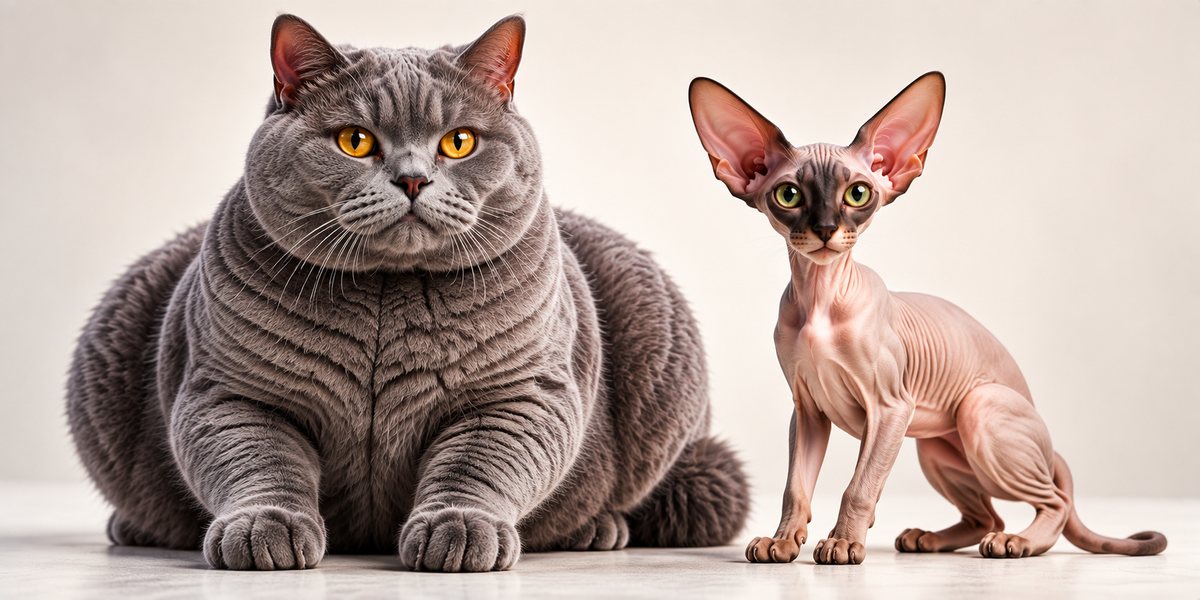
Compare breeds by conformation-related welfare. The ordering follows the characteristic itself rather than the alphabet whenever a meaningful order exists.
Discuss Conformation-related welfare in the forum
| # | Breed | Conformation-related welfare |
|---|---|---|
| 1 | Dwarfism requires orthopedic attention The short-legged dwarf conformation warrants particular attention to orthopedic comfort, mobility and healthy body condition. | |
| 2 | High brachycephalic concern Exotic Shorthairs can have marked brachycephaly. Extremely shortened faces can impair breathing, tear drainage, dental alignment and heat tolerance, so welfare-focused breeding should favor open nostrils, functional airways and less extreme facial shortening. | |
| 3 | High brachycephalic concern Himalayans share Persian brachycephalic conformation. Very flat faces can compromise breathing, tear drainage, dental alignment and heat tolerance, making moderate facial structure and demonstrably free breathing important welfare priorities. | |
| 4 | High brachycephalic concern Extreme Persian brachycephaly can impair breathing, tear drainage, dental alignment, temperature regulation and normal birth. Welfare-focused selection should favor functional airways, less extreme facial shortening and cats able to eat, groom and exercise comfortably. | |
| 5 | High dwarf brachy concern Minuets combine short-legged dwarfism with Persian-derived body and facial traits. Welfare assessment should consider spinal and joint loading, ability to move and jump normally, body weight and, in flatter-faced lines, breathing and eye function. | |
| 6 | High dwarf concern Munchkins have disproportionate short-legged dwarfism. Even active individuals should be selected and managed for sound spine, joints and chest, comfortable gait and healthy body weight rather than treating reduced limb length as purely cosmetic. | |
| 7 | High dwarf ear trait concern Kinkalows combine short-legged dwarfism with curled ears. Welfare selection should prioritize sound spine and joints, comfortable gait and flexible healthy ears rather than intensifying either novelty trait. | |
| 8 | High dwarf hairless concern Bambinos combine disproportionate short legs with hairlessness. Welfare assessment should therefore cover spine and joint function, ability to move and climb comfortably, healthy body weight, skin condition and temperature regulation rather than judging either trait only by appearance. | |
| 9 | High dwarf sparsecoat concern Minskins combine short-legged dwarfism with sparse coat coverage. Welfare depends on comfortable mobility, sound spine and joints, healthy body weight and adequate skin and temperature protection; breeding should not intensify these traits at the expense of function. | |
| 10 | High historical genetic concern The original Ojos Azules eye-color mutation was associated with severe developmental abnormalities when inherited in duplicate. Welfare-focused breeding therefore requires genetic caution around the defining eye trait itself, not simply selection for ever deeper blue eyes. | |
| 11 | High tail spine concern Cymrics share the Manx tailless mutation, so conformation welfare centers on spinal and pelvic development rather than coat length. Breeding should avoid cats with abnormal gait, hind-limb weakness or bowel and bladder dysfunction and should not reward ever more extreme shortening. | |
| 12 | High tail spine concern The Manx tailless mutation can affect more than the tail, producing spinal and pelvic abnormalities and bowel, bladder or hind-limb dysfunction in affected cats. Functional movement and neurologic health should take priority over maximizing taillessness. | |
| 13 | Low coat concern LaPerms are structurally moderate and distinguished mainly by their curly coat. Welfare selection should maintain healthy skin, whiskers and adequate coat coverage while preserving ordinary feline proportions and movement. | |
| 14 | Low coat concern Tennessee Rex cats are distinguished mainly by a curly satin-like coat rather than skeletal extremes. Welfare breeding should maintain healthy skin, whiskers and adequate coat protection while preserving moderate functional anatomy. | |
| 15 | Low coat heavy type Selkirk Rex cats combine a curly coat with a substantial body. Welfare selection should maintain healthy skin, whiskers and coat, normal facial proportions and free movement rather than intensifying curl, heaviness or facial shortening. | |
| 16 | Low conformation concern Abyssinians have a moderate, athletic conformation without a defining structural extreme. Welfare-focused selection should preserve sound joints, normal chest and jaw structure and muscular condition rather than pushing the breed toward excessive slenderness. | |
| 17 | Low conformation concern Aegeans retain a functional natural-cat build with no defining structural exaggeration. Preserving moderate proportions, sound movement and genetic diversity is more important than intensifying any cosmetic feature. | |
| 18 | Low conformation concern American Shorthairs have a sturdy, moderate body plan without a defining structural extreme. Welfare selection should preserve balanced proportions and mobility and avoid allowing the desired substantial look to become obesity or excessive heaviness. | |
| 19 | Low conformation concern The American Wirehair's distinctive feature is coat texture rather than skeletal exaggeration. Welfare concerns center on healthy skin and whiskers and a moderate, functional body, not on intensifying wire texture at the expense of coat or skin condition. | |
| 20 | Low conformation concern Arabian Maus have a lean, functional landrace build adapted to active movement. Their welfare is best protected by retaining natural proportions and avoiding selection toward exaggerated thinness, size or other show-driven extremes. | |
| 21 | Low conformation concern Asian cats generally have balanced Burmese-derived proportions without a defining harmful structural trait. Selection should preserve normal breathing, jaw alignment and athletic movement rather than exaggerating compactness or facial shape. | |
| 22 | Low conformation concern Tiffanies are distinguished mainly by coat and Burmese-derived type rather than structural extremes. A moderate head, sound joints and free movement should remain priorities as appearance is refined. | |
| 23 | Low conformation concern Australian Mists were developed with moderate companion-cat proportions and no defining structural extreme. Welfare-focused breeding should retain normal facial structure, sound movement and healthy body condition. | |
| 24 | Low conformation concern Balinese have a long, slender Siamese-derived build that should remain muscular and functional. Selection should avoid excessive refinement that leaves cats frail, under-muscled or with exaggerated wedge-shaped heads affecting normal oral or airway function. | |
| 25 | Low conformation concern Birmans have a moderate, substantial body and no defining structural mutation. Welfare selection should preserve normal facial length, sound joints and free movement while avoiding drift toward excessively flat Persian-like facial conformation. | |
| 26 | Low conformation concern Bombays are compact, muscular cats but should retain a functional muzzle, open nostrils and athletic movement. Breeding should avoid excessive shortening of the face or heaviness simply to intensify the rounded look. | |
| 27 | Low conformation concern Brazilian Shorthairs retain conventional domestic-cat anatomy without a defining structural extreme. Preserving balanced proportions, sound movement and broad genetic diversity is the main conformation-welfare priority. | |
| 28 | Low conformation concern Burmillas have generally moderate proportions without a defining structural mutation. Breeding should preserve normal facial length, sound joints and athletic movement and resist exaggeration inherited from more extreme ancestral lines. | |
| 29 | Low conformation concern California Spangled cats were designed for a spotted appearance on a functional athletic body. Welfare selection should prioritize sound movement and ordinary feline proportions rather than intensifying a wild look through structural exaggeration. | |
| 30 | Low conformation concern Chantilly-Tiffany cats were defined primarily by coat and color, not by structural extremes. Any surviving or reconstructed line should retain a moderate functional body and normal facial and skeletal anatomy. | |
| 31 | Low conformation concern Cherubim are substantial semi-longhaired companion cats without a defining structural mutation. Selection should preserve balanced facial structure, sound joints and free movement rather than increasing size or plushness at the expense of function. | |
| 32 | Low conformation concern Cyprus cats retain a robust natural-cat conformation with no defining structural extreme. Preserving athletic movement, balanced proportions and genetic diversity should take precedence over creating a more exaggerated show type. | |
| 33 | Low conformation concern Dragon Li cats have a conventional, athletic natural-cat build. Welfare-focused breeding should preserve this functional anatomy and broad genetic base rather than introducing exaggerated size, head or body traits. | |
| 34 | Low conformation concern Egyptian Maus are lean, muscular sprinters with a functional body plan. Selection should preserve sound hind limbs, joints and chest and avoid confusing extreme leanness with the breed's naturally athletic appearance. | |
| 35 | Low conformation concern European Shorthairs are intentionally close to functional domestic-cat proportions. Welfare selection should preserve moderate anatomy, sound movement and genetic diversity rather than creating a more exaggerated show silhouette. | |
| 36 | Low conformation concern German Longhairs are built around a moderate, functional longhaired type rather than structural extremes. Breeding should preserve normal facial proportions, sound joints and free movement while selecting coat quality. | |
| 37 | Low conformation concern Havana Browns have a distinctive muzzle but otherwise moderate, athletic anatomy. The squared muzzle should remain compatible with normal teeth and breathing, and rarity makes preserving genetic diversity more important than intensifying head type. | |
| 38 | Low conformation concern Kanaani cats have an athletic natural-type build without a defining structural mutation. Preserving balanced proportions, sound joints and genetic diversity is more important than pushing the breed toward a more extreme wild appearance. | |
| 39 | Low conformation concern Korats are compact but athletic cats with no defining structural mutation. Their heart-shaped head and muscular body should remain compatible with normal jaw function, breathing and agile movement. | |
| 40 | Low conformation concern Korn Ja cats are represented as moderate Thai domestic-type cats without a defining structural extreme. Preservation breeding should prioritize functional anatomy and genetic diversity over creating a more dramatic standardized silhouette. | |
| 41 | Low conformation concern Nebelungs have a moderate, elongated body without a defining structural mutation. Welfare-focused breeding should preserve muscular condition, normal facial anatomy and free movement while maintaining coat quality. | |
| 42 | Low conformation concern Ocicats are muscular, athletic cats whose spotted appearance does not depend on structural deformity. Breeding should preserve balanced joints, normal facial anatomy and agile movement rather than exaggerating size or a wild silhouette. | |
| 43 | Low conformation concern Raas cats are an island landrace with no defining structural exaggeration. Any preservation program should retain functional natural proportions and genetic diversity rather than reshaping the population toward a novel show extreme. | |
| 44 | Low conformation concern Russian-type cats have a moderate, elegant body without a defining structural mutation. Welfare selection should preserve muscular condition, normal facial anatomy and functional movement rather than pushing toward excessive slenderness. | |
| 45 | Low conformation concern Sam Sawet cats are rare Thai domestic-type cats without a known structural extreme. Preservation should prioritize healthy conventional anatomy and genetic diversity rather than creating exaggerated features to distinguish the breed. | |
| 46 | Low conformation concern Serengetis are long-legged athletic cats bred for a wild-looking silhouette without wild ancestry. Their height and ear size should remain compatible with sound joints, balance and normal sensory function rather than being exaggerated for appearance. | |
| 47 | Low conformation concern The Serrade Petit is sparsely documented but not defined by a known structural mutation. A functional moderate body, normal breathing and sound movement should remain the welfare baseline as the type is preserved or standardized. | |
| 48 | Low conformation concern Snowshoes have moderate Siamese-derived proportions without a defining structural mutation. Breeding should preserve normal facial anatomy, muscular condition and sound movement rather than pushing the type toward extreme refinement. | |
| 49 | Low conformation concern Sokokes retain a lean, athletic natural-breed conformation. Preservation should favor sound movement, normal body condition and genetic diversity rather than exaggerating slenderness or other features to create a stronger show type. | |
| 50 | Low conformation concern Somalis have an athletic Abyssinian-derived body with no defining structural mutation. Welfare selection should preserve muscular condition, sound joints and normal facial anatomy while maintaining the semi-long coat. | |
| 51 | Low conformation concern Suphalaks are rare Thai cats with a conventional shorthaired body plan and no defining structural mutation. Preservation breeding should prioritize functional anatomy and genetic diversity over exaggerating features for distinctiveness. | |
| 52 | Low conformation concern Thai cats retain a more moderate traditional Siamese-type body and head. Welfare selection should preserve that functional balance, normal jaw and airway anatomy and muscular condition rather than moving toward more extreme refinement. | |
| 53 | Low conformation concern These Thai color varieties share the breed's moderate traditional body type. Coat color should not alter welfare priorities: preserve normal facial anatomy, muscular condition and free movement rather than structural exaggeration. | |
| 54 | Low conformation concern Tonkinese are medium, muscular cats with generally balanced proportions. Breeding should preserve normal facial length, jaw alignment and athletic movement and avoid drifting toward extremes from either Siamese or Burmese ancestry. | |
| 55 | Low conformation concern Toygers are bred for tiger-like markings on an athletic domestic-cat body. Welfare selection should keep movement, joints and facial anatomy fully functional and avoid creating structural exaggerations merely to intensify the wild appearance. | |
| 56 | Low conformation concern Turkish Angoras are elegant, athletic cats without a defining structural mutation. Selection should preserve muscular strength, normal facial anatomy and sound movement rather than exaggerating slenderness or coat at the expense of function. | |
| 57 | Low conformation concern Turkish Vans are substantial, athletic cats with no defining structural mutation. Welfare-focused breeding should preserve powerful free movement, healthy body condition and normal facial anatomy rather than maximizing size. | |
| 58 | Low conformation concern York Chocolates were moderate semi-longhaired cats without a defining structural mutation. Any surviving or reconstructed population should prioritize functional anatomy and genetic diversity rather than exaggerating size, coat or head shape. | |
| 59 | Low developing type concern The Transylvanian is still being standardized, so welfare-focused development should preserve a moderate functional body, normal breathing and free movement. Early selection is an opportunity to prevent cosmetic exaggerations from becoming fixed breed traits. | |
| 60 | Low ear trait monitoring American Curls have a cartilage mutation that curls the ears backward, but the ears should remain flexible and free of pain or narrowing. Welfare-focused breeding should avoid rigid or excessively curled ears and preserve normal ear-canal health. | |
| 61 | Low heavy type monitoring Chartreux are sturdy, muscular cats with no defining structural mutation. Their substantial build should remain athletic; excessive weight or bulk that reduces mobility should not be confused with correct breed type. | |
| 62 | Low size monitoring Aphrodite Giants are selected for substantial size, but large size should remain compatible with agile movement, sound joints and healthy body condition. Breeding for ever greater mass would add orthopedic burden without improving function. | |
| 63 | Low slender type monitoring Colorpoint Shorthairs share the elongated Siamese body type. They should remain well muscled and functionally athletic, with selection avoiding excessive refinement, frailty or head exaggeration that compromises normal jaw or airway anatomy. | |
| 64 | Low slender type monitoring Oriental Bicolors share the long, fine-boned Oriental body type. They should remain muscular and agile, with normal jaw and airway function; extreme refinement or head exaggeration should not be rewarded. | |
| 65 | Low slender type monitoring Oriental Longhairs have an elongated, fine-boned type that should remain strong and athletic. Selection should avoid excessive delicacy or wedge-head exaggeration that compromises jaw, dental or airway function. | |
| 66 | Low slender type monitoring Oriental Shorthairs have an intentionally elongated, fine-boned body and wedge head. Welfare-focused breeding should retain muscular strength, normal jaw and airway anatomy and avoid escalating refinement into frailty or functional facial exaggeration. | |
| 67 | Low slender type monitoring Modern Siamese can have a very elongated body and extreme wedge head. Welfare-focused selection should retain strong musculature, normal jaw and airway anatomy and healthy eye placement rather than rewarding ever greater refinement. | |
| 68 | Low slender type monitoring Suffolks share the active, elongated Oriental-type build. They should remain muscular and functionally athletic, with breeding avoiding excessive refinement or head exaggeration that compromises normal jaw or airway structure. | |
| 69 | Low structure sensory concern Khao Manees have moderate conventional anatomy, so the main appearance-linked welfare issue is not body structure but the association between white pigmentation and congenital deafness. Selection should include hearing health rather than intensifying blue-eyed white appearance without assessment. | |
| 70 | Low structure sensory concern Turkish Vankedisi have conventional athletic anatomy; the principal appearance-linked welfare issue is white pigmentation and congenital deafness risk. Hearing health should be considered directly rather than selecting white, blue-eyed appearance without functional assessment. | |
| 71 | Low to moderate head concern Burmese are compact and muscular, with head shape varying by population. Welfare selection should retain open nostrils, normal jaw and eye placement and functional proportions rather than exaggerating roundness or facial shortening. | |
| 72 | Low to moderate head concern European Burmese have compact but athletic proportions and a somewhat less extreme head than some Burmese populations. Selection should retain normal breathing, jaw alignment and movement and avoid progressive facial shortening. | |
| 73 | Low to moderate heavy type RagaMuffins are large, substantial cats. Their size and plush appearance should remain compatible with normal breathing, sound joints and easy movement, with obesity clearly distinguished from desired body substance. | |
| 74 | Low to moderate large type Neva Masquerades share the large, powerful Siberian body type. Selection should preserve athletic movement, sound joints and functional facial structure rather than increasing mass or coat volume beyond what the cat can comfortably carry. | |
| 75 | Low to moderate large type Ragdolls are large, substantial cats but should remain mobile and athletic enough for normal feline behavior. Selection should prioritize sound joints, healthy body condition and functional facial anatomy rather than maximizing size or heaviness. | |
| 76 | Low to moderate large type Siberians are large, powerful natural-breed cats whose size should remain compatible with agility and sound joints. Selection should preserve functional climbing and movement rather than maximizing mass or coat volume. | |
| 77 | Moderate coat body concern Cornish Rex cats combine a very light, fine-boned body with an unusually sparse wavy coat. Welfare breeding should retain muscular strength, healthy skin and whiskers and adequate thermoregulation rather than maximizing delicacy or coat sparsity. | |
| 78 | Moderate coat concern German Rex cats are defined by a curly coat rather than skeletal exaggeration. Welfare selection should maintain healthy skin, whiskers and adequate coat coverage and avoid increasing coat sparsity where it reduces protection or comfort. | |
| 79 | Moderate coat concern Lykois are selected for sparse roaned coat and partial hairlessness. Welfare breeding should prioritize healthy skin, normal thermoregulation and robust body condition and avoid selecting for ever greater nakedness simply to intensify the werewolf appearance. | |
| 80 | Moderate coat head concern Devon Rex cats have a light build, unusual head shape and sparse curly coat. Welfare selection should preserve muscular strength, healthy skin and whiskers, normal patellar stability and functional facial anatomy rather than intensifying delicacy or coat sparsity. | |
| 81 | Moderate fold family monitoring Scottish Straights themselves do not show folded ears when they lack the fold mutation, but their breeding context makes genetic status important. Welfare-focused programs should avoid matings that perpetuate cartilage disease and verify functional joints rather than treating straight ears alone as sufficient. | |
| 82 | Moderate hairless concern Hairlessness changes normal skin protection and thermoregulation in the Donskoy. Welfare depends on healthy skin, dentition and temperature tolerance, with selection favoring functional cats rather than increasingly bare skin at the expense of resilience. | |
| 83 | Moderate hairless concern Peterbald conformation ranges from coated to hairless. Minimally coated cats need functional skin and temperature regulation, while breeding should avoid exaggerating hairlessness or very slender structure in ways that compromise resilience or normal activity. | |
| 84 | Moderate hairless concern Sphynx hairlessness removes normal coat protection, increasing dependence on skin, ear and temperature management. Welfare-focused breeding should prioritize healthy skin, robust thermoregulation and functional body structure rather than ever more extreme hairlessness. | |
| 85 | Moderate heavy type concern British Longhairs have a very substantial, cobby build and dense coat. Welfare-focused selection should distinguish desired substance from obesity and avoid increasingly shortened faces or excessive body mass that reduces mobility or heat tolerance. | |
| 86 | Moderate heavy type concern British Shorthairs are deliberately broad and heavy-set. The type should remain compatible with easy breathing and agile movement; excessive body mass, obesity or progressive shortening of the muzzle should not be mistaken for desirable substance. | |
| 87 | Moderate historical coat concern The extinct Oregon Rex was distinguished by a Rex coat rather than skeletal exaggeration. Historical welfare concerns would chiefly involve skin, whisker and coat function; any modern recreation should be judged on its actual founder genetics rather than the extinct name. | |
| 88 | Moderate hybrid type concern Bengals are muscular, athletic cats and should remain capable of normal running, climbing and jumping. Selection for dramatic wild-type appearance should not encourage oversized bodies, overly small ears or other exaggerations that compromise function. | |
| 89 | Moderate large hybrid type Chausies are tall, long-legged hybrid-derived cats. Welfare selection should preserve balanced joints, spine and musculature and avoid pursuing exceptional height or wild-type proportions beyond what supports comfortable domestic-cat movement. | |
| 90 | Moderate large hybrid type Savannahs are tall, long-legged hybrid-derived cats. Their dramatic height should remain compatible with sound joints, spine and gait; breeding for ever greater size or wild-type proportions should not outrank comfortable domestic-cat function. | |
| 91 | Moderate large size concern Maine Coons are naturally large, but desirable size should remain compatible with sound hips, joints and cardiac health and effortless movement. Selection for record-breaking mass or length can add orthopedic burden without improving breed function. | |
| 92 | Moderate large size concern Norwegian Forest Cats are large, powerful climbers whose size should remain athletic and functional. Welfare selection should emphasize sound hips and joints, healthy body condition and climbing ability rather than pursuing maximum mass. | |
| 93 | Moderate multi trait concern Highlanders may combine curled ears, shortened tails and a large muscular build. Welfare-focused breeding should require flexible healthy ears, normal spinal and tail function and sound joints, rather than stacking increasingly exaggerated novelty traits. | |
| 94 | Moderate small size concern Singapuras are exceptionally small cats. Welfare selection should distinguish healthy small adult size from poor growth or frailty and prioritize robust musculature, normal reproduction and functional body proportions rather than ever smaller cats. | |
| 95 | Moderate small size concern Toybobs are selected for exceptionally small stature and a shortened tail. Welfare-focused breeding should ensure adults are robust rather than developmentally stunted and confirm normal spine, pelvis, gait and pain-free tail anatomy. | |
| 96 | Moderate tail concern American Bobtails are selected for a shortened tail, so welfare assessment should confirm normal spinal, pelvic and hind-limb function and a flexible, pain-free tail. Tail shortening should never be favored when accompanied by neurologic or mobility abnormalities. | |
| 97 | Moderate tail concern The American Ringtail's tail curls over the back but should remain flexible and pain-free. Breeding should preserve normal vertebral function and free tail movement rather than selecting for a rigid or increasingly extreme curl. | |
| 98 | Moderate tail concern Japanese Bobtails have shortened kinked tails. The tail should be pain-free and accompanied by normal spine, pelvis, gait and elimination; selection should favor healthy function rather than the shortest or most tightly kinked tail. | |
| 99 | Moderate tail concern Kurilian Bobtails have naturally shortened kinked tails. Breeding should preserve normal spinal and pelvic function, pain-free tail anatomy and powerful free movement rather than selecting simply for greater tail reduction. | |
| 100 | Moderate tail concern Mekong Bobtails have shortened kinked tails. Welfare selection should require normal spine, pelvis, hind-limb function and pain-free tail anatomy, rather than rewarding the most extreme kink or shortest tail. | |
| 101 | Moderate tail monitoring Korean Bobtails are selected for shortened or kinked tails, so welfare assessment should confirm normal spine, pelvis, gait and elimination. Sparse documentation makes functional evaluation more important than assumptions based on appearance. | |
| 102 | Moderate tail polydactyl monitoring Pixie-bobs may combine shortened tails with polydactyly. Welfare selection should ensure normal spine and gait, pain-free functional tails and well-aligned extra toes rather than rewarding more extreme tail reduction or foot structure. | |
| 103 | Very high fold brachy concern Foldex cats combine the cartilage mutation responsible for folded ears with Persian/Exotic-derived facial shortening. Welfare concerns therefore include osteochondrodysplasia as well as breathing, tear-duct and dental problems in brachycephalic individuals. | |
| 104 | Very high fold cartilage concern The folded ear is produced by the same cartilage mutation that causes osteochondrodysplasia throughout the skeleton. This is an intrinsic welfare problem rather than a cosmetic ear issue; selection cannot retain the fold while eliminating the underlying mutation. | |
| 105 | Very high fold hairless concern Ukrainian Levkoys combine hairlessness with folded ears. The fold trait raises the same fundamental cartilage and joint-welfare concern as other fold-eared cats, while hairlessness adds skin and temperature-management demands. | |
| 106 | Very high multi trait concern Dwelfs combine short-legged dwarfism, hairlessness and curled ears. The stacked traits warrant careful welfare scrutiny of spine and joints, mobility, skin and temperature regulation and ear health, with function taking priority over increasingly extreme appearance. |






































































































Breed comparisons describe tendencies, not guarantees about an individual cat. Approximate entries are kept separate from the canonical research record and can be refined as better evidence arrives.
Discuss Conformation-related welfare in the forum
Help strengthen lower-data entries
For the breeds below, this characteristic currently relies on limited, conflicting or general baseline evidence. First-hand owner observations can help us decide what deserves further research. Contributions are reviewed separately and never overwrite the researched record automatically.
 English