
Curiosity & exploration in Cat Breeds
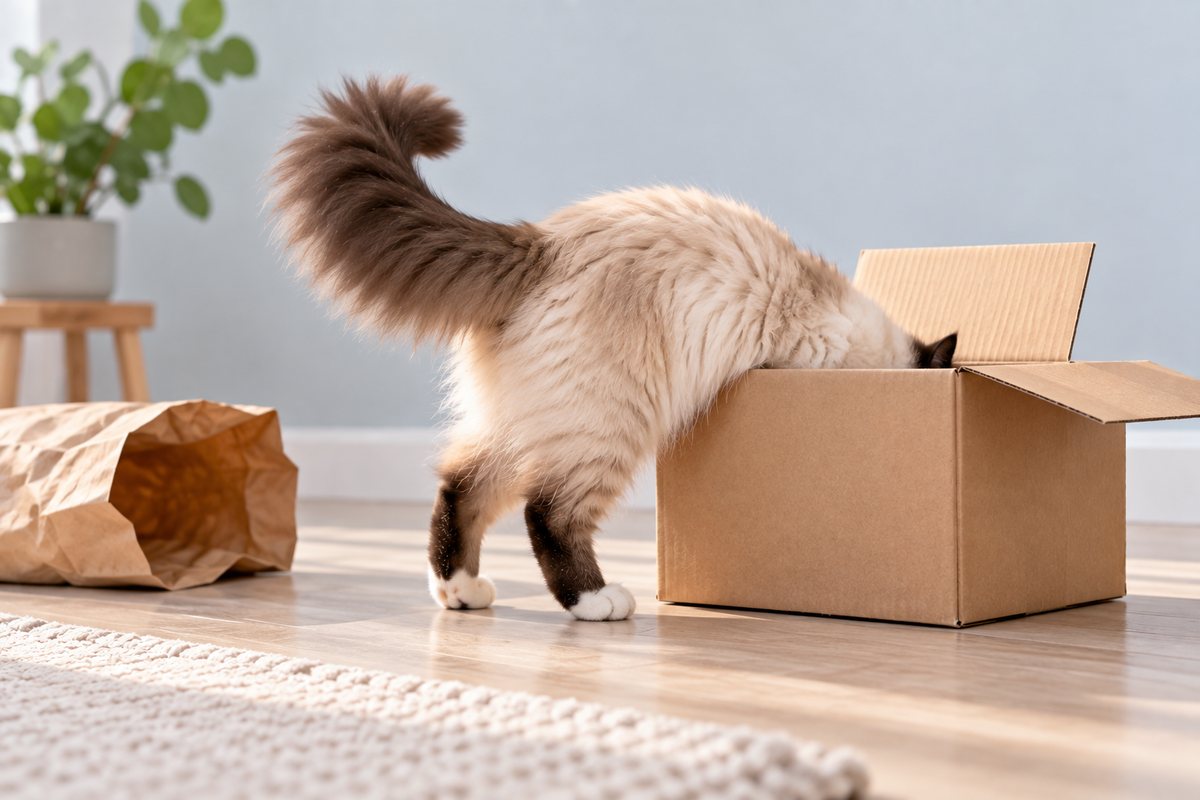
Compare breeds by curiosity & exploration. The ordering follows the characteristic itself rather than the alphabet whenever a meaningful order exists.
Discuss Curiosity & exploration in the forum
| # | Breed | Curiosity & exploration |
|---|---|---|
| 1 | Very high Abyssinians are intensely curious and exploratory; they routinely investigate high places, openings and changes in their environment and rarely ignore an accessible new space. | |
| 2 | Very high Balinese are alert, curious cats that closely involve themselves in household activity. | |
| 3 | Very high Bengals are intensely inquisitive cats that constantly explore, investigate mechanisms and seek new activity; environmental novelty is a major source of engagement. | |
| 4 | Very high Chausies are exceptionally curious and athletic, readily exploring cupboards, elevated spaces and anything novel enough to investigate. | |
| 5 | Low to moderate Cherubim are expected to share the relaxed, people-oriented Ragdoll-family pattern: interested in household activity, but usually less driven to explore every high shelf or closed space. | |
| 6 | High Colorpoint Shorthairs inherit the intense engagement typical of Siamese-type cats; expect high curiosity, close supervision of people and persistent investigation of novel objects and spaces. | |
| 7 | Very high Japanese Bobtails are highly curious, active cats that readily explore cupboards, rooms and household spaces and often turn investigation into interactive play. | |
| 8 | Very high They are inquisitive cats with a strong drive to investigate their surroundings. | |
| 9 | Very high Lykois are exceptionally curious cats with a strong tendency to search, inspect and investigate their environment, often combining exploration with prey-oriented play. | |
| 10 | Very high Munchkins are extremely curious and persistent investigators; short legs do not prevent them from exploring accessible corners, objects and household activity. | |
| 11 | Very high Oriental Longhairs share the Oriental group’s intense curiosity: they are highly inquisitive, socially involved and inclined to investigate rooms, objects and elevated spaces. | |
| 12 | Very high Exceptionally inquisitive and inclined to investigate high shelves, cupboards and household activity. | |
| 13 | Very high Savannahs are exceptionally inquisitive and persistent explorers, often investigating household objects, mechanisms, high places and novel spaces with unusual intensity. | |
| 14 | Very high Siberians are intensely inquisitive, athletic cats that readily investigate cupboards, cabinets, bags and elevated spaces and tend to engage actively with environmental novelty. | |
| 15 | Very high They are persistent explorers with a strong interest in cupboards, drawers and high places. | |
| 16 | Very high Somalis combine intense curiosity with near-constant environmental exploration; they are especially likely to inspect high places, moving objects and whatever their people are handling. | |
| 17 | Very high Highly inquisitive and inclined to investigate doors, cupboards and anything that attracts attention. | |
| 18 | Very high Thai cats are intensely inquisitive and mischievous, with a strong tendency to investigate people, objects and changes throughout the home. | |
| 19 | Very high Tonkinese are inquisitive, involved cats that closely supervise household activity. | |
| 20 | High Aegeans are alert, agile cats shaped by a free-ranging island background; they are likely to inspect new spaces readily and make active use of vertical and outdoor-like features. | |
| 21 | High American Bobtails are notably inquisitive and interactive, tending to investigate household activity, toys and new spaces without the nonstop intensity of the most hyperactive breeds. | |
| 22 | High Curiosity is pronounced; Curls spend considerable time exploring and investigating their surroundings. | |
| 23 | High Curiosity is a characteristic part of the American Ringtail temperament. | |
| 24 | High American Shorthairs are observant, capable hunters with moderate-to-high curiosity; they usually investigate changes and moving targets while remaining more measured than highly driven Oriental-type breeds. | |
| 25 | High Aphrodite Giants are active, capable cats with a landrace background; a relatively strong drive to survey space, climb and investigate changes is a reasonable expectation. | |
| 26 | High Asian cats share the lively, people-oriented Burmese-family temperament, so curiosity is typically high and often directed toward whatever their people are doing. | |
| 27 | Moderate Bambinos are typically sociable and playful, and their Sphynx-derived temperament supports moderate-to-high curiosity even though short legs can limit where that curiosity takes them. | |
| 28 | High Bombay kittens are notably curious and remain engaged with family activity as adults. | |
| 29 | Moderate Brazilian Shorthairs are alert, adaptable cats with the exploratory tendencies expected of an active natural shorthaired population; curiosity is usually moderate to high. | |
| 30 | High British Longhairs are observant and interested but usually deliberate explorers; they tend to inspect changes without the persistent cupboard-opening intensity of highly active breeds. | |
| 31 | High Burmese are strongly people-focused, intelligent and inquisitive; they commonly investigate rooms, objects and human activity and can become involved in almost everything happening at home. | |
| 32 | Moderate to high The Burmilla combines an easygoing nature with a distinctly inquisitive and playful streak. | |
| 33 | High California Spangled cats were developed for an athletic, alert profile; they are expected to be active investigators, especially of movement, elevated spaces and interactive play. | |
| 34 | Moderate Chantilly-Tiffany cats are generally portrayed as attentive, people-oriented companions; curiosity is likely moderate, expressed through following household activity rather than constant high-energy exploration. | |
| 35 | High Chartreux are quiet but observant cats; their curiosity tends to be purposeful and watchful, with investigation of movement and household changes rather than indiscriminate activity. | |
| 36 | High Cornish Rex cats insist on being involved in household activity and retain a playful, investigative, kitten-like approach to novel objects and spaces well into adulthood. | |
| 37 | Low to moderate Cymrics are intelligent and playful despite a generally settled demeanor; curiosity is moderate to high and often appears as watchful investigation, puzzle-solving and interest in moving objects. | |
| 38 | Moderate Cyprus cats come from a naturally developed island population and are typically alert and capable; moderate-to-high environmental curiosity is a reasonable expectation, especially in active individuals. | |
| 39 | High Devon Rex cats are famously involved, agile and inventive; they tend to investigate people, objects and elevated spaces readily and often turn novelty into play. | |
| 40 | High Donskoys are strongly inquisitive and actively seek new things to explore. | |
| 41 | High Dragon Li cats are alert, athletic natural cats with strong hunting competence; they are likely to investigate territory and environmental changes actively while retaining some independence. | |
| 42 | Moderate Dwelf cats combine Sphynx, Munchkin and curl ancestry; the Sphynx influence supports an inquisitive, socially engaged temperament, while body proportions can limit access to some high places. | |
| 43 | High Self-directed manipulation of doors, drawers, water and high spaces supports strong exploratory tendency. | |
| 44 | High European Burmese are lively, intelligent and highly people-oriented; curiosity is typically high, with frequent investigation of household activity and novel objects. | |
| 45 | Moderate European Shorthairs are versatile, alert cats with substantial individual variation; most should show moderate environmental curiosity, often strongest around prey-like movement and territory changes. | |
| 46 | Moderate German Longhairs are generally balanced, companionable cats; expect moderate curiosity, with calm inspection of changes rather than a strong tendency toward constant exploration. | |
| 47 | High German Rex cats are lively, intelligent and people-oriented; they are usually quick to investigate new activity and combine curiosity with playful social engagement. | |
| 48 | High Havana Browns are curious, tactile investigators that like to inspect household activity and often use their paws to examine unfamiliar objects. | |
| 49 | High Highlanders are energetic, playful cats with a bold domestic hybrid-type look; they are generally confident investigators that benefit from climbing, play and environmental novelty. | |
| 50 | Low to moderate Himalayans generally share the Persian’s calm approach to the environment; they notice and investigate novelty but are less likely to pursue prolonged, high-energy exploration. | |
| 51 | High The Kanaani is lively and adventure-oriented, with a strong tendency to explore. | |
| 52 | High Khao Manees are outgoing, curious cats that explore readily and tend to approach unfamiliar spaces and household activity with confidence. | |
| 53 | High The breed is notably curious and engaged with its surroundings. | |
| 54 | High Active and inquisitive, with a strong tendency to explore its environment. | |
| 55 | High Korn Ja cats are associated with an alert, people-engaged Thai domestic type; a moderately high tendency to investigate household activity and novelty is the best current estimate. | |
| 56 | High Lambkins combine Munchkin and Selkirk Rex ancestry; expect moderate curiosity and playful investigation, with short-legged conformation affecting access more than the underlying interest in novelty. | |
| 57 | High LaPerms are active, people-oriented cats that commonly investigate their surroundings and seek interaction; curiosity is typically high without necessarily reaching Bengal-like intensity. | |
| 58 | High Manx are intelligent, playful cats with a reputation for problem-solving and dog-like engagement; they commonly investigate household activity and novel objects with above-average interest. | |
| 59 | High Mekong Bobtails are active, social Siamese-related cats; high curiosity is expected, particularly toward people, movement and changes in their immediate environment. | |
| 60 | Moderate Minskins are sociable, playful cats from Munchkin and Sphynx-related ancestry; curiosity is likely moderate to high, though short legs change how they access vertical spaces. | |
| 61 | Low to moderate Minuets combine Persian-family calm with Munchkin playfulness; they tend to be interested and playful but are usually more measured explorers than highly active athletic breeds. | |
| 62 | Moderate; observant and exploratory Nebelungs like to climb and observe people and situations from high places before deciding whether to join in. | |
| 63 | High As the colorpoint Siberian form, the Neva Masquerade shares the Siberian’s intelligent, inquisitive nature and is likely to investigate cupboards, elevated spaces and household activity readily. | |
| 64 | High They are alert, resourceful explorers with a strong preference for climbing and elevated viewpoints. | |
| 65 | High Confident, alert and playful, the Ocicat tends to engage actively with its surroundings. | |
| 66 | High Temperament documentation is sparse for this rare breed; the best current estimate is normal-to-moderately-high feline curiosity, without evidence for an extreme exploratory phenotype. | |
| 67 | Moderate Historical descriptions are too limited for a strong breed-specific claim; as a rex domestic cat, moderate curiosity with playful investigation is the most defensible estimate. | |
| 68 | High Oriental Bicolors share the highly engaged Oriental/Siamese temperament; curiosity is high, social and persistent, with strong interest in people, rooms, cupboards and novel activity. | |
| 69 | High Peterbalds are intelligent, social and active cats closely related to Oriental-type stock; they usually investigate novelty readily and prefer being involved in household activity. | |
| 70 | High Pixie-bobs are confident, interactive cats that often combine calmness with an interest in games and household activity; curiosity is moderately high rather than frenetic. | |
| 71 | Low to moderate RagaMuffins are typically relaxed and people-centered; they show interest in household activity and play, but exploration is usually gentle and less persistent than in highly active breeds. | |
| 72 | High Ragdolls are socially attentive and will often follow household activity, but their exploratory drive is usually moderate rather than high-intensity; interest tends to center on people and accessible spaces. | |
| 73 | High Russian cats are observant and inquisitive, often seeking high vantage points and learning to manipulate doors or drawers while remaining somewhat deliberate around unfamiliar situations. | |
| 74 | High Sam Sawets are notably curious and interested in household activity. | |
| 75 | High They are curious cats and readily investigate new objects or activity around the home. | |
| 76 | High Scottish Straights share the Scottish breed group’s generally observant, playful temperament; expect moderate-to-high curiosity expressed through toys, household activity and calm investigation. | |
| 77 | High Selkirk Rex cats are playful and sociable but generally easygoing; curiosity is moderate to high, with steady interest in people and novelty rather than constant high-speed exploration. | |
| 78 | High Serengetis were developed from active Oriental and Bengal-related stock; they are athletic, alert and likely to explore vertical space and environmental changes with high persistence. | |
| 79 | High Documentation is limited, but this small French natural-type cat is best estimated as alert and moderately-to-highly curious, with active investigation typical of agile shorthaired cats. | |
| 80 | High A Siamese is typically lively and strongly interested in people, activity and its surroundings. | |
| 81 | High Athletic and inquisitive, Snowshoes actively explore and can become mischievous when under-stimulated. | |
| 82 | High Sokokes are athletic, alert cats with a natural-breed background; they tend to investigate territory actively and show strong interest in movement and environmental change. | |
| 83 | High The Suffolk derives from British-type and related lines but is generally more active than the classic British profile; moderate-to-high curiosity is the best current estimate. | |
| 84 | High Suphalaks are rare Thai cats related in context to other socially engaged Southeast Asian types; moderate-to-high curiosity and close interest in household activity are reasonable expectations. | |
| 85 | High Curiosity is a characteristic part of the Tennessee Rex temperament. | |
| 86 | High These Thai color varieties share the underlying Thai temperament: socially intense, intelligent and strongly inquisitive, with frequent investigation of people and household activity. | |
| 87 | High Toybobs are small but typically playful and socially engaged; expect moderate-to-high curiosity directed toward toys, people and accessible household spaces. | |
| 88 | Moderate to high Toygers are intelligent, interested companions that respond well to puzzles, tricks and active interaction. | |
| 89 | High They are active, inquisitive cats that strongly engage with their surroundings. | |
| 90 | High This active, mischievous breed is strongly inclined to investigate its surroundings and seek out activity. | |
| 91 | High As the all-white Turkish Van type, the Vankedisi is expected to share much of the Van’s active, intelligent temperament, including strong interest in movement, novelty and household spaces. | |
| 92 | Moderate York Chocolates were described as affectionate, active companions with hunting ancestry; moderate-to-high curiosity is plausible, particularly toward movement, play and household activity. | |
| 93 | Moderate American Wirehairs are observant and engaged with their surroundings, showing steady curiosity without the persistent exploratory drive seen in the most active breeds. | |
| 94 | Moderate Tiffanies combine the Asian group’s social interest with a somewhat softer activity profile; expect steady household curiosity rather than relentless exploration. | |
| 95 | Low to moderate Australian Mists are interested in household activity but generally explore in a measured way; they are more likely to investigate near their people than patrol every inaccessible corner. | |
| 96 | Moderate Birmans take an intelligent interest in family activity and often follow people from room to room; curiosity is clear but generally less relentless than in highly active breeds. | |
| 97 | Low to moderate They tend to observe before acting and are less inclined toward relentless climbing or acrobatics. | |
| 98 | Moderate They combine Persian-like calm with a livelier, inquisitive streak. | |
| 99 | Moderate Foldex cats derive largely from Scottish Fold and Exotic-type lines, suggesting moderate curiosity: interested in people and new objects but usually not relentless explorers. | |
| 100 | Moderate Evidence is limited, but the Korean Bobtail is best treated as an alert natural domestic type with moderate curiosity rather than assuming either unusually low or extreme exploratory drive. | |
| 101 | Moderate Maine Coons are observant and inquisitive, often fascinated by water, moving objects and household mechanisms; curiosity is substantial but usually measured rather than frenetic. | |
| 102 | Low to moderate Persians are generally calm rather than relentlessly exploratory, preferring a settled home and gentle play. | |
| 103 | Moderate Reliable breed-specific behavioral evidence is limited; as a naturally developed island cat, the best estimate is moderate environmental curiosity with substantial individual variation. | |
| 104 | Moderate Behavioral evidence remains sparse for this emerging natural breed; the best current estimate is moderate curiosity typical of an alert domestic cat, pending broader owner data. | |
| 105 | Moderate Ukrainian Levkoys are generally portrayed as social and intelligent; moderate curiosity is expected, with investigation often focused on people and interactive activity. | |
| 106 | Inquisitive and alert. |









































































































Breed comparisons describe tendencies, not guarantees about an individual cat. Approximate entries are kept separate from the canonical research record and can be refined as better evidence arrives.
 English