
Defensive & conflict behaviour in Cat Breeds
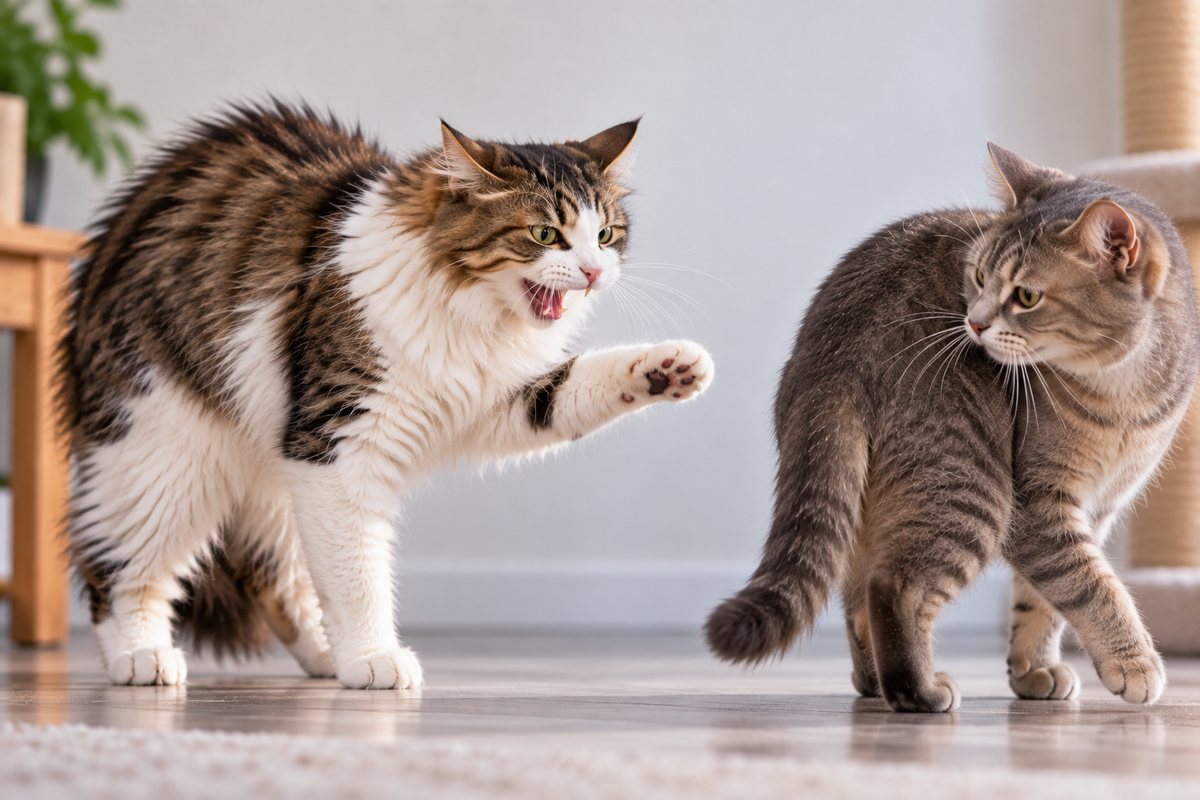
Compare breeds by defensive & conflict behaviour. The ordering follows the characteristic itself rather than the alphabet whenever a meaningful order exists.
Discuss Defensive & conflict behaviour in the forum
| # | Breed | Defensive & conflict behaviour |
|---|---|---|
| 1 | Moderate The Arabian Mau is alert, athletic and shaped by a free-living landrace background. It can be socially affectionate, but resource competition and territorial pressure may evoke firmer defensive responses than in placid companion breeds. | |
| 2 | Moderate Assertive high-energy social style can create friction without appropriate introductions; this is not an aggression label. | |
| 3 | Moderate The Chausie is large, intense, athletic and comparatively demanding of space and stimulation. It is not inherently aggressive, but high arousal and forceful play can create conflict if companions are timid or resources are constrained. | |
| 4 | Moderate The Dragon Li is an alert, capable natural-type cat with more independence and territorial awareness than many companion-selected breeds. It is not inherently aggressive, but may use firmer avoidance, posturing, or defensive responses when crowded or poorly introduced. | |
| 5 | Moderate Egyptian Maus can be intensely attached to familiar people while remaining watchful about unfamiliar situations. They are usually not conflict-seeking, but their sensitivity and athletic reactivity can produce quick avoidance, warning, or defensive responses if pressured. | |
| 6 | Moderate European Shorthairs generally show balanced domestic-cat conflict behaviour: confident individuals often disengage or hold boundaries without escalation, while more territorial individuals may react firmly to crowding or abrupt cat introductions. No unusually high breed-level aggression is expected. | |
| 7 | Moderate Highlanders are confident, energetic cats with a robust play style. They are not generally expected to seek conflict, but high arousal and physical play can look forceful, and poorly managed introductions may produce firmer territorial responses than in very placid breeds. | |
| 8 | Moderate Kanaani cats have an athletic, alert, natural-cat profile and can be more independent than strongly companion-selected breeds. They are not assumed aggressive, but may respond to pressure with faster avoidance, territorial signaling, or defensive action if escape options are limited. | |
| 9 | Moderate Korats are deeply attached to familiar people and can be sensitive to disruption, noise, and competition for attention. They are not characteristically aggressive, but their intensity and preference for familiar routines can produce assertive boundary-setting when stressed. | |
| 10 | Moderate Reliable breed-wide behavioural evidence for the Korean Bobtail is limited, so a moderate assessment is most defensible. Its natural domestic-cat background suggests ordinary territorial and defensive responses rather than either unusually placid or unusually confrontational behaviour. | |
| 11 | Moderate The Korn Ja is too sparsely documented behaviorally to justify an extreme conflict rating. As a traditional natural-type Thai cat, it is best expected to show normal feline avoidance and territorial boundary-setting, with defensiveness depending more on socialization and circumstances than breed. | |
| 12 | Moderate Kurilian Bobtails are typically confident, active and socially capable, but their robust natural-breed temperament can include firm boundaries and strong hunting arousal. They are not generally conflict-seeking, yet poor introductions or resource pressure may elicit assertive responses. | |
| 13 | Moderate Lykois are active, alert and strongly exploratory, with a temperament sometimes compared with hunting-oriented domestic cats. They are not inherently aggressive, but high arousal and caution with novelty can produce quick warning or defensive responses when pressured. | |
| 14 | Moderate Manx cats are often confident, loyal and playful, with a sturdy, assertive presence rather than a timid one. They are not expected to seek conflict, but may defend boundaries firmly; spinal or hindquarter discomfort can also increase handling-related defensiveness. | |
| 15 | Moderate Nebelungs are often reserved with unfamiliar people and strongly attached to familiar routines. They usually avoid rather than initiate conflict, but sensitivity and caution can make defensive warning more likely if a shy individual is pursued or cornered. | |
| 16 | Moderate Behavioral evidence for Ojos Azules is too limited for an extreme breed-level rating. A moderate assessment is most appropriate: expect ordinary domestic-cat avoidance and defensive boundary-setting, with socialization and individual temperament carrying more weight than breed. | |
| 17 | Moderate The extinct Oregon Rex is too sparsely documented for a strong behavioral claim. Historical descriptions support an affectionate companion-cat profile, but a moderate conflict assessment is safer because the population was small and no modern breed-wide evidence can refine it. | |
| 18 | Moderate Oriental Bicolors are highly social, vocal and emotionally engaged cats. They are not generally aggressive, but their intensity and strong demand for interaction can make frustration, overstimulation, or social competition more visible than in placid breeds. | |
| 19 | Moderate Oriental Longhairs are highly social and expressive, usually seeking interaction rather than avoiding it. Their intensity can produce assertive protest or friction when bored, excluded, or poorly introduced, though serious defensive behavior is not a defining breed tendency. | |
| 20 | Moderate Oriental Shorthairs are outgoing, demanding and highly interactive. They are not characteristically aggressive, but their social intensity, vocal persistence and high activity can amplify frustration or inter-cat tension when attention, space, or enrichment is inadequate. | |
| 21 | Moderate The Raas is a sparsely documented island landrace, so a moderate assessment is more defensible than assuming companion-breed placidity. Its natural-population background suggests normal territorial caution and firm defensive responses when crowded, with substantial individual variation. | |
| 22 | Moderate Sam Sawet cats are not documented well enough behaviorally to justify a low or high extreme. As a Thai natural-type population, they are best expected to show ordinary feline territorial and defensive responses shaped strongly by individual socialization. | |
| 23 | Moderate Confident, intense behavior warrants neutral/moderate rather than inferred aggression. | |
| 24 | Moderate Serengetis are athletic, energetic and confident cats developed from domestic breeds. They are not inherently aggressive, but high activity and assertive play can create friction if companions cannot match their intensity or introductions are rushed. | |
| 25 | Moderate The Serrade Petit is too sparsely documented for a strong breed-level conflict claim. Its conventional domestic-cat background supports a moderate expectation: ordinary avoidance and territorial boundary-setting, with individual socialization more informative than the breed label. | |
| 26 | Moderate Siamese cats are intensely social, vocal and persistent rather than typically defensive. They often communicate displeasure clearly and can become assertive when frustrated, under-stimulated, or competing for attention, so household conflict can be more conspicuous than in placid breeds. | |
| 27 | Moderate Sokokes are active, alert natural-breed cats with a comparatively independent and athletic style. They are not assumed aggressive, but their sensitivity to control and strong environmental awareness can produce firm avoidance or defensive responses when pressured. | |
| 28 | Moderate Suphalaks are rare and behaviorally less documented than major Thai breeds. A moderate assessment is appropriate: expect an alert, interactive domestic cat capable of clear territorial boundaries, without evidence for unusually high aggression. | |
| 29 | Moderate Thai cats are highly social, vocal and emotionally engaged, much like traditional Siamese. They are not characteristically aggressive, but their persistence and social intensity can produce assertive protest or friction when bored, excluded, or poorly introduced. | |
| 30 | Moderate These Thai color varieties share the underlying Thai temperament rather than a distinct conflict profile. Expect a social, expressive cat that is not inherently aggressive but may be assertive when frustrated or when social introductions are rushed. | |
| 31 | Moderate Turkish Angoras are intelligent, active and often strong-willed cats. They are usually affectionate with their chosen people but can be assertive about handling, territory, or preferred resources, giving them a somewhat firmer boundary-setting style than very placid breeds. | |
| 32 | Moderate Assertive temperament warrants neutral/moderate treatment rather than an aggression inference. | |
| 33 | Moderate Turkish Vankedisi cats are best expected to share the active, self-possessed temperament of Turkish Angora-type populations. They are not inherently aggressive, but can be assertive and may defend boundaries firmly when pressured or poorly introduced. | |
| 34 | Low Usually confident and busy rather than confrontational. An Abyssinian is more likely to escape restraint or redirect into activity than seek conflict, though frustration can produce sharp boundary-setting. | |
| 35 | Low A socially flexible landrace type with generally straightforward cat-to-cat communication. Defensive behavior is usually situational rather than a prominent breed tendency, with space and gradual introductions reducing friction. | |
| 36 | Low The Ringtail is generally sociable and adaptable, but retains an athletic, alert natural-cat style. Ordinary defensiveness should be low; crowding or poor introductions can still trigger territorial boundary-setting. | |
| 37 | Low Usually calm and self-possessed, with enough independence to withdraw when interaction becomes unwelcome. Conflict behavior is expected to be low provided the cat has retreat options and introductions are gradual. | |
| 38 | Low Burmese-derived sociability makes the Asian strongly people-oriented and generally non-avoidant. Conflict tendency is low, although its confident, interactive style can be persistent with less social housemates. | |
| 39 | Low The Tiffanie combines an affectionate Asian-group temperament with a generally softer social style. It is not expected to be conflict-prone, though its desire for interaction can require compatible companions. | |
| 40 | Low Balinese cats are assertive communicators but strongly social. They may protest, vocalize or leave when frustrated, yet ordinary aggression is not characteristic; conflict risk rises mainly when their high interaction needs are repeatedly blocked. | |
| 41 | Low Bambinos are generally bred for an outgoing, affectionate companion temperament. Defensive conflict should be low, but short limbs can reduce escape options, so they need accessible retreats rather than being forced to tolerate pressure. | |
| 42 | Low Bombays are confident, highly social and strongly attached to people. They are usually not conflict-prone, but their persistent desire for attention can create friction with timid cats unless resources and social space are well managed. | |
| 43 | Low Generally alert, adaptable and sociable, the Brazilian Shorthair retains a practical natural-cat temperament. Defensive responses are expected to be proportionate to context rather than unusually frequent or intense. | |
| 44 | Low Burmese are exceptionally social and confident rather than defensive. Serious conflict tendency is low, but their intense involvement with people and other animals can become intrusive to more reserved companions. | |
| 45 | Low Athletic confidence and strong play drive can make interactions energetic, but the breed was intended as a domestic companion rather than a combative cat. Conflict risk is mainly associated with mismatched play styles or poor introductions. | |
| 46 | Low Like its Siamese relatives, the Colorpoint Shorthair is socially assertive and expressive rather than habitually aggressive. It may protest strongly or pursue interaction, but ordinary defensive escalation remains low with compatible companions. | |
| 47 | Low Cymrics are generally affectionate and steady, but can be confident hunters with firm boundaries. Conflict tendency is still low overall; pain associated with spinal or hindquarter problems can markedly lower tolerance in affected individuals. | |
| 48 | Low The Cyprus cat is a robust landrace type with social adaptability and substantial independence. It should not be considered aggression-prone, though territorial or resource-related defensiveness may be more evident than in highly selected placid breeds. | |
| 49 | Low Donskoys are usually strongly people-oriented and socially engaged rather than confrontational. Their need for warmth and close contact can make them persistent, but ordinary conflict risk is low; fear, rough handling, or competition for warm resting places can still provoke defensive boundary-setting. | |
| 50 | Low Dwelfs are generally selected from sociable Sphynx-, Munchkin- and Curl-derived lines, so people-directed conflict should usually be low. Their small stature and unusual body form make respectful handling especially important; discomfort or inability to retreat can still produce defensive reactions. | |
| 51 | Low European Burmese are typically outgoing, affectionate and socially persistent, with low inclination to avoid ordinary household interaction. Conflict is usually more likely to arise from overexcitement or resource competition than from a generally defensive temperament. | |
| 52 | Low Exotic Shorthairs are usually calm, gentle and less reactive than highly active breeds. They tend to withdraw or tolerate mild social pressure rather than escalate it, although pain, overheating, or persistent handling can still trigger defensive responses. | |
| 53 | Low Foldex cats are generally bred for a calm, affectionate companion temperament. Serious conflict tendency should be low in well-socialized individuals, but discomfort associated with inherited skeletal traits can lower handling tolerance and make pain-related defensiveness especially important to recognize. | |
| 54 | Low German Longhairs are generally expected to be steady, companionable cats rather than highly reactive or confrontational ones. Most should use withdrawal and ordinary feline warning signals before escalation, assuming adequate space and gradual introductions. | |
| 55 | Low German Rex cats are typically lively, affectionate and people-oriented. Their social style favors engagement over confrontation, so baseline conflict tendency is low; overstimulation or forced restraint may still produce quick but situational defensive reactions. | |
| 56 | Low Havana Browns are usually interactive, curious and strongly people-focused. They tend to investigate or seek contact rather than respond defensively, although their social intensity means frustration and unwanted restraint can produce clear boundary-setting. | |
| 57 | Low Japanese Bobtails are typically confident, social and active, traits that reduce fear-based defensiveness in ordinary household life. They may be assertive about play or attention, but serious escalation is not expected when socialized and given room to disengage. | |
| 58 | Low Khao Manees are generally outgoing, curious and socially engaged. Confidence around people usually keeps fear-based conflict low, though their active temperament can make overstimulation or abrupt restraint more likely to produce a quick warning response. | |
| 59 | Low Kinkalows are generally intended as sociable companion cats, drawing on the friendly tendencies of Curl- and Munchkin-derived lines. Baseline conflict risk should be low, while respectful handling remains important because short limbs may limit easy escape from unwanted interaction. | |
| 60 | Low Lambkins are generally companion-oriented cats from Munchkin- and Selkirk-derived lines, so serious conflict tendency should be low. Their short legs can reduce escape options, making gentle handling and easy access to retreats important when they feel pressured. | |
| 61 | Low LaPerms are typically affectionate, curious and people-oriented. They generally favor approach or withdrawal over confrontation, with defensive reactions most likely when restraint is prolonged or the cat cannot disengage. | |
| 62 | Low Registry profiles emphasize gentle, easygoing behavior rather than confrontation. | |
| 63 | Low Mekong Bobtails are generally social, interactive and closely bonded to people. Their confidence tends to reduce fear-driven conflict, although energetic play and strong social expectations can produce assertive boundary-setting when overstimulated. | |
| 64 | Low Minskins are usually sociable companion cats with strong interest in people and relatively low baseline defensiveness. Because of their short stature and sparse coat, they benefit from careful handling and accessible retreats; discomfort can otherwise provoke defensive reactions. | |
| 65 | Low Minuets are generally gentle, affectionate cats combining Persian-type placidity with the sociability of Munchkin lines. Conflict tendency is usually low, though short legs can make escape from unwanted interaction harder and increase defensive responses if the cat is cornered. | |
| 66 | Low Munchkins are typically outgoing, playful and socially confident rather than defensive. Serious conflict is not expected as a breed tendency, but their short-legged build makes it especially important that they can retreat without being chased or restrained. | |
| 67 | Low Neva Masquerades generally share the Siberian's confident, sociable temperament. They are usually tolerant and capable of disengaging without escalation, although their large size and energetic play make gradual introductions and adequate resources important. | |
| 68 | Low Norwegian Forest Cats are generally steady, self-possessed and socially tolerant. They tend to withdraw or reposition rather than escalate ordinary friction, though a large adult can enforce boundaries decisively when crowded or repeatedly provoked. | |
| 69 | Low Ocicats are typically confident, outgoing and highly interactive despite their wild-looking coat. Confidence reduces fear-based defensiveness, while their energetic, assertive play means conflict prevention depends on sufficient activity and well-managed introductions. | |
| 70 | Low Peterbalds are typically affectionate, people-focused and socially engaged. They usually seek contact rather than confrontation, so baseline conflict tendency is low; lack of coat and sensitivity to cold or rough handling can nevertheless make discomfort-related defensiveness important. | |
| 71 | Low Pixie-bobs are generally described as confident, steady and strongly bonded to their household. Despite their rugged appearance, they are not expected to be unusually confrontational and typically manage ordinary social friction without rapid escalation. | |
| 72 | Low Russian-type cats are generally gentle and reserved rather than confrontational. They often respond to social pressure by observing from a distance or withdrawing; defensive behavior becomes more likely mainly when a cautious cat is prevented from retreating. | |
| 73 | Low Scottish Folds are generally calm, companionable cats with low baseline conflict tendency. However, osteochondrodysplasia can cause chronic pain, and pain can materially reduce handling tolerance or produce defensive reactions; behavioral change warrants veterinary attention. | |
| 74 | Low Scottish Straights generally share the calm, companion-oriented temperament of Scottish breeding lines without the folded-ear phenotype. They are usually low-conflict cats, although individual socialization and respectful introductions remain more important than breed label. | |
| 75 | Low Siberians are generally confident, sociable and steady cats whose self-assurance tends to reduce fear-based defensiveness. They are powerful animals and can enforce boundaries firmly, but ordinary household conflict is usually manageable with space and gradual introductions. | |
| 76 | Low Singapuras are typically affectionate, curious and people-oriented, with low inclination toward confrontation. Their small size can make retreat especially important; when overwhelmed they are more likely to seek distance or shelter than to sustain conflict. | |
| 77 | Low Snowshoes are generally social, affectionate and interactive cats with a confident Siamese-derived temperament tempered by a companion-oriented style. They are usually low-conflict, though boredom or competition for attention can produce vocal or assertive boundary-setting. | |
| 78 | Low Somalis are energetic, curious and socially engaged cats that usually channel arousal into exploration and play rather than confrontation. Conflict risk is generally low, though insufficient enrichment can increase rough play or social friction. | |
| 79 | Low Sphynx cats are usually exceptionally people-oriented and contact-seeking, which makes persistent social engagement more typical than defensive avoidance. Baseline conflict tendency is low, but cold, skin discomfort, or unwanted restraint can quickly reduce tolerance. | |
| 80 | Low Suffolks derive from highly social Oriental-type lines and are expected to be outgoing, interactive companion cats. Serious defensiveness is not a defining tendency, although social intensity and high engagement can make frustration or competition for attention more obvious. | |
| 81 | Low Tennessee Rex cats are generally reported as affectionate, people-oriented companions. Available breed experience does not suggest unusual conflict behavior; most defensiveness should be situational, arising from fear, pain, restraint, or poorly managed introductions. | |
| 82 | Low Tonkinese are typically outgoing, affectionate and socially confident, combining Burmese and Siamese traits. Their confidence generally limits fear-based defensiveness, although high social demand and energetic play can cause friction if companionship and enrichment are inadequate. | |
| 83 | Low Toybobs are generally bred as affectionate, sociable companion cats. Their very small stature makes escape routes and gentle handling important, but there is no strong reason to expect elevated breed-level conflict behavior in well-socialized individuals. | |
| 84 | Low Toygers are selected primarily as companion cats and are generally confident, social and trainable. Their athletic play can be vigorous, but serious defensive or territorial conflict is not expected to be unusually common when introductions and resources are managed well. | |
| 85 | Low Transylvanian cats are being selected for a gentle, non-aggressive companion temperament, so low baseline conflict is the best current assessment. Because the breed remains developing and sparsely documented, individual socialization should carry more weight than the label. | |
| 86 | Low Ukrainian Levkoys are generally intended as sociable, people-oriented companion cats. Baseline conflict tendency should be low, while hairlessness and folded-ear ancestry make careful attention to physical comfort important because discomfort can increase defensiveness. | |
| 87 | Low York Chocolates were described as affectionate, friendly companion cats with an active but generally easygoing social style. The breed is now very rare, so evidence is limited, but historical temperament does not indicate unusually high conflict tendency. | |
| 88 | Very low The breed is typically steady, tolerant and socially confident. Well-socialized American Bobtails tend to defuse ordinary household friction rather than escalate it, while still defending themselves if cornered. | |
| 89 | Very low American Curls are usually notably easygoing and people-oriented. Their typical response to social pressure is avoidance or continued friendly engagement rather than escalation, making serious conflict tendency low. | |
| 90 | Very low Even, non-confrontational temperament is a defining breed virtue. | |
| 91 | Very low Aphrodite Giants are generally selected for a calm, friendly companion temperament. Their large size does not imply greater aggression; accustomed adults are more likely to disengage than escalate ordinary social friction. | |
| 92 | Very low The Australian Mist was developed specifically as an easygoing household companion. Tolerance and social tractability are central to the breed type, so defensive escalation should be uncommon outside fear, pain or severe social stress. | |
| 93 | Very low The Birman is characteristically gentle, steady and socially tolerant. It is among the breeds more likely to withdraw or seek reassurance than escalate household disputes, although any cat may defend itself when trapped or in pain. | |
| 94 | Very low The British Longhair is typically placid, undemonstrative and slow to escalate. It commonly copes with unwanted interaction by moving away, making ordinary defensive conflict low when it has quiet retreat space. | |
| 95 | Very low British Shorthairs are characteristically composed and non-dramatic. They usually set boundaries by leaving or refusing contact rather than escalating, although they can object firmly to persistent restraint. | |
| 96 | Very low The Burmilla usually combines Burmese sociability with a somewhat softer, less intense manner. It is generally tolerant and non-confrontational, with avoidance more likely than escalation during ordinary household disagreements. | |
| 97 | Very low Historical accounts portray the Chantilly-Tiffany as gentle, devoted and moderate in temperament. On that basis, defensive escalation is best estimated as low, with withdrawal more likely than confrontation under ordinary stress. | |
| 98 | Very low Chartreux are typically quiet, observant and even-tempered. Their sturdy confidence tends to reduce fear-driven reactivity, and they generally avoid unnecessary confrontation while retaining normal defensive behavior when pressured. | |
| 99 | Very low The Cherubim is selected as a relaxed, affectionate large companion cat. A gentle, tolerant social style is expected, so defensive conflict should be uncommon in well-socialized individuals outside pain, fear or serious resource pressure. | |
| 100 | Very low Cornish Rex cats are typically outgoing, playful and strongly affiliative. Their first response is usually engagement or escape rather than confrontation, making persistent defensive behavior unusual in a secure, enriched home. | |
| 101 | Very low The Devon Rex is exceptionally social, playful and contact-seeking. Well-socialized individuals are generally low in defensive conflict, often attempting renewed interaction rather than holding distance or escalating disputes. | |
| 102 | Very low Gentle placid temperament is consistently emphasized. | |
| 103 | Very low Breed sources emphasize placid, gentle temperament. | |
| 104 | Very low Breed temperament is notably gentle and non-confrontational. | |
| 105 | Very low Breed sources consistently emphasize placid, non-confrontational temperament. | |
| 106 | Very low Patient, tolerant temperament supports low ordinary conflict tendency. |





































































































Breed comparisons describe tendencies, not guarantees about an individual cat. Approximate entries are kept separate from the canonical research record and can be refined as better evidence arrives.
Discuss Defensive & conflict behaviour in the forum
Help strengthen lower-data entries
For the breeds below, this characteristic currently relies on limited, conflicting or general baseline evidence. First-hand owner observations can help us decide what deserves further research. Contributions are reviewed separately and never overwrite the researched record automatically.
 English