
Distinctive routine care in Cat Breeds
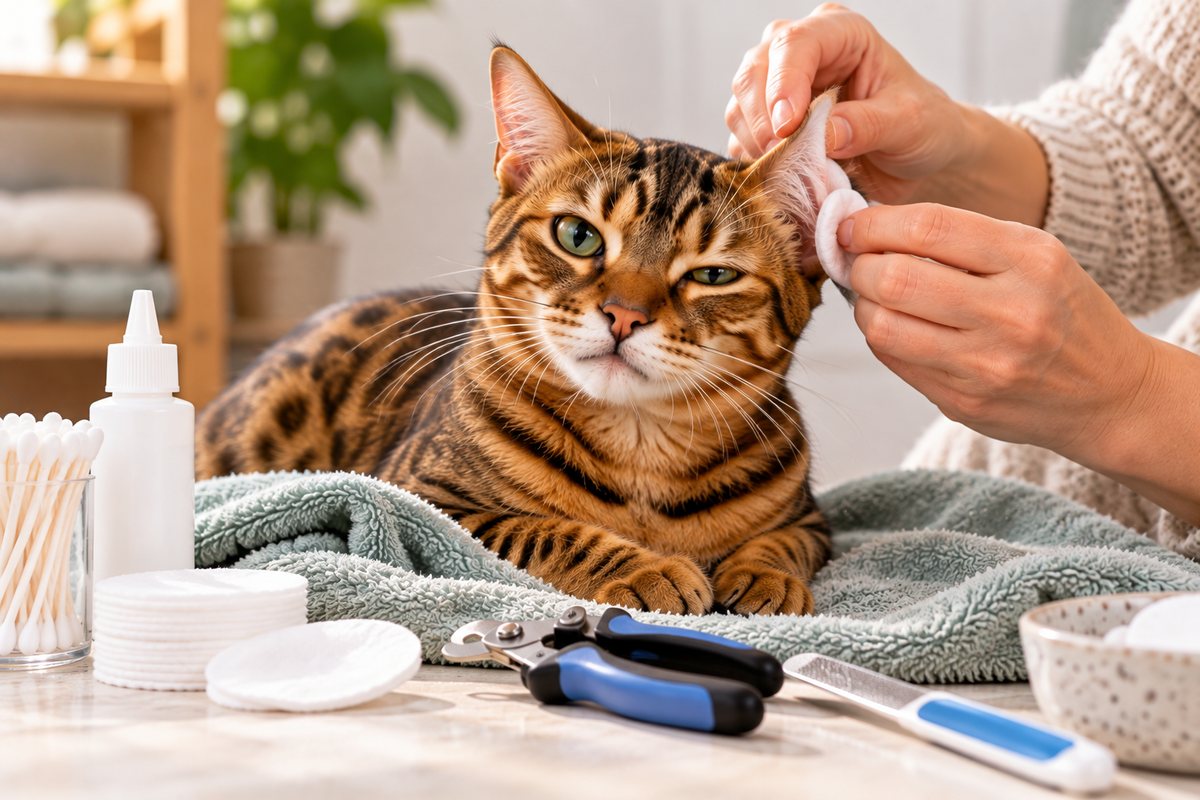
Compare breeds by distinctive routine care. The ordering follows the characteristic itself rather than the alphabet whenever a meaningful order exists.
Discuss Distinctive routine care in the forum
| # | Breed | Distinctive routine care |
|---|---|---|
| 1 | Coat can be damaged by excess brushing Distinctive care: coat can be damaged by excess brushing. | |
| 2 | Coat ear joint check Highlanders need grooming appropriate to coat length plus routine checks of the curled ears without forceful manipulation. Their large, athletic body also makes weight, joints and mobility useful things to monitor. | |
| 3 | Coat face joint care Coat care depends on hair length, but routine management should also include facial and eye hygiene in flatter-faced cats and close observation of gait, stiffness and jumping comfort because folded-ear ancestry can affect joints. | |
| 4 | Coat length variable Routine care depends on whether the individual is short- or longhaired: longer coats need regular detangling while short coats are simple. Given the breed's rarity, ordinary dental, ear, nail and health observation matters more than any supposed specialized beauty routine. | |
| 5 | Coat length variable Pixie-bob grooming varies with coat length: short coats are easy, while longer coats benefit from regular combing. Check nails carefully where extra toes are present and monitor tail, spine and gait as part of routine handling. | |
| 6 | Coat plus joint awareness Grooming depends on coat length, but routine care should also include weight and mobility observation because Scottish Straights often come from Fold breeding programs. Any stiffness or reluctance to jump deserves attention rather than being dismissed as temperament. | |
| 7 | Coat plus tail check Routine grooming is straightforward, but the curled tail should remain flexible and pain-free. Include normal nail, ear and dental care and notice any new reluctance to move or hold the tail normally. | |
| 8 | Coat tail check Routine brushing should match the individual's coat length, with ordinary nail, ear and dental care. Because breed documentation is limited, also make a habit of noticing tail comfort, spinal movement and gait rather than assuming the bobtail is always functionally irrelevant. | |
| 9 | Coat variable skin care Peterbald care varies with coat type: nearly naked cats need more skin, ear and temperature management, while brush-coated individuals need less. All benefit from routine nail-bed checks, dental care and protection appropriate to their actual coat coverage. | |
| 10 | Daily combing is useful The full long coat benefits from daily combing to prevent tangles, with particular attention during seasonal coat changes. | |
| 11 | Dense semilong coat care The dense semi-long coat needs regular combing and considerably more attention during seasonal shedding. Hands-on grooming also helps monitor body condition beneath the coat; add routine nails, ears and dental care. | |
| 12 | Dense shortcoat weight watch The dense short coat is generally easy, with occasional brushing and more attention during shedding. Routine care should emphasize dental hygiene, nail care and weight monitoring because a plush coat can soften the visual signs of gradual gain. | |
| 13 | Dense triple coat care Siberians need regular combing through the dense weather-resistant coat, with much more work during seasonal shedding. Pay particular attention to armpits, belly and hindquarters and use grooming to monitor body condition under the heavy coat. | |
| 14 | Dwarf coat mobility care Minuets need regular coat care—more for longhaired individuals—alongside strict weight and mobility monitoring for short legs. Accessible beds, litter boxes and climbing routes reduce unnecessary mechanical strain. | |
| 15 | Dwarf ear mobility care Keep Kinkalows lean, provide accessible climbing and litter facilities and monitor gait, spine and jumping comfort. Curled ears should be checked gently for cleanliness and irritation without forceful manipulation. | |
| 16 | Dwarf mobility care Routine care should keep Munchkins lean and active with climbing and litter resources they can use comfortably. Watch gait, spine, chest and willingness to jump, and investigate persistent mobility changes rather than treating them as normal for short legs. | |
| 17 | Dwarf rex mobility care Lambkins need gentle care of the curly coat plus a lean body condition and accessible home layout. Routine handling should include checking joints, spine and jumping comfort so mobility changes are noticed early. | |
| 18 | Ear wax management due to lack of ear hair Distinctive care: ear wax management due to lack of ear hair. | |
| 19 | Easy coat care The short ticked coat is straightforward to maintain with ordinary light grooming. | |
| 20 | Easy coat care; dental care deserves emphasis The coat needs little maintenance, but regular tooth brushing is especially worthwhile because gingivitis can be a concern. | |
| 21 | Easy coat care; extra combing during seasonal shed The plush coat is easy to maintain, with some extra combing useful in spring and autumn. | |
| 22 | Easy coat care in both hair lengths Both shorthaired and longer-coated American Bobtails are comparatively easy to groom. | |
| 23 | Easy coat maintenance The medium-length coat is comparatively easy to maintain with ordinary brushing. | |
| 24 | Easy longhair coat; weekly combing usually sufficient Despite its length, the silky single coat rarely mats, sheds relatively little and is usually easy to maintain. | |
| 25 | Easy semi-longhair coat Despite its length, the silky coat has relatively little tendency to mat or tangle. | |
| 26 | Easy semi-longhair coat The low-undercoat silky coat is comparatively hassle-free and usually needs only light routine grooming. | |
| 27 | Easy-care short coat The short, lustrous coat is straightforward to maintain. | |
| 28 | Face eye dental monitoring The shortened facial structure makes routine attention to eyes, facial folds where present, and dental condition particularly worthwhile. | |
| 29 | Fine semilong coat care The fine semi-long coat usually needs regular but not intensive combing because it lacks the heavy undercoat of many longhaired breeds. Routine dental care and substantial daily interaction are equally important. | |
| 30 | Gentle curl care LaPerm curls are best maintained with gentle combing or finger grooming rather than heavy brushing that pulls the coat straight or breaks it. Check skin, ears, nails and teeth routinely and increase detangling when longer coats need it. | |
| 31 | Gentle curl-preserving coat care The curls benefit from gentle combing and finger-fluffing rather than aggressive brushing or blow drying. | |
| 32 | Gentle ear handling due to curled cartilage Distinctive care: gentle ear handling due to curled cartilage. | |
| 33 | Gentle handling of tail end area due to unprotected nerve endings Distinctive care: gentle handling of tail end area due to unprotected nerve endings. | |
| 34 | Gentle rex coat care German Rex coats need gentle handling rather than aggressive brushing, with periodic skin checks where coverage is sparse. Routine ears, nails and dental care plus temperature awareness complete the basic schedule. | |
| 35 | Gentle rex coat care Tennessee Rex curls should be handled gently to preserve coat and skin condition rather than repeatedly brushed for a conventional smooth finish. Routine ear, nail and dental care plus periodic skin checks are appropriate. | |
| 36 | Hairless dwarf ear special care Dwelf routine care combines skin, ear and nail-bed hygiene with temperature and sun protection, plus accessible home resources and close mobility monitoring for the short-legged body. Curled ears should be handled gently. | |
| 37 | Hairless dwarf special care Bambinos need regular skin, ear and nail-bed cleaning as required, protection from cold and strong sun, and accessible resources for short legs. Keep them lean and monitor joints and jumping comfort as part of everyday care. | |
| 38 | Hairless fold special care Ukrainian Levkoys need hairless-cat skin, ear, nail-bed and temperature care plus especially close observation of gait, stiffness and joint comfort because folded-ear anatomy can signal systemic cartilage disease. | |
| 39 | Hairless special care Donskoys need regular skin and ear checks, bathing or wiping only as their skin actually requires, and protection from cold and strong sun. Nail beds can accumulate oils and also deserve routine attention. | |
| 40 | Hindquarter spinal monitoring Routine observation of gait, hindquarter function and toileting comfort is particularly important. | |
| 41 | Historical rex care The extinct Oregon Rex would have required gentle handling of its curly coat and routine skin observation rather than intensive brushing. Any modern cat with a similar coat should be cared for according to its actual breed and individual skin condition. | |
| 42 | Large coat care The substantial coat benefits from regular combing, especially around friction points and during seasonal shedding. Their large frame also makes weight, joints and ease of movement worth checking as part of routine care. | |
| 43 | Large semilong coat care Maine Coons need regular combing of the shaggy coat, especially the belly, armpits and hindquarters where mats form. Routine care should also include weight and mobility checks in this large breed alongside nails, ears and dental hygiene. | |
| 44 | Light regular brushing; increase during seasonal shedding The silky coat is easy to maintain; brushing should become more frequent during spring and fall shedding. | |
| 45 | Long coat care German Longhairs need regular combing through the full coat, with particular attention to friction areas and seasonal shedding. Nail, ear and dental care are otherwise conventional. | |
| 46 | Long coat is easier than it looks; dental care deserves attention The silky coat rarely mats, but regular dental care is particularly worthwhile because some lines are prone to dental problems. | |
| 47 | Low-maintenance coat Both coat lengths are comparatively easy to maintain because the silky coat is not strongly prone to matting. | |
| 48 | Low-maintenance coat Weekly brushing is generally sufficient for the short coat. | |
| 49 | Low-maintenance coat; routine dental, nail and ear care The short coat is unusually easy to maintain; routine nail, ear and dental care remain important. | |
| 50 | Low-maintenance in both coat lengths Both shorthair and longhair Burmillas are comparatively easy to groom. | |
| 51 | Minimal coat care The short coat requires very little grooming beyond normal nail and dental care. | |
| 52 | Plush semilong coat care RagaMuffins need regular combing through the plush semi-long coat, particularly at friction points. Hands-on grooming should double as a body-condition check because the coat and large frame can hide gradual weight gain. | |
| 53 | Protect from cold wet · gentle coat care The fine coat lacks normal guard hairs, so protection from cold wet conditions and gentle coat care are particularly important. | |
| 54 | Regular combing is important The dense medium-length coat needs regular combing to prevent tangles and mats. | |
| 55 | Regular combing, especially during seasonal undercoat shed The dense woolly coat needs regular combing, with extra attention when the undercoat sheds seasonally. | |
| 56 | Regular eye wiping due to large exposed eyes and short face Distinctive care: regular eye wiping due to large exposed eyes and short face. | |
| 57 | Regular face tearstain cleaning Distinctive care: regular face tearstain cleaning. | |
| 58 | Seasonal coat plus activity Aegeans need routine brushing, with extra attention during seasonal shedding, plus regular nail and dental care. Their active nature also makes daily play and checks for minor scrapes or parasites sensible where secure outdoor access is used. | |
| 59 | Seasonal coat plus activity Cyprus cats generally need ordinary brushing with more help during seasonal coat change. Their athletic lifestyle makes regular nail checks, dental care and inspection for minor injuries particularly useful. | |
| 60 | Seasonal semilong coat care The Turkish Van's semi-long coat is relatively low in undercoat but still benefits from regular combing and extra attention during seasonal shedding. Add routine nails, ears and dental care and enough active play to maintain muscle. | |
| 61 | Semilong coat care Tiffanies benefit from regular gentle combing through the semi-long coat, concentrating behind the legs and other friction areas before knots form. Add routine nails, ears and dental hygiene. | |
| 62 | Semilong coat care The semi-long coat needs regular combing to prevent friction tangles, although it is not normally as demanding as a very dense Persian coat. Routine nail, ear and dental care complete the basic schedule. | |
| 63 | Semilong coat care Cherubim need consistent combing through the substantial semi-long coat, with closer attention during shedding and at friction points. Hands-on grooming is also a useful opportunity to monitor body condition beneath the coat. | |
| 64 | Semilong coat care York Chocolates had a semi-long coat that would benefit from regular combing, particularly around friction areas and during shedding. Routine nail, ear and dental care would otherwise be conventional. | |
| 65 | Simple active general care Raas cats are expected to need straightforward short-coat care plus ordinary nails, ears and dental hygiene. Their athletic landrace profile makes regular exercise and environmental challenge more distinctive than grooming. | |
| 66 | Simple coat active care Brazilian Shorthairs generally need simple short-coat grooming, routine nails, ears and dental hygiene. Regular active play and body-condition monitoring are the main continuing management needs. | |
| 67 | Simple coat active care The short spotted coat requires little specialized maintenance. Routine care is mainly nails, ears and dental hygiene plus substantial active play to maintain the athletic body the breed was developed for. | |
| 68 | Simple coat active care The short natural coat is straightforward, with occasional brushing and ordinary nail, ear and dental care. Daily play and environmental enrichment help maintain this athletic cat's condition. | |
| 69 | Simple coat care; brush more during shedding periods Occasional brushing is usually enough, increasing to daily brushing during short seasonal shedding periods. | |
| 70 | Simple coat general care Sam Sawet cats should need straightforward short-coat care: occasional brushing, nails, ears and dental hygiene. Because breed-specific evidence is sparse, regular hands-on health checks are more useful than imposing an elaborate special routine. | |
| 71 | Simple coat high activity Arabian Maus need minimal coat maintenance, usually occasional brushing plus nails, ears and dental hygiene. Their distinctive routine demand is energetic daily exercise and enrichment rather than grooming. | |
| 72 | Simple coat high activity Kanaani cats need little coat maintenance, but their athletic temperament makes vigorous daily play and secure enrichment a recurring necessity. Standard nail, ear and dental care still applies. | |
| 73 | Simple coat high activity The short coat usually needs little more than occasional grooming, with standard nail, ear and dental care. Daily interactive play and mental stimulation are the more important recurring maintenance needs for this active Oriental-type cat. | |
| 74 | Simple coat high activity Savannahs need little specialized coat maintenance. The recurring workload is instead vigorous daily activity, robust enrichment, nail and dental care and secure environmental management appropriate to a tall, athletic cat. | |
| 75 | Simple coat high activity The short coat is easy, with routine nails, ears and dental hygiene. Serengetis need substantial daily active play and climbing opportunities, making enrichment the distinctive part of routine care. | |
| 76 | Simple coat high activity Sokokes need minimal coat maintenance but substantial opportunity for active play and climbing. Routine nails, ears and dental care should be paired with regular body-condition checks on their naturally lean frame. | |
| 77 | Simple coat small cat safety Toybobs generally need simple coat care, nails, ears and dental hygiene. Their very small size makes household safety and regular weight and growth monitoring a more distinctive routine consideration than grooming. | |
| 78 | Simple coat social care Asian cats need little specialized grooming: a quick coat check, nails, ears and dental hygiene are usually sufficient. Regular interactive play and social contact are a more distinctive part of their day-to-day maintenance than coat work. | |
| 79 | Simple coat social care Coat maintenance is minimal, but Colorpoint Shorthairs need consistent dental care, nails and ears plus substantial daily social and mental engagement. Their recurring care burden is interaction more than grooming. | |
| 80 | Simple coat social care Suffolks need little coat maintenance, but their Oriental-type temperament makes daily social contact, active play and mental stimulation important recurring care. Standard dental, nail and ear care applies. | |
| 81 | Simple coat social care Thai cats need minimal coat maintenance but substantial daily interaction and play. Routine dental hygiene, nails and ears should be maintained consistently, with body condition monitored as activity changes. | |
| 82 | Simple coat social care These Thai color varieties need the same straightforward short-coat care as other Thai cats: occasional brushing, nails, ears and dental hygiene, alongside frequent social interaction and play. | |
| 83 | Simple coat social dental care Siamese coats need very little maintenance, but dental hygiene and routine nails and ears deserve attention. Frequent social interaction and mental stimulation are also recurring care needs for this highly involved breed. | |
| 84 | Simple coat social weight care European Burmese need minimal grooming, but routine care should include dental hygiene, nails, measured feeding and frequent interactive play. Weight monitoring is worthwhile because Burmese-family metabolic risk makes obesity particularly undesirable. | |
| 85 | Simple coat tail check The short coat is easy, but routine handling should include checking that the bobtail remains pain-free and that gait and spinal movement are normal. Add ordinary nail, ear and dental care. | |
| 86 | Simple coat weight watch The short coat is easy to maintain with occasional brushing. Routine care should put at least as much emphasis on measured feeding, daily play, dental hygiene and body-condition checks as on grooming. | |
| 87 | Simple developing breed care The developing Transylvanian appears to need conventional short-coat maintenance: occasional brushing, nails, ears and dental hygiene. Routine hands-on checks are valuable while the breed's longer-term health profile is still being established. | |
| 88 | Simple general care European Shorthairs generally need conventional short-coat care: occasional brushing, nails, ears and dental hygiene. Body condition and activity should be reviewed regularly because individual lifestyle matters more than breed-specific maintenance. | |
| 89 | Simple general care Korn Ja cats should need straightforward short-coat grooming with routine nails, ears and dental hygiene. Because the breed is exceptionally rare, regular hands-on observation is preferable to assuming undocumented special-care requirements. | |
| 90 | Simple general care The sparsely documented Serrade Petit has no established specialized grooming requirement. Occasional brushing, nails, ears, dental hygiene and routine hands-on health observation are the most defensible care baseline. | |
| 91 | Simple general care Suphalaks should need straightforward short-coat grooming with routine nail, ear and dental care. Their rarity does not create a known special maintenance routine, so regular hands-on health observation is the sensible baseline. | |
| 92 | Simple glossy coat weight watch Bombays need little coat work beyond occasional brushing or wiping to remove loose hair. Regular dental care, nail trimming, active play and weight checks are the more important recurring tasks. | |
| 93 | Simple short-coat care The short, soft pelt-like coat is comparatively easy to maintain. | |
| 94 | Skin-focused routine care With little protective coat, routine care should emphasize skin condition, temperature comfort and gentle cleaning rather than conventional brushing. | |
| 95 | Sparsecoat dwarf special care Minskins need skin and ear care appropriate to sparse coat coverage, protection from temperature extremes and accessible resources for short legs. Keep body condition lean and watch for changes in gait or jumping comfort. | |
| 96 | Straightforward coat care The short coat is generally simple to maintain with ordinary light grooming. | |
| 97 | Usually modest grooming for the coat length The weather-resistant semi-long coat is surprisingly manageable, although seasonal shedding warrants extra grooming. | |
| 98 | Very easy coat care; bathing rarely needed The short silky coat is easy to maintain and regular bathing is usually unnecessary. | |
| 99 | Very light coat grooming The fragile curly coat generally needs little conventional brushing; gentle handling is preferable. | |
| 100 | Very low-maintenance coat The short satin-like coat needs little more than occasional brushing or polishing. | |
| 101 | Very low-maintenance coat The short coat needs little maintenance; routine brushing is largely optional when skin and coat are healthy. | |
| 102 | Very low-maintenance short coat The short coat needs only occasional combing and normally does not require bathing. | |
| 103 | Weekly brushing or combing Weekly brushing suits the shorthair; the longhair variety benefits from weekly combing. | |
| 104 | Weekly combing; watch friction areas during shedding The silky semi-long coat generally needs weekly combing, with extra attention under the armpits during seasonal shedding. | |
| 105 | White blue eyed lines deafness awareness baer question Distinctive care: white blue eyed lines deafness awareness baer question. | |
| 106 | White semilong coat hearing Routine care includes regular combing of the semi-long white coat, with more attention during shedding, plus standard nails, ears and dental hygiene. Hearing status is also worth knowing in white cats rather than inferred from behavior alone. |







































































































Breed comparisons describe tendencies, not guarantees about an individual cat. Approximate entries are kept separate from the canonical research record and can be refined as better evidence arrives.
 English