
Documented health predispositions in Cat Breeds
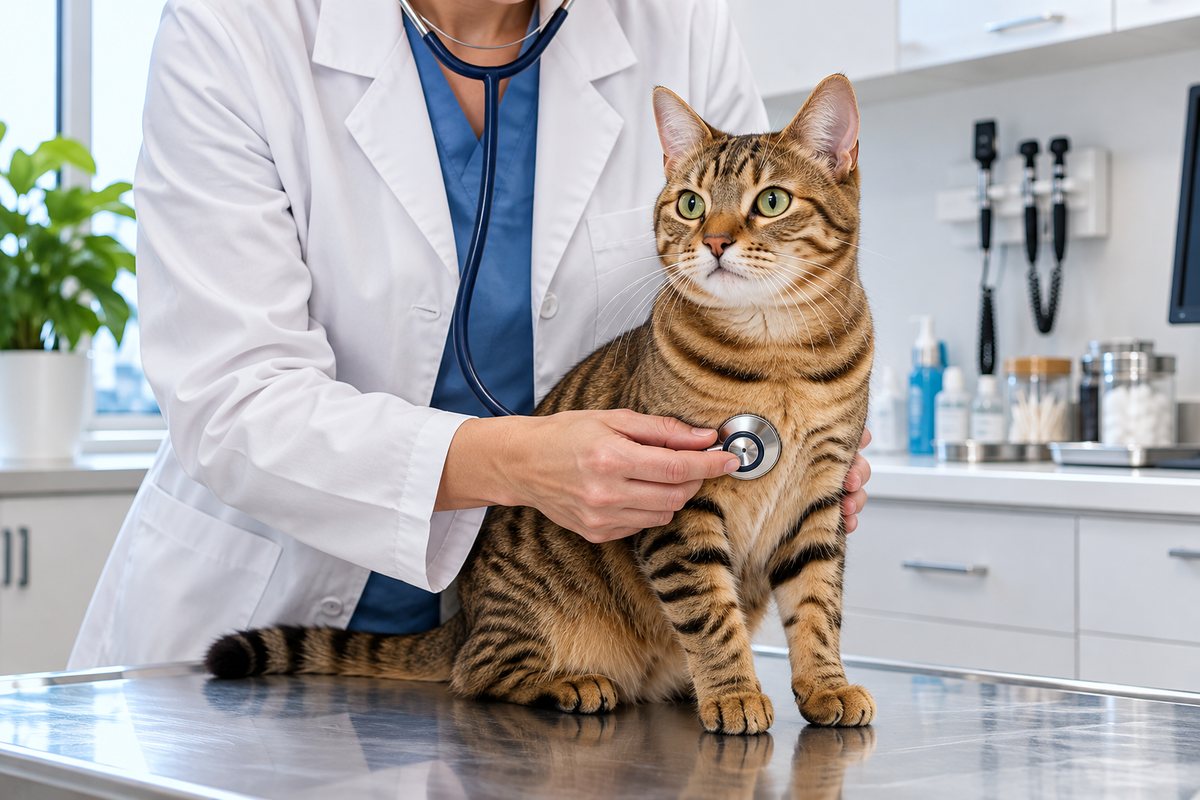
Compare breeds by documented health predispositions. The ordering follows the characteristic itself rather than the alphabet whenever a meaningful order exists.
Discuss Documented health predispositions in the forum
| # | Breed | Documented health predispositions |
|---|---|---|
| 1 | Dental disease, FLUTD, IBD and amyloidosis are reported concerns Tonkinese are generally healthy, but dental disease, lower urinary tract disease, inflammatory bowel disease and amyloidosis are reported more often in the breed. | |
| 2 | Elevated conformation risks Bambinos combine hairlessness with short-legged dwarfism. Health concerns therefore include skin and temperature problems plus potential orthopedic and spinal stress associated with disproportionate conformation; careful mobility monitoring is more important than assuming the hybrid traits are purely cosmetic. | |
| 3 | Elevated conformation risks Dwelfs combine hairlessness, short-legged dwarfism and curled ears. That combination warrants attention to skin and temperature management, joint and spinal function and ear health; the rarity of the type means absence of large disease studies should not be mistaken for evidence of low risk. | |
| 4 | Elevated conformation risks Exotic Shorthairs share Persian-related risks including polycystic kidney disease and hypertrophic cardiomyopathy, while brachycephaly can contribute to breathing, eye and dental problems. Facial conformation is therefore a major part of the breed's health profile. | |
| 5 | Elevated conformation risks Himalayans share Persian-derived risks such as polycystic kidney disease and hypertrophic cardiomyopathy, alongside brachycephalic eye, dental and airway problems in flatter-faced lines. Responsible breeding should address both inherited disease and facial conformation. | |
| 6 | Elevated conformation risks Lambkins combine short-legged dwarfism with a Rex-type curly coat. Their main breed-specific concern is conformation: caregivers and breeders should monitor joints, spine, mobility and body weight, while also managing any skin or coat problems associated with the curly phenotype. | |
| 7 | Elevated conformation risks Minskins combine sparse hair with short-legged dwarfism. Skin, ear and temperature-management needs accompany potential orthopedic and spinal stress from disproportionate conformation, so mobility and body condition deserve ongoing attention. | |
| 8 | Elevated conformation risks Munchkins have disproportionate short-legged dwarfism caused by a dominant mutation. Many individuals remain mobile, but lordosis, pectus excavatum and joint or spinal stress are recurring concerns, making gait, weight and orthopedic comfort important to monitor. | |
| 9 | Elevated conformation risks Persians have important inherited risks including polycystic kidney disease and hypertrophic cardiomyopathy. Brachycephalic conformation can additionally cause chronic eye drainage, dental crowding, airway compromise and difficult birth, making facial structure a major welfare issue. | |
| 10 | Elevated conformation risks Ukrainian Levkoys combine hairlessness with folded ears. That creates skin and temperature-management needs plus concern for cartilage and joint disease associated with fold-type anatomy; the small population also limits certainty about additional inherited risks. | |
| 11 | Elevated family conformation risks Minuets combine Persian ancestry with short-legged dwarfism. Relevant concerns include polycystic kidney disease and Persian-type facial issues in some lines, plus orthopedic and spinal effects of disproportionate conformation; breeders should address both sides of the ancestry. | |
| 12 | Elevated known risks Abyssinians have well-established inherited risks including pyruvate kinase deficiency and progressive retinal atrophy. Renal amyloidosis and patellar luxation are also reported, so genetic testing and family health history are important breeding considerations. | |
| 13 | Elevated known risks Bengals have recognized inherited concerns including progressive retinal atrophy and pyruvate kinase deficiency, while hypertrophic cardiomyopathy is also an important breed health issue. Responsible breeding uses available DNA tests alongside cardiac assessment and family history. | |
| 14 | Elevated known risks Burmese health risks include hypokalaemic polymyopathy and, in some populations, craniofacial defects; diabetes mellitus is notably overrepresented in some Burmese populations. Family history and population-appropriate genetic testing are therefore important. | |
| 15 | Elevated known risks Devon Rex health concerns include hypertrophic cardiomyopathy, hereditary myopathy and patellar luxation. Their sparse coat can also predispose to skin and ear problems, making cardiac history and breed-specific genetic screening particularly relevant. | |
| 16 | Elevated known risks European Burmese share important Burmese-family risks, including hypokalaemic polymyopathy, while diabetes and other inherited problems vary among populations and lines. Population-appropriate DNA testing and detailed family health history are therefore important. | |
| 17 | Elevated known risks Maine Coons have important predispositions to hypertrophic cardiomyopathy and hip dysplasia, and spinal muscular atrophy is a recognized inherited disorder. DNA testing can identify known variants, but cardiac imaging and orthopedic history remain important because genetics do not capture all risk. | |
| 18 | Elevated known risks Somalis share key inherited risks with Abyssinians, particularly pyruvate kinase deficiency and progressive retinal atrophy. Renal amyloidosis is also reported in the breed family, making DNA testing and family health history important. | |
| 19 | Elevated known risks Sphynx cats have a significant predisposition to hypertrophic cardiomyopathy. Hairlessness also brings recurring skin, ear and temperature-management issues, and hereditary myopathy occurs in some lines, making cardiac screening especially important. | |
| 20 | Gangliosidoses GM1 GM2 The principal known inherited breed risk is GM1/GM2 gangliosidosis; DNA testing allows breeders to avoid affected matings. | |
| 21 | HCM and deafness in some white cats are important concerns Hypertrophic cardiomyopathy deserves screening attention, while some white Turkish Angoras may have partial or complete deafness. | |
| 22 | HCM, patellar luxation and some skin problems are reported concerns Cornish Rex are generally healthy, but hypertrophic cardiomyopathy, patellar luxation and dermatological problems including sunburn are recognized concerns. | |
| 23 | Heart murmurs/HCM concern and cow-hocking have been reported The breed is generally healthy, but heart murmurs that may indicate hypertrophic cardiomyopathy and cow-hocking have occurred. | |
| 24 | High conformation risk Cymrics share the Manx tailless mutation and can develop spinal malformations, abnormal hind-limb function and bowel or bladder problems associated with Manx syndrome. The long coat is secondary to the central health issue: selecting for healthy spinal and pelvic development. | |
| 25 | High conformation risk Manx cats can develop Manx syndrome, in which the tailless mutation is associated with spinal malformations, hind-limb abnormalities and bowel or bladder dysfunction. Severity varies, but spinal and pelvic health is the defining breed-specific medical concern. | |
| 26 | High conformation risk Every Scottish Fold with folded ears carries the cartilage mutation responsible for osteochondrodysplasia. Severity varies, but painful progressive joint and bone disease is intrinsic to the fold trait, making mobility, stiffness and pain the central breed health concern. | |
| 27 | Historical genetic concern The original Ojos Azules population raised concern because the blue-eye trait was associated in early breeding with severe developmental defects when inherited from both parents. The breed is now extremely rare, so any claimed line warrants unusually careful pedigree and genetic scrutiny. | |
| 28 | Hypertrophic cardiomyopathy is an important concern Hypertrophic cardiomyopathy is an important health concern in Bombay breeding lines. | |
| 29 | Limited historical data The Oregon Rex is extinct and its health record was never developed enough to establish a characteristic inherited disease profile. Any health assessment is therefore historical and limited; the Rex coat itself may have required gentle skin and hair care. | |
| 30 | Limited specific risk Aegeans are a naturally developed population with no single inherited disorder established as a defining breed problem. The practical health focus is therefore broad preventive care and maintaining genetic diversity rather than managing one characteristic syndrome. | |
| 31 | Limited specific risk American Ringtails are a small, developing population without a well-established breed-specific disease syndrome. Their curled tail should remain flexible and comfortable; otherwise health assessment should emphasize family history, genetic diversity and ordinary feline screening. | |
| 32 | Limited specific risk American Wirehairs are generally robust and no single inherited disease dominates the breed profile. Because the population is closely related historically to American Shorthairs, cardiac health and family history remain sensible considerations alongside skin and coat condition. | |
| 33 | Limited specific risk Aphrodite Giants remain a relatively rare natural-breed population, and no single breed-specific inherited disorder is firmly established. Large body size makes orthopedic comfort and weight worth monitoring while breeders preserve broad genetic diversity. | |
| 34 | Limited specific risk Arabian Maus are a naturally developed landrace with no prominent inherited disease established as characteristic. Their health profile is best approached through ordinary feline preventive care, body condition and preservation of genetic diversity. | |
| 35 | Limited specific risk Australian Mists are generally regarded as robust, with no single inherited disorder defining the breed. Their Burmese and Abyssinian ancestry makes transparent family health history and relevant DNA screening prudent, while weight management is a practical everyday concern. | |
| 36 | Limited specific risk Brazilian Shorthairs derive from a broad natural domestic-cat population and have no well-established signature inherited disorder. Maintaining genetic diversity, healthy body condition and ordinary preventive screening is more relevant than a single breed-specific warning. | |
| 37 | Limited specific risk California Spangled cats were developed from multiple domestic breeds and no single inherited disorder became strongly characteristic before the breed became rare. For surviving lines, genetic diversity and family-specific cardiac and orthopedic history would be more informative than a broad disease label. | |
| 38 | Limited specific risk Chantilly-Tiffany cats were never associated with a well-established signature inherited disease. Because the population became extremely small, genetic diversity and reliable family health history would be especially important wherever surviving or reconstructed lines are claimed. | |
| 39 | Limited specific risk Cyprus cats are a natural island population without a firmly established signature inherited disorder. Health management should emphasize broad genetic diversity, parasite and infectious-disease prevention where outdoor exposure occurs, and ordinary feline screening. | |
| 40 | Limited specific risk Dragon Li cats represent a natural Chinese domestic-cat type with no well-established signature inherited disorder. The best current health approach emphasizes genetic diversity, family history and ordinary feline preventive care rather than a breed-specific disease assumption. | |
| 41 | Limited specific risk European Shorthairs come from a broad traditional domestic-cat population and have no single inherited disease that defines the breed. Their generally robust profile makes body condition, dental care and ordinary age-appropriate screening more important than a narrow breed syndrome. | |
| 42 | Limited specific risk German Rex cats are rare and lack evidence for a single dominant inherited disease pattern. Their curly coat can be associated with skin and hair fragility in some individuals, while the small population makes genetic diversity and family health history especially important. | |
| 43 | Limited specific risk Kanaani cats are rare and have no firmly established signature inherited disease. Their small breeding population makes genetic diversity and transparent family health history especially important, alongside ordinary feline cardiac, dental and preventive care. | |
| 44 | Limited specific risk Korean Bobtails are sparsely documented and no reliable breed-wide inherited disease pattern is established. Tail and spinal anatomy should be comfortable and functional, while broader health assessment should rely on the individual and family history. | |
| 45 | Limited specific risk The rare Korn Ja has no well-established signature inherited disorder. Because the breeding population is small, maintaining genetic diversity and documenting family health are particularly important rather than assuming rarity implies either fragility or exceptional health. | |
| 46 | Limited specific risk Mekong Bobtails have no single inherited disorder established strongly enough to define the breed's health profile. Tail and spinal function should be normal and painless, while family history and ordinary feline screening remain the most useful guides. | |
| 47 | Limited specific risk Pixie-bobs are generally considered robust, without one well-established inherited disorder dominating the breed. Because polydactyly and shortened tails occur, breeders should still select for normal limb, spine and tail function and maintain transparent family health records. | |
| 48 | Limited specific risk Raas cats are a sparsely studied island landrace with no established signature inherited disease. Their main population-level concern is preserving genetic diversity while documenting health systematically rather than drawing strong conclusions from limited records. | |
| 49 | Limited specific risk Russian-type cats are generally regarded as robust and no single inherited disease dominates the breed profile. Obesity can become a practical problem in food-motivated indoor cats, while family cardiac and kidney history remains useful as in any breed. | |
| 50 | Limited specific risk Sam Sawet cats are rare Thai domestic-type cats without a documented signature inherited disorder. The small evidence base makes genetic diversity, family history and ordinary preventive health assessment more meaningful than a claim of breed-specific disease. | |
| 51 | Limited specific risk Serengetis are a relatively young breed without a single firmly established inherited disease syndrome. Their small population and athletic build make genetic diversity, cardiac history and orthopedic soundness useful priorities in breeding and health assessment. | |
| 52 | Limited specific risk Sokokes are a rare natural-breed population with no well-established signature inherited disorder. Maintaining genetic diversity is particularly important, while routine health assessment should focus on the individual rather than assuming natural-breed ancestry guarantees freedom from disease. | |
| 53 | Limited specific risk Suphalaks are extremely rare and lack enough population data to establish a characteristic inherited disease pattern. Preservation breeding should prioritize genetic diversity and detailed family health records alongside ordinary feline preventive care. | |
| 54 | Limited specific risk Toybobs are a very small-bodied, rare breed without a mature evidence base for breed-wide disease prevalence. Breeders should document cardiac, orthopedic and reproductive health carefully and distinguish healthy small stature from developmental weakness. | |
| 55 | Limited specific risk The Transylvanian is still a developing breed, so no stable breed-wide disease profile has yet been established. Early breeding should prioritize genetic diversity, functional conformation and transparent longitudinal health records rather than waiting for problems to become fixed. | |
| 56 | Limited specific risk York Chocolates were a small rare population without a well-established signature inherited disease. For any surviving lines, genetic diversity and verifiable family health history would be more important than assuming the breed's historical reputation for robustness guarantees low risk. | |
| 57 | Moderate conformation risks Donskoys require particular attention to skin, ears, temperature regulation and dental health because of hairlessness. The breed's dominant hairless mutation differs from the Sphynx mutation, and the long-term health consequences remain less comprehensively documented than in common breeds. | |
| 58 | Moderate conformation risks Highlanders combine a distinctive curled-ear phenotype with a large, athletic build, and some lines also include short tails or polydactyly. The breed is too young for a mature disease profile, so joint, spine and ear health plus genetic diversity deserve particular attention. | |
| 59 | Moderate family risks Asian cats share Burmese ancestry, so breeding programs should remain aware of Burmese-family inherited disorders such as hypokalaemic polymyopathy, with risk depending on the lines used. Family history and appropriate DNA testing are more informative than assuming uniform risk. | |
| 60 | Moderate family risks Tiffanies belong to the Asian/Burmese-derived family and can share inherited risks present in those lines, including hypokalaemic polymyopathy. Risk varies by ancestry, making pedigree health history and appropriate genetic testing important. | |
| 61 | Moderate family risks Cherubim are closely related to Ragdoll-derived breeding populations, making hypertrophic cardiomyopathy an important inherited risk to address. Cardiac screening, relevant genetic testing and transparent family history are more meaningful than treating the newer breed name as a separate health reset. | |
| 62 | Moderate family risks Oriental Bicolors share the wider Oriental/Siamese genetic background, so concerns such as progressive retinal atrophy, amyloidosis and hypertrophic cardiomyopathy can be relevant depending on the lines used. Family history and appropriate testing matter more than the bicolor pattern. | |
| 63 | Moderate family risks RagaMuffins share ancestry with Ragdoll and Persian-related populations, making hypertrophic cardiomyopathy and polycystic kidney disease relevant concerns in some lines. Cardiac and kidney history and appropriate genetic screening should therefore be discussed with breeders. | |
| 64 | Moderate family risks Scottish Straights lack the folded-ear phenotype, but cats from Fold breeding programs still require careful pedigree interpretation. A straight-eared cat that did not inherit the fold mutation avoids fold-related osteochondrodysplasia, while family cardiac, kidney and joint history remains relevant. | |
| 65 | Moderate family risks Suffolks derive from Oriental-type breeding and can share health concerns from that family, including progressive retinal atrophy, amyloidosis and hypertrophic cardiomyopathy depending on ancestry. Transparent pedigree health history and relevant testing are important. | |
| 66 | Moderate family risks These Thai color varieties share the broader Thai/Siamese breed family's genetic background, so progressive retinal atrophy, amyloidosis and other line-dependent inherited concerns can be relevant. Health assessment should follow ancestry rather than coat color. | |
| 67 | Moderate hybrid risks Savannahs are generally athletic, but their hybrid ancestry and large size make careful cardiac, orthopedic and reproductive history important. Hypertrophic cardiomyopathy has been reported, and responsible care should not assume hybrid status confers protection from domestic-cat disease. | |
| 68 | Moderate known risks American Shorthairs are generally robust, but hypertrophic cardiomyopathy occurs in the breed and hip dysplasia has also been reported. Weight gain is a common practical concern, so cardiac history, mobility and body condition deserve attention. | |
| 69 | Moderate known risks Balinese share important inherited risks with Siamese-related lines, including progressive retinal atrophy and amyloidosis in some families; hypertrophic cardiomyopathy and asthma are also concerns worth discussing with breeders and veterinarians. | |
| 70 | Moderate known risks British Longhairs share ancestry and health concerns with British Shorthairs, particularly hypertrophic cardiomyopathy; polycystic kidney disease can occur where Persian ancestry is present. Dense coat and a relatively sedentary build also make grooming and weight management important. | |
| 71 | Moderate known risks British Shorthairs have a recognized predisposition to hypertrophic cardiomyopathy, and polycystic kidney disease can occur in lines with Persian ancestry. Their sturdy, relatively sedentary build also makes obesity an important practical health risk. | |
| 72 | Moderate known risks Colorpoint Shorthairs share the Siamese breed family's inherited concerns, including progressive retinal atrophy and amyloidosis in some lines, with hypertrophic cardiomyopathy also reported. Family history and relevant genetic testing are therefore important. | |
| 73 | Moderate known risks Neva Masquerades share the Siberian health profile, with hypertrophic cardiomyopathy the most important recognized inherited concern. Cardiac screening and family history are therefore relevant even when the colorpoint variety is treated separately in registration systems. | |
| 74 | Moderate known risks Norwegian Forest Cats have recognized risks including hypertrophic cardiomyopathy, glycogen storage disease type IV and pyruvate kinase deficiency. Hip dysplasia is also reported, making cardiac, genetic and orthopedic history useful in breeding decisions. | |
| 75 | Moderate known risks Oriental Longhairs share health risks with the wider Siamese/Oriental family, including progressive retinal atrophy and amyloidosis in some lines; hypertrophic cardiomyopathy can also occur. Breed-family genetic and cardiac history are therefore relevant. | |
| 76 | Moderate known risks Oriental Shorthairs share several inherited concerns with Siamese-related cats, including progressive retinal atrophy and amyloidosis, with hypertrophic cardiomyopathy also reported. Breeding-line history matters because risk is not uniform across all cats. | |
| 77 | Moderate known risks Hypertrophic cardiomyopathy is the best-established inherited health concern in Ragdolls, including a known breed-associated MYBPC3 variant. Bladder stones and kidney disease also occur, but cardiac screening and responsible use of genetic testing are especially important. | |
| 78 | Moderate known risks Siamese lines have recognized predispositions including amyloidosis and progressive retinal atrophy, with asthma and several other inherited disorders reported. Health risk varies by family, so genetic results and longevity and disease history in close relatives are useful. | |
| 79 | Moderate known risks Siberians are generally robust, but hypertrophic cardiomyopathy is a recognized inherited concern in the breed. Cardiac screening and family history are therefore important even when an individual appears exceptionally healthy and athletic. | |
| 80 | Moderate sensory risk Khao Manees are generally robust, but congenital deafness is an important concern in white cats, particularly those with blue eyes. Hearing status should be assessed directly rather than inferred from eye color, and breeding choices should consider the risk. | |
| 81 | Moderate sensory risk Turkish Vankedisi are white Turkish cats, making congenital deafness an important concern, particularly in blue-eyed individuals. Hearing should be assessed directly, while the broader health profile is expected to resemble robust Turkish Angora-type populations. | |
| 82 | No clear breed-specific disease pattern is established yet; the breed is young and health history remains limited. | |
| 83 | No major breed-specific predisposition is currently established No specific breed health problem has emerged prominently enough to define routine Peterbald screening, although ordinary veterinary preventive care remains important. | |
| 84 | No major breed-specific predisposition is currently prominent Burmillas are generally regarded as a healthy breed without a single dominant breed-specific disorder. | |
| 85 | No major breed-specific predisposition is currently prominent The Chausie is generally regarded as a healthy breed without a single dominant breed-specific disorder. | |
| 86 | No major breed-specific predisposition is currently prominent The Kurilian Bobtail is a hardy natural breed with few recognized breed-specific health problems. | |
| 87 | No major breed-specific predisposition is currently prominent Despite their unusual coat, Lykoi are generally regarded as hardy, healthy cats without a prominent breed-specific disorder. | |
| 88 | No major breed-specific predisposition is currently prominent The Selkirk Rex is generally regarded as a healthy breed without a single dominant breed-specific disorder. | |
| 89 | No major breed-specific predisposition is known The Chartreux is generally regarded as a healthy breed without a prominent breed-specific disease pattern. | |
| 90 | No major breed-specific predisposition is known The Japanese Bobtail is generally regarded as a healthy breed, without a prominent breed-specific disease pattern. | |
| 91 | No major breed-specific predisposition is known The Ocicat is generally regarded as a healthy breed without a prominent breed-specific disease pattern. | |
| 92 | No major breed-specific predisposition is known The Snowshoe is generally regarded as a healthy breed without a prominent breed-specific disease pattern. | |
| 93 | No particular breed-specific disorder is highlighted in the current profile The current breed profile characterizes the Turkish Van as generally healthy without identifying a particular breed-specific disorder. | |
| 94 | No prominent breed-specific disorder is established American Bobtails are generally regarded as healthy, without a prominent breed-specific inherited disorder defining routine care. | |
| 95 | No prominent breed-specific disorder is established The Havana is generally regarded as a relatively healthy breed without a prominent breed-specific disorder defining routine care. | |
| 96 | No prominent breed-specific disorder is established The LaPerm is generally regarded as a healthy breed without a prominent breed-specific disorder defining routine care. | |
| 97 | No prominent breed-specific disorder is established The Thai is generally regarded as a healthy natural breed when maintained at an appropriate body condition. | |
| 98 | No prominent breed-specific disorder is established in the current profile Birmans are generally regarded as healthy, without a single prominent breed-specific disorder defining routine care. | |
| 99 | None known There is no known breed-specific genetic health problem requiring a canonical warning for the American Curl. | |
| 100 | Osteochondrodysplasia · brachycephalic related problems Important health concerns include fold-gene cartilage disease and, in flatter-faced individuals, breathing, eye-drainage and dental problems. | |
| 101 | Some lines warrant cardiac and genetic screening Some Singapura lines have reported cardiomyopathy, and genetic panels can identify mutations such as PK deficiency and PRA variants. | |
| 102 | The breed can inherit structural and joint concerns associated with its dwarfism background; ear health also deserves attention because of the curled-ear ancestry. | |
| 103 | There is no known breed-specific disease pattern; the breed is generally regarded as robust and healthy. | |
| 104 | There is no known breed-specific predisposition established for this rare breed. | |
| 105 | There is no well-established breed-specific disease pattern; the breed is generally regarded as healthy, with weight management a practical concern. | |
| 106 | Urolithiasis, PK deficiency and leukodystrophy are reported predispositions Documented breed concerns include urolithiasis, pyruvate kinase deficiency and leukodystrophy. |







































































































Breed comparisons describe tendencies, not guarantees about an individual cat. Approximate entries are kept separate from the canonical research record and can be refined as better evidence arrives.
Discuss Documented health predispositions in the forum
Help strengthen lower-data entries
For the breeds below, this characteristic currently relies on limited, conflicting or general baseline evidence. First-hand owner observations can help us decide what deserves further research. Contributions are reviewed separately and never overwrite the researched record automatically.
 English