
Handling tolerance in Cat Breeds
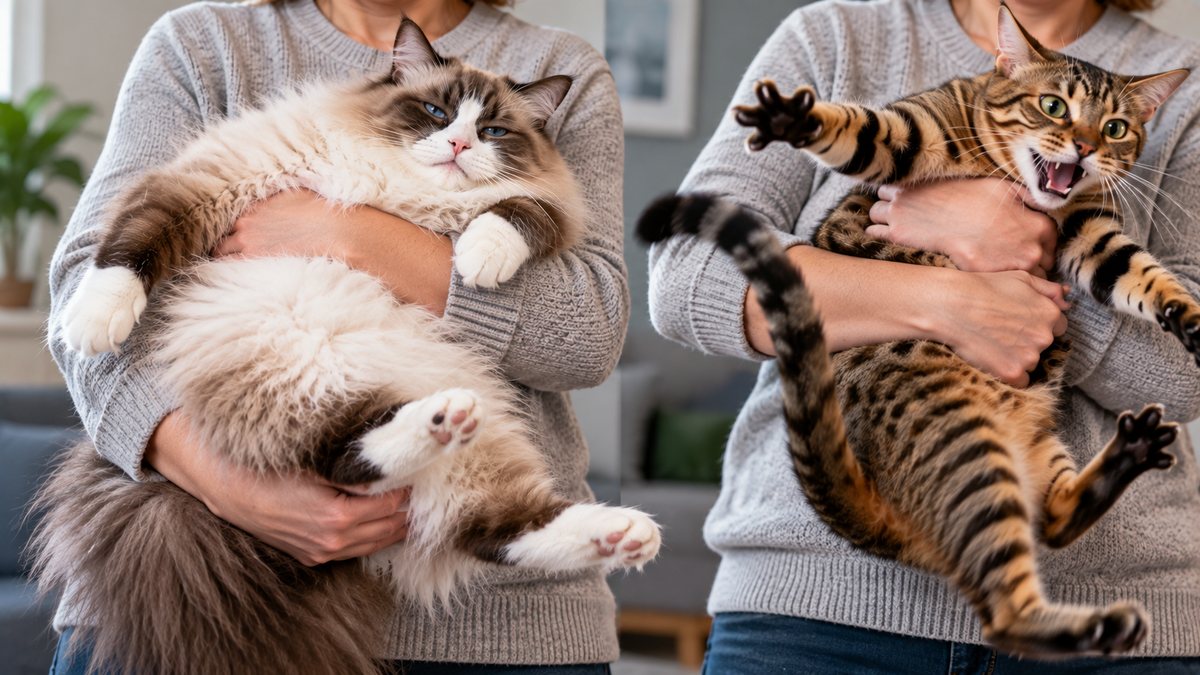
Compare breeds by handling tolerance. The ordering follows the characteristic itself rather than the alphabet whenever a meaningful order exists.
Discuss Handling tolerance in the forum
| # | Breed | Handling tolerance |
|---|---|---|
| 1 | Very high Exceptionally people-oriented and physically affectionate; many Burmese readily accept carrying, close contact and routine handling when socialized normally. | |
| 2 | Very high Devon Rex cats are unusually people-focused, tactile and warmth-seeking; many actively seek shoulders, laps and close contact and consequently tolerate routine handling very well. | |
| 3 | Very high Like other Burmese-derived cats, European Burmese are strongly human-oriented and tactile, and most accustomed individuals accept carrying and close handling readily. | |
| 4 | Very high Peterbalds are characteristically social, affectionate and physically people-seeking; many readily accept carrying and close handling, while their exposed skin calls for gentle grip and support. | |
| 5 | Very high Gentle, relaxed physical handling tolerance is strongly supported. | |
| 6 | Very high The breed's relaxed response to ordinary handling is a defining historical temperament trait, while individual consent still matters. | |
| 7 | Very high Tonkinese are exceptionally social, tactile and people-seeking; many actively enjoy being carried or held and usually tolerate routine handling very well. | |
| 8 | High Usually easygoing and people-oriented, so a well-socialized American Bobtail often accepts lifting, grooming and routine examination better than more reactive breeds. | |
| 9 | High Typically people-focused and adaptable, and most well-socialized American Curls accept ordinary handling readily; the curled ears themselves should be handled gently and never forced. | |
| 10 | High Its generally calm, sociable temperament and substantial body make accustomed adults comparatively tolerant of routine handling, provided the whole body is well supported. | |
| 11 | High The Asian group is strongly people-oriented and Burmese-derived, so accustomed cats commonly accept close physical handling and brief carrying readily. | |
| 12 | High Affectionate, people-oriented Asian-group temperament usually translates into good tolerance of grooming, lifting and routine examination when introduced positively. | |
| 13 | High Bred for an easygoing companion temperament, the Australian Mist is typically comfortable with gentle handling and is often easier to hold and examine than highly independent breeds. | |
| 14 | High Very people-oriented and interactive; most socialized Balinese accept handling well, although their lively nature means they may not remain still simply because they enjoy contact. | |
| 15 | High Typically affectionate and human-focused, so accustomed Bambinos often accept close handling well; support the elongated body and short limbs rather than allowing awkward dangling. | |
| 16 | High The Birman’s calm, affectionate temperament generally gives it good tolerance for lifting, grooming and routine examination, especially when handling has been familiar since kittenhood. | |
| 17 | High Bombays are strongly people-seeking and tactile, and well-socialized individuals commonly accept being picked up and handled readily, though individual preferences still matter. | |
| 18 | High Usually affectionate and less intense than the Burmese while retaining good people orientation, giving most Burmillas good tolerance of ordinary handling. | |
| 19 | High Historical descriptions emphasize a gentle, people-attached companion temperament, making good tolerance of calm grooming and handling a reasonable expectation. | |
| 20 | High Typically quiet, steady and physically robust; socialized Chartreux generally tolerate routine handling well even though many express affection without demanding constant carrying. | |
| 21 | High Selected as a large companion cat with a relaxed, affectionate disposition, the Cherubim should generally accept grooming, lifting and routine examination well when its heavy body is fully supported. | |
| 22 | High Close, people-oriented Siamese-family temperament generally produces good handling tolerance, although these energetic cats may object vocally or wriggle when they have had enough. | |
| 23 | High Highly social and warmth-seeking, the Cornish Rex commonly enjoys close body contact and accepts handling readily, while its light frame should still be supported gently. | |
| 24 | High Donskoys are typically social and physically affectionate, giving good handling tolerance; skin should be supported gently because there is little or no coat cushioning friction. | |
| 25 | High Dwelfs are generally bred for an affectionate companion temperament and usually accept close handling; their short limbs, long body and curled ears require deliberate, well-supported lifting. | |
| 26 | High Usually placid and affectionate, the Exotic commonly accepts grooming, lifting and routine examination well; breathing comfort should be watched in very flat-faced individuals during restraint. | |
| 27 | High The generally gentle Persian/Scottish-derived temperament favors good handling tolerance, but joints and folded ears should be handled without force because skeletal issues can make manipulation uncomfortable. | |
| 28 | High Selected for a balanced, friendly temperament, the German Longhair should usually tolerate grooming and routine handling well, an important practical trait for a semi-longhaired companion cat. | |
| 29 | High German Rex cats are typically sociable and people-oriented, so routine lifting and handling are usually well accepted; their active nature may limit how long they wish to remain restrained. | |
| 30 | High Havana Browns are notably people-focused and often use their paws to initiate contact; accustomed cats generally accept close handling well and tend to prefer involvement with their people. | |
| 31 | High Usually outgoing and people-oriented despite the wild-looking exterior, Highlanders commonly tolerate ordinary handling well; their substantial, athletic body should be securely supported. | |
| 32 | High The generally calm Persian-derived temperament makes Himalayans comparatively tolerant of grooming and routine handling, though brachycephalic cats should never be restrained in a way that compromises breathing. | |
| 33 | High Outgoing, confident and human-oriented, the Japanese Bobtail generally accepts routine handling well, although its active temperament often favors interaction over sitting motionless in someone’s arms. | |
| 34 | High Khao Manees are typically sociable, curious and people-oriented, so accustomed cats usually accept lifting and routine examination readily while remaining active and inquisitive. | |
| 35 | High Bred as a small companion cat, the Kinkalow is generally affectionate and manageable; lifting should support the long torso and short legs rather than placing leverage on the limbs. | |
| 36 | High The Korn Ja belongs to the people-oriented Thai breed tradition and is expected to accept ordinary close handling well when socialized, while retaining an alert, active character. | |
| 37 | High Kurilian Bobtails are confident, intelligent and strongly bonded to their households; most accustomed cats should accept practical handling well, though their powerful body favors secure rather than restrictive holding. | |
| 38 | High Lambkins are generally tolerant cats when handled respectfully. | |
| 39 | High LaPerms are commonly affectionate, people-seeking cats and often enjoy shoulder or lap contact, translating into good tolerance of grooming and routine handling. | |
| 40 | High Maine Coons are typically gentle and steady for grooming and examination, but their size means lifting must support chest and hindquarters rather than letting the heavy body hang. | |
| 41 | High Mekong Bobtails are social, confident and strongly people-oriented, so well-socialized individuals generally tolerate lifting and close handling readily. | |
| 42 | High Minskins are bred as affectionate companion cats and commonly accept close contact well; their short limbs and partly hairless skin make gentle, fully supported handling important. | |
| 43 | High The calm Persian influence and companion-oriented temperament generally make Minuets easy to handle; the short-legged body should be supported rather than held with weight pulling on the limbs. | |
| 44 | High Munchkins are usually outgoing, companionable cats and commonly accept close handling; support the chest and hindquarters so the long body is not left hanging from the short limbs. | |
| 45 | High The Neva Masquerade shares the Siberian’s generally confident, sociable temperament and usually tolerates grooming and routine handling well; its large body needs full support when lifted. | |
| 46 | High Confident, social and trainable, the Ocicat generally accepts routine handling well and often enjoys close interaction, although its athletic temperament may make prolonged restraint unwelcome. | |
| 47 | High Historical rex accounts describe an affectionate, people-oriented cat, making good tolerance of ordinary handling a reasonable reconstruction for the extinct Oregon Rex. | |
| 48 | High Oriental Bicolors are strongly people-oriented and tactile; most socialized cats accept handling readily, though their active, vocal nature means they may clearly object when they want to move. | |
| 49 | High Highly social and people-focused, the Oriental Longhair usually accepts grooming and close handling well, with activity level rather than fearfulness more likely to limit restraint. | |
| 50 | High Oriental Shorthairs commonly seek intense human contact and generally tolerate handling well; they are active and expressive, so willingness to be held still varies by moment. | |
| 51 | High Persians are usually placid and comparatively tolerant of the frequent grooming and face care their coat and conformation require, provided handling remains gentle and breathing is unobstructed. | |
| 52 | High Pixie-bobs are generally steady, devoted companion cats and often accept routine handling well; their substantial body should be supported securely rather than tightly restrained. | |
| 53 | High Scottish Straights generally retain the calm, companionable temperament of Fold lines without the folded-ear genotype; most socialized cats should accept ordinary handling well. | |
| 54 | High The Selkirk Rex is generally patient, affectionate and easygoing, traits that suit grooming and routine examination; dense curls should be handled without rough pulling. | |
| 55 | High Siamese cats are intensely people-oriented and commonly accept close physical handling, although they are active and vocal enough to make their objections unmistakable when restraint lasts too long. | |
| 56 | High Siberians are typically confident, sociable and physically robust, and most accustomed cats tolerate grooming, lifting and examination well; support the large hindquarters when carrying. | |
| 57 | High Singapuras are people-oriented and frequently seek close contact, so routine handling is usually well tolerated; their very small frame should be supported gently rather than gripped. | |
| 58 | High Snowshoes combine Siamese sociability with a generally moderate companion temperament; most socialized cats accept lifting and routine handling readily. | |
| 59 | High Generally amenable to handling when treated gently. | |
| 60 | High With Burmese/Asian ancestry and selection as a companion breed, the Suffolk is expected to be people-oriented and comparatively tolerant of close handling and routine examination. | |
| 61 | High The Suphalak belongs to the affectionate Thai cat tradition and is expected to be strongly people-oriented, giving good handling tolerance when normally socialized. | |
| 62 | High Tennessee Rex cats are described as affectionate companion cats and should generally accept routine handling well; gentle grooming preserves the distinctive rex/satin coat. | |
| 63 | High The traditional Thai type is highly social and people-oriented, so accustomed cats generally accept close handling readily while remaining active and communicative. | |
| 64 | High These Thai color varieties share the parent breed’s sociable, human-focused temperament and should normally show good tolerance of ordinary handling. | |
| 65 | High Toybobs are bred as small, affectionate companions and generally accept close handling readily; their diminutive body should be supported gently. | |
| 66 | High Toygers are typically confident, social and trainable, making routine handling comparatively easy; their muscular, active body still favors cooperative rather than prolonged restrictive holding. | |
| 67 | High Foundation-population reports describe Transylvanian cats as notably trusting and tolerant of human contact, so good handling tolerance is a reasonable current breed assessment, while recognizing that the breed is still developing. | |
| 68 | High Developed as a companion cat, the Ukrainian Levkoy is generally expected to be sociable and tolerant of close handling; exposed skin and folded ears require gentle contact. | |
| 69 | High Historical descriptions portray the York Chocolate as affectionate and people-oriented; its semi-long coat also makes calm acceptance of routine grooming a practical breed expectation. | |
| 70 | Moderate Usually tolerant of brief, gentle handling, but this active breed commonly prefers choosing its own position to being held for long periods. | |
| 71 | Moderate Generally practical to handle when well socialized; its confident natural-cat temperament tends to suit routine grooming and examination without implying a strong desire to be restrained. | |
| 72 | Moderate Usually sociable enough for routine handling, although the breed remains athletic and may prefer interactive contact to prolonged restraint. | |
| 73 | Moderate Usually steady for routine handling when accustomed to it, but many are independent enough to prefer four paws on a surface rather than prolonged carrying. | |
| 74 | Moderate Generally calm and manageable for routine handling, with an independent streak that makes brief, respectful restraint more suitable than prolonged holding. | |
| 75 | Moderate Confident and athletic rather than fragile; a socialized Arabian Mau normally tolerates practical handling but may resist being immobilized for longer than necessary. | |
| 76 | Moderate Typically alert and sociable, with enough natural-cat independence that routine handling is usually manageable but prolonged restraint may be less welcome. | |
| 77 | Moderate Usually calm and non-reactive for grooming and examination, but many British-type cats prefer sitting beside a person to being carried or tightly held. | |
| 78 | Moderate Usually placid for necessary handling but notably not a breed that universally enjoys being picked up; many prefer contact while remaining supported on their own feet. | |
| 79 | Moderate Athletic and interactive, so routine handling should be workable with socialization, but prolonged restraint is less compatible with the breed’s active style. | |
| 80 | Moderate Usually affectionate and steady enough for routine handling, but the compact hindquarters and spinal/tail anatomy warrant careful support and no pulling or manipulation of the tail area. | |
| 81 | Moderate A socialized Cyprus cat is usually manageable for ordinary handling, but its landrace background favors athletic independence over passive tolerance of prolonged restraint. | |
| 82 | Moderate Confident and loyal but relatively natural in temperament, the Li Hua should handle routine contact well when socialized while retaining more autonomy than strongly lap-oriented companion breeds. | |
| 83 | Moderate Generally robust and adaptable for practical handling, but temperament spans a broad natural-cat range, so prolonged holding is less reliably welcomed than routine examination or grooming. | |
| 84 | Moderate Korats form strong bonds and often enjoy physical affection with trusted people, but their sensitivity and preference for familiar routines can make handling by strangers less easy than handling at home. | |
| 85 | Moderate As a natural bobtail type, it is reasonable to expect workable routine handling with socialization but more individual variation than in breeds intensively selected for a lap-cat temperament. | |
| 86 | Moderate Lykoi are curious and strongly engaged with familiar people but retain an alert, hunting-oriented style; routine handling is usually workable while prolonged restraint may be less appealing. | |
| 87 | Moderate Usually affectionate and robust enough for routine handling, but the spine, pelvis and residual tail area should be treated carefully because vertebral abnormalities can make manipulation painful in affected cats. | |
| 88 | Moderate Usually calm and friendly for grooming and examination, but Norwegian Forest Cats often prefer freedom of movement to prolonged carrying; their large body should be supported securely. | |
| 89 | Moderate Historical descriptions indicate a moderate domestic-cat temperament; routine handling would be expected to be manageable with socialization, with substantial individual variation in an extinct/rare population. | |
| 90 | Moderate Russian Blue-type cats are gentle with familiar people but often reserved with strangers; routine home handling is usually easy, whereas unfamiliar restraint may produce withdrawal rather than cooperation. | |
| 91 | Moderate This Thai natural type is expected to be alert and people-compatible but less standardized for handling temperament; routine contact should be workable with early socialization. | |
| 92 | Moderate Usually sweet-tempered and manageable, but handling should be particularly gentle because osteochondrodysplasia can make the tail, limbs or joints painful in affected cats. | |
| 93 | Moderate Serengetis are confident, energetic and interactive; routine handling is usually manageable, but this long-legged active breed is more likely to prefer movement to prolonged restraint. | |
| 94 | Moderate The small Serrade Petit is a natural French type with limited standardized behavioral data; a socialized cat should tolerate routine handling, while individual independence remains important. | |
| 95 | Moderate Somalis are affectionate but exceptionally active and inquisitive; they usually tolerate brief handling but commonly prefer climbing, play and chosen contact to prolonged holding. | |
| 96 | Moderate Turkish Angoras are affectionate and people-focused but agile and strong-willed; most tolerate necessary handling while often preferring to control when and how physical contact occurs. | |
| 97 | Moderate Like other Turkish Van-type cats, the Vankedisi is intelligent, athletic and affectionate on its own terms; routine handling is workable but prolonged carrying may be less welcome. | |
| 98 | Low to moderate Bengals are highly interactive but often dislike physical restraint; many prefer active contact and play to being picked up or held in place, making cooperative handling especially valuable. | |
| 99 | Low to moderate Large, athletic and strongly action-oriented, the Chausie is better suited to cooperative handling than forced restraint; many will interact closely without enjoying prolonged holding. | |
| 100 | Low to moderate Egyptian Maus can be deeply attached to familiar people yet sensitive to restraint and unfamiliar handling; consent-based, predictable handling usually works better than simply holding them still. | |
| 101 | Low to moderate The Kanaani is athletic and relatively natural in type; socialized cats can be handled routinely, but prolonged restraint is less likely to suit this alert, independent temperament. | |
| 102 | Low to moderate Nebelungs are affectionate with trusted people but often reserved and sensitive; familiar caregivers may handle them easily, while restraint by strangers can be considerably less comfortable. | |
| 103 | Low to moderate As a geographically isolated natural population rather than a long-selected lap breed, Raas cats are best expected to show moderate-to-low restraint tolerance unless extensively socialized from kittenhood. | |
| 104 | Low to moderate Savannahs are intensely interactive but athletic and autonomy-seeking; many dislike being physically restrained even when bonded closely, and cooperative handling is preferable to forced holding. | |
| 105 | Low to moderate Sokokes are athletic, alert and comparatively natural in behavior; they can bond strongly yet often favor self-directed interaction over being restrained or carried for long periods. | |
| 106 | Low Many prefer controlling physical contact rather than prolonged holding. |







































































































Breed comparisons describe tendencies, not guarantees about an individual cat. Approximate entries are kept separate from the canonical research record and can be refined as better evidence arrives.
Discuss Handling tolerance in the forum
Help strengthen lower-data entries
For the breeds below, this characteristic currently relies on limited, conflicting or general baseline evidence. First-hand owner observations can help us decide what deserves further research. Contributions are reviewed separately and never overwrite the researched record automatically.
 English