
Hunting & chasing tendencies in Cat Breeds
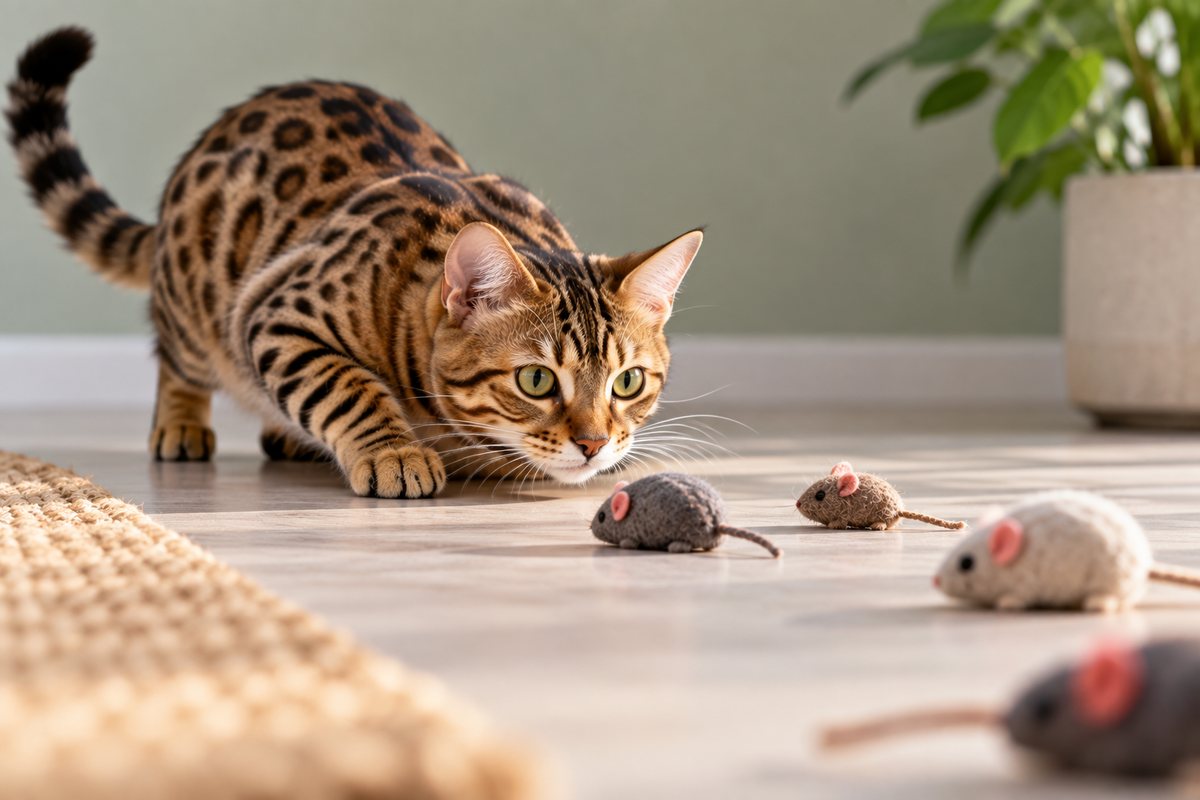
Compare breeds by hunting & chasing tendencies. The ordering follows the characteristic itself rather than the alphabet whenever a meaningful order exists.
Discuss Hunting & chasing tendencies in the forum
| # | Breed | Hunting & chasing tendencies |
|---|---|---|
| 1 | Moderate to high Chasing interest is likely moderate; the breed combines playful Burmese-family ancestry with a somewhat softer activity profile than the most intense oriental breeds. | |
| 2 | Very high Chasing is exceptionally important enrichment for Bengals; their athleticism, intense play and fascination with moving targets support a very strong stalk-pounce-pursuit pattern. | |
| 3 | Moderate to high Burmese are lively and persistent players, so chasing toys is likely to be a strong part of daily play even though social interaction is often as motivating as prey simulation. | |
| 4 | Moderate to high Above-average chasing is likely. The German Rex is active, playful and agile, making moving toys and pursuit games useful daily enrichment. | |
| 5 | Very high A very strong hunting and chasing tendency is expected; the breed's athletic type and foundation history make prey-style behavior particularly relevant. | |
| 6 | Very high A strong prey drive is a notable part of the Lykoi profile; stalking, tracking, chasing and pouncing are likely to be unusually prominent behaviors. | |
| 7 | Moderate to high Strong chasing is expected from the Oriental/Siamese behavioral background: active, inquisitive cats of this type usually engage intensely with moving toys. | |
| 8 | Moderate to high A moderate hunting tendency is the best current estimate; the breed is generally playful without evidence that predatory drive is exceptionally high or low. | |
| 9 | Moderate to high A moderate chase tendency is the best current estimate; Levkoys are curious and playful but lack evidence for an unusually intense prey drive. | |
| 10 | High Very strong chase-and-pounce play is expected: the breed's exceptional activity, curiosity and quick movement make moving toys especially compelling. | |
| 11 | Moderate to high Aegeans are agile, outdoor-rooted cats, so chasing insects, small moving objects and prey-style toys is likely to be a prominent part of play. | |
| 12 | High Moderately strong hunting play is likely; this athletic, playful breed usually engages readily with stalking, chasing and pouncing games. | |
| 13 | High Chasing is likely to be above average because American Curls remain unusually playful into adulthood, although they are not primarily selected as working mousers. | |
| 14 | Moderate to high Expect ordinary-to-moderately strong feline chasing behavior; the breed's active, curious profile supports regular stalk-and-pounce play without evidence for an extreme prey drive. | |
| 15 | High Hunting interest is likely above average: the breed descends from practical rodent-control cats and typically retains patient stalking and pouncing behavior. | |
| 16 | Moderate to high A moderate-to-strong chase instinct is a reasonable expectation for this large, athletic natural breed, especially in active younger cats. | |
| 17 | Moderate to high Hunting and chasing are likely strong; this highly active landrace developed under free-ranging conditions where alertness and opportunistic hunting were useful. | |
| 18 | Moderate to high Expect moderately strong chase play: the Asian's lively, interactive Burmese-family temperament generally translates into enthusiastic pursuit of moving toys. | |
| 19 | High Strong chasing behavior is likely. Balinese are athletic, highly playful and inquisitive, making fast-moving wand toys and fetch-like games particularly suitable. | |
| 20 | Moderate to high Despite short legs, Bambinos are playful and inquisitive; expect moderate chase-and-pounce motivation, with games adapted to their lower jumping reach. | |
| 21 | Moderate to high A moderate-to-strong chasing tendency is plausible for this agile natural-population breed; moving toys should provide a useful outlet for normal hunting sequences. | |
| 22 | High Moderately strong chase play is likely, reflecting the breed's playful Burmese influence tempered by a generally easygoing companion temperament. | |
| 23 | Moderate to high A strong interest in stalking, chasing and pouncing is likely; the breed was deliberately developed for an athletic, wild-spotted look while retaining active domestic-cat behavior. | |
| 24 | Moderate to high Expect ordinary feline hunting play at moderate intensity; available breed descriptions suggest a balanced companion temperament rather than an extreme chase drive. | |
| 25 | High Hunting ability is historically relevant to the Chartreux, and a quiet, patient stalk followed by sudden pursuit is more characteristic than constant high-energy chasing. | |
| 26 | High Chausies are likely among the strongest chasers in the directory: extreme athleticism and jungle-cat ancestry make vigorous pursuit and prey-style enrichment especially important. | |
| 27 | Moderate to high Expect normal but comparatively gentle chase play; the calmer Ragdoll-family temperament suggests shorter, less relentless predatory-play sessions than in highly active breeds. | |
| 28 | High Strong chasing is expected because this Siamese-family breed is athletic, inquisitive and highly playful; interactive moving toys are an important outlet. | |
| 29 | High Chasing is likely very strong. Cornish Rex are fast, agile and persistently playful, so running, leaping and pursuing moving toys commonly suit their play style. | |
| 30 | Moderate to high A moderate-to-strong hunting tendency is plausible for this old island landrace, with active individuals likely to show substantial interest in moving prey-sized targets. | |
| 31 | High Strong chasing is likely: Devon Rex are highly playful, agile and interactive, and fast-moving toys provide a useful outlet for their energetic play. | |
| 32 | High Expect above-average chase play. Donskoys are active, curious and socially engaged, so pursuit games are likely to be frequent even without evidence of exceptional prey drive. | |
| 33 | Moderate to high A strong natural hunting tendency is plausible for this robust landrace-type cat; stalking and chasing games should be treated as meaningful enrichment. | |
| 34 | Moderate to high Dwelfs are playful and curious, but their short-legged conformation limits some pursuit mechanics; expect moderate chase motivation with low-impact prey-style games. | |
| 35 | High Strong chasing is expected: the Egyptian Mau is exceptionally fast, athletic and alert, making pursuit and pounce games a natural fit. | |
| 36 | High Expect strong chase play. European Burmese are lively, intelligent and playful, and usually benefit from frequent interactive pursuit games. | |
| 37 | A strong natural hunting and chasing tendency is typical. Hunting ability is likely strong because this population retains the practical, general-purpose European farm-cat type; rodent pursuit and prey-style play are natural behaviors. | |
| 38 | Moderate to high Expect moderate predatory play, broadly similar to its British/Scottish-related ancestry; individuals may chase enthusiastically but sustained high-drive pursuit is not a defining trait. | |
| 39 | Moderate to high A moderate hunting tendency is the best current estimate: this traditional longhaired type is generally balanced rather than hyperactive, while retaining normal feline stalk-and-pounce behavior. | |
| 40 | High Havana Browns are curious, interactive cats and likely show moderately strong chasing behavior, often combining prey play with close involvement in household activity. | |
| 41 | Moderate to high Expect strong chase-and-pounce play; Highlanders are typically energetic, athletic and playful, so vigorous pursuit games are appropriate enrichment. | |
| 42 | High Strong chasing is likely: Japanese Bobtails are agile, active and playful, with a long history as capable domestic mousers. | |
| 43 | High Expect above-average chasing. Khao Manees are active, curious and playful, so rapid pursuit and pouncing games are likely to be rewarding. | |
| 44 | Moderate to high Chase motivation is probably moderate to high, reflecting playful Curl/Munchkin ancestry, though short legs may limit the height and duration of pursuit. | |
| 45 | High Korats are alert, muscular and playful, so moderately strong stalking and chasing behavior is likely, particularly with fast interactive toys. | |
| 46 | Moderate to high A moderate-to-strong hunting tendency is plausible for this natural bobtail population; agile individuals should show normal robust stalk-and-pounce behavior. | |
| 47 | Moderate to high Expect moderately strong chasing. This Thai breed is active and people-oriented, with enough playfulness and curiosity to make prey-style games a regular enrichment need. | |
| 48 | High Strong hunting behavior is expected; Kurilian Bobtails are robust natural cats with a reputation for capable hunting and an active interest in pursuit. | |
| 49 | High LaPerms are curious, active companions, so above-average chase play is likely, though their social orientation may make interactive games more attractive than solitary hunting. | |
| 50 | Moderate to high Expect moderate chase motivation. Playfulness is present, but the short-legged build makes ground-level stalking and short pursuits more suitable than high-impact chasing. | |
| 51 | High Hunting interest is likely moderate to strong: Maine Coons have working-cat roots and often enjoy stalking and pursuit, though their play style is usually less frantic than lighter athletic breeds. | |
| 52 | High Strong hunting ability is plausible and historically consistent with the Manx; expect confident stalking and pouncing, with substantial individual variation in pursuit intensity. | |
| 53 | Moderate to high Expect above-average chase play. This active, agile Siamese-related bobtail is likely to engage readily in pursuit and pouncing games. | |
| 54 | Moderate to high Chasing motivation is probably moderate; Minskins are playful and curious but their short legs favor ground-level pursuit and compact play sessions. | |
| 55 | High Munchkins are energetic ground-level players, so chasing can be strong despite reduced jumping reach; rolling and rapidly moving floor toys are particularly suitable. | |
| 56 | Moderate to high A moderate hunting tendency is likely. Nebelungs can be playful and agile but are often reserved and measured, favoring focused stalk-and-pounce sessions over constant pursuit. | |
| 57 | High Expect strong chasing similar to the Siberian background: these powerful, agile cats are likely to enjoy stalking, leaping and pursuit games. | |
| 58 | High Strong hunting behavior is likely in this athletic natural breed; climbing, stalking and chasing fit both its morphology and historical outdoor adaptation. | |
| 59 | High Chasing is likely strong. Ocicats are athletic, active and trainable, and typically benefit from vigorous pursuit games despite being fully domestic in ancestry. | |
| 60 | Moderate to high Evidence is sparse; the best current estimate is ordinary-to-moderate feline chase behavior rather than an unusually high or low hunting drive. | |
| 61 | Moderate to high Historical descriptions support an active rex-type temperament, making moderate-to-strong chase play the best estimate, though breed-specific behavioral evidence is limited. | |
| 62 | High Expect strong pursuit play. Oriental Longhairs combine athleticism, curiosity and persistent social play, making chase games important enrichment. | |
| 63 | High Chasing is likely very strong; the breed is exceptionally active, inquisitive and playful, and typically needs frequent moving-target games. | |
| 64 | High Strong chasing is likely because Peterbalds are active, curious and closely related behaviorally to Oriental-type cats; interactive pursuit games should be frequent. | |
| 65 | High Expect moderately strong to strong hunting play. Pixie-bobs are athletic, active cats and are likely to enjoy stalking and pursuing toys, although individual intensity varies. | |
| 66 | Moderate to high As a natural island cat, the Raas is plausibly an effective opportunistic hunter; moderate-to-strong chasing is the best current estimate despite limited formal behavioral data. | |
| 67 | High The Russian Blue-type profile supports moderately strong hunting play: these cats can be fast, agile and intensely focused on moving toys while remaining quiet indoors. | |
| 68 | Moderate to high A moderate-to-strong chase tendency is plausible for this active Thai natural type; prey-style play should be provided even though detailed breed-specific evidence is limited. | |
| 69 | High Very strong chasing is expected. Savannahs combine exceptional athleticism, high activity and serval ancestry, so vigorous prey-style enrichment and careful small-animal management are important. | |
| 70 | High A moderate-to-strong chase interest is likely; Selkirks are playful and curious but generally less frenetic than the most athletic rex and oriental breeds. | |
| 71 | Moderate to high Strong chasing is expected from this athletic, long-legged, active breed; running and pursuit games are likely to be particularly rewarding. | |
| 72 | Moderate to high This small natural-type cat is likely to retain competent hunting behavior; moderate-to-strong chasing is the best estimate while breed-specific evidence remains limited. | |
| 73 | High Strong chasing is characteristic of the Siamese activity profile: athleticism, curiosity and persistent play make moving-target games important daily enrichment. | |
| 74 | High Strong hunting behavior is expected. Siberians are powerful, agile natural cats with established hunting ability and typically enjoy stalking and pursuit games. | |
| 75 | High Despite small size, Singapuras are active and inquisitive; expect strong chase-and-pounce play with lightweight, fast-moving toys. | |
| 76 | High Above-average chasing is likely because Snowshoes combine Siamese-derived activity with a playful, interactive temperament; pursuit games should be regular enrichment. | |
| 77 | Moderate to high Strong hunting and chasing are plausible in this athletic natural breed; its alert, active style favors fast pursuit and exploratory prey play. | |
| 78 | High Very strong chase play is likely. Somalis are exceptionally active, agile and curious, making stalking, sprinting and pouncing central enrichment activities. | |
| 79 | High Expect strong chasing. Sphynx are highly active and playful, often pursuing toys enthusiastically even though their strongest motivation may be social interaction. | |
| 80 | Moderate to high A moderate-to-strong chase tendency is the best estimate from its active, social ancestry; regular prey-style play is appropriate while direct breed evidence remains limited. | |
| 81 | Moderate to high Expect moderately strong chasing in this active Thai breed; agility and interactive playfulness support regular stalk-and-pounce games. | |
| 82 | High Strong chasing is likely. The traditional Siamese-type temperament is active, intelligent and playful, making pursuit games an important outlet. | |
| 83 | Moderate to high Expect strong chase play broadly consistent with the Thai/Siamese behavioral background, with substantial individual variation. | |
| 84 | High Strong chasing is likely: Tonkinese are energetic, agile and persistently playful, and usually respond enthusiastically to fast interactive toys. | |
| 85 | High Toybobs are playful despite their tiny size; expect moderate-to-strong ground-level chasing, with appropriately small, low-impact toys. | |
| 86 | High Above-average chase play is likely. Toygers are athletic, active domestic cats and generally benefit from vigorous stalking and pursuit games. | |
| 87 | Moderate to high Breed-specific behavior is still sparsely documented; a moderate hunting tendency is the most defensible estimate for this natural-derived cat pending stronger evidence. | |
| 88 | High Strong chasing is expected in this agile, athletic and inquisitive breed; running, climbing and pouncing games suit its high-energy play style. | |
| 89 | High Strong pursuit behavior is likely. Turkish Vans are powerful, active cats whose athletic play often includes running, leaping and chasing. | |
| 90 | High Expect moderately strong to strong chasing, broadly consistent with the athletic Turkish Van population, while allowing for individual variation. | |
| 91 | Moderate to high Available historical descriptions suggest an active, affectionate cat; moderate-to-strong chasing is a reasonable estimate, though evidence is limited because the breed is rare or effectively extinct. | |
| 92 | Moderate Expect moderate chasing and hunting play; its farm-cat background and playful temperament support normal predatory behavior without suggesting unusually intense drive. | |
| 93 | Moderate Predatory play should be present but usually moderate; Australian Mists tend to be playful companion cats rather than relentless high-drive hunters. | |
| 94 | Moderate Expect moderate predatory play. Bombays are playful and intelligent, but their typical companion-oriented temperament does not point to unusually intense hunting drive. | |
| 95 | Moderate Expect moderate chase-and-pounce behavior; the Manx-family working-cat background supports hunting ability, while the heavier build can make pursuit less frenetic than in oriental types. | |
| 96 | Moderate Chasing interest is usually low to moderate; Exotics play readily but their calm temperament and brachycephalic build favor shorter, less strenuous pursuit sessions. | |
| 97 | Moderate Expect moderate hunting play. The Persian influence generally softens intensity, while Munchkin ancestry contributes playful curiosity; short-legged individuals need low-impact chase games. | |
| 98 | Moderate Chasing is usually moderate rather than intense; RagaMuffins are playful but their relaxed, people-focused temperament favors gentler pursuit sessions. | |
| 99 | Moderate Expect moderate or somewhat low chase intensity. Ragdolls play and pounce normally but their relaxed temperament generally makes sustained predatory pursuit less prominent. | |
| 100 | Moderate Chasing is generally moderate; Scottish Folds can be playful but are not typically relentless pursuers, and cats with joint disease may need especially low-impact games. | |
| 101 | Moderate Expect moderate chase play. Straights usually retain the playful companion temperament of the Scottish breed family without evidence for an unusually intense hunting drive. | |
| 102 | Low Hunting drive appears comparatively restrained; Birmans still enjoy normal chase play, but they are generally less predatory in style than highly active natural or hybrid-derived breeds. | |
| 103 | Low Chasing interest is usually modest to moderate; the breed's calm, less athletic style favors shorter bursts of stalk-and-pounce play rather than sustained pursuit. | |
| 104 | Low Expect relatively moderate hunting play: British Shorthairs may stalk and pounce enthusiastically in short sessions but are usually not relentless chasers. | |
| 105 | Low Chasing is likely modest. Himalayans retain normal predatory play but their Persian-type build and generally calm temperament favor brief pursuit rather than sustained hunting-style activity. | |
| 106 | Low Predatory play is usually relatively low-intensity. Persians still stalk and pounce, but their calm temperament and body type favor short, gentle chase sessions. |







































































































Breed comparisons describe tendencies, not guarantees about an individual cat. Approximate entries are kept separate from the canonical research record and can be refined as better evidence arrives.
 English