
Independence & social demand in Cat Breeds
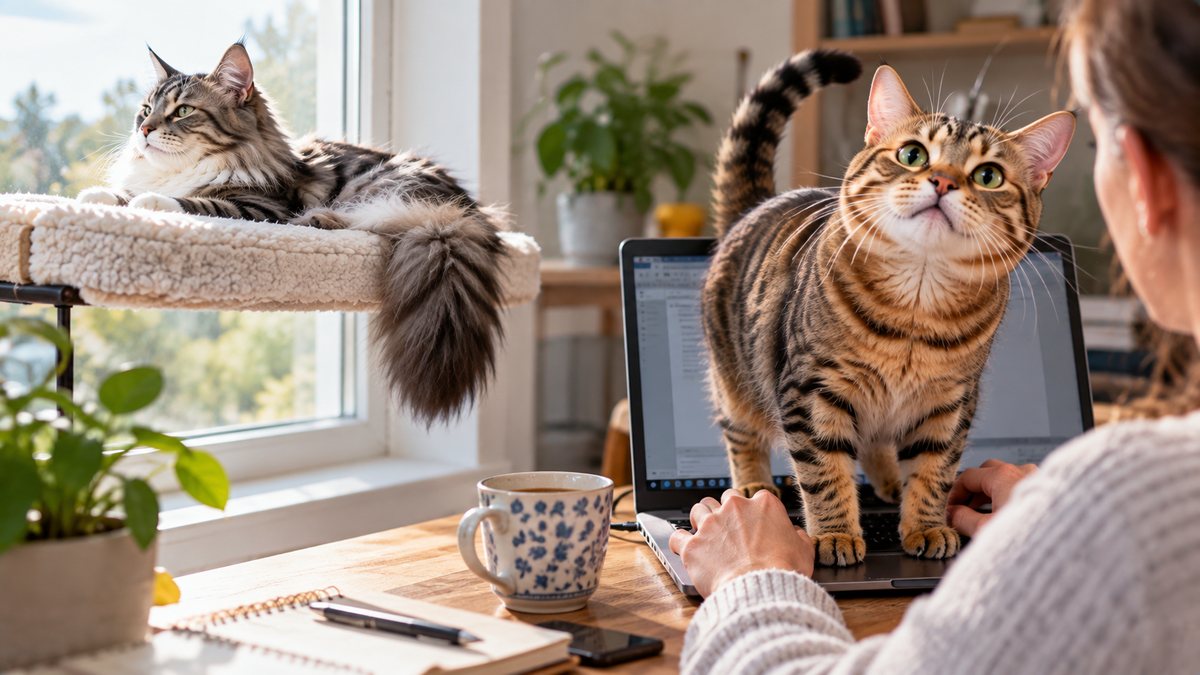
Compare breeds by independence & social demand. The ordering follows the characteristic itself rather than the alphabet whenever a meaningful order exists.
Discuss Independence & social demand in the forum
| # | Breed | Independence & social demand |
|---|---|---|
| 1 | Very high Abyssinians are intensely interactive and inquisitive, usually wanting frequent participation in whatever their people are doing. | |
| 2 | Very high Bengals have very high interaction and stimulation needs and generally do best with frequent engagement rather than long stretches of social inactivity. | |
| 3 | Very high social demand Bombays generally want substantial human company and attention. | |
| 4 | Very high Burmese strongly seek company and involvement and are poorly suited to prolonged isolation. | |
| 5 | Very high social demand Chausies generally do poorly with long periods alone and benefit from frequent interaction or a compatible feline companion. | |
| 6 | Very high social demand As a Siamese-derived breed, the Colorpoint Shorthair is highly people-oriented and usually needs frequent companionship, interaction and inclusion in household life. | |
| 7 | Very high Persistent social/play behavior creates unusually high interaction demand. | |
| 8 | Very high The breed seeks extensive companionship and interaction. | |
| 9 | Very high social demand They want regular companionship and are poorly suited to routinely long periods alone. | |
| 10 | Very high social demand European Burmese are strongly people-oriented and usually seek frequent attention and involvement; prolonged routine isolation is a poor fit. | |
| 11 | Very high | |
| 12 | Very high social demand Needs companionship and generally does not enjoy being ignored or left alone for long periods. | |
| 13 | Very high social demand Oriental Bicolors share the Oriental/Siamese social profile: intensely people-focused, interactive and poorly suited to prolonged routine isolation. | |
| 14 | Very high Oriental group evidence supports unusually high social demand. | |
| 15 | Very high social demand Needs substantial companionship and generally does poorly with prolonged isolation. | |
| 16 | Very high social demand Peterbalds are characteristically affectionate, interactive and people-focused, generally needing frequent companionship and involvement. | |
| 17 | Very high | |
| 18 | Very high | |
| 19 | Very high social demand Singapuras thrive on interaction and generally do best with substantial human or feline companionship. | |
| 20 | High social demand Snowshoes are very social and generally do not thrive when routinely left alone for long periods. | |
| 21 | Very high Sphynx cats have a strong need for warmth, company and household involvement and are poorly suited to frequent prolonged isolation. | |
| 22 | Very high social demand The Suffolk descends from highly social Oriental-type cats and is best assessed as strongly people-oriented, interactive and poorly suited to prolonged isolation. | |
| 23 | Very high Strong interaction and companionship needs are characteristic. | |
| 24 | Very high social demand These Thai-group varieties share the strongly interactive, people-oriented social style of the Thai breed and generally need substantial companionship. | |
| 25 | Very high Tonkinese seek substantial companionship and dislike being socially isolated. | |
| 26 | High social demand Strongly social and generally dislikes being left alone for long periods. | |
| 27 | High social demand The breed is strongly people-oriented and generally prefers regular involvement with its household. | |
| 28 | High social demand This strongly people-oriented breed generally prefers regular companionship and involvement in household life. | |
| 29 | High social demand Tiffanies inherit the strongly people-oriented Asian/Burmese social style and generally prefer frequent companionship and household involvement. | |
| 30 | High social demand They thrive on regular human companionship and are not ideal for routinely long periods alone. | |
| 31 | High social demand Balinese thrive on attention and company and are poorly suited to being left alone for long periods. | |
| 32 | High social demand Bambinos are typically outgoing, affectionate companion cats that benefit from frequent human contact and are not ideal for routine long isolation. | |
| 33 | High Strong family involvement and following behavior indicate substantial social demand without the intensity of Siamese. | |
| 34 | High independence They are comparatively independent and can usually entertain themselves calmly when alone. | |
| 35 | High social demand Burmillas are affectionate, people-focused cats that usually want regular companionship, though they are less intensely demanding than the most dependent Oriental breeds. | |
| 36 | High social demand The breed can be demanding of attention and generally does best with regular social interaction. | |
| 37 | High social demand The Chantilly-Tiffany prefers regular companionship and generally does not thrive when left alone for long periods. | |
| 38 | High social demand Cherubim are selected for an affectionate companion temperament and generally prefer substantial contact with their household rather than long periods of isolation. | |
| 39 | High independence The Chinese Li Hua has a distinctly independent side despite being an engaged companion. | |
| 40 | High social demand Dwelfs combine highly companion-oriented parent breeds and are generally expected to seek frequent warmth, contact and interaction with familiar people. | |
| 41 | High social demand Human companionship and interaction are particularly important to the German Rex. | |
| 42 | High social demand This strongly people-oriented breed generally prefers regular companionship and involvement in household life. | |
| 43 | High High interaction and intelligence create substantial social engagement needs. | |
| 44 | High independence The breed is affectionate but notably independent, often preferring interaction on its own terms. | |
| 45 | High social demand Khao Manees are active, intelligent and people-oriented cats that generally benefit from frequent interaction and companionship. | |
| 46 | High social demand Kinkalows are typically playful, outgoing companion cats and generally do best with regular social contact rather than prolonged isolation. | |
| 47 | High social demand This strongly people-oriented breed generally prefers regular companionship and involvement in household life. | |
| 48 | High social demand LaPerms are notably people-oriented and affectionate, often seeking proximity and interaction while still allowing periods of independent activity. | |
| 49 | High social demand Lykois are active, curious and socially engaged cats that generally benefit from regular interaction with people or compatible animal companions. | |
| 50 | Moderate to high social demand Manx generally prefer not to be left alone for long periods. | |
| 51 | High social demand Mekong Bobtails are strongly attached, interactive cats that usually prefer substantial involvement with their household. | |
| 52 | High social demand Minskins are outgoing, affectionate companion cats and generally prefer frequent social contact and household involvement. | |
| 53 | High social demand Neva Masquerades share the Siberian tendency toward strong family involvement and generally prefer regular companionship while remaining capable cats. | |
| 54 | High social demand Ocicats are highly interactive, intelligent cats that generally want regular participation in household activity and can become bored with too much isolation. | |
| 55 | High social demand Historical accounts place the Oregon Rex among the affectionate, people-oriented rex types, suggesting a relatively high need for companionship and interaction. | |
| 56 | High Strong companionship needs are characteristic without requiring Oriental-level intensity. | |
| 57 | High Ragdolls strongly prefer human company but are generally less relentlessly demanding than Oriental-type breeds. | |
| 58 | High social demand The breed is people-oriented and tends to prefer regular company to long periods alone. | |
| 59 | High social demand Scottish Folds generally prefer regular companionship and do not do well when left alone for long periods. | |
| 60 | High social demand Scottish Straights generally share the affectionate, household-oriented temperament of the Scottish breed group and prefer regular companionship. | |
| 61 | High social demand Serengetis are active, confident and interactive cats that benefit from regular social engagement and stimulation rather than long periods alone. | |
| 62 | High Strong family involvement supports high social engagement without evidence of extreme dependence. | |
| 63 | High social demand Somalis thrive on company and are best suited to homes where people or compatible cats provide regular companionship. | |
| 64 | High social demand The breed is people-oriented and generally prefers regular companionship to long periods alone. | |
| 65 | High social demand This strongly people-oriented breed generally prefers regular companionship and involvement in household life. | |
| 66 | High social demand Toybobs are typically affectionate, companion-oriented cats that enjoy frequent contact and involvement with familiar people. | |
| 67 | High social demand Toygers benefit from regular interaction and can become more aloof when chronically ignored. | |
| 68 | High social demand Ukrainian Levkoys are generally described as affectionate, sociable companion cats that prefer regular human contact and household involvement. | |
| 69 | High social demand York Chocolates were known as affectionate, people-oriented cats that tended to seek regular companionship and participation in family life. | |
| 70 | Moderate Aegeans are sociable household cats but retain enough self-direction to occupy themselves between periods of interaction. | |
| 71 | Moderate American Ringtails tend to enjoy family company without being relentlessly dependent; regular attention is welcome rather than constantly demanded. | |
| 72 | Moderate Aphrodite Giants generally form warm household bonds while retaining the steady independence expected of a large natural-type cat. | |
| 73 | Moderate Brazilian Shorthairs are generally sociable and adaptable, enjoying regular family contact while retaining normal feline independence. | |
| 74 | Moderate to high social demand Cymrics tend to form strong family attachments and appreciate regular company, while usually retaining more independence than Oriental-type companion breeds. | |
| 75 | Moderate Cyprus cats are generally social and adaptable but retain the practical independence typical of a natural island population. | |
| 76 | Moderate to high social demand Egyptian Maus bond intensely with chosen people and value regular interaction, but their selective social style includes a meaningful independent streak. | |
| 77 | Moderate to high social demand Foldex cats are generally affectionate companion cats that prefer regular household contact, while usually tolerating normal periods of independent rest. | |
| 78 | Moderate German Longhairs are generally even-tempered and people-friendly without being unusually dependent, balancing companionship with quiet independence. | |
| 79 | Moderate The Korean Bobtail is best assessed as a socially adaptable cat with ordinary companionship needs rather than either extreme dependence or aloofness. | |
| 80 | Moderate to high social demand Lambkins are generally gentle companion cats that appreciate regular household company, though their social demand is not usually extreme. | |
| 81 | Moderate Maine Coons value companionship and household involvement without usually being excessively dependent on constant attention. | |
| 82 | Moderate to high social demand Minuets tend to be affectionate and people-oriented but usually combine that attachment with the calmer independence of their Persian ancestry. | |
| 83 | Moderate to high social demand Munchkins are typically sociable and playful, enjoying regular family interaction without generally reaching Siamese-level dependence. | |
| 84 | Moderate With limited breed-specific behavioral evidence, the best current assessment is ordinary companion-level social demand rather than marked dependence or aloofness. | |
| 85 | Moderate to high social demand Pixie-bobs commonly form strong family bonds and enjoy household participation, but are generally less socially demanding than Oriental-type breeds. | |
| 86 | Moderate Strong attachment coexists with an ability to entertain themselves. | |
| 87 | Moderate Social and affectionate without the unusually high dependence of Oriental-type breeds. | |
| 88 | Moderate Evidence is limited, but the Serrade Petit is best assessed as having ordinary feline social needs: regular companionship without unusually high dependence. | |
| 89 | Moderate Sokokes can form strong bonds and enjoy interaction, but their active natural-breed temperament also supports substantial independence and self-directed activity. | |
| 90 | Moderate Breed-specific behavioral evidence remains limited; its natural-population background supports a best-current assessment of moderate social demand with functional independence. | |
| 91 | Moderate to high social demand Turkish Angoras often bond strongly with their household and seek involvement, but their assertive, self-directed temperament preserves meaningful independence. | |
| 92 | Moderate Strong attachment coexists with meaningful independence. | |
| 93 | Moderate to high social demand Turkish Vankedisi are best assessed similarly to closely related Turkish cats: strongly bonded and socially engaged, but not helplessly dependent on constant attention. | |
| 94 | Low to moderate Comparatively self-sufficient and able to entertain itself in a busy household. | |
| 95 | Low to moderate social demand American Wirehairs are typically affectionate but fairly self-sufficient, making ordinary periods alone easier for them than for highly people-dependent breeds. | |
| 96 | Low to moderate social demand Arabian Maus can bond closely with people but their landrace background and active temperament support relatively good self-sufficiency. | |
| 97 | Low Calm, undemanding temperament supports comparatively high independence. | |
| 98 | Low Chartreux are affectionate but notably undemanding and self-contained, making them comparatively comfortable with ordinary periods alone. | |
| 99 | Low to moderate social demand European Shorthairs are typically balanced companions with enough independence to manage ordinary periods alone provided their environment remains enriching. | |
| 100 | Low to moderate social demand Exotic Shorthairs enjoy affection and familiar company but are usually calm and comparatively undemanding rather than constantly seeking interaction. | |
| 101 | Low Affectionate but comparatively undemanding. | |
| 102 | Independent but affectionate They combine notable independence with strong affection for familiar people. | |
| 103 | Close to family but can cope with time alone Nebelungs are devoted companions but are generally capable of entertaining themselves when the household is out. | |
| 104 | Low Norwegian Forest Cats are affectionate family companions but comparatively independent and generally capable of occupying themselves. | |
| 105 | Low The breed is affectionate but characteristically calm and not highly demanding. | |
| 106 | Low to moderate social demand As a natural island population with limited companion-breed selection, Raas cats are best assessed as relatively self-sufficient while still capable of close household bonds. |








































































































Breed comparisons describe tendencies, not guarantees about an individual cat. Approximate entries are kept separate from the canonical research record and can be refined as better evidence arrives.
 English