
Indoor & home environment needs in Cat Breeds
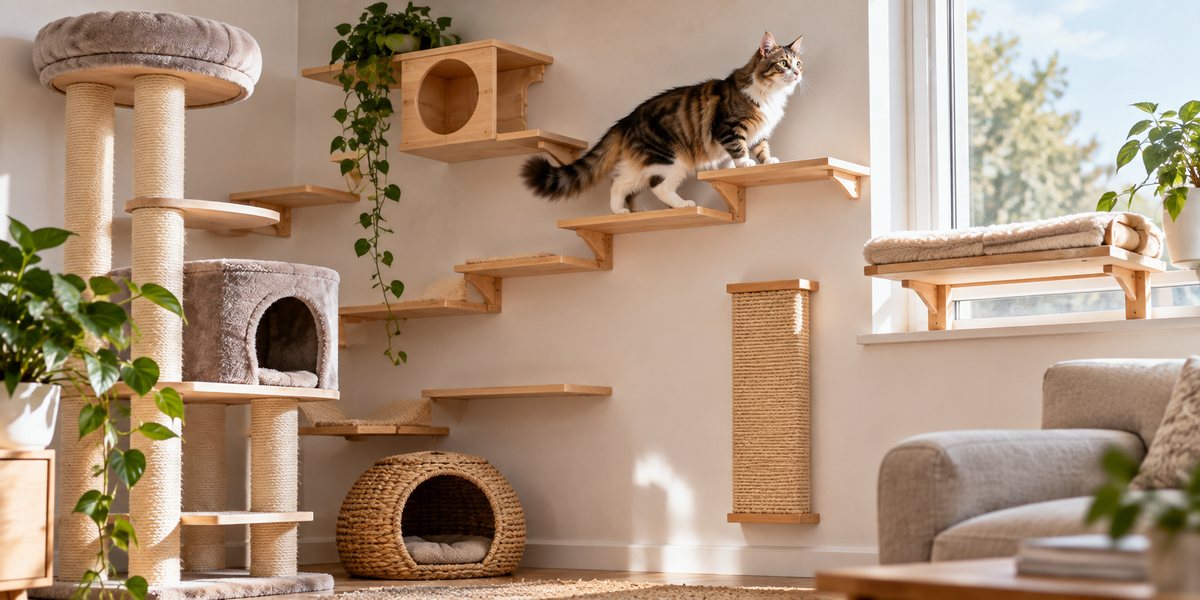
Compare breeds by indoor & home environment needs. The ordering follows the characteristic itself rather than the alphabet whenever a meaningful order exists.
Discuss Indoor & home environment needs in the forum
| # | Breed | Indoor & home environment needs |
|---|---|---|
| 1 | Accessible active indoor Manx cats are playful and often powerful jumpers, but spinal and hind-limb function varies. Indoor enrichment should be tailored to the individual, using stable climbing routes, accessible resting places and active play without forcing difficult jumps. | |
| 2 | Accessible enriched indoor Cymrics benefit from enriched indoor living, but climbing routes should suit the individual's spinal and hind-limb function. Stable steps, easy-access perches, scratching areas and regular play can provide activity without forcing difficult jumps. | |
| 3 | Accessible enriched indoor Kinkalows are playful and curious, but short legs can change how they negotiate height. Use stable stepped climbing routes, reachable perches, scratching surfaces and frequent interactive play rather than assuming they need little exercise. | |
| 4 | Accessible enriched indoor Lambkins are short-legged cats, so useful enrichment should be accessible rather than simply tall. Stable steps, low-to-moderate perches, easy-entry resources, scratching surfaces and regular interactive play allow activity without demanding large jumps. | |
| 5 | Accessible enriched indoor Minuets are companionable indoor cats, but short legs make accessibility important. Low or stepped climbing furniture, easy-entry litter boxes where needed, scratching options and regular play provide enrichment without requiring large jumps. | |
| 6 | Accessible indoor comfort Foldex cats should have indoor resources that remain easy to use if inherited skeletal discomfort develops. Low or stepped perches, accessible beds and litter boxes, scratching options and gentle play are preferable to an environment demanding repeated high jumps. | |
| 7 | Accessible indoor comfort Scottish Folds require an indoor environment designed around the possibility of painful osteochondrodysplasia. Use easy-access beds, litter boxes and low or stepped perches, avoid demanding jumps, and adjust play to the cat's comfort and mobility. | |
| 8 | Active indoor enrichment Aegeans are agile, inquisitive island cats accustomed to using complex outdoor space. Indoor homes should compensate with tall climbing routes, window observation, frequent hunting-style play and enough variety to prevent a capable explorer from becoming under-stimulated. | |
| 9 | Active indoor enrichment American Curls are curious, playful cats that benefit from an indoor home with climbable territory, window observation and regular interactive games. Their ears should not be handled or bent during play, and quiet retreat areas remain important. | |
| 10 | Active indoor enrichment Aphrodite Giants are large, athletic Cyprus-derived cats. Indoor homes should use sturdy oversized climbing and scratching furniture, generous resting surfaces and regular active play so a substantial cat can move and stretch comfortably. | |
| 11 | Active indoor enrichment Brazilian Shorthairs are active, adaptable cats that benefit from usable vertical territory and regular movement. Indoor homes should include climbing, scratching, window observation, hunting-style play and quiet areas where the cat can disengage. | |
| 12 | Active indoor enrichment California Spangled cats are athletic, curious and built for climbing and leaping. A satisfying indoor home needs substantial vertical territory, vigorous chase-and-pounce play, observation points and rotating enrichment. | |
| 13 | Active indoor enrichment Cyprus cats are athletic island cats that benefit from substantial indoor complexity. Sturdy climbing routes, observation points, scratching areas and frequent hunting-style play help provide the movement and exploration an indoor individual needs. | |
| 14 | Active indoor enrichment Dragon Li cats have an alert, athletic natural-cat profile and benefit from an indoor environment that offers autonomy as well as activity. Multiple high perches, hiding places, scratching zones and challenging hunting-style play help replace outdoor complexity. | |
| 15 | Active indoor enrichment Kanaani cats are athletic, alert and relatively independent. Indoor homes should provide extensive vertical routes, opportunities to run and stalk, secluded resting places and varied enrichment so the cat can control both activity and social distance. | |
| 16 | Active indoor enrichment Kurilian Bobtails are large, athletic natural-breed cats that need sturdy environmental resources. Strong climbing furniture, large scratching posts, vigorous hunting-style play and enough usable territory help an indoor cat express its physical capabilities. | |
| 17 | Active indoor enrichment Neva Masquerades are large, athletic Siberian-type cats. They benefit from sturdy tall climbing furniture, generous scratching surfaces, active daily play and cool comfortable resting areas suited to a substantial, heavily coated cat. | |
| 18 | Active indoor enrichment Pixie-bobs are robust, active cats that benefit from sturdy climbing and scratching structures sized for a substantial body. Regular interactive play, exploration opportunities and quiet retreat areas help balance their social and physical needs. | |
| 19 | Active indoor enrichment Raas cats come from an island landrace and are best assumed to benefit from substantial environmental complexity. Indoor living should provide climbing routes, secluded retreats, scratching sites, observation points and active hunting-style play. | |
| 20 | Active indoor enrichment Toygers are athletic, curious cats that benefit from an indoor environment emphasizing movement and engagement. Sturdy vertical territory, running and stalking games, puzzle feeding and regular training or interactive play suit their active companion profile. | |
| 21 | Active indoor enrichment Turkish Vankedisi cats are best expected to share the active, agile profile of Turkish Angora-type populations. Indoor homes should provide tall climbing routes, energetic play, observation points and enough autonomy for the cat to choose social distance. | |
| 22 | Adapts well to ordinary household life when given play, scratching and resting spaces. | |
| 23 | Balanced indoor American Ringtails are adaptable companion cats with ordinary feline environmental needs. Multiple perches, scratching sites, hiding places, window views and daily interactive play should provide a good indoor baseline without requiring specialized housing. | |
| 24 | Balanced indoor American Wirehairs are usually moderate, adaptable cats and do not require an extreme indoor setup. Sturdy scratching posts, several perches, hiding and resting places, window views and daily play provide a strong baseline while allowing independent downtime. | |
| 25 | Balanced indoor Australian Mists were developed specifically as companion cats suited to indoor life. They still need daily play, scratching options, perches and observation opportunities, but their moderate temperament generally fits a conventional enriched household well. | |
| 26 | Balanced indoor Chantilly-Tiffany cats were described as affectionate, moderately active companions. A conventional enriched indoor home with perches, scratching, hiding places, daily play and comfortable social resting areas should suit most individuals. | |
| 27 | Balanced indoor Chartreux are calm but capable cats that benefit from both quiet resting territory and regular activity. A suitable indoor home includes sturdy perches, scratching surfaces, short interactive hunting games and food management to prevent sedentary weight gain. | |
| 28 | Balanced indoor European Shorthairs are generally adaptable, robust domestic cats. A strong indoor baseline includes several perches and retreats, scratching surfaces, window observation and daily interactive play, with intensity adjusted to the individual cat. | |
| 29 | Balanced indoor Korean Bobtails lack enough breed-wide behavioral evidence for specialized housing claims. Provide a versatile indoor environment with vertical territory, hiding and observation points, scratching resources and daily interactive play, then adjust to the individual's activity. | |
| 30 | Balanced indoor The Korn Ja is too sparsely documented for highly specialized housing claims. A varied indoor environment with climbing, scratching, hiding, observation and daily interactive play provides a sensible baseline while individual preferences are learned. | |
| 31 | Balanced indoor Ojos Azules are too sparsely documented to justify unusual indoor requirements. The sound default is a varied feline environment with climbing, scratching, hiding, observation opportunities and regular interactive play matched to the individual. | |
| 32 | Balanced indoor The extinct Oregon Rex lacks enough evidence for specialized environmental requirements. Historical companion-cat descriptions support a conventional enriched setup with warm resting areas, climbing, scratching, observation and regular play. | |
| 33 | Balanced indoor Sam Sawet cats are too sparsely documented for highly specialized housing claims. A well-designed indoor environment should therefore cover robust feline basics: vertical territory, hiding and resting places, scratching options, window observation and regular interactive play. | |
| 34 | Balanced indoor Scottish Straights generally fit ordinary enriched indoor homes well. Provide scratching surfaces, comfortable perches, hiding areas and daily play, with food and activity managed so a moderate companion lifestyle does not drift into inactivity. | |
| 35 | Balanced indoor The Serrade Petit lacks enough behavioral documentation to justify unusual housing requirements. Indoor welfare is best supported with multiple resting and hiding sites, usable vertical space, scratching surfaces and daily interactive play tailored to the individual. | |
| 36 | Balanced indoor Suphalaks are rare and their housing needs are not documented in enough detail to justify an extreme profile. A varied indoor home with climbing, scratching, observation points, retreats and daily interactive play is the sound default. | |
| 37 | Balanced indoor The developing Transylvanian breed has no established need for specialized housing. A varied indoor home with perches, scratching areas, hiding places, window observation and regular interactive play is the best current baseline. | |
| 38 | Balanced indoor York Chocolates were described as affectionate, playful companion cats. A conventional enriched indoor home with climbing and scratching options, comfortable social resting areas, window views and daily play should meet their likely needs. | |
| 39 | Calm companionship · secure indoor living Ragdolls benefit from close household companionship and secure living rather than reliance on outdoor independence. | |
| 40 | Calm flexible home · weight management Undemanding indoor temperament is flexible, while lower activity makes weight management relevant. | |
| 41 | Calm home · ground level access · routine Persian-family temperament and conformation favor calm, protected household living. | |
| 42 | Calm home · ground level access · routine Persians generally suit a calm indoor home with accessible resting places, scratching options and gentle daily play. Because of their placid style and flat-faced conformation in many lines, useful enrichment should not depend on strenuous jumping or prolonged exertion. | |
| 43 | Calm indoor weight focus British Longhairs are relatively calm and can thrive indoors without an exceptionally intense environment. Provide accessible perches, scratching sites and regular play while actively managing food and exercise because a low-key lifestyle can promote excess weight. | |
| 44 | Calm indoor weight focus Exotic Shorthairs generally suit indoor life well, but their low-to-moderate activity makes weight management important. Provide accessible climbing, scratching and short play sessions, plus cool comfortable resting areas because flat-faced individuals can tolerate heat and exertion poorly. | |
| 45 | Companionship · routine coat care Home needs are moderate, with emphasis on companionship and coat-specific care. | |
| 46 | Flexible home · weight management Broad adaptability suits many homes; moderate activity makes routine weight/play management useful. | |
| 47 | Gentle companionship · moderate play Birmans benefit from family involvement without requiring an exceptionally intense environment. | |
| 48 | Gentle companionship · secure indoor living Close social temperament and low defensiveness favor protected companion living. | |
| 49 | High activity indoor Arabian Maus are athletic landrace cats adapted to roaming and environmental challenge. Indoor homes need substantial movement opportunities, tall climbing routes, vigorous hunting-style play and varied observation points to compensate for reduced outdoor complexity. | |
| 50 | High activity indoor Balinese are agile, intelligent and intensely social. Indoor homes should provide tall climbing routes, puzzle feeding, frequent chase-and-pounce play and substantial human involvement; a low-stimulation environment is a poor fit. | |
| 51 | High activity indoor Colorpoint Shorthairs are active, vocal and strongly people-oriented. They need substantial social contact, vertical territory, puzzle activities and vigorous daily play; enrichment should address both physical activity and their demand for interaction. | |
| 52 | High activity indoor Egyptian Maus are exceptionally athletic and fast. Indoor homes should offer long running routes where possible, tall stable climbing structures, high observation points and frequent hunting-style play to provide an outlet for their speed and vigilance. | |
| 53 | High activity indoor Highlanders are energetic, powerful players that need more than ordinary floor space. Tall sturdy climbing structures, large scratching surfaces, vigorous daily play and puzzle feeding are especially useful for keeping an indoor Highlander physically and mentally occupied. | |
| 54 | High activity indoor Ocicats are highly athletic, intelligent and social. Indoor homes should provide tall climbing routes, vigorous interactive play, puzzle feeding and training opportunities; their needs are better met by active enrichment than by floor space alone. | |
| 55 | High activity indoor Oriental Bicolors are active, intelligent and highly social. They benefit from tall climbing territory, puzzle feeding, vigorous interactive play and frequent household involvement; environmental and social enrichment are both important. | |
| 56 | High activity indoor Serengetis are long-legged, athletic cats that need substantial indoor outlets for running, jumping and chasing. Tall sturdy climbing structures, open movement routes, puzzle feeding and frequent vigorous play are particularly appropriate. | |
| 57 | High activity indoor Sokokes are athletic, alert natural-breed cats that benefit from a physically complex indoor territory. Tall climbing routes, running and jumping opportunities, puzzle feeding and frequent hunting-style play are important outlets for their activity and exploration. | |
| 58 | High activity indoor Somalis are exceptionally agile, exploratory cats and need a physically and mentally rich indoor territory. Tall climbing routes, running and jumping opportunities, puzzle feeding and frequent interactive hunting games are particularly valuable. | |
| 59 | High activity indoor Turkish Angoras are athletic, intelligent climbers that often seek the highest usable points in a home. Tall stable cat trees, shelves, vigorous play, puzzle activities and freedom to move between social and quiet areas suit them well. | |
| 60 | High enrichment · interactive search play Problem-solving and prey-oriented play favor substantial enrichment. | |
| 61 | High enrichment · robust vertical space · secure home Savannahs need exceptional environmental management for a domestic cat: robust tall climbing structures, secure doors and windows, challenging puzzle enrichment and substantial daily interactive activity. Their jumping ability, curiosity and persistence make ordinary minimal indoor setups inadequate. | |
| 62 | High enrichment · vertical space · interactive play Bengals need unusually substantial indoor enrichment: tall robust climbing structures, vigorous interactive play, puzzle feeding and, for suitable individuals, exercise wheels or training. A sparse environment can leave their high activity and problem-solving drive underused. | |
| 63 | High social contact · interactive play Strong need for companionship and active involvement makes isolated low-interaction homes a poor fit. | |
| 64 | Interactive home · enrichment Puzzle toys, tricks and family involvement suit the breed. | |
| 65 | Interactive home · vertical space · puzzle enrichment Japanese Bobtails are agile, social and intelligent. Indoor homes should offer jumping and climbing opportunities, puzzle activities, training or fetch-style games and regular family involvement to channel their active curiosity. | |
| 66 | Large cat space · robust vertical space · water management Large body size, climbing interests and fascination with water can affect practical home setup. | |
| 67 | Predictable home · interactive play · climbing High intelligence/activity combined with close family attachment favor interactive but predictable homes. | |
| 68 | Quiet predictable home · routine · high perches Russian-type cats often appreciate predictable routines, quiet retreat areas and high observation points from which they can watch before joining activity. Daily play and climbing remain important, but the environment should also protect their preference for calm, controllable social contact. | |
| 69 | Quiet, stable home with climbing opportunities A quiet, predictable home suits the Nebelung particularly well, with high places for climbing and observation. | |
| 70 | Robust vertical space · room to climb Norwegian Forest Cats are large, powerful climbers and need sturdy vertical territory sized for their body. Tall cat trees or shelves, large scratching surfaces, active play and cool comfortable resting areas suit their natural athleticism and heavy coat. | |
| 71 | Small cat safe indoor Toybobs are exceptionally small cats, so indoor safety and appropriately scaled resources matter. Provide stable low-to-moderate climbing options, small secure retreats, scratching sites and active play while blocking gaps or hazards a tiny cat could enter. | |
| 72 | Social enriched indoor Asian cats are active, people-oriented companions that do best indoors when they can participate in household life. Provide climbing furniture, puzzle play, scratching sites and frequent interactive sessions rather than expecting them to entertain themselves for long periods. | |
| 73 | Social enriched indoor Tiffanies are affectionate, playful companions that benefit from an indoor home with regular social contact, moderate climbing territory, scratching options and interactive play. Comfortable grooming and resting areas also suit the semi-long coat. | |
| 74 | Social enriched indoor Bombays are affectionate, playful and strongly people-oriented. Indoor life works best with warm resting places, climbing and scratching territory, puzzle toys and frequent interactive play close to household activity. | |
| 75 | Social enriched indoor Burmillas combine playful curiosity with a generally moderate companion temperament. They do well indoors with climbing and scratching options, daily interactive play and accessible resting places near household activity. | |
| 76 | Social enriched indoor European Burmese are highly social, playful cats that can become frustrated in a sparse or lonely indoor environment. They benefit from frequent human or compatible-animal companionship, climbing territory, puzzle play and several energetic interactive sessions each day. | |
| 77 | Social enriched indoor German Rex cats are lively, curious and people-oriented. Indoor living suits them when the home offers climbing, warm resting places, frequent interactive play and regular social contact rather than a sparse or isolated environment. | |
| 78 | Social enriched indoor Havana Browns are inquisitive, interactive cats that like to investigate household activity. A good indoor home offers climbing, puzzle toys, scratching areas and frequent hands-on play, with quiet retreats available when the cat chooses downtime. | |
| 79 | Social enriched indoor Khao Manees are lively, curious and people-oriented. Indoor homes should combine vertical exploration, frequent interactive play and puzzle activities with substantial household contact; they are less suited to long periods in a sparse environment. | |
| 80 | Social enriched indoor LaPerms are affectionate, curious and moderately active. They generally thrive indoors with accessible climbing and observation points, scratching surfaces, regular interactive play and opportunities to remain near their people. | |
| 81 | Social enriched indoor Mekong Bobtails are active, social cats that generally want to be involved with people. A good indoor setup combines climbing and scratching territory with frequent interactive play, puzzle activities and resting places close to household activity. | |
| 82 | Social enriched indoor Singapuras are small but highly curious and active. They make excellent use of vertical space, warm elevated resting places, puzzle toys and frequent interactive play, and usually prefer being involved in household activity rather than isolated. | |
| 83 | Social enriched indoor Snowshoes are active, social Siamese-derived cats that generally want both play and companionship. Indoor homes should provide climbing territory, interactive games, puzzle feeding and regular involvement with people or compatible animals. | |
| 84 | Social enriched indoor Suffolks inherit an active, highly social Oriental-type temperament. Indoor homes should provide frequent human interaction, tall climbing territory, puzzle activities and vigorous play; long periods in a low-stimulation environment are a poor fit. | |
| 85 | Social enriched indoor Tennessee Rex cats are generally described as affectionate companions. Indoor homes should combine ordinary feline resources—climbing, scratching, hiding and observation—with regular interactive play and comfortable places near their people. | |
| 86 | Social enriched indoor Thai cats are active, vocal and strongly people-focused. A satisfying indoor home combines tall climbing and observation areas with frequent interactive play, puzzle activities and substantial daily social contact. | |
| 87 | Social enriched indoor These Thai color varieties share the active, social temperament of the Thai breed. A good indoor home offers tall climbing territory, frequent interactive play, puzzle activities and plenty of household involvement rather than prolonged isolation. | |
| 88 | Staged vertical access · interactive play Munchkins remain playful and exploratory despite short legs. Stable stepped routes and closely spaced platforms let them gain useful vertical territory through smaller jumps, alongside floor-level running space, scratching resources and daily interactive play. | |
| 89 | Vertical space · active home · water management Acrobatic climbing and unusual interest in water affect home setup. | |
| 90 | Vertical space · high enrichment · interactive home Abyssinians need a vertically rich, highly interactive indoor environment. Tall climbing routes, high observation points, puzzle feeding and frequent active play suit a cat that explores continuously and wants to participate in household activity. | |
| 91 | Vertical space · interactive home Agility, investigation and family involvement favor climbing and interactive opportunities. | |
| 92 | Very high enrichment · robust vertical space · company Chausies are large, powerful, high-energy cats that need robust vertical structures, room for athletic movement, challenging enrichment and frequent interaction. Their indoor environment should be designed for strong jumping and sustained activity rather than ordinary sedentary companionship. | |
| 93 | Very high social contact · interactive play Siamese require substantial companionship and interactive household life. | |
| 94 | Very high social contact · interactive play Tonkinese strongly seek companionship and active household involvement. | |
| 95 | Very high social contact · interactive play · vertical space Oriental group needs apply with qualification to the longhaired form. | |
| 96 | Very high social contact · interactive play · vertical space Oriental Shorthairs need both social and environmental intensity: frequent companionship, vigorous interactive play, tall climbing territory and puzzle activities. Long periods alone in a low-stimulation home are a poor match for their athletic, involved temperament. | |
| 97 | Warm accessible indoor Bambinos need warm indoor conditions because of sparse or absent coat, while short legs make accessible resources important. Provide warm beds, stable stepped climbing options, easy-to-reach perches and active play without forcing large jumps. | |
| 98 | Warm accessible indoor Dwelfs combine hairlessness with short legs, making both thermal comfort and accessibility central. A suitable indoor home provides warm beds, draft-free resting areas, stable low or stepped climbing routes and regular interactive enrichment. | |
| 99 | Warm accessible indoor Minskins are sparsely coated and short-legged. Indoor homes should provide reliable warmth, soft resting surfaces, accessible low or stepped perches and daily play, while avoiding cold drafts and layouts that require repeated large jumps. | |
| 100 | Warm accessible indoor Ukrainian Levkoys are hairless and may also have folded-ear ancestry, so indoor design should prioritize warmth, soft resting areas and easy access. Provide gentle play, stable climbing options and avoid forcing activity if joint discomfort is evident. | |
| 101 | Warm home · high enrichment · vertical space Fine coat plus acrobatic activity favor warm, enriched indoor environments. | |
| 102 | Warm home · high social contact · interactive play Fine coat, close-contact behavior and high sociability favor warm, interactive indoor living. | |
| 103 | Warm indoor Donskoys are hairless cats with limited protection from cold and strong sun, so temperature-controlled indoor living is especially appropriate. Warm resting places, climbing and scratching options, frequent social contact and active play meet both thermal and behavioral needs. | |
| 104 | Warm indoor environment · social companionship Hairlessness and strong social demand make warm, companion-rich indoor conditions particularly important. | |
| 105 | Warm social indoor Peterbalds with little or no coat need protection from cold and excessive sun and usually seek substantial social contact. Warm resting places, climbing and scratching resources, frequent interactive play and household involvement suit indoor life well. | |
| 106 | Well suited to indoor life when given normal play and companionship. |









































































































Breed comparisons describe tendencies, not guarantees about an individual cat. Approximate entries are kept separate from the canonical research record and can be refined as better evidence arrives.
 English