
Lap & cuddling preference in Cat Breeds
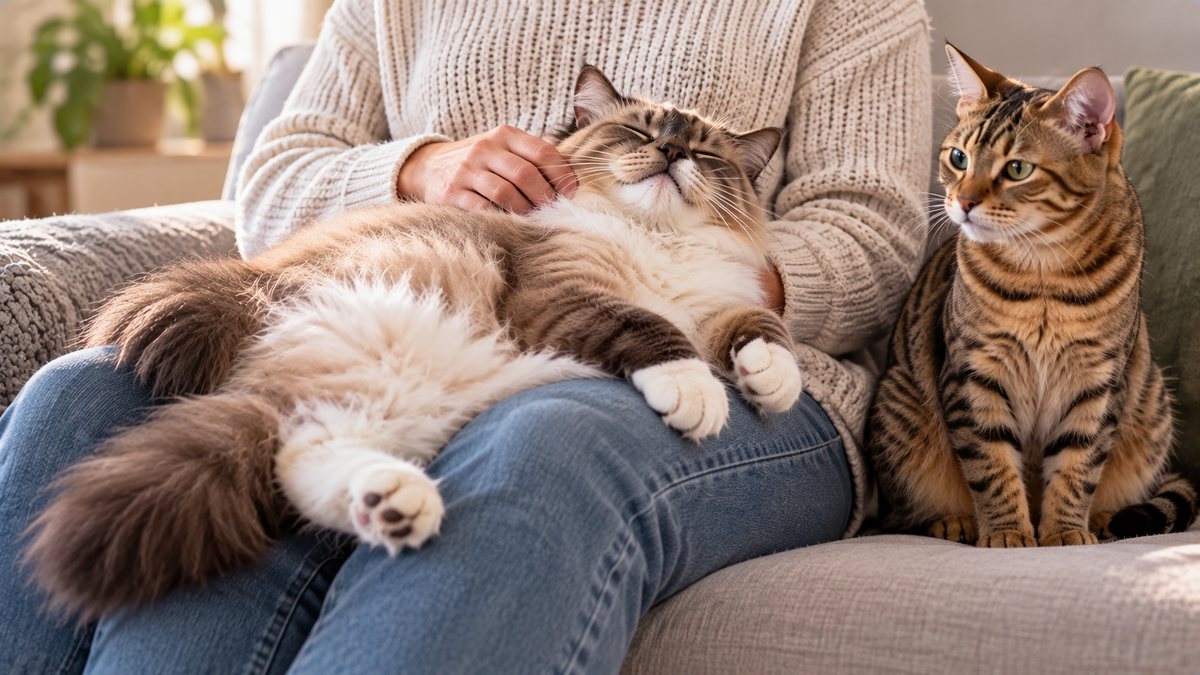
Compare breeds by lap & cuddling preference. The ordering follows the characteristic itself rather than the alphabet whenever a meaningful order exists.
Discuss Lap & cuddling preference in the forum
| # | Breed | Lap & cuddling preference |
|---|---|---|
| 1 | Very high Bambinos are typically highly social and warmth-seeking; the combination makes laps, blankets and close body contact especially attractive resting places. | |
| 2 | Very high The Bombay is notably inclined to cuddle and settle on laps or beside its people. | |
| 3 | Very high Close physical companionship is strongly characteristic. | |
| 4 | Very high Close body contact is a prominent breed behavior. | |
| 5 | Very high Donskoys are unusually people-oriented and, lacking an insulating coat, strongly value warmth; laps and close skin-to-body contact are especially appealing. | |
| 6 | Very high Dwelfs combine a highly social companion temperament with hairlessness and warmth-seeking, so close cuddling and lap use are typically strong preferences. | |
| 7 | Very high European Burmese are intensely affectionate, people-dependent companions and commonly seek sustained physical contact, including laps and cuddling. | |
| 8 | Very high Strong lap and snuggling tendency, including sleeping close to people. | |
| 9 | Very high | |
| 10 | Very high Breed sources consistently support sustained close-body companionship and relaxed cuddling. | |
| 11 | Very high Thai cats are intensely social and people-focused; many actively seek sustained physical closeness and make enthusiastic lap companions. | |
| 12 | Very high These Thai color varieties share the strongly social, affectionate Thai temperament, so frequent cuddling and lap seeking are expected. | |
| 13 | Very high Strong physical companionship is characteristic. | |
| 14 | Very high Ukrainian Levkoys are bred for a sociable companion temperament and their sparse coat increases warmth-seeking, making cuddling and lap contact especially attractive. | |
| 15 | High Many American Curls readily settle on a lap when they are ready to rest. | |
| 16 | High American Ringtails tend to be people-oriented and relaxed with trusted family, making lap and close-body contact fairly common when they settle. | |
| 17 | High Asian cats are strongly people-oriented and tactile; many actively seek close contact and will use a familiar lap as a regular resting place. | |
| 18 | High Tiffanies combine an affectionate, people-focused temperament with a calmer resting style, so lap sitting and cuddling are commonly welcomed. | |
| 19 | High in adults Mature Australian Mists often prefer a warm lap to prolonged high-energy play. | |
| 20 | High Many Balinese readily settle on a lap after active play. | |
| 21 | High Close, gentle contact is characteristic, though not every individual is continuously lap-seeking. | |
| 22 | High Burmillas are affectionate, easygoing companions and commonly enjoy cuddling or settling on a trusted person once playtime is over. | |
| 23 | High Chantilly-Tiffany cats are notably inclined to lounge on the lap of a trusted person. | |
| 24 | High Cherubim cats are selected for a gentle, affectionate companion temperament, making relaxed cuddling and lap contact a frequent part of their social behavior. | |
| 25 | High Colorpoint Shorthairs are intensely people-focused and affectionate; many seek physical closeness readily, including laps, though their lively nature keeps them moving. | |
| 26 | High Warmth-seeking and strong human attachment support high lap/contact preference. | |
| 27 | High Many Exotics readily jump into a familiar lap for a nap. | |
| 28 | High Foldex cats generally inherit an easygoing, affectionate companion style, so many enjoy being close, cuddled and settled on a familiar lap. | |
| 29 | High German Rex cats are affectionate, sociable and warmth-loving; many readily seek cuddling and close resting contact with familiar people. | |
| 30 | High Strong close companionship is common, though touch/interaction is especially distinctive. | |
| 31 | High Close lap-style companionship is commonly supported in Persian/Himalayan profiles. | |
| 32 | High Many Khao Manee are enthusiastic lap cats and shoulder riders. | |
| 33 | High Kinkalows are generally affectionate companion cats and often enjoy close handling and lap contact, while retaining a playful, inquisitive streak. | |
| 34 | High Often enjoys laps and close cuddling. | |
| 35 | High Korn Ja cats are traditionally regarded as affectionate and people-oriented, making close resting contact and lap use a likely part of their companion behavior. | |
| 36 | High Many Kurilian Bobtails readily seek lap or bed contact with their people. | |
| 37 | High Lambkins are bred as gentle companion cats and typically enjoy close contact; their calm periods often include cuddling or resting against a person. | |
| 38 | High LaPerms are notably people-oriented and often seek faces, shoulders and laps; physical closeness is a characteristic part of their affectionate style. | |
| 39 | High Mekong Bobtails are strongly social and people-focused, making cuddling and close physical contact common with trusted family members. | |
| 40 | High Minuets generally combine a gentle, affectionate temperament with a relaxed companion style, so lap sitting and cuddling are commonly favored. | |
| 41 | Often enjoys cuddling Despite their high activity level, Munchkins commonly settle into bed or close contact for cuddling. | |
| 42 | High Historical descriptions portray the Oregon Rex as affectionate and people-oriented, consistent with a relatively strong preference for cuddling and close resting contact. | |
| 43 | High Oriental Bicolors share the strongly social, people-focused Oriental temperament; close contact and laps are commonly sought, interspersed with active interaction. | |
| 44 | High Oriental group evidence supports strong close-contact preference. | |
| 45 | High Persians commonly enjoy quiet lap/close-body companionship. | |
| 46 | High After active play, many Peterbalds readily curl up on a lap or under the covers. | |
| 47 | High Scottish Folds are typically gentle and strongly attached to their households; many enjoy cuddling and lap contact, although some prefer lying immediately beside their person. | |
| 48 | High Scottish Straights generally share the Fold’s gentle, affectionate companion temperament, with frequent close contact and lap sitting in relaxed individuals. | |
| 49 | High Strong cuddling/lap tendency is commonly supported. | |
| 50 | High Close physical companionship is commonly sought, though individuals vary. | |
| 51 | High Close physical companionship is common. | |
| 52 | High After active periods, Singapuras commonly settle on laps or shoulders. | |
| 53 | High Snowshoes are affectionate, people-focused cats that often choose close physical companionship; laps and cuddling are common outlets for that attachment. | |
| 54 | High Strong cuddling tendency; many actively seek arms, laps and close physical contact. | |
| 55 | High Suffolks derive from the Havana Brown/Oriental companion type and are strongly people-oriented, supporting a high expectation of cuddling and close physical contact. | |
| 56 | High Suphalaks are people-oriented Thai cats with an affectionate companion style, making regular cuddling and close resting contact a reasonable expectation. | |
| 57 | High Tennessee Rex cats are known as affectionate household companions and commonly enjoy close contact, including cuddling and lap resting. | |
| 58 | High Toybobs are small, affectionate companion cats that generally enjoy handling and close contact, making laps a common resting choice. | |
| 59 | High York Chocolates were described as affectionate, people-oriented cats that enjoy close companionship, making lap sitting and cuddling a strong tendency. | |
| 60 | Moderate Aegeans are sociable and affectionate, but their active, outdoors-oriented character often favors nearby companionship and interactive contact over long lap sessions. | |
| 61 | Moderate Close contact is common but the breed's social style is broader than lap sitting. | |
| 62 | Moderate Many enjoy lap contact but it is not a defining universal trait. | |
| 63 | Moderate American Wirehairs are affectionate without usually being clingy; many enjoy a lap at quiet times but are equally content resting close by. | |
| 64 | Moderate Aphrodite Giants tend to form warm household bonds, though their large, active build makes beside-you contact at least as characteristic as prolonged lap sitting. | |
| 65 | Moderate Brazilian Shorthairs are sociable and affectionate, but generally retain enough activity and independence that lap contact is common rather than constant. | |
| 66 | Moderate California Spangled cats were developed as active, interactive companions; they can enjoy cuddling, but engagement and nearby companionship are more defining than persistent lap sitting. | |
| 67 | Moderate Close companionship occurs, but the breed is not defined by persistent lap seeking. | |
| 68 | Moderate to high Cymrics are devoted family cats that often enjoy close physical contact, with lap sitting common but balanced by play, observation and following their people. | |
| 69 | Moderate Cyprus cats can be affectionate household companions, but their robust landrace background supports a more flexible contact style rather than a consistently lap-seeking one. | |
| 70 | Moderate European Shorthairs vary with their broad natural-breed background; many enjoy lap contact with trusted people, but independence and individual preference remain substantial. | |
| 71 | Moderate to high German Longhairs are generally calm, balanced and people-friendly, making quiet lap contact quite plausible without the persistent clinginess of the most lap-oriented breeds. | |
| 72 | Moderate Highlanders are interactive and people-friendly but notably playful and athletic, so lap time tends to alternate with active engagement rather than dominate their affection style. | |
| 73 | Moderate Close companionship occurs, but active participation is more characteristic than persistent lap sitting. | |
| 74 | Moderate Korean Bobtails are generally social household cats, but the limited standardized behavioral record supports a moderate expectation: affectionate contact without assuming persistent lap seeking. | |
| 75 | Moderate Lykoi form strong bonds and can be very affectionate, but their energetic, investigative behavior means they often alternate cuddling with patrol, play and exploration. | |
| 76 | Moderate Many enjoy close contact, but the breed is not uniformly lap-oriented. | |
| 77 | Moderate to high Manx cats are devoted to their households and often enjoy close contact, though many express attachment by following and staying nearby as much as by sitting on laps. | |
| 78 | Variable There is not enough reason to make lap-sitting a defining breed trait; individual preference is likely to dominate. | |
| 79 | Moderate Neva Masquerades are affectionate and family-oriented but retain the Siberian’s active, capable temperament; many enjoy laps without being continuously lap-bound. | |
| 80 | Moderate The historical Ojos Azules population was described as companionable, but behavioral evidence is limited; a moderate lap preference is the most defensible expectation rather than an extreme. | |
| 81 | Moderate Pixie-bobs are devoted and sociable but often comparatively laid-back in how they show affection; many stay close to family without needing to occupy a lap continuously. | |
| 82 | Moderate Many enjoy close contact with trusted people, but selective reserve makes a universal lap label inappropriate. | |
| 83 | Moderate Sam Sawets are adaptable, friendly Thai cats; many can enjoy close contact, but there is not a strong basis for treating persistent lap sitting as a defining breed trait. | |
| 84 | Variable There is not enough reason to make lap-sitting a defining breed trait; individual preference is likely to dominate. | |
| 85 | Variable There is not enough reason to make lap-sitting a defining breed trait; individual preference is likely to dominate. | |
| 86 | Variable There is not enough reason to make lap-sitting a defining breed trait; individual preference is likely to dominate. | |
| 87 | Moderate Turkish Angoras bond strongly with chosen people but are active and self-directed; many enjoy physical closeness while preferring to decide when lap contact occurs. | |
| 88 | Moderate Turkish Vankedisi cats share the active, intelligent Van-type temperament; they can be affectionate but are better expected to choose contact on their own terms than to be constant lap cats. | |
| 89 | Low | |
| 90 | Low to moderate Arabian Maus can be strongly attached to their people, but their alert, active landrace temperament more often favors following, play and nearby company than extended lap time. | |
| 91 | Low | |
| 92 | Low British Longhairs generally prefer sitting beside their people rather than on a lap. | |
| 93 | Low British Shorthairs are widely described by registry material as preferring nearby companionship over being carried or continuously lap-held. | |
| 94 | Low Chausies bond closely with their people but are athletic, busy cats; affection is more often expressed through following and interaction than long periods confined to a lap. | |
| 95 | Low to moderate Dragon Li cats tend to be loyal yet comparatively self-possessed; they may accept cuddling from trusted people but are not best characterized as dedicated lap cats. | |
| 96 | Low to moderate Many Kanaani prefer being near their people to prolonged lap sitting; individual cats still vary. | |
| 97 | Low The breed often prefers nearby companionship to prolonged lap holding. | |
| 98 | Low to moderate Raas cats come from a free-living island population and tend toward a more self-directed behavioral profile, so lap seeking should not be assumed even when an individual bonds well with people. | |
| 99 | Low Savannah social attachment does not imply a strong breed-wide preference for prolonged lap cuddling. | |
| 100 | Low to moderate Sokokes can bond intensely with familiar people but remain active and comparatively independent; affection is often expressed through proximity and interaction rather than prolonged lap sitting. | |
| 101 | Low to moderate Somalis are affectionate but exceptionally active and inquisitive; they usually prefer participating in household activity to remaining on a lap for long stretches. | |
| 102 | Low Turkish Vans are commonly described as affectionate without being classic lap cats. | |
| 103 | Often enjoys laps and snuggling Despite their athletic energy, many Maus enjoy sitting on laps and snuggling. | |
| 104 | Often enjoys lap cuddling Once settled, many Nebelungs enjoy cuddling on a lap and staying close to their people. | |
| 105 | Often enjoys laps Despite their athletic appearance, many Ocicats readily settle on a lap when playtime is over. | |
| 106 | Often enjoys lap time and cuddling. |










































































































Breed comparisons describe tendencies, not guarantees about an individual cat. Approximate entries are kept separate from the canonical research record and can be refined as better evidence arrives.
 English