
Learning & training in Cat Breeds
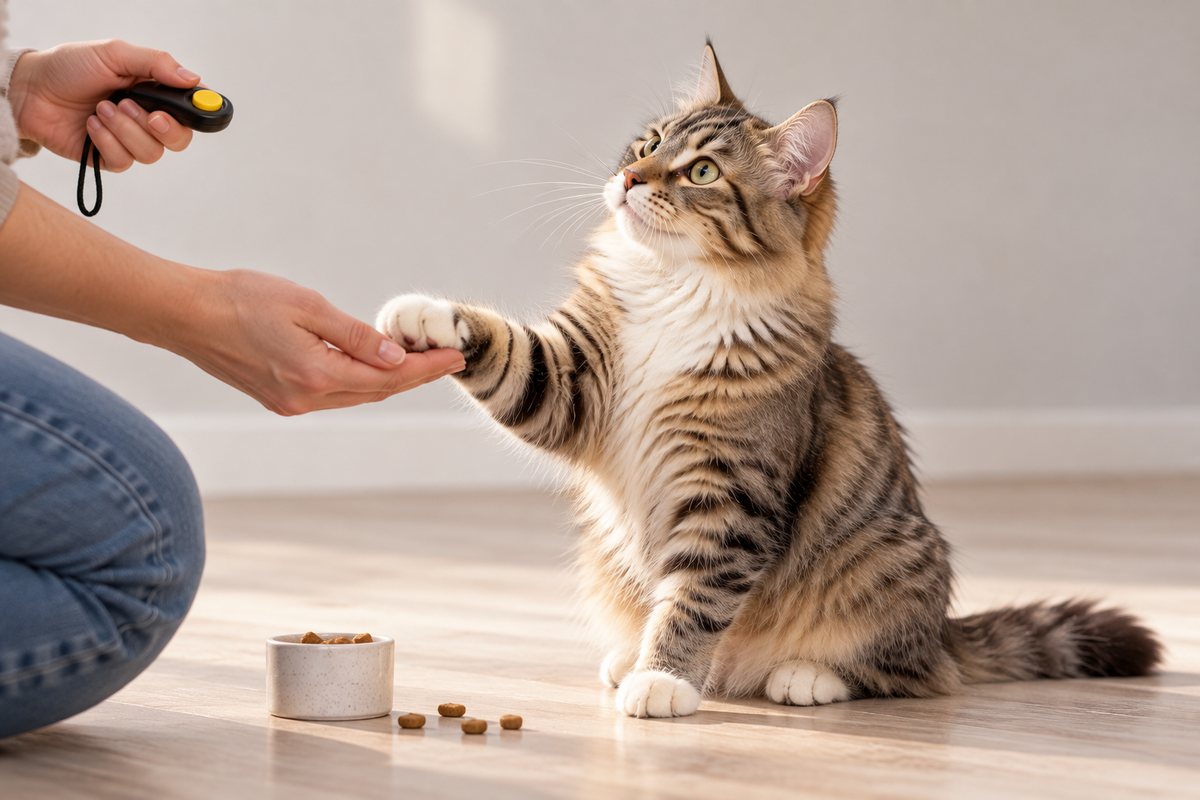
Compare breeds by learning & training. The ordering follows the characteristic itself rather than the alphabet whenever a meaningful order exists.
Discuss Learning & training in the forum
| # | Breed | Learning & training |
|---|---|---|
| 1 | Very high Balinese are highly intelligent and readily learn games such as fetch. | |
| 2 | Very high Bengals are among the more trainable cat breeds and commonly excel at tricks, fetch, harness walking, clicker work and food-rewarded problem solving. | |
| 3 | Very high Chausies are highly intelligent and trainable; active tasks such as fetch, leash work and complex puzzle play are particularly well matched to the breed. | |
| 4 | Very high Japanese Bobtails are versatile learners well suited to tricks, fetch, puzzle work and even agility-style activities. | |
| 5 | Very high Highly intelligent and well suited to puzzle toys, tricks and interactive learning. | |
| 6 | Very high Kurilian Bobtails are highly intelligent and notably trainable. | |
| 7 | Very high Lykoi are notably intelligent problem solvers and benefit from training and puzzle toys that require active investigation rather than passive play. | |
| 8 | Very high Munchkins are bright, determined problem solvers that can learn fetch, leash routines and creative routes to desired places quickly; training should remain low-impact. | |
| 9 | Very high The Oriental Bicolor shares the Oriental group’s highly social, inquisitive learning style and is well suited to clicker work, puzzle tasks and interactive games. | |
| 10 | Very high Highly intelligent, receptive to training and often enthusiastic about fetch and agility-style games. | |
| 11 | Very high Russian-type cats are quick problem solvers that can learn fetch, tricks, puzzle manipulation and even mechanisms such as doors or drawers. | |
| 12 | Very high Savannahs are highly intelligent, energetic learners that thrive on trick training, interactive puzzles and other tasks that combine movement with problem solving. | |
| 13 | Very high Singapuras are fast learners and respond well to interactive challenges. | |
| 14 | Very high Thai cats combine strong social motivation with Siamese-family intelligence; they are well suited to clicker training, retrieval games and learning household cues. | |
| 15 | Very high Tonkinese are highly intelligent, with strong memories and a pronounced capacity for learning household routines. | |
| 16 | Very high Toygers are highly intelligent and generally easy to train for activities such as leash walking, fetch and agility-style games. | |
| 17 | High Abyssinians are exceptionally bright, interactive learners; puzzle solving, target work and fast-moving reward games suit their need to stay mentally engaged. | |
| 18 | High Alert, sociable and food-motivated, the Aegean should learn household routines, recall cues and simple games readily with short reward-based sessions. | |
| 19 | High American Bobtails are intelligent, engaged learners that respond well to trick training, manipulable puzzles and reward-based household cues. | |
| 20 | High American Curls are clever, inquisitive cats that can learn games such as fetch. | |
| 21 | High Generally easy to train for games and household routines. | |
| 22 | High Intelligent and generally responsive to training. | |
| 23 | High The Asian combines Burmese-family intelligence with a social, playful temperament, making interactive games, household cues and simple tricks relatively easy to teach. | |
| 24 | High As the semi-longhaired member of the Asian group, the Tiffanie is expected to retain the group’s bright, people-oriented learning style and respond well to interactive rewards. | |
| 25 | High They are easy to train and some learn fetch or lead walking. | |
| 26 | High Bambinos are typically outgoing and inquisitive; they should learn household cues and simple games readily, while training should respect the limits imposed by their short-legged build. | |
| 27 | High Birmans are intelligent and enjoy interactive toys and games that make them think. | |
| 28 | High Bombays are intelligent cats that respond well to games, tricks and puzzle toys. | |
| 29 | High The Brazilian Shorthair’s alert, adaptable temperament supports good everyday learning, including household routines and simple reward-based games. | |
| 30 | High Burmese cats are highly intelligent and strongly people-motivated, a combination that supports quick learning of games, routines and interactive cues. | |
| 31 | High Burmillas are intelligent, inquisitive cats that can learn tricks and enjoy interactive puzzle toys. | |
| 32 | High The breed is intelligent and responds well to interactive engagement. | |
| 33 | High Chartreux cats are thoughtful problem solvers that can learn tricks and enjoy working out manipulable puzzle toys. | |
| 34 | High The Cherubim’s Ragdoll-derived, people-oriented temperament should support reliable routine learning and gentle reward-based training, even though intense trick work is unlikely to be a defining trait. | |
| 35 | High With Siamese-type intelligence and social engagement, the Colorpoint Shorthair is well suited to clicker work, fetch-like games and learning household cues when training stays interactive. | |
| 36 | High Cornish Rex cats are exceptionally quick, playful learners, and their persistent interest in retrieval games makes interactive training especially effective. | |
| 37 | High Cymrics share the Manx group’s alert, playful problem-solving style and should learn household routines, retrieval-style games and simple cues readily. | |
| 38 | High Intelligent and quick to learn household routines and games. | |
| 39 | High The Donskoy is highly intelligent and benefits from interactive problem-solving toys. | |
| 40 | High Alert, independent and naturally problem-solving, the Dragon Li should learn routines and puzzle tasks well, though motivation may come more from play or food than a wish to please. | |
| 41 | High The Dwelf’s Sphynx-derived sociability and curiosity support good interactive learning, but its short-legged build makes low-impact tricks and handling cues preferable to athletic tasks. | |
| 42 | High Egyptian Maus are smart, observant problem solvers and may independently learn mechanisms such as doors, drawers or faucets; structured reward training can channel that ability. | |
| 43 | High European Burmese are quick, people-focused learners; reward-based games, retrieval and household cues suit their active Burmese temperament. | |
| 44 | High Intelligent and capable of learning tricks through positive reinforcement. | |
| 45 | High Exotic Shorthairs are intelligent and curious and will study how to reach a desired toy. | |
| 46 | High The German Rex is notably intelligent and responds well to interaction and learning. | |
| 47 | High Havana Browns are highly intelligent, hands-on learners that respond well to trick teaching and puzzle toys they can manipulate. | |
| 48 | High The Highlander’s playful, outgoing temperament supports good trainability, especially for interactive games, target work and routines that channel its physical energy. | |
| 49 | High The Kanaani’s active, alert temperament suggests a quick learner that benefits from puzzle work and short reward-based sessions rather than passive repetition. | |
| 50 | High Khao Manees are socially engaged learners with a strong aptitude for interactive play; retrieval games and short reward-based sessions are a good fit. | |
| 51 | High Kinkalows are intelligent and generally responsive to interactive learning. | |
| 52 | High The Korean Bobtail is best assessed as an alert, adaptable learner likely to handle household routines and interactive reward-based tasks well, though breed-specific training evidence is limited. | |
| 53 | High The breed is notably intelligent and responsive to interaction and training. | |
| 54 | High LaPerms are inquisitive and people-oriented enough to learn routines, handling cues and simple tricks readily, especially when training is gentle and interactive. | |
| 55 | High Maine Coons are intelligent problem solvers with good memory for rewarding tasks; many readily learn routines, retrieval games and ways to locate hidden preferred toys. | |
| 56 | High Manx cats are responsive, playful learners, and retrieval-style games and other interactive tasks often suit their people-oriented temperament. | |
| 57 | High Social, active and Siamese-related, the Mekong Bobtail is expected to learn household cues and interactive games quickly and to respond well to reward-based training. | |
| 58 | High Intelligent and responsive to enrichment. | |
| 59 | High Highly intelligent, though new experiences are best introduced patiently. | |
| 60 | High As a Siberian colorpoint, the Neva Masquerade shares the group’s strong problem-solving ability and can learn household rules, games and practical cues quickly. | |
| 61 | High Norwegian Forest Cats are intelligent and resourceful, with strong problem-solving ability. | |
| 62 | High Ocicats are intelligent and commonly learn games such as fetch readily. | |
| 63 | High The breed was described as intelligent and responsive. | |
| 64 | High Historical descriptions of the Oregon Rex as active and people-oriented support a good general learning capacity, although the extinct breed leaves little direct training evidence. | |
| 65 | High Oriental Longhairs share the Oriental family’s very high intelligence and social motivation, making them strong candidates for clicker work, tricks and puzzle-based learning. | |
| 66 | High Peterbalds are highly engaged, people-oriented learners; retrieval play, interactive cues and frequent mental challenges fit their active social temperament. | |
| 67 | High Pixie-bobs are commonly responsive to people and interactive routines; many should take readily to harness work, retrieval-style play and simple trained cues. | |
| 68 | High Ragdolls are intelligent and can learn games such as fetch. | |
| 69 | High The Sam Sawet’s alert, social Thai-cat profile supports good everyday learning, particularly when food, play and human interaction are used as rewards. | |
| 70 | High Scottish Folds are intelligent and can learn basic tricks. | |
| 71 | High The Serengeti’s athletic, curious temperament makes puzzle solving and interactive training a good fit; short, active sessions should hold attention better than repetition. | |
| 72 | High Siamese are highly intelligent, interactive cats that learn household routines and games readily. | |
| 73 | High Siberians are extremely intelligent and quick to learn household rules; their curiosity and problem-solving ability also make puzzles and interactive training rewarding. | |
| 74 | High Snowshoes are intelligent and readily learn tricks, leash walking, fetch and even how to open doors. | |
| 75 | High The breed is notably intelligent and benefits from interactive challenges. | |
| 76 | High Somalis are highly intelligent, quick to engage and readily learn games and routines. | |
| 77 | High Intelligent and capable of learning games such as fetch and other interactive routines. | |
| 78 | High The Suffolk’s Oriental-family background supports a high learning capacity, with interactive games, cues and puzzle tasks likely to suit its social, active temperament. | |
| 79 | High The Suphalak’s people-oriented Thai background supports quick learning of routines and interactive behaviours, especially when training uses attention, play or food rewards. | |
| 80 | High Tennessee Rex cats are curious and socially engaged, traits that should support good learning of routines, handling cues and simple interactive games. | |
| 81 | High The breed is notably intelligent. | |
| 82 | High Toybobs are playful and people-focused, so simple tricks and household routines should be learned readily, with short sessions appropriate to their small size. | |
| 83 | High Turkish Angoras are highly intelligent and respond well to firm but gentle training. | |
| 84 | High Turkish Vans are highly intelligent and respond well to interactive challenges and learning. | |
| 85 | High The Turkish Vankedisi shares the active, intelligent profile associated with Turkish Van-type cats and should respond well to interactive, reward-based learning. | |
| 86 | High The Ukrainian Levkoy’s social, curious profile supports good everyday learning and interactive training, while the breed’s sparse evidence base argues against stronger claims. | |
| 87 | High Historical accounts portray the York Chocolate as affectionate and playful, supporting good routine learning and interactive games without evidence for exceptional trainability. | |
| 88 | Moderate The American Ringtail should learn ordinary routines, handling cues and simple reward-based behaviours well; there is not strong evidence that trainability is an exceptional breed trait. | |
| 89 | Moderate The American Wirehair is typically steady and playful rather than intensely driven; it should learn routines and simple reward-based behaviours reliably without needing constant training. | |
| 90 | Moderate The Aphrodite Giant is best treated as a capable but unhurried learner: consistent rewards and predictable routines should work better than repetitive drilling. | |
| 91 | Moderate British Longhairs are observant and capable learners, but their calmer style often favors practical routines and food-rewarded games over prolonged trick-training sessions. | |
| 92 | Moderate British Shorthairs readily learn household routines and reward associations, although their independent, low-key temperament can make them less eager for repetitive training than more people-driven breeds. | |
| 93 | Moderate Available descriptions suggest a gentle, people-oriented cat that should learn routines and simple cues comfortably, without good evidence for unusually high training drive. | |
| 94 | Moderate Cyprus cats are active, capable generalists; a solid everyday learning ability is the best current assessment, with motivation likely varying substantially by individual. | |
| 95 | Moderate The Foldex should be capable of normal companion-cat learning and simple interactive games; its Persian/Exotic and Fold ancestry suggests a calmer training style rather than high drive. | |
| 96 | Moderate The German Longhair is best assessed as an observant, steady learner suited to household routines and gentle reward-based games rather than demanding repetitive training. | |
| 97 | Moderate Himalayans can learn names, grooming routines and household boundaries, but their Persian-derived calm temperament generally favors short, low-pressure training sessions. | |
| 98 | Moderate The Lambkin should manage ordinary household learning and simple reward-based behaviours well; its physical build makes low-impact training more appropriate than athletic trick work. | |
| 99 | Moderate Minuets are sociable and playful enough for routine learning and simple tricks, but their short-legged conformation makes low-impact games more appropriate than athletic training. | |
| 100 | Moderate Persians are capable, cooperative learners despite their calm demeanor; they can learn grooming routines, household boundaries and their names with consistent gentle reinforcement. | |
| 101 | Moderate For the little-documented Raas cat, normal feline learning ability is the most defensible estimate: it should form routines and reward associations without evidence for exceptional trainability. | |
| 102 | Moderate RagaMuffins are cooperative, people-oriented cats that should learn household routines and handling cues readily, though their relaxed temperament is not usually associated with intense training drive. | |
| 103 | Moderate Scottish Straights are observant companion cats that should learn household routines and simple games reliably, though they are not typically selected for unusually intense trainability. | |
| 104 | Moderate The Selkirk Rex is generally patient and people-oriented, making routine learning and simple reward-based training straightforward even if it is less driven than highly athletic breeds. | |
| 105 | Moderate For the sparsely documented Serrade Petit, a normal companion-cat learning profile is the best current estimate: capable of routines and reward associations without evidence for exceptional trainability. | |
| 106 | Moderate With very limited breed-specific behavioral evidence, the Transylvanian is best treated as a normally capable learner whose response to training will depend heavily on individual motivation. |








































































































Breed comparisons describe tendencies, not guarantees about an individual cat. Approximate entries are kept separate from the canonical research record and can be refined as better evidence arrives.
 English