
Living with other cats in Cat Breeds
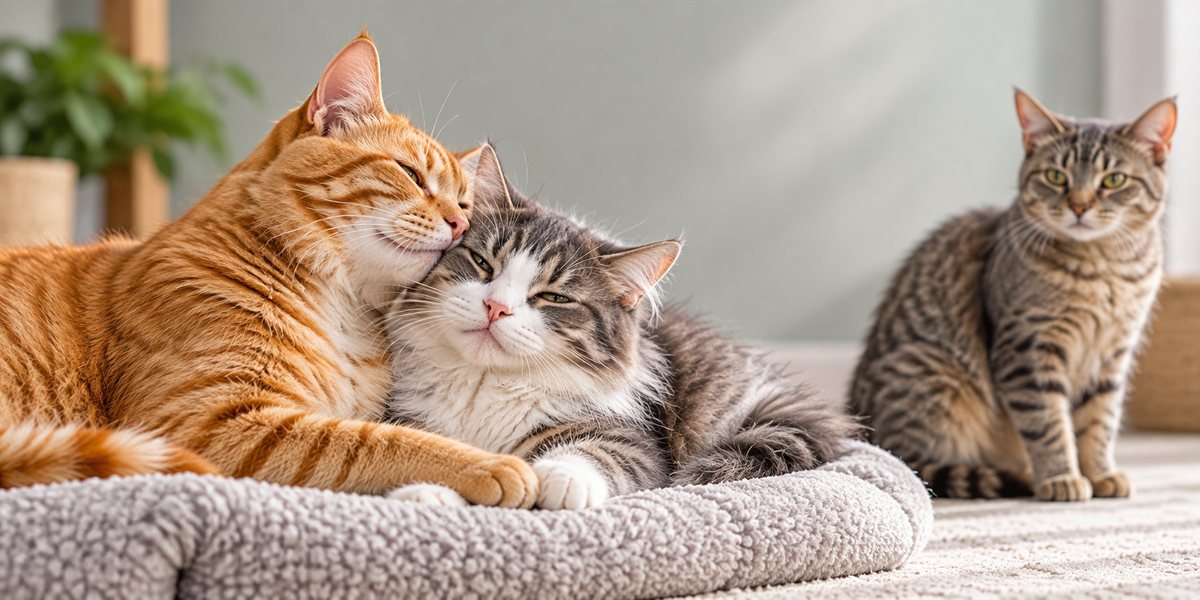
Compare breeds by living with other cats. The ordering follows the characteristic itself rather than the alphabet whenever a meaningful order exists.
Discuss Living with other cats in the forum
| # | Breed | Living with other cats |
|---|---|---|
| 1 | Strongly social Usually benefits from feline companionship and often does poorly as an only cat. | |
| 2 | Favorable tendency Aegeans are typically sociable, adaptable cats and usually have good potential for sharing a home with another friendly cat when introductions are gradual and resources are plentiful. | |
| 3 | Favorable tendency American Bobtails are generally easy-going and socially confident, traits that usually support peaceful multi-cat living; a compatible temperament and normal staged introductions remain important. | |
| 4 | Favorable tendency American Curls are usually friendly, playful and tolerant, and many fit comfortably into multi-cat households, especially when the resident cats have similarly sociable temperaments. | |
| 5 | Often favorable American Ringtails are commonly affectionate and outgoing, so coexistence with other cats is often favorable; success is strongest with careful introductions and enough separate resting and feeding spaces. | |
| 6 | Favorable tendency American Wirehairs tend to be adaptable and good-natured, giving them favorable prospects with compatible cats; introductions should still allow each cat to establish territory without pressure. | |
| 7 | Favorable tendency Australian Mists are notably tolerant, people-oriented and adaptable, giving them strong potential for harmonious multi-cat living when introductions are handled calmly. | |
| 8 | Favorable tendency Bengals often do well with other confident, playful cats and may benefit from a companion able to match their high activity level. Poor energy matching can produce chasing or tension, so introductions and enrichment matter. | |
| 9 | Favorable tendency Burmese cats are highly social and attention-seeking, and many thrive with compatible feline companionship rather than long periods alone. Their preferred housemate is usually similarly confident and interactive. | |
| 10 | Favorable tendency Burmillas combine sociability with a generally easy-going temperament, so they often integrate well with compatible cats after a normal gradual introduction. | |
| 11 | Favorable tendency Chantilly-Tiffany cats are typically affectionate and companion-oriented without being excessively intense, giving them good prospects with another friendly cat in a stable household. | |
| 12 | Favorable tendency Chartreux are usually calm, tolerant and quietly sociable. These traits favor peaceful coexistence with other cats, especially companions that are similarly composed rather than intrusive. | |
| 13 | Favorable tendency Colorpoint Shorthairs are active, vocal and strongly social; many appreciate a compatible cat that can provide play and company, particularly in homes where people are absent for part of the day. | |
| 14 | Favorable tendency Cymrics are generally affectionate, playful and adaptable, giving them favorable prospects with compatible cats. Their sturdy play style is best paired with a confident companion rather than a very timid one. | |
| 15 | Favorable tendency Cyprus cats developed in a free-ranging island population where tolerance of other cats is useful, and they are generally social and adaptable in domestic homes. A compatible feline housemate is usually a good prospect, with ordinary gradual introductions and separate resources. | |
| 16 | Favorable tendency | |
| 17 | Favorable tendency Generally gets along with cat-friendly pets able to accommodate the Mau's energy. | |
| 18 | Favorable tendency | |
| 19 | Favorable tendency | |
| 20 | Favorable tendency Foldex cats are generally easy-going, affectionate and playful, traits that usually translate well to multi-cat homes. A friendly companion is normally a good fit when introductions are gradual and each cat retains its own feeding, resting and litter resources. | |
| 21 | Favorable tendency German Longhairs are generally calm, friendly and socially balanced cats. They usually have good prospects with another compatible cat, especially when both have room to withdraw and introductions are gradual rather than forced. | |
| 22 | Favorable tendency German Rex generally get along well with other cats when introductions are handled sensibly. | |
| 23 | Favorable tendency | |
| 24 | Favorable tendency Highlanders are usually outgoing, playful and socially confident. Many are well suited to another active, friendly cat, although their energetic play style can overwhelm a timid or elderly companion unless activity levels are matched. | |
| 25 | Favorable tendency Generally adapts well to other pets and is reported to get along well in multi-pet homes. | |
| 26 | Favorable tendency Khao Manees are highly interactive, curious and socially engaged cats, and many enjoy having another compatible cat for company and play. Their assertive curiosity makes a similarly confident companion a better match than a very retiring cat. | |
| 27 | Favorable tendency Kinkalows are generally social with compatible pets after appropriate introductions. | |
| 28 | Favorable tendency The breed generally adapts well to multi-pet households with appropriate introductions. | |
| 29 | Favorable tendency Generally social and favorable toward compatible feline companionship. | |
| 30 | Favorable tendency Lambkins generally do well with compatible cats after appropriate introductions. | |
| 31 | Favorable tendency Strong companionship needs make a compatible cat or cat-friendly dog a useful household companion. | |
| 32 | Favorable tendency Lykois are active, inquisitive and socially engaged, and many do well with other cats that can match their play and exploration. Their energetic hunting-style play makes temperament matching important, particularly with quiet or physically frail housemates. | |
| 33 | Favorable tendency Gets along with other pets when properly introduced. | |
| 34 | Favorable tendency Mekong Bobtails are strongly social, active cats that commonly form close household bonds. A compatible cat can provide useful companionship and play, although their confident temperament is best matched with a housemate that is not easily intimidated. | |
| 35 | Favorable tendency Minuets are typically gentle, affectionate and playful, combining the sociability of their parent breeds with a relatively easy-going manner. They usually have good potential with another friendly cat, provided introductions are gradual and rough play is not allowed to disadvantage shorter-legged individuals. | |
| 36 | Favorable tendency Sociable and reported to enjoy company including other pets. | |
| 37 | Favorable tendency Supplementary veterinary breed material reports good compatibility with other pets; preserve normal introduction/context qualification. | |
| 38 | Favorable tendency Strong social needs generally make compatible feline companionship favorable. | |
| 39 | Favorable tendency | |
| 40 | Favorable tendency | |
| 41 | Favorable tendency | |
| 42 | Favorable tendency Sam Sawets generally coexist well with compatible cats. | |
| 43 | Favorable tendency | |
| 44 | Favorable tendency Strong social needs generally support compatible feline companionship. | |
| 45 | Favorable tendency Usually gets along well with other cats and may do particularly well with feline companionship. | |
| 46 | Favorable tendency Generally gets along well with other cats, though some individuals prefer more exclusive attention. | |
| 47 | Favorable tendency | |
| 48 | Favorable tendency | |
| 49 | Favorable tendency Generally favorable tendency for compatible feline companionship. | |
| 50 | Favorable tendency | |
| 51 | Favorable tendency Suphalaks generally coexist well with other cats when properly introduced. | |
| 52 | Favorable tendency Tennessee Rex cats are generally described as affectionate, relaxed and socially oriented, which gives them good prospects with another friendly cat. A compatible companion is usually workable when introductions are gradual and each cat has adequate resources and retreat space. | |
| 53 | Favorable tendency These Thai-derived cats share the socially engaged, people-oriented temperament associated with the Thai type, so compatible feline companionship is usually a good prospect. An interactive housemate can suit them particularly well when people are away for part of the day. | |
| 54 | Favorable tendency | |
| 55 | Favorable tendency Toybobs are generally sociable, playful and companion-oriented despite their very small size. They can do well with other friendly cats, but a gentle play partner is preferable to a much larger or rough companion that could accidentally injure them. | |
| 56 | Favorable tendency Generally gets along with other pets. | |
| 57 | Favorable tendency Sociable and generally comfortable with other pets, though may prefer to dominate household social dynamics. | |
| 58 | Often workable Abyssinians are highly social and playful, so many enjoy a compatible feline companion; their intensity can overwhelm a quiet or elderly cat, making energy matching and gradual introductions important. | |
| 59 | Often workable American Shorthairs are generally even-tempered and self-possessed, making another cat quite workable, although they do not necessarily need feline company and should have space to disengage. | |
| 60 | Often workable Aphrodite Giants are generally calm and people-oriented rather than confrontational, so living with another cat is usually workable when personalities are compatible and each cat has adequate space. | |
| 61 | Often workable Arabian Maus are active, alert and socially capable cats. They can live well with other cats, but their athletic energy and confident manner make temperament and activity-level matching especially useful. | |
| 62 | Often workable Asian cats are strongly social and interactive, and many appreciate animal companionship. Multi-cat homes can work very well, though competition for attention or resources can create friction in some individuals. | |
| 63 | Often workable Balinese cats are intensely social, active and communicative, and many benefit from compatible feline company. A similarly playful companion is usually a better match than a cat that prefers a very quiet household. | |
| 64 | Often workable Bambinos are typically playful and companionable, so another friendly cat can suit them well. Their unusual body type makes gentle play partners and safe, non-competitive household arrangements preferable. | |
| 65 | Often workable Birmans are generally gentle, sociable and low-conflict, making compatible feline companionship quite workable. They tend to suit cats that interact calmly rather than highly territorial or relentlessly boisterous housemates. | |
| 66 | Often workable Bombays are strongly people-oriented and often socially confident; many accept or enjoy another cat, particularly one that tolerates their desire for interaction and shared attention. | |
| 67 | Often workable Brazilian Shorthairs are generally lively, adaptable companion cats. They can share a home successfully with other cats when introductions are gradual and both animals have sufficient territory and resources. | |
| 68 | Often workable British Longhairs are usually calm and relatively self-contained. They can live peacefully with another respectful cat, but they are less likely than highly social breeds to require constant feline companionship. | |
| 69 | Often workable British Shorthairs are typically calm, independent and non-confrontational. Another cat is often acceptable if it respects their personal space; an overly demanding or hyperactive companion may be a poorer match. | |
| 70 | Often workable California Spangled cats are athletic, intelligent and socially engaged. Another confident, playful cat can be a good match, provided both have enough climbing space, play opportunities and separate resources. | |
| 71 | Often workable Chausies are extremely active, intelligent and socially demanding. They can benefit from a compatible feline companion, but their size and intensity make a confident, energetic housemate and careful introductions particularly important. | |
| 72 | Often workable Cherubim cats are generally gentle and companionable, so another friendly cat is usually workable. Their calmer social style is best matched with a housemate that does not rely on rough or highly competitive play. | |
| 73 | Often workable Cornish Rex cats are exceptionally playful and people-focused, and many enjoy feline companionship. Their persistent activity can be a lot for a sedentary cat, so matching play styles improves the odds of harmony. | |
| 74 | Often workable Thrives on company and is reported to get along well with other family pets. | |
| 75 | Often workable Dragon Li cats are typically confident, alert and moderately independent rather than intensely dependent on feline company. They can share a home successfully with another respectful cat, but territorial introductions should be gradual and neither cat should be forced into close contact. | |
| 76 | Often workable Social behavior is reported, but evidence remains secondary and experimental-breed specific. | |
| 77 | Often workable Often compatible with other animals, but temperament varies substantially and some sources report territorial individuals. | |
| 78 | Often workable | |
| 79 | Often workable Kanaani cats are athletic, alert and comparatively independent, so another cat can be workable without being essential. They are best paired with a confident housemate that tolerates energetic play and given enough vertical territory and separate resources to avoid competition. | |
| 80 | Often workable · may be bossy Can live well with other cats but often expects a privileged or dominant place in the household. | |
| 81 | Often workable Korean Bobtails are generally described as friendly, adaptable companion cats, giving them reasonable prospects in a multi-cat household. Because breed-specific evidence is limited, compatibility should be judged primarily from the individual cat and managed with gradual introductions. | |
| 82 | Often workable Generally favorable tendency for compatible multi-cat living. | |
| 83 | Often workable Social behavior toward other animals is consistently reported, but evidence is secondary. | |
| 84 | Often workable Nebelungs tend to be gentle, reserved and strongly attached to familiar companions. They can live very well with a calm, respectful cat, but a noisy, intrusive or highly dominant feline housemate may be stressful; slow introductions are particularly valuable. | |
| 85 | Often workable Norwegian Forest Cats are generally mild-mannered and socially adaptable, making them good candidates for multi-cat homes when introductions are gradual and each cat has enough space and resources. | |
| 86 | Often workable Reported to get along well in groups and with other cat breeds when personalities and energy levels are compatible. | |
| 87 | Often workable Historical descriptions of Ojos Azules portray affectionate, active companion cats, so living with another compatible cat was likely quite workable. Because the breed is exceptionally rare and its behavioral documentation is limited, individual temperament should carry more weight than the breed label. | |
| 88 | Often workable Historical descriptions portray the Oregon Rex as affectionate, playful and people-oriented, suggesting that compatible multi-cat living was quite plausible. Because the breed is extinct and documentation is sparse, this is best treated as a temperament-based historical assessment rather than a strong breed-wide claim. | |
| 89 | Often workable Secondary sources support multi-pet living, but evidence is not strong enough for the highest compatibility category. | |
| 90 | Often workable Adaptable and generally friendly, though the reviewed primary material does not give a sufficiently direct other-cat claim for the strongest category. | |
| 91 | Often workable Generally favorable tendency for compatible multi-pet living. | |
| 92 | Often workable Generally favorable tendency for compatible multi-cat living. | |
| 93 | Often workable A compatible companion cat can be beneficial, but individual background and hybrid-generation context make a stronger universal claim inappropriate. | |
| 94 | Often workable Generally companionable, but household introductions and individual history remain important. | |
| 95 | Often workable Generally gets along well with other pets, including other cats. | |
| 96 | Often workable | |
| 97 | Often workable Siberians are typically social, confident family cats and often live successfully with other cats. Their size and playfulness make matched energy levels and generous shared resources useful in multi-cat homes. | |
| 98 | Often workable Thai cats are highly social and often appreciate feline companionship, particularly when people are away. They usually adapt well to another compatible cat when introductions are gradual and attention and resources are not forced into competition. | |
| 99 | Often workable Can live well with other pets but may assert social dominance; individual household dynamics matter. | |
| 100 | Often workable Turkish Vankedisi cats share the active, intelligent and self-assured social style of the Turkish Van population. They can live successfully with other cats, but may try to control interactions, so confident companions, sufficient territory and unhurried introductions improve compatibility. | |
| 101 | Often workable Available breed literature reports sociability with other domestic pets, but evidence is secondary. | |
| 102 | Often workable Historical breed descriptions report good compatibility with other animals. | |
| 103 | Individual dependent Tiffanies are affectionate and socially engaged but can be selective or jealous about attention. Another cat may become a close companion, yet compatibility is more individual-dependent than a blanket sociable label suggests. | |
| 104 | Individual dependent Raas cats come from a naturally developed island population and retain a relatively robust, independent profile. They may coexist successfully with other cats, but there is too little breed-specific behavioral documentation to assume unusually high sociability; individual temperament and careful territorial introductions should lead the decision. | |
| 105 | Individual dependent Serrade Petit cats can share a home with other cats, but available descriptions suggest more individual variation than in strongly social breeds. A slow introduction, separate resources and the ability to retreat are important, and some individuals may prefer being the only cat. | |
| 106 | Individual dependent The Transylvanian is too recently documented for a confident breed-wide claim about other-cat sociability. Its domestic-cat background makes peaceful multi-cat living entirely plausible, but the best current assessment is individual-dependent, with gradual introductions and adequate separate territory. |





































































































Breed comparisons describe tendencies, not guarantees about an individual cat. Approximate entries are kept separate from the canonical research record and can be refined as better evidence arrives.
Discuss Living with other cats in the forum
Help strengthen lower-data entries
For the breeds below, this characteristic currently relies on limited, conflicting or general baseline evidence. First-hand owner observations can help us decide what deserves further research. Contributions are reviewed separately and never overwrite the researched record automatically.
 English