
Similar breeds & identity distinctions in Cat Breeds
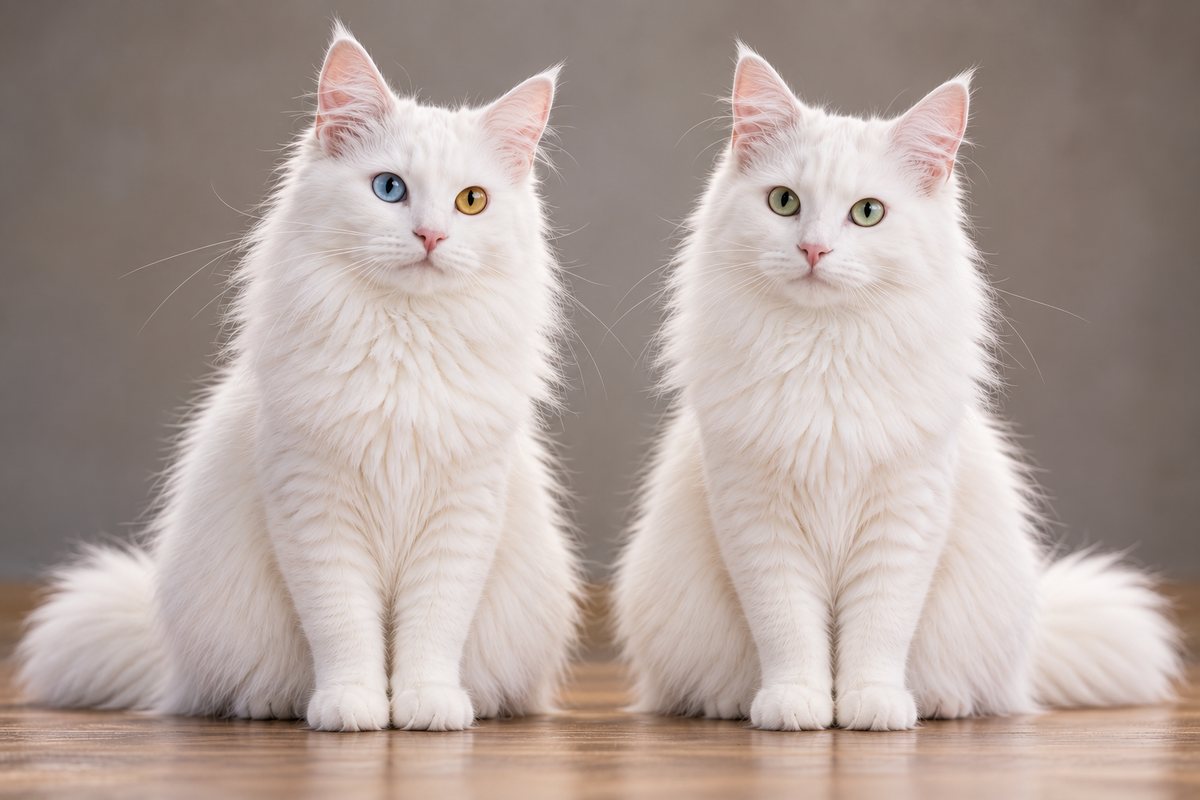
Compare breeds by similar breeds & identity distinctions. The ordering follows the characteristic itself rather than the alphabet whenever a meaningful order exists.
Discuss Similar breeds & identity distinctions in the forum
| # | Breed | Similar breeds & identity distinctions |
|---|---|---|
| 1 | Abyssinian Somalis share the Abyssinian's ticked color and athletic type but carry a semi-long coat, fuller ruff and plumed tail. They are best understood as the longhaired counterpart of the Abyssinian breeding family. | |
| 2 | Abyssinian Burmese Singapuras are unusually small cats with a warm sepia-ticked coat, combining an impression that can recall Abyssinian ticking and Burmese body type. Their tiny size, specific ticking and pedigree distinguish them from either breed. | |
| 3 | American Bobtail Pixie-bobs and American Bobtails are both substantial short-tailed cats. Pixie-bobs are selected for a specific brown spotted wild look and may be polydactyl, while American Bobtails accept a much broader range of colors and patterns. | |
| 4 | American Curl bobtail types Highlanders may be confused with American Curls or bobtailed wild-look breeds because they combine curled ears with a shortened tail. The simultaneous presence of the Highlander's large muscular type, curl ears and tail phenotype, backed by pedigree, is the useful distinction. | |
| 5 | American Curl Munchkin Kinkalows combine American-Curl-type backward-curled ears with Munchkin-derived short legs. An American Curl has normal leg length, while a Munchkin need not have curled ears; the paired traits and pedigree distinguish Kinkalow. | |
| 6 | American Shorthair American Wirehairs share much of the American Shorthair body type, but their defining mutation produces a resilient crimped or wiry coat, including curled whiskers in some cats. A straight-coated look-alike is not identified as Wirehair by body shape alone. | |
| 7 | Aphrodite Giant Cyprus cats and Aphrodite Giants overlap in island origin and some breeding histories. A Cyprus label may encompass a broader natural population, while Aphrodite Giant programs emphasize large size and a particular standardized type; documented ancestry and registry definition matter more than appearance alone. | |
| 8 | Asian Burmese Burmillas share Burmese-derived structure with Asians and Burmese, but their signature is a silver ground with shaded or tipped color inherited from Chinchilla Persian ancestry. Short coat, silver expression and pedigree together distinguish them. | |
| 9 | Asian Burmilla The Tiffanie is essentially the semi-longhaired member of the Asian group. It differs from shorthaired Asians and Burmillas primarily in coat length and from unrelated longhairs through its Burmese-derived body and documented Asian-group ancestry. | |
| 10 | Bambino American Curl Dwelfs combine three conspicuous traits: sparse/hairless coat, short Munchkin-type legs and American-Curl-type ears. Bambinos lack the curled ears, while American Curls normally have full leg length and ordinary coat coverage. | |
| 11 | Bambino Munchkin Minskins are small short-legged cats with deliberately sparse coat concentrated at points, while Bambinos are generally more extensively hairless and Sphynx-like. Coated Munchkins have the short legs without the characteristic sparse Minskin coat. | |
| 12 | Bengal Toygers and Bengals share historical breeding connections, but Toygers are selected for vertically striped, tiger-like patterning and an elongated tiger-inspired head. Bengals more often show rosettes, spots or marbling and a leopard-like impression. | |
| 13 | Bengal Egyptian Mau Ocicats have a deliberately wild-looking spotted coat but no recent wild-cat ancestry. Their spots are generally discrete and regular; Bengals often show rosettes or marbling, while Egyptian Maus have a different naturally spotted pattern and body type. | |
| 14 | Bengal spotted domestics Kanaani cats can resemble Bengals or spotted domestic shorthairs because of their athletic spotted/tabby appearance. They are a separate domestic breeding population without Bengal leopard-cat ancestry; pedigree and the breed's particular long-legged natural type are decisive. | |
| 15 | Birman RagaMuffin Ragdolls are large colorpointed semi-longhairs that can resemble Birmans and RagaMuffins. Birmans have characteristic white gloves and a different body type; RagaMuffins permit broader non-point colors and are a separate pedigree population. | |
| 16 | Black Burmese domestic Bombays can look like black Burmese or sleek black domestic shorthairs. The breed combines a uniformly black coat and copper-to-gold eyes with a specific Burmese-derived body and head type; pedigree distinguishes it from visually similar black cats. | |
| 17 | Black Thai domestic Korn Ja cats can resemble ordinary solid dark Thai domestic shorthairs. The rare breed identity depends on documented traditional Thai ancestry and its standardized color/type rather than simply having a dark short coat. | |
| 18 | Blue eyed white colorpoint cats Ojos Azules were defined by unusually deep blue eyes occurring independently of white coat or colorpoint. A blue-eyed white cat or Siamese-type colorpoint is therefore not automatically Ojos Azules; documented ancestry from the original mutation is essential. | |
| 19 | British Longhair LaPerm Selkirk Rex cats are distinguished by a plush curly coat on a substantial body. Straight-coated relatives can resemble British-type cats, while LaPerm curls occur on a more moderate body and usually form a looser, less plush coat. | |
| 20 | British Shorthair British Longhairs share the cobby body, round head and dense coat texture of British Shorthairs; the defining distinction is the longer coat produced within the same breed family. They should not be confused with the more elongated forest breeds. | |
| 21 | British Shorthair domestic shorthair American Shorthairs are often confused with British Shorthairs or sturdy domestic shorthairs. They are generally less cobby and less plush-coated than British Shorthairs, while pedigree documentation separates them from look-alike domestic cats. | |
| 22 | British Shorthair domestic shorthair European Shorthairs are more moderate and natural in build than the very cobby, plush British Shorthair. They can be almost indistinguishable visually from high-quality domestic shorthairs, making documented pedigree essential to breed identity. | |
| 23 | British Shorthair Russian Blue Chartreux, blue British Shorthairs and Russian Blues can all appear solid blue. Chartreux are muscular with a woolly blue coat and copper/gold eyes; Russian Blues are more slender with green eyes, while British Shorthairs are more cobby and round-headed. | |
| 24 | Brown tabby domestic Dragon Li cats strongly resemble brown mackerel-tabby domestic shorthairs. The breed is not identified by tabby pattern alone: documented Chinese Li Hua ancestry and the standardized sturdy natural type are necessary to distinguish a pedigreed Dragon Li. | |
| 25 | Brown tabby domestic Sokokes can resemble brown tabby domestic shorthairs, but their characteristic blotched 'African tabby' pattern, lean athletic build and documented Sokoke ancestry distinguish the breed. Pattern alone cannot establish identity. | |
| 26 | Burmese Burmilla Asian cats share Burmese-derived body type with Burmese and Burmilla. Asians are chiefly separated by their wider range of non-Burmese colors and patterns; Burmillas specifically have the silver shaded/tipped expression derived from their Persian ancestry. | |
| 27 | Burmese Korn Ja Suphalaks are rare copper-brown Thai cats and can resemble brown Burmese or other solid Thai types. Their distinctive warm copper coloration plus documented traditional Suphalak ancestry separates them; a brown coat alone is insufficient. | |
| 28 | Burmese Siamese Tonkinese sit morphologically between Burmese and Siamese, with a moderately muscular body and characteristic mink pattern in many cats. Pointed or solid Tonkinese can look especially close to the ancestral breeds, so pedigree and eye/color expression help distinguish them. | |
| 29 | Burmese spotted domestics Australian Mists can resemble softly spotted domestic shorthairs or Burmese-derived cats. Their combination of a misted spotted or marbled pattern, moderate Burmese/Abyssinian-derived type and documented Australian Mist pedigree is more diagnostic than any single marking. | |
| 30 | Burmese Tonkinese European Burmese are generally a little more moderate and wedge-shaped than American Burmese and recognize a broader traditional color range. Tonkinese have an intermediate Siamese–Burmese type and frequently show mink pattern and aquamarine eyes. | |
| 31 | Chartreux American Shorthair British Shorthairs are exceptionally cobby with a dense plush coat and round head. Chartreux are more athletic and usually blue only, while American Shorthairs are less cobby and have a less plush coat; blue color alone does not distinguish them. | |
| 32 | Chausie Bengal Savannahs are tall, long-legged cats with serval ancestry and a spotted coat. Chausies derive from jungle cats and are usually less conspicuously spotted as adults, while Bengals are generally more compact and show leopard-like rosettes or marbling. | |
| 33 | Chocolate domestic longhair York Chocolates were semi-longhaired cats selected for chocolate and lilac coloring and can resemble similarly colored domestic longhairs. With the breed now extremely scarce, documented York Chocolate ancestry—not coat color alone—is necessary for identity. | |
| 34 | Chocolate Oriental Havana Browns can resemble solid-chocolate Oriental Shorthairs. The Havana Brown is more moderate in body and has its characteristic squared muzzle, whereas Orientals are more elongated and wedge-headed; pedigree traditions also differ. | |
| 35 | Cornish Rex Devon Rex and Cornish Rex both have curly coats, but Devon Rex have a broader, pixie-like head, very large low-set ears and a shorter, more irregular coat. Cornish Rex are more elongated and carry tight, even waves. | |
| 36 | Cornish Rex Devon Rex German Rex can resemble Cornish Rex because both have waved coats. German Rex are generally more moderate and muscular in body and head, while Cornish Rex are markedly slender; Devon Rex have a distinct head and a different, often more irregular coat texture. | |
| 37 | Cymric Manx and Cymric share the same tailless mutation and body type. The straightforward distinction is coat length: Manx is the shorthaired form, while Cymric is the longhaired form or division in systems that separate them. | |
| 38 | Cyprus Aphrodite Giants overlap historically and geographically with Cyprus cats. The Aphrodite Giant identity emphasizes a large, powerful, often long-bodied Cypriot type, whereas broader Cyprus-cat labels may include more varied island cats; pedigree system and ancestry are decisive. | |
| 39 | Devon Rex German Rex Cornish Rex are separated from other Rex breeds by their extremely soft, close waves and distinctive slender body. Devon Rex usually have a shorter, more irregular coat and very different broad-cheeked head; German Rex are more moderate in body and coat. | |
| 40 | Domestic shorthair Brazilian Shorthairs deliberately retain a natural shorthaired-cat appearance, so visual overlap with domestic shorthairs is substantial. Breed identity therefore depends heavily on documented breeding ancestry together with the standardized Brazilian type. | |
| 41 | Donskoy Oriental Sphynx Peterbalds combine an Oriental-style elongated body and wedge head with variable hairlessness derived historically from Donskoy lines. Donskoys are more moderate in type, while Sphynx have different hairless genetics and a less Oriental structure. | |
| 42 | Donskoy Peterbald Sphynx can resemble Donskoy and hairless Peterbald cats, but classic Sphynx hairlessness has a different genetic origin and the breed has a distinctive rounded, muscular body. Peterbalds are markedly Oriental in type; Donskoys have dominant hairlessness and a different standard. | |
| 43 | Donskoy Scottish Fold Ukrainian Levkoys combine a hairless or sparse coat with inward-folded ears. Donskoys may share hairlessness but have upright ears, while Scottish Folds have folded ears but normal coat; the combination plus pedigree distinguishes the Levkoy. | |
| 44 | European Burmese Tonkinese Burmese and European Burmese share ancestry but differ in accepted type and color traditions, with American Burmese generally rounder and more compact. Tonkinese are intermediate Burmese–Siamese cats and often show mink coloration and aquamarine eyes. | |
| 45 | Exotic Shorthair Himalayan Persians and Exotic Shorthairs share the same cobby body and brachycephalic head, with coat length the obvious distinction. Himalayans are Persian-type cats specifically carrying colorpoint pattern and may be classified within Persian depending on registry. | |
| 46 | Hairless Rex cats Lykois can be mistaken for partially hairless cats, but their characteristic roaning and sparse 'werewolf' coat comes from a distinct hair-follicle phenotype. They are not Sphynx or Donskoy crosses, and pedigree plus the roaned coat pattern distinguishes them. | |
| 47 | Japanese Bobtail Korean Bobtails can resemble Japanese Bobtails and regional short-tailed domestic cats. Because the Korean population is poorly standardized internationally, documented Korean ancestry plus tail structure and overall type are more reliable than tail length alone. | |
| 48 | Japanese Bobtail Kurilian Bobtails are typically more substantial and powerful than Japanese Bobtails, with a short kinked tail whose shape varies individually. Japanese Bobtails tend to be finer and have the characteristic pom-pom presentation; pedigree and regional ancestry settle close cases. | |
| 49 | Japanese Bobtail Thai Mekong Bobtails combine a colorpoint Siamese/Thai-derived appearance with a short kinked tail. Japanese Bobtails are not defined by colorpoint and have a different body and tail presentation; ordinary Thai cats have full-length tails. | |
| 50 | Kinkalow American Curls can be confused with Kinkalows because both may have backward-curled ears. The American Curl is normally proportioned in the legs; Kinkalows combine curled ears with Munchkin-derived short legs. | |
| 51 | Korat Chartreux Russian Blues can be confused with Korats and Chartreux. Russian Blues are elegant and wedge-headed with a dense silver-tipped blue coat and green eyes; Korats have a heart-shaped head, while Chartreux are heavier and normally copper- or gold-eyed. | |
| 52 | Kurilian Mekong bobtails Japanese Bobtails have a distinctive pom-pom tail formed by kinked vertebrae and a relatively fine, athletic body. Kurilian Bobtails are generally more robust with a different tail structure, while Mekong Bobtails are colorpointed and more Siamese-derived in type. | |
| 53 | Maine Coon Siberian Norwegian Forest Cats are distinguished from Maine Coons by a more triangular head and straighter profile and from Siberians by a less rounded, barrel-like body. All three have weather-resistant semi-long coats, so head and body structure matter more than fluffiness. | |
| 54 | Manx Cymrics are the longhaired expression of the Manx breeding population. They share the same tailless-to-full-tail range and rounded hindquarter structure; coat length and registry classification are the principal distinctions. | |
| 55 | Mediterranean domestic types Aegeans can resemble ordinary white-and-colored Mediterranean domestic cats. Pedigree identity depends on documented Aegean ancestry together with the breed's moderate athletic build and characteristic bicolor or multicolor presentation; appearance alone cannot establish the breed. | |
| 56 | Mekong Bobtail small domestic Toybobs are defined by very small adult size together with a short kinked tail. Mekong Bobtails are substantially larger and colorpointed, while an unusually small domestic bobtail lacks the documented Toybob breeding ancestry. | |
| 57 | Munchkin Persian Minuets combine Munchkin-derived short legs with Persian-family round head, substantial coat and body. A Munchkin need not have Persian type, while a Persian has normal leg length; the combined phenotype and pedigree identify the Minuet. | |
| 58 | Neva Masquerade Norwegian Forest Maine Coon Siberians are large, rounded and powerful with a dense triple coat. Neva Masquerades are their colorpoint counterpart; Norwegian Forest Cats are more triangular-headed and Maine Coons more rectangular with a square muzzle. | |
| 59 | Norwegian Forest Siberian Maine Coons, Norwegian Forest Cats and Siberians are all large semi-longhaired breeds. Maine Coons tend toward a long rectangular body and square muzzle; Norwegian Forest Cats have a triangular head and straighter profile, while Siberians are more rounded and barrel-bodied. | |
| 60 | Ocicat Bengal California Spangled cats were developed for a spotted wild-cat look and can resemble Ocicats or Bengals. They lack Bengal wild-species ancestry and were selected for distinct blocky spots rather than Bengal rosetting; verified pedigree is crucial because the breed is now exceptionally rare. | |
| 61 | Ocicat Bengal Egyptian Maus can resemble Ocicats and spotted Bengals, but the Mau's spots occur on a naturally spotted coat and the breed has a distinctive moderate, athletic type. Ocicats are deliberately domestic hybrid creations with regular spotting; Bengals often show rosettes and a heavier wild-derived look. | |
| 62 | Oriental Shorthair Oriental Bicolors share the elongated body and wedge head of Oriental Shorthairs; their defining distinction is white spotting combined with accepted Oriental colors or patterns. Registry classification varies, so pedigree designation may be as important as appearance. | |
| 63 | Oriental Shorthair Suffolks are closely related in appearance and ancestry to Oriental-type cats, especially self-colored Orientals. The breed's specific British breeding history and accepted solid colors, supported by pedigree, distinguish it more reliably than body shape alone. | |
| 64 | Oriental Shorthair Balinese Oriental Longhairs share the elongated Oriental body with Oriental Shorthairs but have a semi-long coat. Balinese have essentially the same longhaired structural family but are colorpointed with blue eyes rather than displaying the broad Oriental color range. | |
| 65 | Other chocolate longhairs Chantilly-Tiffany cats were semi-longhaired cats often associated with rich chocolate coloring and can resemble chocolate domestic longhairs or other rare longhair breeds. With the original population largely gone, only documented ancestry—not color and coat alone—could establish identity. | |
| 66 | Other curled tail cats The American Ringtail is defined by a tail that curls over the back yet remains flexible. That differs from bobtail breeds, where the tail is structurally shortened, and from an ordinary cat that merely carries a normal-length tail high when excited. | |
| 67 | Other dwarf breeds Munchkins are the foundational short-legged breed and can be confused with derivative dwarf breeds. Kinkalow adds curled ears, Lambkin adds Rex coat, Bambino adds hairlessness and Minuet adds Persian type; a standard Munchkin lacks those defining combinations. | |
| 68 | Other European longhairs German Longhairs can resemble several moderate semi-longhaired European breeds. Their identity rests on the specific German Longhair breeding population and standard, with a more moderate functional type than extreme Persians and without the defining features of forest breeds. | |
| 69 | Other Rex breeds LaPerms have a loose, springy curly coat that may be short or long and a moderate body. Unlike the very short close waves of Cornish Rex or sparse Devon coat, LaPerm curls often form ringlets and waves with a softer, less structurally extreme overall type. | |
| 70 | Other Rex breeds The Oregon Rex was a distinct historical curly-coated population, not simply any Rex-coated cat from Oregon. Because it is extinct, modern Cornish, Devon or German Rex cats cannot be identified as Oregon Rex from coat resemblance. | |
| 71 | Other Rex breeds Tennessee Rex cats have a curly coat with a characteristic satin-like sheen. They can resemble other Rex breeds, but their coat genetics, heavier moderate body and documented Tennessee lineage distinguish them from Cornish, Devon, German or Selkirk Rex. | |
| 72 | Other rex or patterned cats The developing Transylvanian is identified by its emerging standardized combination of coat pattern, texture and regional breeding ancestry. Because the population is new, pedigree continuity is more reliable than assigning the name to any cat with a superficially similar coat. | |
| 73 | Persian Birman Ragdoll Himalayans are Persian-type cats carrying colorpoint pattern. Their very dense Persian coat and brachycephalic head distinguish them from the more moderate Birman and Ragdoll; in some registries Himalayan is classified within Persian rather than as a separate breed. | |
| 74 | Persian British Shorthair Exotic Shorthairs are essentially Persian-type cats in a short plush coat. Their flatter Persian face and cobby body distinguish them from most British Shorthairs, while coat length is the clearest distinction from a Persian of equivalent type. | |
| 75 | Pixie-bob American Bobtails and Pixie-bobs can both look substantial and short-tailed. American Bobtails allow a broad range of coat colors and have a flexible shortened tail, while Pixie-bobs are selected for a specific spotted brown wild look and may be polydactyl. | |
| 76 | Ragdoll Cherubim are closely related historically to the Ragdoll family and can look very similar. The distinction rests primarily on the newer breed's accepted nontraditional colors/patterns and documented pedigree classification rather than a dramatic difference in body type. | |
| 77 | Ragdoll RagaMuffins and Ragdolls share historical roots and a large, gentle semi-longhaired appearance. RagaMuffins permit a broader range of colors and patterns and are maintained as a separate pedigree population; pedigree is often the clearest distinction in look-alike individuals. | |
| 78 | Ragdoll Himalayan Birmans can resemble Ragdolls and Himalayans because all can be colorpointed longhairs. Birmans are distinguished by genetically characteristic white gloves, a silky single-ish coat and moderate face; Himalayans are more Persian in head and coat, while Ragdolls are larger and have different white-pattern possibilities. | |
| 79 | Regional domestic shorthair Arabian Maus can resemble ordinary Middle Eastern street or domestic shorthairs because the breed derives from that landrace. Pedigreed identity rests on documented ancestry plus the tall, athletic body and regionally typical coat rather than on color alone. | |
| 80 | Regional domestic shorthair Raas cats can resemble ordinary athletic Indonesian domestic shorthairs because they derive from a local island population. Genuine identity requires documented Raas ancestry; color or facial resemblance alone is not sufficient. | |
| 81 | Russian Blue Nebelungs are essentially the semi-longhaired counterpart to the Russian Blue in overall type and blue color. The clearest visual distinction is the Nebelung's medium-long silky coat, plumed tail and furnishings versus the Russian Blue's dense short coat. | |
| 82 | Russian Blue Chartreux Korats can be confused with other solid blue breeds. Korats have a silver-tipped blue coat, green eyes and characteristic heart-shaped head; Russian Blues are more wedge-shaped and slender, while Chartreux have copper/gold eyes and a heavier build. | |
| 83 | Savannah Abyssinian Chausies can resemble Savannahs or very large Abyssinian-type cats. Chausies have jungle-cat ancestry, a long-legged but less spotted adult presentation and characteristic head/ear proportions; Savannahs derive from servals and usually retain a more conspicuous spotted pattern. | |
| 84 | Savannah Bengal Serengetis were bred for a tall, spotted wild look without recent wild-cat ancestry. They can resemble Savannahs, but lack serval ancestry and typically have a more domestic scale; Bengals are generally more compact and often rosetted. | |
| 85 | Scottish Fold British Shorthair Scottish Straights resemble Scottish Folds in body and head but have upright ears. They can also resemble British Shorthairs; pedigree and genetic/breeding context distinguish a Scottish Straight from a British cat with a similar round appearance. | |
| 86 | Scottish Fold Exotic Foldex cats combine Scottish-Fold-type ears with an Exotic/Persian-influenced round head and compact body. A Scottish Fold may have a less Persian-derived face, while an Exotic Shorthair has straight ears; pedigree confirms the combined lineage. | |
| 87 | Scottish Straight British Shorthair Scottish Folds are identified by forward-folded ears caused by the fold mutation. Scottish Straights share much of the round body and head but have normal upright ears and should not carry the fold phenotype; British Shorthairs can look similar but belong to a separate breeding population. | |
| 88 | Selkirk Rex Munchkin Lambkins combine a Selkirk-Rex-like curly coat with Munchkin-derived short legs. A Selkirk Rex has normal leg length, while a Munchkin may have a straight coat; both traits together characterize the Lambkin type. | |
| 89 | Siamese Thai cats represent the moderate traditional Siamese type: rounder head contours and a more substantial body than the extremely elongated modern Siamese, while retaining colorpoint and blue eyes. Pedigree classification can vary by registry. | |
| 90 | Siamese Birman Snowshoes combine Siamese-derived colorpoint with white feet and facial/body white spotting. They are shorter and more moderate than many modern Siamese and lack the Birman's semi-long coat; the characteristic white pattern plus pedigree is central. | |
| 91 | Siamese Colorpoint Shorthair Oriental Shorthairs share the extreme elongated Siamese body and wedge head but occur in a very broad range of non-point colors and patterns, usually with green eyes. Siamese and Colorpoint Shorthairs are defined by point coloration and blue eyes. | |
| 92 | Siamese Oriental Longhair Balinese are the semi-longhaired counterpart of Siamese, sharing colorpoint, blue eyes and elongated type. Oriental Longhairs have similar structure but occur in non-point colors and patterns; coat length separates Balinese from Siamese. | |
| 93 | Siamese Oriental Shorthair Colorpoint Shorthairs share Siamese body type and blue eyes but encompass additional point colors or patterns recognized separately in some systems. Oriental Shorthairs share the body but have non-point coloration and usually green rather than blue eyes. | |
| 94 | Siberian Neva Masquerades are colorpoint Siberians: they share the Siberian's large rounded body and dense semi-long coat but carry point coloration and blue eyes. Whether they are treated as a separate breed or variety depends on registry system. | |
| 95 | Small domestic shorthair The Serrade Petit can resemble a small ordinary domestic shorthair because no single dramatic feature defines it. Given sparse documentation, verified pedigree and continuity with the named breeding population are essential for identity. | |
| 96 | Somali Abyssinians are most easily confused with Somalis because they share the same basic type and ticked color genetics. The practical distinction is coat length: Abyssinians have a close short coat, while Somalis carry a semi-long coat with a fuller ruff and tail. | |
| 97 | Sphynx Munchkin Bambinos combine the sparse or hairless appearance of the Sphynx with Munchkin-type short legs. A Sphynx has normal leg length; a Munchkin may be fully coated. The combination, backed by pedigree, distinguishes the Bambino. | |
| 98 | Sphynx Peterbald Donskoys can resemble Sphynx and hairless Peterbalds. Donskoy hairlessness comes from a different dominant genetic basis than classic Sphynx hairlessness, while Peterbalds combine Donskoy-derived coat genetics with a markedly Oriental body and head. | |
| 99 | Thai color varieties These are color varieties within the Thai breeding family rather than a fundamentally different body type. Identity depends on Thai conformation and pedigree plus the specific dilute/lilac or point coloration; color alone does not create a separate breed. | |
| 100 | Thai Colorpoint Shorthair Modern Siamese are highly elongated, wedge-headed colorpoint cats with blue eyes. Thai cats retain a more moderate traditional Siamese type, while Colorpoint Shorthairs share modern Siamese structure but extend the accepted point-color range in systems that separate them. | |
| 101 | Thai domestic types Sam Sawet cats can look like ordinary Thai domestic shorthairs because the name is tied to a rare traditional type rather than a dramatically unique morphology. Documented ancestry and breeding context are therefore essential to identity. | |
| 102 | Toyger Ocicat Savannah Bengals are commonly confused with other wild-looking breeds. Their rosetted or marbled coat and compact muscular leopard-cat-derived type differ from the Toyger's striped tiger pattern, the Ocicat's regular spots and the Savannah's taller serval-like build. | |
| 103 | Turkish Angora Van Turkish Vankedisi are all-white Turkish cats whose classification varies by tradition. They can overlap visually and historically with white Turkish Angoras, while Turkish Vans usually show colored head and tail markings; pedigree system and breeding history are decisive. | |
| 104 | Turkish Angora Vankedisi Turkish Vans are substantial semi-longhaired cats classically associated with colored head markings and tail on a mostly white body. Turkish Angoras are finer-boned and occur in many patterns; all-white Turkish cats may be described as Vankedisi in some contexts. | |
| 105 | Turkish Van Vankedisi Turkish Angoras are fine-boned, silky-coated cats that may be many colors. Turkish Vans are more substantial and classically show the van pattern; Vankedisi refers to white Turkish cats in a different naming tradition, making pedigree context important. | |
| 106 | White Thai domestic Khao Manees are often white with blue, gold or odd eyes, but those features also occur in ordinary white cats. Genuine identity depends on Thai Khao Manee ancestry and the breed's moderate type; white coat and odd eyes alone are not diagnostic. |








































































































Breed comparisons describe tendencies, not guarantees about an individual cat. Approximate entries are kept separate from the canonical research record and can be refined as better evidence arrives.
 English