
Vocalization in Cat Breeds
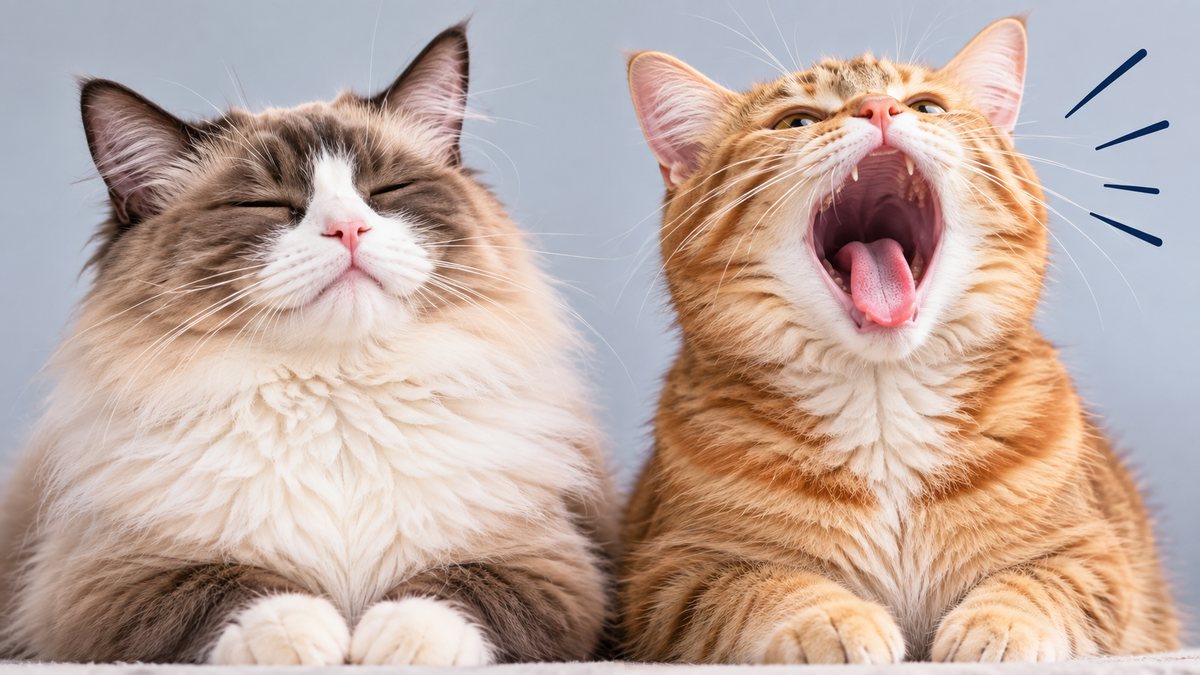
Compare breeds by vocalization. The ordering follows the characteristic itself rather than the alphabet whenever a meaningful order exists.
Discuss Vocalization in the forum
| # | Breed | Vocal tendency |
|---|---|---|
| 1 | Very high | |
| 2 | Very high Highly talkative and interactive, consistent with the Oriental/Siamese breed group. | |
| 3 | Very high A notably talkative breed that commonly uses its voice to interact with the household. | |
| 4 | Very high Exceptionally vocal, persistent and interactive communicator. | |
| 5 | Low to moderate; individual conversational style varies Moderately to highly vocal; the breed’s intense social orientation can translate into frequent meowing or calling when seeking people, warmth or attention. | |
| 6 | Very high | |
| 7 | Often vocal. | |
| 8 | Talkative and often noticeably vocal. | |
| 9 | High Supplementary current breed material characterizes the Asian as distinctly vocal. | |
| 10 | Low to moderate; individual conversational style varies Moderately to highly vocal; its Burmese ancestry commonly produces a sociable cat that uses a distinctive voice readily with people. | |
| 11 | Usually quiet British Shorthairs are generally quiet and unobtrusive rather than highly vocal. | |
| 12 | Low to moderate; individual conversational style varies Moderately vocal; Burmillas often communicate socially but are usually softer and less insistent than the most talkative Burmese and Siamese lines. | |
| 13 | High | |
| 14 | High The Chinese Li Hua tends to be relatively vocal. | |
| 15 | Low to moderate; individual conversational style varies Moderately to highly vocal is a reasonable estimate from its Sphynx/Munchkin-derived social temperament; many will actively call for attention and warmth. | |
| 16 | High Distinctly talkative, using a broad repertoire of chirps and meows often described as songlike. | |
| 17 | High The Kanaani tends toward a relatively vocal style of communication. | |
| 18 | Low to moderate; individual conversational style varies Moderately to highly vocal is plausible for this Thai breed, whose social style is closer to other communicative Southeast Asian cats than to quiet cobby breeds. | |
| 19 | High Distinctly communicative and talkative. | |
| 20 | High Mekong Bobtails tend to be relatively vocal and communicative. | |
| 21 | High Landrace references describe a distinctive loud, deep vocalization. | |
| 22 | High Generally highly communicative and interactive. | |
| 23 | Low to moderate; individual conversational style varies Moderately to highly vocal; its Sphynx- and Munchkin-related social dependence can produce frequent calling for attention, warmth or access. | |
| 24 | Low to moderate; individual conversational style varies Usually quiet to moderately vocal; Persian influence tends to soften vocality while Munchkin ancestry can add more active social communication. | |
| 25 | Low to moderate; individual conversational style varies Moderately to highly vocal; its Abyssinian/Siamese-derived ancestry and outgoing temperament often produce an expressive, conversational cat. | |
| 26 | Usually relatively quiet rather than highly vocal. | |
| 27 | Low to moderate; individual conversational style varies Moderately vocal and sometimes conspicuous, using meows, chirps, hisses and other calls; individual generation and socialization can strongly affect frequency. | |
| 28 | High Can be distinctly vocal and conversational, consistent with Oriental ancestry. | |
| 29 | High Serrade Petits are relatively vocal and communicate readily with their people. | |
| 30 | High | |
| 31 | High The Suphalak tends to be communicative and relatively talkative. | |
| 32 | High Chatty and communicative, though not necessarily loud; commonly greets and converses with familiar people. | |
| 33 | Low to moderate; individual conversational style varies Moderately to highly vocal; as Thai-type cats they are expected to retain the conversational social style of the traditional Siamese family. | |
| 34 | High Talkative and responsive but less continuously vocal than the strongest vocal breeds. | |
| 35 | Low to moderate; individual conversational style varies Usually moderate in voice; Toybobs are strongly people-oriented and may chirp or meow for interaction without being consistently loud. | |
| 36 | Low to moderate; individual conversational style varies Moderate vocality is the most defensible current estimate for this emerging Carpathian breed; no strong evidence supports either unusually quiet or extreme calling. | |
| 37 | Low to moderate; individual conversational style varies Moderately vocal; this active, assertive breed often communicates wants clearly but is not normally classed among the most persistently talkative cats. | |
| 38 | Low to moderate; individual conversational style varies Moderately to highly vocal is a reasonable estimate from its highly social hairless ancestry; calling for people, warmth and attention may be frequent. | |
| 39 | Moderate Communicative and willing to draw human attention; evidence is landrace/breed literature rather than registry scoring. | |
| 40 | Low to moderate; individual conversational style varies Usually moderately vocal: American Bobtails tend to communicate with soft chirps, trills and occasional meows rather than persistent loud calling. | |
| 41 | Low to moderate; individual conversational style varies Usually quiet to moderately vocal; most communicate when they want something without the sustained conversational calling of Oriental breeds. | |
| 42 | Low to moderate; individual conversational style varies Generally quiet to moderate in voice, using ordinary meows and attention calls without vocality being a defining trait. | |
| 43 | Low to moderate; individual conversational style varies Best estimated as moderately vocal: this social, robust Cypriot breed is communicative without being known for relentless calling. | |
| 44 | Low to moderate; individual conversational style varies Moderately vocal and people-oriented; it may meow for attention or company but is not normally considered an especially loud breed. | |
| 45 | Moderate Distinctly conversational and vocal, though generally softer and less insistent than the Siamese. | |
| 46 | Can be vocal. | |
| 47 | Variable Vocal tendency varies meaningfully: some Bengals are vocal while others are quieter and selective about using their voice. | |
| 48 | Low to moderate; individual conversational style varies Moderate vocality is the best estimate for this adaptable shorthair: communicative when engaged, but not characteristically loud or incessant. | |
| 49 | Moderate Uses a soft voice and commonly enjoys conversational interaction without evidence for Siamese-level intensity. | |
| 50 | Low to moderate; individual conversational style varies Best estimated as moderately vocal: an interactive, active cat likely to communicate with people without voice being a hallmark of the breed. | |
| 51 | Moderate soft chirps The breed communicates with a soft, sweet chirping voice rather than exceptionally loud vocalization. | |
| 52 | Low to moderate; individual conversational style varies Usually quiet to moderately vocal; the Ragdoll-related temperament favors gentle social communication rather than persistent loud calling. | |
| 53 | Moderate Generally relatively quiet in volume but can be conversational and frequently uses a distinctive trill. | |
| 54 | Low to moderate; individual conversational style varies Moderate vocality is a reasonable landrace estimate, with individuals ranging from quiet to conversational depending on socialization and household context. | |
| 55 | Moderate Can converse using chortles and trills, but the source does not support classifying the breed among the most continuously vocal. | |
| 56 | Low to moderate; individual conversational style varies Usually quiet to moderately vocal, with broad individual variation typical of a natural European shorthair population. | |
| 57 | Low to moderate; individual conversational style varies Moderate vocality is expected from its Exotic/Scottish ancestry; most are communicative without being notably loud or incessant. | |
| 58 | Low to moderate; individual conversational style varies Generally quiet to moderately vocal; the breed is better characterized by an even, companionable temperament than by persistent calling. | |
| 59 | Low to moderate; individual conversational style varies Moderately vocal and interactive; Rex-type sociability often produces a cat that uses meows and chirps readily with familiar people. | |
| 60 | Moderate Enjoys chatting with familiar people in a soft voice. | |
| 61 | Variable Khao Manee are communicative cats; some are quite vocal while others are more moderate. | |
| 62 | Low to moderate; individual conversational style varies Moderately vocal is the best estimate from its Curl/Munchkin background: social and attention-seeking, but not usually an extreme caller. | |
| 63 | Variable Vocal style varies markedly: some Korats are very quiet while others have a broad vocal repertoire. | |
| 64 | Low to moderate; individual conversational style varies Moderate vocality is the best current estimate; as a natural bobtail population, individual variation is likely greater than in tightly selected breeds. | |
| 65 | Low to moderate; individual conversational style varies Moderately vocal is the best estimate from its Selkirk Rex and Munchkin ancestry; sociable cats may call for interaction without constant loudness. | |
| 66 | Low to moderate; individual conversational style varies Usually moderate in vocality; Lykoi are interactive and curious but are not chiefly distinguished by a loud or continuous voice. | |
| 67 | Moderate Relatively quiet in volume but can be talkative and frequently uses a characteristic trill. | |
| 68 | Low to moderate; individual conversational style varies Moderately vocal; many are sociable and will meow or chirp for interaction, but extreme loudness is not a defining breed feature. | |
| 69 | Moderate Communicative and expressive but generally not loud. | |
| 70 | Low to moderate; individual conversational style varies Probably moderately vocal based on historical Rex temperament descriptions, although documentation is too limited to justify an extreme rating. | |
| 71 | Moderate Secondary breed material consistently describes an extremely chatty, opinionated Oriental communication style. | |
| 72 | Moderate Often vocal and inclined to talk interactively with familiar people. | |
| 73 | Moderate Communicates with an unusual repertoire including chirps and chitters; repertoire richness should not be confused with constant loud meowing. | |
| 74 | Variable Generally quiet, yet capable of persistent conversational back-and-forth when engaged. | |
| 75 | Moderate Sam Sawets are moderately communicative without usually reaching the vocal intensity of Siamese cats. | |
| 76 | Low to moderate; individual conversational style varies Usually quiet to moderately vocal, broadly paralleling Scottish Fold temperament without the folded-ear trait. | |
| 77 | Low to moderate; individual conversational style varies Usually quiet to moderately vocal; Selkirks tend to be sociable and communicative without the persistent voice associated with Oriental breeds. | |
| 78 | Moderate Communicates with characteristic chirping, especially in greeting, without evidence for very high continuous vocalization. | |
| 79 | Variable Some Singapuras are very vocal, while breed material also describes a generally soft, gentle voice; preserve the variation rather than force one score. | |
| 80 | Variable | |
| 81 | Low to moderate; individual conversational style varies Moderately vocal is the best estimate for this affectionate Rex breed; social calling is plausible, but exceptional loudness is not a known defining feature. | |
| 82 | Low to moderate; individual conversational style varies Moderately vocal and communicative; many use soft meows and chirps frequently with their people without matching Siamese-level intensity. | |
| 83 | Low Abyssinians are generally not especially talkative, although they communicate readily through behavior and quieter sounds. | |
| 84 | Low Generally not noisy; communication is often quiet, including soft cooing. | |
| 85 | Low Breed literature describes Tiffanie as the quieter Asian variety. | |
| 86 | Low Generally quiet, with a comparatively soft communication style. | |
| 87 | Low Quiet and unobtrusive in ordinary household life. | |
| 88 | Low Noted for quiet voices, sometimes using chirps to communicate. | |
| 89 | Low Cornish Rex are generally not especially vocal, communicating readily through body language and interaction. | |
| 90 | Low Not particularly talkative; tends to use occasional chirps when seeking attention. | |
| 91 | Low | |
| 92 | Low Quiet breed with a soft voice and chirping repertoire. | |
| 93 | Low | |
| 94 | Low Communicates with a soft harmonious voice and quiet meows; some lines may be more talkative, but not Siamese-like. | |
| 95 | Low Generally not vocal. | |
| 96 | Low Usually not loud overall despite a rich repertoire of chirps and trills. | |
| 97 | Low Gentle, quiet breed; available primary material does not indicate frequent or intense vocal behavior. | |
| 98 | Low Not excessively vocal; tends toward softer chirps and meows. | |
| 99 | Low Gentle, quiet breed with a soft musical voice. | |
| 100 | Low | |
| 101 | Low Generally relatively quiet. | |
| 102 | Low Scottish Folds are generally quiet cats that communicate in a soft, unobtrusive way. | |
| 103 | Low Breed standard/profile emphasizes a quiet temperament. | |
| 104 | Low | |
| 105 | Low Historical veterinary/breed descriptions emphasize purring and relatively soft communication rather than frequent meowing. | |
| 106 | Usually conversational rather than extreme Somalis are socially engaged cats, but extreme vocality is not a defining feature of the breed. |









































































































Breed comparisons describe tendencies, not guarantees about an individual cat. Approximate entries are kept separate from the canonical research record and can be refined as better evidence arrives.
Discuss Vocalization in the forum
Help strengthen lower-data entries
For the breeds below, this characteristic currently relies on limited, conflicting or general baseline evidence. First-hand owner observations can help us decide what deserves further research. Contributions are reviewed separately and never overwrite the researched record automatically.
 English