
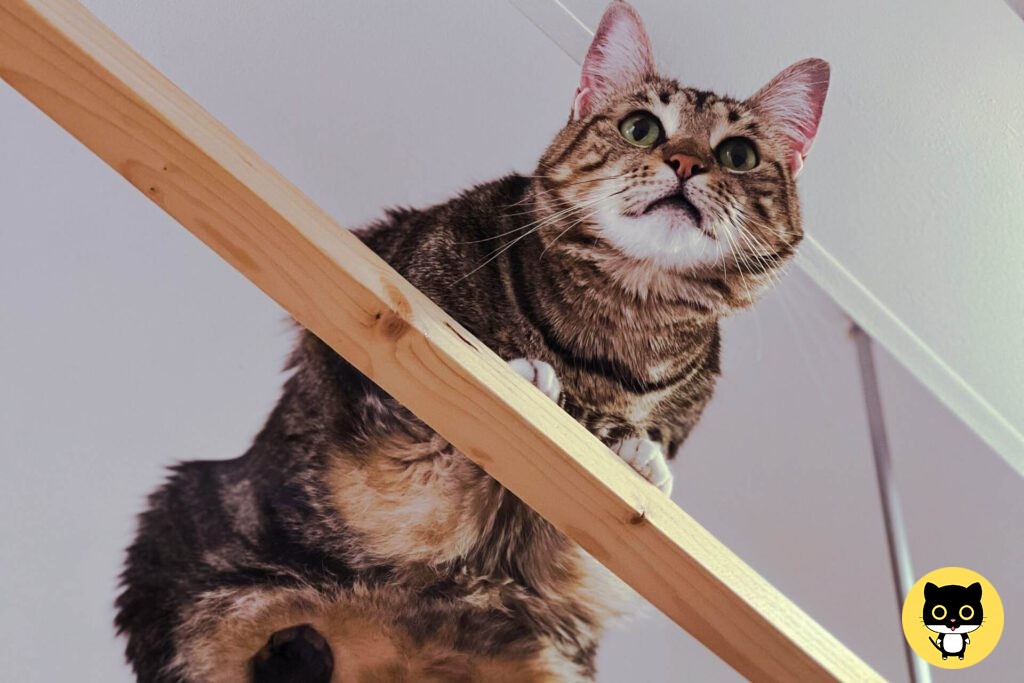
The Chausie is a domestic cat breed with Jungle-cat ancestry and an unusually athletic presence. It combines a tall, lean outline with an alert, involved way of living: climbing, investigating, vocalizing, playing and seeking interaction well beyond kittenhood. That combination is the key to understanding the breed. Its short coat may be relatively simple to maintain, but the cat itself is not necessarily a low-maintenance companion.
Quick Facts
| Origin | Domestic breed developed with Jungle-cat ancestry |
|---|---|
| Adult size | Approximate male weight: 15 lb (6.8 kg); females are described as about 15% smaller |
| Coat | Short to medium, with a dense undercoat and resilient outer coat |
| Recognized colors | Brown ticked tabby, solid black and black-grizzled ticked tabby |
| Typical activity | High; climbing, exploration, interactive play and social contact are important |
| Estimated lifespan | 12–18+ years, an estimate rather than a population-based survival result |
| Recognition | Recognized for championship competition by TICA; not listed on the current CFA or FIFe breed lists checked here |
Identity and recognition
The Chausie is a deliberately developed domestic breed rather than a wild cat kept as a household pet. Its history includes Jungle-cat ancestry, but ancestry is not something that can be reliably read from a cat’s coat, eye color or athletic appearance. In particular, the visible features of a Chausie do not establish its generation or prove how much wild ancestry an individual has.
Recognition also depends on the registry being discussed. TICA granted foundation registration in 1995 and made championship status effective on May 1, 2013. Its current registration rules treat the Chausie as an established breed; they do not reduce every cat’s identity to a simple F-generation ladder. The current breed lists checked for CFA and FIFe do not include the Chausie, so “recognized breed” should not be treated as a universal claim across major registries. Buyers should ask which registry issued the pedigree and what that pedigree actually documents.
This distinction matters when a seller uses terms such as “high generation,” “purebred” or “wild-looking.” A responsible purchase involves checking registration records, parentage, health information and the contract rather than relying on a dramatic appearance or an unexplained generation label.
Appearance: an athletic domestic cat
The Chausie’s silhouette is tall, long-legged, lean and supple. It has a rectangular torso, a deep chest, medium boning, large upright ears and a long muzzle. The tail is flexible and may be somewhat short. Together these features produce a cat that looks built for movement, but the standard describes structure rather than guaranteeing that every individual can safely perform extreme jumps or tolerate rough handling.
Adult males are described at approximately 15 lb (6.8 kg), with females about 15 percent smaller. That figure is a rough breed description, not a target weight. Sex, lineage, age and body condition all affect size, and a veterinarian’s body-condition assessment is more useful than comparing a healthy cat with a published number.
The recognized coat colors are brown ticked tabby, solid black and black-grizzled ticked tabby. In the grizzled pattern, individual hairs can be lighter near the skin and darker at the tips, giving the coat a subtly frosted or sanded appearance. Gold or yellow eyes are preferred, while hazel to light green eyes are allowed. Neither eye color nor coat pattern establishes ancestry or generation.
Coat care and the real meaning of “low maintenance”
The Chausie’s coat is short to medium in length, with a dense, soft undercoat and a somewhat coarser, resilient outer coat. Texture can vary with color and between individuals. Occasional combing is generally enough, and routine bathing is not ordinarily required.
That makes grooming relatively manageable, not the entire cat easy to manage. A light-feeling coat can still leave hair around the home, and individual shedding or seasonal change has not been measured for this breed. Comb according to what the cat’s coat and household require: more often when loose hair accumulates or tangles appear, and less often when the coat stays clean and smooth.
Regular nail care, dental attention and routine veterinary examinations remain ordinary parts of responsible cat care. A kitten should also be taught gradually that paws, ears, mouth and carrier handling are normal. Whether an adult Chausie accepts grooming or restraint comfortably is an individual question, so observing those responses before adoption is valuable.
Temperament and daily life
Curiosity is one of the Chausie’s defining household traits. These cats are described as highly active, playful and talkative, often retaining an enthusiastic interest in play into adulthood. They may want to climb high, inspect cupboards, follow household activity and turn ordinary objects into opportunities for investigation.
The practical answer is to design the home before the cat arrives. Tall, stable climbing furniture gives athletic behavior a safe direction. Puzzle feeders, short training sessions, rotating toys and daily interactive play help prevent the cat’s interests from narrowing to fragile ornaments, cupboards or escape routes. Secure windows, doors and storage are not optional details for a determined explorer; they are part of the enclosure.
A large house is not automatically a better Chausie home. Floor area without vertical territory or interaction can leave a cat bored, while a smaller apartment can work when it offers stable climbing surfaces, varied activities, secure boundaries and a caregiver who provides regular engagement. The useful question is not “How many rooms are available?” but “What can this cat do here every day?”
People-oriented behavior and affection are supported as broad descriptions, but affection does not always mean lap sitting. One Chausie may seek close physical contact, while another may show attachment through following, vocal conversation, play or resting nearby. A people-oriented cat may still dislike prolonged restraint. Meeting an adult and watching voluntary contact, grooming tolerance and responses to handling can reveal more than a general temperament label.
Some individuals may enjoy reward-based fetch or harness training. These activities can turn energy and intelligence into cooperation, but they should be introduced gradually and never used to force a frightened cat into outdoor exposure. An indoor life with secure enclosure access or supervised harness activity is a safer default than uncontrolled roaming.
Families, other animals and household safety
Long periods alone may be difficult for a Chausie. TICA describes the breed as better suited to adults and families without young children, which is a useful caution about supervision and handling rather than a declaration that every Chausie will react poorly to children. A household with children would need calm, closely supervised interactions, clear rules about chasing or grabbing, and a retreat where the cat can leave undisturbed.
Compatibility with another cat or a dog should be assessed one relationship at a time. A slow introduction can include separate rooms, scent exchange, barriers, duplicate food and litter resources, and brief supervised contact. A difficult first meeting does not predict the final relationship, but forcing contact can make the process harder. Escape routes and high resting places give the resident cat and the newcomer choices during the adjustment.
Small pets and wildlife require stricter boundaries. Hunting or prey-directed behavior has been reported, although its frequency is not established. Rabbits, rodents, birds and other vulnerable animals should be physically separated rather than trusted to the cat’s apparent friendliness. The same reasoning applies outdoors: athletic ability, curiosity and possible prey drive make free roaming risky for the cat, local wildlife and neighbors.
Exercise, enrichment and behavior
Daily activity should be planned rather than left to chance. Several short play sessions may be more useful than expecting one long workout, especially when they include chasing, climbing, searching and problem-solving. Food puzzles and hidden portions of a complete diet can add mental work, while a cat wheel or secure outdoor enclosure may suit some individuals when introduced safely.
Under-stimulation can have visible household consequences. An adopter described a Chausie as capable of destructive behavior when under-exercised, while also finding the relationship affectionate and rewarding. That account does not prove that insufficient exercise causes every behavior problem, but it illustrates how the same intelligence that makes the breed engaging can become difficult when the environment offers too few outlets.
Nighttime activity may also matter. A caregiver who rescued a Chausie kitten described intense energy, vocal behavior at night and a close bond with the household, while considering leash work and a cat wheel as safer ways to provide exercise. Prospective caregivers should therefore ask whether they can tolerate activity and noise beyond a conventional play schedule, not simply whether they enjoy an energetic kitten.
Food, health and veterinary care
A Chausie should receive a complete and balanced diet appropriate to its life stage, with portions adjusted for body condition, activity, age and health. There is no established requirement for a raw, meat-only, fruit-free, vegetable-free or supplement-based diet. A veterinarian can help adjust feeding when a particularly active cat gains too much weight, remains too thin or develops a medical condition. General nutrition guidance is available from WSAVA’s global nutrition guidelines.
The supplied evidence does not establish a robust Chausie-specific disease-prevalence profile or a standard genetic screening panel. That does not mean the breed is free of illness, nor does it justify importing disease claims from related breeds without evidence. A buyer should request available veterinary records, vaccination history, parent information and any testing the breeder actually performed, then arrange an independent veterinary examination.
A study of Chausie hybrids examined reproductive biology and hybrid male sterility in a particular cohort. It should not be turned into a claim that all Chausies are infertile or medically unhealthy. Questions about fertility, breeding rights and reproductive history belong in the documented pedigree and veterinary record for the individual cat.
The reported life expectancy is 12–18 or more years. This is a registry estimate, not a population-based survival study and not a promise for a particular cat. Genetics, preventive care, diet, environment, accidents and individual health all influence how long a Chausie lives.
Availability, purchase price and adoption
Availability appears limited in the contexts reported, but there is no breeder census or reliable wait-time dataset supporting a quantified claim that the Chausie is rare. A prospective buyer may need to contact breeders well in advance, travel, verify registration details and consider whether the seller’s description matches the registry and contract documents.
No defensible universal purchase price can be given from the available evidence. One undated Reddit comment from the United States mentioned US$1,500–$7,000, but it did not identify a seller, pedigree, generation claim, age, breeding or pet rights, or whether the figure was an asking price or a completed sale. It is therefore not a reliable market range or a suitable benchmark. Any genuine price comparison should identify the currency, region, date, pedigree details and whether the amount was requested or actually paid.
Adoption can involve different uncertainties. A rescue or rehoming organization may know the cat’s observed behavior better than a seller knows a young kitten’s eventual temperament, but records and ancestry may be incomplete. In either setting, ask about energy level, nighttime behavior, handling, other animals, escape attempts, diet and medical history. An adult’s established preferences can be more informative than predictions based on appearance.
Is a Chausie a good fit?
The Chausie may suit a caregiver who enjoys an interactive, athletic cat and is prepared to make enrichment part of ordinary household maintenance. The strongest match is someone who can provide daily play, vertical territory, secure doors and windows, thoughtful introductions, regular social contact and patience with an individual whose affection may look more like companionship and conversation than constant lap sitting.
The breed is a weaker fit for someone seeking a quiet, independent cat that can be left alone for long stretches, roams outdoors without supervision or requires little management beyond food and occasional brushing. It is also a poor match for a home that cannot secure small pets, protect escape routes or supervise children’s interactions.
The central suitability question is not simply whether the Chausie is attractive or affectionate. It is whether the household can turn curiosity and athleticism into safe, repeatable routines. With that structure, the breed may be deeply rewarding. Without it, the same qualities can become noise, damage, escape risk or exhaustion for both cat and caregiver.
What owners and caregivers say
Owners and caregivers describe rewarding relationships with Chausies, but their experiences also show why the breed should be approached as an individual rather than a temperament stereotype. A rescued kitten was described as extremely energetic, sweet, bonded to the household and vocally active at night. That caregiver considered leash training and a cat wheel as possible outlets, illustrating how enrichment may need to extend beyond ordinary toy play.
Introductions can require deliberate management. One caregiver described difficulty bringing a four-month-old Chausie together with an adult cat and used separation, scent exchange, barriers and gradually supervised contact rather than forcing a friendship. The practical lesson is not that Chausies cannot live with other cats; it is that compatibility is shaped by the individuals, the introduction process and the resources available to each animal.
An adopter described an indoor Chausie as highly athletic and destructive when under-exercised, while also reporting strong hunting behavior outdoors, variable affection and an ultimately rewarding bond. These details belong together. A cat can be demanding, intensely capable and still an excellent companion when the caregiver accepts the management that those traits require.
Affection also varies in form. One cat may be especially cuddly, while another may bond closely without offering constant lap contact. For a prospective caregiver, that contrast is a reminder to ask what kind of relationship they actually want: a cat that sleeps beside them, follows them, plays fetch, talks throughout the day or welcomes physical handling. Meeting an adult and observing the answer is more reliable than assuming that “people-oriented” means “always wants to be held.”
Useful breed and recognition references
- Chausie breed information and recognition details.
- Published breed standard for structure, coat and eye descriptions.
- Current registration rules.
- CFA breed list and FIFe breed list for recognition comparisons.
 English