
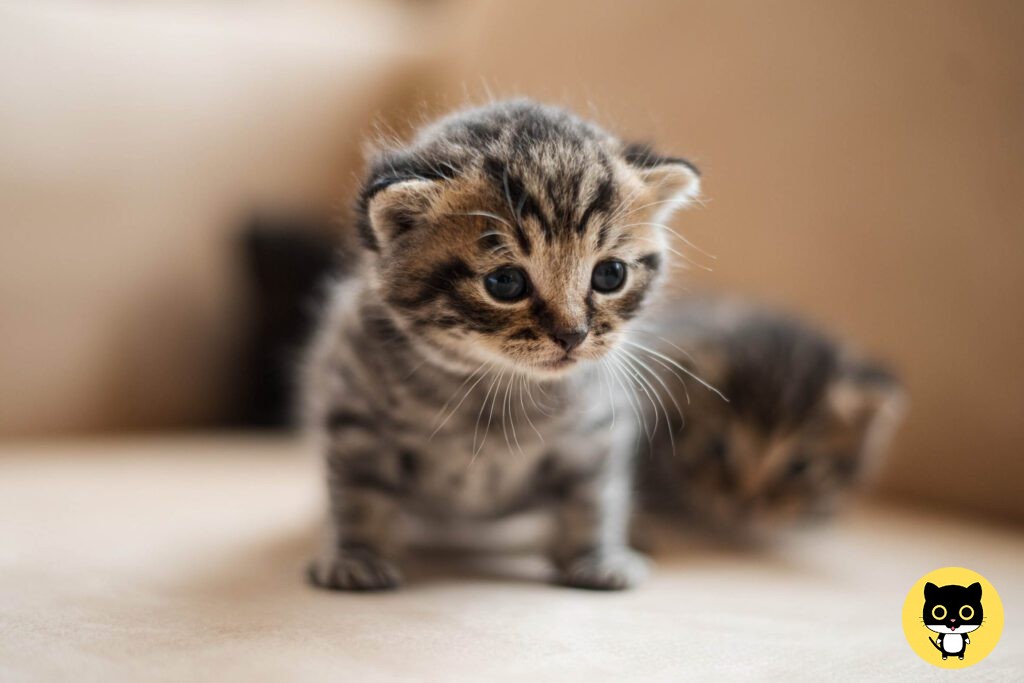
The Minuet is easiest to understand as a breed with more than one practical “look.” Formerly called the Napoleon, it was developed from Persian-group and Munchkin-group cats and now has its own breed identity rather than being treated simply as a Persian–Munchkin cross. Its appeal often begins with the rounded face and unusual proportions, but living successfully with one depends more on the individual cat’s form, coat and temperament than on the name alone.
Quick Facts
| Quick fact | What to know |
|---|---|
| Other name | Napoleon |
| Forms | Shorthaired short-legged, longhaired short-legged, shorthaired Tall and longhaired Tall |
| Coat | Dense plush double coat in shorthaired cats; soft semi-long to long coat in longhaired cats |
| Colors and patterns | All colors and patterns are permitted under the current TICA standard |
| Typical temperament | Playful, curious, affectionate and interested in household activity, with meaningful individual variation |
| Lifespan | A breeder-published estimate is 12–15 years; a transparent population average has not been established |
Identity, history and recognition
The Minuet combines Persian-type features with the short-legged trait associated with Munchkin-group cats. The breed was originally known as the Napoleon, but Minuet is now the modern name used in its breed identity. That distinction matters when comparing pedigrees, standards and health information: a breeder should be able to explain the cat’s ancestry and the registry terminology rather than relying on a marketing description such as “Persian Munchkin.”
Recognition is not identical everywhere. TICA’s current Minuet Breed Group includes four forms: MNT for shorthaired short-legged cats, MNL for longhaired short-legged cats, MTT for shorthaired Tall cats and MTL for longhaired Tall cats. Championship eligibility for all four forms began on May 1, 2026. TICA’s breed standard describes the forms together while preserving the differences in leg length and coat.
Those terms should not be treated as interchangeable across registries. WCF publishes a Minuet Shorthair standard, while that publication should not automatically be read as equivalent to TICA Championship recognition. Minuet does not appear on the current CFA recognized-breed list. FIFe takes a different position, excluding cats with Munchkin-type pseudo-achondroplasia and that ancestry from recognition, registration, breeding and exhibition. A prospective buyer should therefore ask which registry issued the pedigree and exactly how the cat’s form is recorded.
Appearance: a rounded cat with several possible silhouettes
The Minuet is medium-sized, substantially boned and muscular rather than uniformly tiny. A rounded head, large round eyes, rounded ears, broad chest and long tail create the breed’s soft, expressive appearance. The short-legged form has a distinctly low silhouette, but the Tall form can look much more conventionally proportioned from a distance. Calling every Minuet “miniature” therefore gives an incomplete picture.
Leg length changes more than visual height. A short-legged Minuet may need easier routes to a sofa, window perch or other favorite resting place, while a Tall individual may use the home more like an ordinary long-legged cat. Short legs do not establish that a cat is inactive or unable to climb: Minuets are described as capable of running, pouncing and jumping. The useful preparation is to watch the actual cat move and provide stable options rather than assuming either helplessness or exceptional athleticism.
Coat length creates another important contrast. Shorthaired Minuets have a dense, plush double coat. Longhaired cats have a soft, silky semi-long to long coat, commonly with a ruff, britches and furnishings on the tail. All colors and patterns are permitted under the current TICA standard, and eye color is not fixed by coat color. A particular color or pattern may affect a breeder’s price or availability, but it does not by itself determine personality or care needs.
The coat can feel light and silky in the hand while still leaving noticeable hair around the home. Minuets should not be described as low-shedding or hypoallergenic. Shedding varies between cats and may be substantial, especially in longhaired individuals, so someone who wants very little loose hair should assess an adult or older kitten in person rather than relying on photographs or coat texture alone.
Temperament and daily companionship
Companionship is often the Minuet’s strongest attraction. The breed is commonly described as curious, playful, affectionate and interested in what people are doing. A Minuet may follow a caregiver from room to room, join a play session, investigate a work area or seek attention when the household is occupied. These traits can make the cat feel like an active participant in family life rather than a pet that remains on the margins.
Affection does not always mean a cat will enjoy being carried or will settle on every visitor’s lap. Owner experiences include cats that are intensely bonded to one person but difficult for most other people to pet, as well as cats that enjoy harness outings or retrieving games. Such differences are not contradictions; they show why “affectionate” should be understood as a tendency toward connection, not a guarantee of universal sociability, quietness, lap preference or handling tolerance.
A Minuet’s involvement with people also brings responsibilities. Interactive play, scratching surfaces, hiding places and opportunities to climb or rest help turn curiosity into appropriate activity. Food, water and litter resources should be easy to reach, particularly for a short-legged cat, and routes to elevated resting places should be sturdy rather than dependent on a difficult leap. Children and visitors need to learn that the cat can choose when contact begins and ends.
Other pets may be compatible, but compatibility is managed rather than guaranteed by breed. Introductions should be gradual, with supervision and permanent retreat spaces. Dogs should not be allowed to overwhelm a small or low-slung cat, and other cats should have enough separate resources to reduce competition. Meeting the adult cat, when possible, provides more useful information about sociability than a general breed reputation.
Grooming and home care
Regular combing is part of responsible Minuet care. Shorthaired cats may need less time, but their dense coat still benefits from routine attention. Longhaired cats commonly require more thorough work behind the ears, under the abdomen, between the legs, through the britches and along the tail. TICA suggests daily or every-other-day combing when needed to prevent tangles.
Grooming is also a relationship skill. Some cats accept brushing readily, while others allow it mainly from one trusted person. Starting gently, keeping sessions short and rewarding cooperation can make maintenance easier, but no description of the breed can promise that every Minuet will enjoy handling. Professional grooming may be useful for a heavily coated cat or a household that cannot keep up with the coat, though it should supplement rather than replace regular observation at home.
Body condition deserves attention because a rounded outline and substantial bone can make excess weight difficult to judge by eye. Regular veterinary examinations, sensible feeding and opportunities for play help distinguish the breed’s natural build from weight gain. The caregiver should also notice changes in gait, breathing, eating, grooming behavior, eye discharge or willingness to move.
Health and welfare questions
The short-legged form raises a genuine welfare question without producing a simple verdict. Selected limb proportions may affect locomotion, jumping, breeding mechanics or other natural behaviors, yet the available evidence does not justify declaring every Minuet impaired. It also does not justify blanket reassurance that the conformation has no consequences. A responsible decision acknowledges both the cat’s observed mobility and the uncertainty around long-term outcomes.
Persian-related facial features create additional screening questions. Persistent tearing, narrowed nostrils, breathing difficulty, dental crowding and other facial-conformation problems deserve attention. Munchkin-related disproportionate dwarfism also makes orthopedic history and gait worth discussing. These are risk areas to investigate, not established Minuet prevalence rates, and a report about one cat cannot diagnose another.
PKD1 is another relevant question because Persian ancestry can carry risk for polycystic kidney disease. Prospective buyers should request applicable PKD1 testing information, veterinary records and an explanation of how results relate to the parents and close relatives. They should also ask about breathing, tearing, eye, dental, kidney, gait and orthopedic problems in the family. A test result is valuable, but it is only one part of evaluating the breeding program and the individual kitten.
A written contract should identify the registration, health commitments, return policy and any breeding or showing restrictions. The buyer should be able to see the kitten or adult move, breathe and interact, and should be cautious if a breeder avoids questions about relatives or discourages independent veterinary care. These steps do not eliminate uncertainty, but they shift the decision from admiration of a silhouette toward informed care of a living animal.
Price and availability
Price depends on region, coat, leg form, pedigree, intended use and the breeder’s program. A North American breeder’s 2026 guide gives approximate asking ranges of US$1,000–$1,800 for pet-quality kittens, US$1,800–$3,000 for show-quality kittens and US$2,500–$3,500 or more for rare-color or breeding-program kittens. The same guide reports roughly US$800–$1,200 for some Tall or nonstandard pet-quality individuals. These are seller-reported asking prices, not verified completed-sale prices; the figures should be read as dated examples rather than a worldwide market value. The breeder’s 2026 price guide gives the underlying categories.
Breeding networks are documented in North America, Europe and Asia, but there is no reliable current measure that supports ranking the Minuet’s rarity or promising a particular wait time. Local availability may be limited, and a buyer may need to travel or arrange transport. Registry rules, import requirements and local animal-welfare laws should be checked before paying a deposit.
A breeder article gives a possible lifespan of 12–15 years. That is a useful planning estimate, not an established breed average supported by a transparent population dataset. A caregiver should plan for a normal long-term commitment while recognizing that genetics, conformation, preventive care and individual health will influence the actual outcome.
Is a Minuet suitable for you?
A Minuet may suit someone who wants a close, playful companion and is prepared for regular grooming, enrichment and veterinary observation. The best match is a household willing to adapt its layout to the cat’s actual leg form, provide accessible resources and respect individual preferences about handling and visitors.
It is a less suitable choice for someone seeking a guaranteed lap cat, a quiet or hypoallergenic pet, or a low-effort purchase. It is also not a good fit for a buyer who wants to choose primarily by appearance while avoiding questions about gait, breathing, family health, registry status or long-term care. The short-legged form can be mobile and lively, but that should lead to thoughtful accommodation and monitoring rather than assumptions about either incapacity or perfect normality.
The most useful pre-purchase meeting is with the particular adult or older kitten whenever possible. Observe whether the cat moves comfortably, how it responds to unfamiliar people, whether it tolerates grooming and what kind of contact it chooses. In the Minuet, form and individuality are not minor details; they are central to the experience of living together.
What owners and caregivers say
Owners and caregivers describe rewarding relationships built around proximity, play and participation. Some Minuets follow their people through the home, seek attention during computer work and enjoy games such as fetch. That kind of companionship can be especially appealing to someone who wants an interactive cat rather than a decorative one.
Affection may be highly selective. One owner described a cat that was exceptionally bonded to her but difficult for most other people to pet. The same cat reportedly traveled by airplane and accepted regular harness outings. The practical lesson is not that every Minuet will travel easily or welcome a harness; it is that a strongly attached cat may still have clear boundaries about who handles it and how.
Grooming experiences are equally varied in workload. Caregivers have reported visible hair around the home, frequent vacuuming or lint-roller use and professional grooming several times a year. A silky coat can therefore be pleasant to touch without being easy to maintain. Meeting the cat and, if possible, seeing its home coat in ordinary conditions can help a prospective caregiver judge whether the likely hair and grooming routine are acceptable.
Individual health stories also need careful interpretation. One adoption account described chronic watery eyes and nasal symptoms in a Persian/Munchkin-type cat. That experience is important as a prompt to ask about breathing, eyes and facial structure, but it does not establish how common those problems are in Minuets or prove their cause. The soundest conclusion is a balanced one: choose the individual carefully, ask precise health questions and be prepared to provide ongoing observation rather than treating the breed’s appealing appearance or affectionate reputation as a guarantee.
 English