
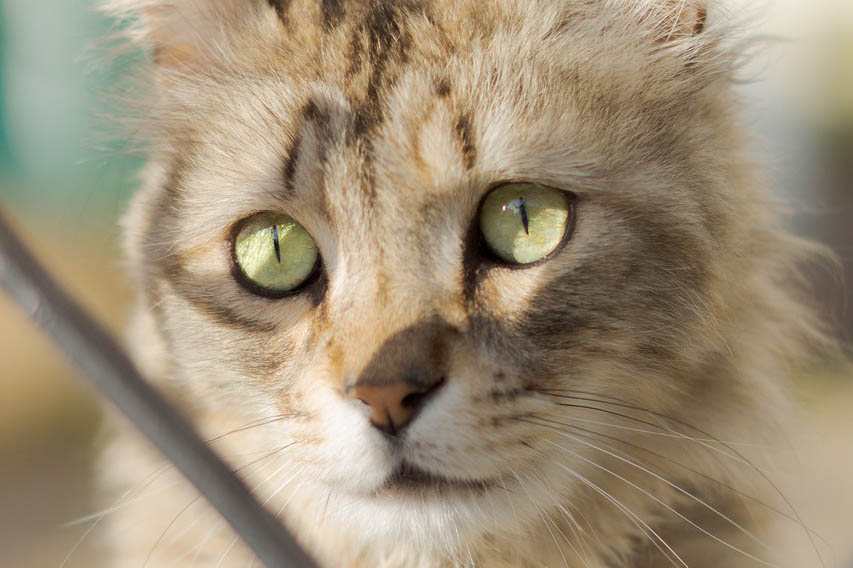
The LaPerm is a curly-coated cat for people who enjoy an involved companion rather than a decorative one. Its coat may be airy and relatively easy to comb, but the cat beneath it is typically active, curious and socially engaged. A good match is less about wanting unusual curls than about being comfortable with a cat that may climb, investigate, follow household routines and change considerably as it matures.
Quick Facts
| Quick fact | LaPerm |
|---|---|
| Coat types | Longhair and shorthair; loose curls, waves or ringlets |
| Typical build | Small-to-medium or medium-sized, lean-muscular and moderately boned |
| Activity | Playful, alert, curious and fond of climbing or exploring |
| Grooming | Usually light combing, adjusted for tangles, coat length and seasonal change |
| Estimated lifespan | Generally quoted as 12–15 years; some have reportedly reached 20 |
| Recognition | Recognized as a formal breed, with terminology and classification varying by registry |
Identity, recognition and history
The LaPerm began with a naturally occurring curly-coat mutation in an Oregon farm-cat population in 1982. Controlled breeding followed, turning an unusual local cat into an established pedigree breed. The name “Rex” describes a type of coat mutation; it does not make a LaPerm interchangeable with another Rex breed or with any curly-coated domestic cat.
The breed has both longhair and shorthair divisions. The CFA and TICA grant the LaPerm championship status, while FIFe lists LPL LaPerm Longhair and LPS LaPerm Shorthair as fully recognized Category 2 breeds. Exact registration terminology and requirements differ between organizations. A curly coat by itself is not proof of pedigree, so a person seeking a registered LaPerm should ask to see registration documentation and pedigree records rather than rely on appearance.
Its farm-cat beginnings also help explain why the modern breed should not be reduced to its coat. The LaPerm’s ancestry and selection history sit behind descriptions of an alert, capable and exploratory cat, but no origin story can predict the personality of every individual. The useful question is how a particular cat behaves with people, handling, other animals and daily activity.
Size and physical appearance
The LaPerm is generally small-to-medium or medium-sized, with males usually larger than females. Reference figures commonly given are about 6–9 pounds for females and 7–12 pounds for males, although published ranges are not completely uniform. Body condition is more useful than trying to make a healthy cat fit a breed number: a veterinarian should assess muscle, weight and overall condition together.
The breed has a moderate, semi-foreign outline: a lean but muscular body, medium boning, medium-long legs and hips that may sit slightly higher than the shoulders. The head is a modified wedge, with medium-to-large ears that appear cupped, and the tail tapers toward the tip. These features describe a show ideal, not a guarantee of an individual cat’s health, athletic ability or temperament.
Coat and body development can continue for roughly two to three years. Longhair coats may take particularly long to fill out, so a kitten that appears lightly coated, unevenly curled or almost bare may look strikingly different as an older juvenile or adult. This is one reason an adopter should avoid treating a very young kitten’s appearance as a fixed forecast.
Coat, curls and color
The LaPerm coat is usually light, airy, springy and textured rather than densely packed or uniformly tight. It may form loose curls, waves or ringlets. Longhairs can develop a ruff and a plumed tail, with extra curl around the ruff and ear bases. Shorthairs range from short to approximately medium-long and commonly have a bottle-brush tail; their coat may feel somewhat harder and show waves across the body.
Longhair and shorthair can be difficult to classify confidently in a young kitten. Maturity, season and humidity may all affect how the coat looks. One caregiver’s LaPerm appeared frizzier in dry conditions and curlier in humidity, an observation that is plausible for that household but should not be treated as a predictable rule for every cat.
Color choice is broad. Accepted possibilities include solid, tabby, tortoiseshell, shaded, chinchilla, smoke and pointed combinations, along with other genetically possible patterns recognized under the relevant standard. Some labels are specific to particular registration systems, so terms such as “Karpati” or “salt and pepper” should not be assumed to have one universal meaning.
Eye color is similarly varied. Depending on the registration standard and coat category, eyes may be copper, gold, yellow, green, blue, aqua or odd-colored. In particular, eye color does not necessarily need to correspond to coat color, so coat shade alone cannot reliably predict what a LaPerm’s eyes will look like.
What living with the coat is like
The coat is often considered light-shedding because it lacks a heavy undercoat. That can make loose hair less conspicuous and may reduce the amount of dense fur some households notice on furniture. It does not mean that every LaPerm leaves little hair, however, and a light coat can still leave strands around the home. Individual coat length, texture and seasonal change matter.
A light-shedding coat is not a hypoallergenic coat. Cat allergens are associated with proteins from sources such as saliva and skin secretions, not simply with the amount of visible hair. Anyone with allergies should spend time with the actual cat before committing; reduced fur around the house cannot establish that living with that cat will be comfortable.
Light combing or a wide-toothed comb is usually enough for a coat that remains loose and tangle-free. Increase attention when a longhair develops knots, mats or heavier seasonal shedding. The practical schedule is therefore driven by the individual coat rather than by a rigid breed-wide timetable. Frequent bathing and routine trimming are not universal requirements, and bathing should be reserved for contamination, veterinary treatment or a particular grooming problem rather than used to create or preserve curl.
Some mature longhairs develop a fuller winter ruff and more plumed tail, while summer may bring a lighter coat. Shorthairs are generally less seasonally affected. A kitten’s early coat may therefore understate or exaggerate the amount of grooming an adult will eventually need.
Temperament and daily life
The LaPerm is often an active, playful and attentive cat. Its curiosity can turn ordinary household activity into an invitation to investigate, and daily interactive play is a sensible part of care. Wand toys, chase games, puzzle-style feeding and rotating toys can provide outlets for movement and problem-solving rather than leaving the cat to invent its own entertainment.
Vertical space is particularly useful. A stable cat tree, secure shelves and protected high resting places allow a LaPerm to climb and observe without turning fragile ornaments, open windows or unsafe ledges into climbing opportunities. An indoor home can suit the breed well when it offers usable height, scratching surfaces, hiding places and social interaction; floor area alone is not the best measure of whether the environment is enriching.
Social interest is often expressed through following people, watching household activities, rubbing against a caregiver, playing nearby or settling close to the action. That does not guarantee a cat who enjoys being carried, restrained or groomed for long periods. A LaPerm may want participation without wanting constant physical contact. Consent-based handling—short sessions, rewards and attention to signs of discomfort—is a better expectation than assuming that a friendly cat will tolerate everything.
This profile can suit a caregiver who wants an interactive companion and has time for play, enrichment and relationship-building. It may be a poorer fit for someone seeking a quiet, highly predictable cat that is content with little stimulation. Individual cats vary widely, so meeting an adult or asking detailed questions about handling, activity and social preferences is more informative than relying on the breed label alone.
Children, dogs, cats and small pets
A LaPerm may live successfully with respectful children, a cat-safe dog or another compatible cat. The essentials are gradual introductions, separate resources, escape routes and supervision of how each animal responds. A people-oriented temperament does not guarantee that a particular LaPerm will welcome another animal, and a confident cat may still need a private room or elevated retreat during the adjustment period.
Children should be taught to invite interaction rather than chase, hold or corner the cat. The same principle applies to adults: a cat that comes over to rub against a leg may not want to be picked up. Watching the individual’s body language is more reliable than interpreting sociability as unlimited tolerance.
Rodents, birds, reptiles and other vulnerable small animals should be kept securely separated. Farm origins and reports of prey-directed play make management sensible, but they do not prove that every LaPerm hunts. Safe housing is the responsible default regardless of how gentle a particular cat appears.
Health, veterinary care and lifespan
No well-established LaPerm-specific disease predisposition is identified in the reviewed veterinary and breed sources. That is narrower than saying the breed is exceptionally healthy or free from inherited illness. LaPerms can still develop the ordinary medical problems seen in cats, and their health depends on genetics, preventive care, nutrition, environment and chance.
A prospective buyer should ask for veterinary records, the family health history, information about permitted outcrosses and any DNA testing relevant to the actual lines. There is no universal LaPerm screening panel that replaces those questions. A responsible breeder should be willing to explain what has been tested, what has not been tested and how the cats are supported if a health problem emerges.
Routine veterinary examinations, vaccination advice, dental care, parasite prevention and weight monitoring remain appropriate. Coat texture or curl is not a substitute for a physical examination, and an unusual coat change should be discussed with a veterinarian rather than explained automatically as a normal LaPerm trait.
A commonly quoted planning estimate is 12–15 years, with some LaPerms reportedly living to 20. These figures are estimates rather than a population-derived life table or a promise for an individual cat. Good preventive care and sound breeding may improve the odds of a long life, but neither can guarantee a particular outcome.
Availability and price
Availability may require patience. A checked U.S. adoption search showed no LaPerm in the searched location, while the United Kingdom has breed-club infrastructure and a documented recent listing. Those observations support contacting breed clubs, breeders and rescues early and allowing time for a suitable match; they do not establish a universal level of rarity everywhere.
Prices also depend heavily on location, age, pedigree, availability and whether the figure is an asking price, an adoption estimate or a rehoming fee. A January 2026 UK market report gave one London LaPerm kitten listing at £900 and cited a broader platform-stated UK range of £400–£1,000. These are dated asking examples, not a guaranteed market price.
The same report described a seven-year-old adult in Alabama with a $400 asking or rehoming fee. That is an adult example, not a kitten price. Separately, AdoptAPet gives an indicative U.S. LaPerm adoption-fee estimate of $75–$150, although actual rescue fees vary by organization and the checked search did not show a cat available in that location. Transport, supplies, insurance and veterinary costs are additional and should be budgeted separately from acquisition.
Is a LaPerm right for you?
A LaPerm is likely to suit someone who appreciates individuality: a coat that may be tousled rather than polished, a kitten that may change dramatically with age, and a companion who wants to be involved in household life. The breed can be a rewarding choice for a caregiver prepared to provide climbing opportunities, daily play, respectful handling and ordinary lifelong veterinary care.
It is less likely to suit someone choosing primarily for a guaranteed low-allergen experience, a completely hair-free home, a fixed adult appearance or a promise of constant lap behavior. The most useful pre-adoption checks are practical: meet the actual cat if possible, ask how it responds to grooming and restraint, learn how its coat changes through the year, and ask the breeder or rescue about health, introductions and behavior around other animals.
The central decision is not whether the LaPerm is “low maintenance.” It is whether the caregiver wants an active, variable individual whose coat may be easier than its reputation suggests while still requiring observation and occasional grooming. For the right household, that combination of unusual appearance and engaging companionship is the attraction.
What owners and caregivers say
Owners and caregivers describe the LaPerm as rewarding partly because it does not always present the same way from one stage or household to the next. A caregiver with LaPerms in the family described them as especially sweet and affectionate, while also noticing that the coat looked frizzier in dry conditions and curlier in humidity. That experience fits the broader impression of a responsive, variable coat, but humidity should not be treated as a dependable coat-changing mechanism for every cat.
The deliberately tousled appearance is a matter of taste. One caregiver described a LaPerm that could look messy even after grooming; another found the challenge of maintaining a longer curly coat appealing. This contrast is useful for prospective owners: the breed’s texture may look charmingly natural to one person and insufficiently polished to another. Seeing an adult coat is therefore more informative than choosing from a kitten photograph.
Coat development can also surprise people. A caregiver described a LaPerm-like cat that was almost hairless early in life before developing a striking coat, while an account of an eight-year-old registered shorthair showed noticeable changes from kittenhood into adulthood. These stories illustrate why young coat appearance should be treated as a stage, not a promise. The suggestion that stress caused hair loss in one individual remains that caregiver’s interpretation rather than an established explanation for the breed.
Another household reported very little visible fur on clothing and furniture. That may explain why some people experience the LaPerm as light-shedding, but it cannot establish a breed-wide shedding rate or predict what every coat will do in a different home. The practical test remains the individual cat, the caregiver’s tolerance for occasional hair and the willingness to comb when tangles appear.
Taken together, these experiences make the LaPerm’s appeal clearer: it can offer an affectionate, interactive relationship wrapped in an unusually changeable coat. They also reinforce the limits of the advertisement shorthand. A LaPerm may seek people without enjoying restraint, shed lightly without being hypoallergenic, and look untidy without being neglected. The best match is built around those possibilities rather than around a single promised trait.
Useful breed information
CFA breed information and standard, TICA LaPerm information, FIFe breed classifications, UC Davis Veterinary Genetics Laboratory breed information, and LaPerm Cat Club information provide starting points for recognition, coat characteristics, health questions and breeder contacts.
 English