
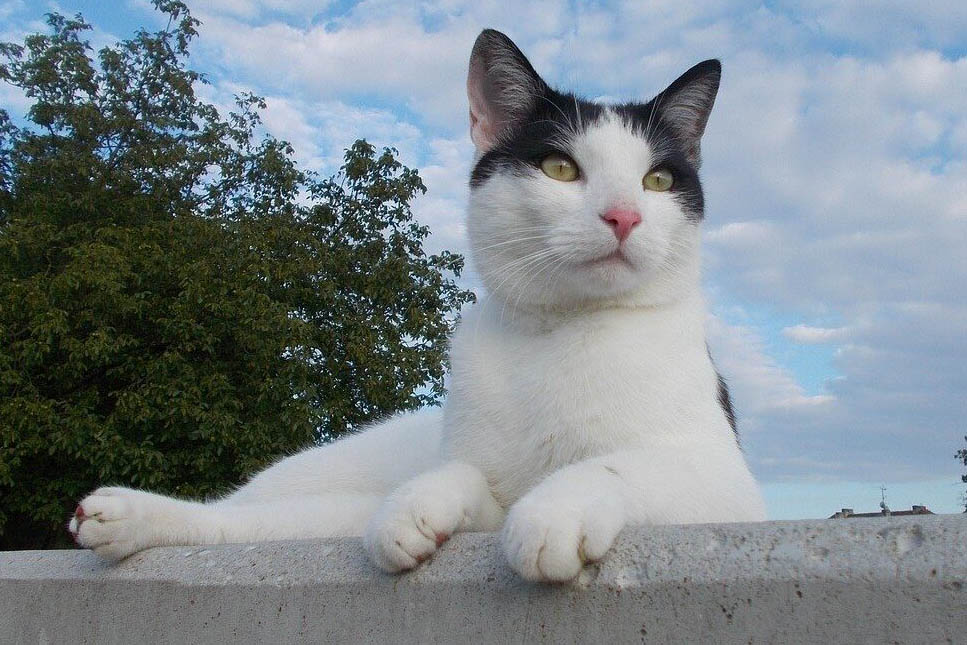
The Aegean Cat is best understood as a Greek-associated native cat type rather than a standardized pedigree breed. Its strongest associations are with the Cycladic islands and the wider Aegean region, where cats have lived alongside people in villages, ports and households. The name can describe a regional or “Aegean-type” cat, but appearance, location or a friendly personality cannot by themselves prove ancestry.
Quick Facts
| Quick fact | Practical meaning |
|---|---|
| Identity | Greek-associated domestic-cat landrace or developing native type |
| Typical build | Medium-sized, compact, athletic and muscular |
| Coat | Variable; semi-long or medium coats are often described, but shorter coats also occur |
| Common coloring | White-dominant bicolor and tricolor patterns, with black, blue, red or tabby markings also reported |
| Recognition | Not listed as a recognized championship breed by CFA, TICA or FIFe |
| Reported lifespan | About 9–12 years in one secondary estimate; not a validated population statistic |
What the Aegean Cat is—and is not
The Aegean is connected with Greek cats that developed in a maritime environment rather than with a closed, modern pedigree program. Greek organizations have documented or promoted native-cat preservation work, but that should not be confused with international championship-breed recognition. The Greek organizational material and regional descriptions are useful for understanding the cat’s cultural and geographic identity, while the current breed lists of CFA, TICA and FIFe do not list the Aegean as a recognized breed.
That distinction matters when a prospective caregiver is comparing an Aegean with an established pedigree breed. A recognized breed normally has a defined standard, registration rules and a more controlled breeding history. The Aegean label is more fluid. It may refer to a regional cat, a cat with Greek ancestry, a mixed cat with an Aegean appearance or an informal description used in a rehoming advertisement. When provenance is uncertain, “Aegean-type,” “Greek domestic cat” or simply domestic shorthair or domestic longhair may be more accurate.
Cats have a long history around the eastern Mediterranean, and human travel, trade and settlement undoubtedly helped move cats between ports and islands. Archaeological and genetic research can illuminate that broader history, but it does not establish an unbroken pedigree for every modern cat called Aegean. A Greek birthplace is meaningful context, not a genetic certificate.
Appearance and coat variation
The Aegean is generally described as a medium-sized cat with a compact, muscular and athletic body. The legs are proportionate, the paws rounded and the tail in balance with the body. The ears are usually described as medium-sized with rounded tips. These descriptions provide a useful visual impression, but they do not amount to a universally binding conformation standard.
Weight descriptions should be treated as rough orientation rather than a target. Some profiles place the cat at approximately 7–10 pounds, or 3.2–4.5 kilograms, or more. That range is not a sex-specific standard and should not determine how much an individual cat is fed. Frame size, muscle, age, reproductive status and body condition are more useful than a number alone.
The coat is one of the clearest areas of variation. Semi-long or medium coats are frequently described, sometimes with a soft or silky texture and an undercoat, while shorter-coated regional cats also appear in descriptions and photographs. A particular cat may therefore have a light, close coat or a fuller coat that tangles and sheds more visibly. A silky feel does not mean a hair-free home, and coat length alone does not predict allergen exposure.
White-dominant bicolor and tricolor patterns are commonly associated with the Aegean, often combined with black, blue, red or tabby-marked areas. Green eyes are reported in some descriptions, but there is no universally accepted Aegean rule for eye color, pattern or coat length. Anyone buying or adopting should assess the actual cat rather than treating white markings or a particular eye color as proof of identity.
Temperament and life with an Aegean
The Aegean is often portrayed as sociable, curious, communicative and involved with familiar people. Many descriptions also present the cat as active, interested in exploration and willing to investigate its surroundings. These qualities make an Aegean-type cat appealing to someone who wants an engaged companion rather than a purely decorative or consistently quiet cat.
Individual history can matter more than the label. A kitten raised around people may become confident and affectionate, while an adult that has lived outdoors may need time to accept handling, indoor routines or unfamiliar sounds. Health, socialization, age and previous experiences can all change how a cat responds. A prospective caregiver who can meet an adult or fostered cat has a much better opportunity to assess its handling tolerance, activity level and preferred distance than someone relying on a breed description.
Activity may range from moderate to distinctly energetic. Play involving chasing, climbing and searching is a sensible starting point, and some profiles mention interest in water or fishing-like behavior. There is no established Aegean exercise quota, so the home should be adjusted to the individual: interactive toys, scratching surfaces, safe vertical territory and opportunities to investigate can help prevent boredom without assuming that every cat needs constant stimulation.
Reported prey interest also deserves practical attention. A cat’s Greek island or harbor association does not make free roaming necessary or safe. Birds, rodents, fish and other small pets may need secure separation, and outdoor access is safer through a catio, enclosed garden or supervised routine. Indoor enrichment can provide climbing, observation and hunting-style play while avoiding traffic, fights, parasites, poisoning, infectious disease and harm to wildlife.
There is not dependable breed-wide evidence for lap preference, tolerance of restraint, behavior with strangers, compatibility with children or dogs, or the length of time an Aegean can comfortably remain alone. Families should use the same careful process they would use with any cat: supervise children, introduce animals gradually, provide retreat spaces and keep food, litter and resting areas sufficiently separated to reduce competition.
Grooming and everyday care
Grooming should follow the individual coat rather than a fixed Aegean schedule. A short, close coat may need only occasional attention, whereas a dense or semi-long coat may benefit from regular combing when loose hair, tangles or mats appear. Seasonal shedding can make a normally manageable coat more noticeable around the home. The cat’s tolerance matters too; short, calm sessions are usually more useful than forcing an infrequent, stressful grooming session.
The Aegean should not be marketed as hypoallergenic. Allergens come primarily from proteins associated with the cat’s skin, saliva and secretions, not simply from the visible length of its hair. Someone with allergies should spend time with the particular cat, consider medical advice and avoid assuming that a shorter or silkier coat will solve the problem.
Routine domestic-cat care is appropriate. That includes preventive veterinary examinations, vaccinations and parasite planning suited to the cat’s lifestyle, dental and nail care when needed, complete food appropriate to life stage and regular attention to body condition. A cat that has lived outdoors or is being transported internationally may need especially careful planning for identification, vaccination, parasite treatment and health documentation.
No distinctive Aegean nutritional, dermatological, eye, ear or dental protocol has been established. The absence of a recognized breed-specific problem list does not mean that the cat is disease-free or unusually robust. Prospective caregivers should ask for veterinary records, vaccination dates, parasite history, known illnesses, family history where available and any examinations that a breeder or seller claims to have completed.
Health and expected longevity
There is no dependable Aegean-specific disease profile, validated genetic test or universal screening panel. That makes ordinary evidence-based care more important, not less. A seller who presents the name as a guarantee of exceptional health should be treated cautiously, just as a seller who invents a long list of breed-specific risks should be.
One secondary profile gives an average lifespan of approximately 9–12 years. That figure does not identify a transparent cohort or survival method, so it is best treated as an informal estimate rather than a population measurement or promise. Nutrition, preventive care, environment, accidents, infectious disease and inherited factors can all affect an individual cat’s life.
Questions about provenance are particularly important because the name may be used loosely. Ask whether the cat is documented as a regional type, a mixed Aegean cat, a domestic cat from Greece or a registered pedigree animal. If registration documents are claimed, ask which organization issued them and what they actually establish. A photograph, island origin or white-and-tabby coat is not equivalent to documented ancestry.
Availability, transport and cost
Availability outside Greece appears limited through conventional breeder and registry channels. Finding an actual breeder may be difficult, and some cats described as Aegean are more likely to be rescues, rehomings or regional-type domestic cats than deliberately bred pedigree kittens. That can be a positive opportunity for adoption, but it changes what the caregiver should expect to receive: a known individual with a particular history rather than a predictable standardized package of traits.
A dependable current breeder-price range is not available. One U.S.-oriented secondary profile gives a figure of $300–$500, but does not identify a verified breeder, date, registry status, kitten-or-adult distinction, or whether the amount was an asking price or a completed sale. It should not be used as a reliable market average.
Rescue logistics can look very different from a purchase price. In a Greek caregiver’s 2024 report, preparation for one cat—including a microchip, vaccinations, medical treatment and an airline-ready carrier—cost about €100, followed by approximately €65 per cat for air transport within an EU rescue effort. These are personal cost-recovery figures, not an adoption fee or a general import budget; actual costs depend on origin, destination, airline, veterinary requirements, timing and the cat’s health.
Anyone considering international transport should verify the destination country’s current rules before committing. Microchip timing, rabies vaccination, health certificates, parasite treatment, airline policies, carrier specifications and waiting periods may all matter. A friendly kitten that is easy to handle still needs proper preparation for travel and a gradual transition after arrival.
Is the Aegean Cat a good match?
The best match is a caregiver who is comfortable with some uncertainty and willing to evaluate the cat in front of them. An Aegean-type cat may suit someone who enjoys an alert, athletic companion, can provide play and secure climbing opportunities, and is prepared to manage a variable coat. It may also suit an adopter who values a Greek connection or wants to help a regional rescue cat without needing a formal pedigree.
The choice is less suitable for someone seeking a guaranteed adult size, a fixed coat and eye-color standard, predictable behavior with children or other pets, or a documented breed-specific health forecast. Those expectations cannot be supplied reliably by the name alone. Meeting the individual cat, reviewing records and speaking honestly with the current caregiver are more useful than relying on romantic ideas about island cats or broad claims about temperament.
Secure housing, gradual introductions, ordinary preventive care and coat-dependent grooming address the practical realities well. The Aegean’s regional identity can add interest and context, but it should guide curiosity rather than replace evidence about the particular animal.
What owners and caregivers say
One adopter described a young cat found in Greece that repeatedly returned to a house, waited at the door and cuddled on its first night. The same account included the less sentimental work behind the happy outcome: microchipping, veterinary preparation, carrier and harness training, and arranging international travel. It is an appealing example of an unusually trusting young rescue cat, but it does not show that every Aegean-type cat will immediately seek close contact.
A caregiver coordinating homes for six Greek kittens described the rescue effort as tiring but rewarding. The reported cost—about €100 per cat for medical, identification and carrier-related preparation, plus roughly €65 per cat for air transport in 2024—shows how quickly logistics can become part of the decision. For an adopter, the important lesson is to distinguish an adoption arrangement from the cost of preparing and moving a cat across borders.
An account involving a five-year-old Aegean cat described the animal making a high leap onto a kitchen bench. It is a small, memorable example of the athletic and opportunistic household behavior that an active cat may display. It is not evidence that Aegean cats commonly jump to a particular height, but it does support a sensible preparation: provide approved climbing places before the kitchen counters become the most rewarding destination.
A Greek rehoming listing dated September 18, 2026, described a one-year-old male as a mixed Aegean Cat. The wording captures the identity issue clearly. In everyday use, “Aegean” may identify a regional appearance or background without establishing a documented pedigree. For a caregiver, that is not necessarily a drawback; it simply means the decision should rest on the cat’s health, history and behavior rather than on a stronger certainty than the label can provide.
 English