
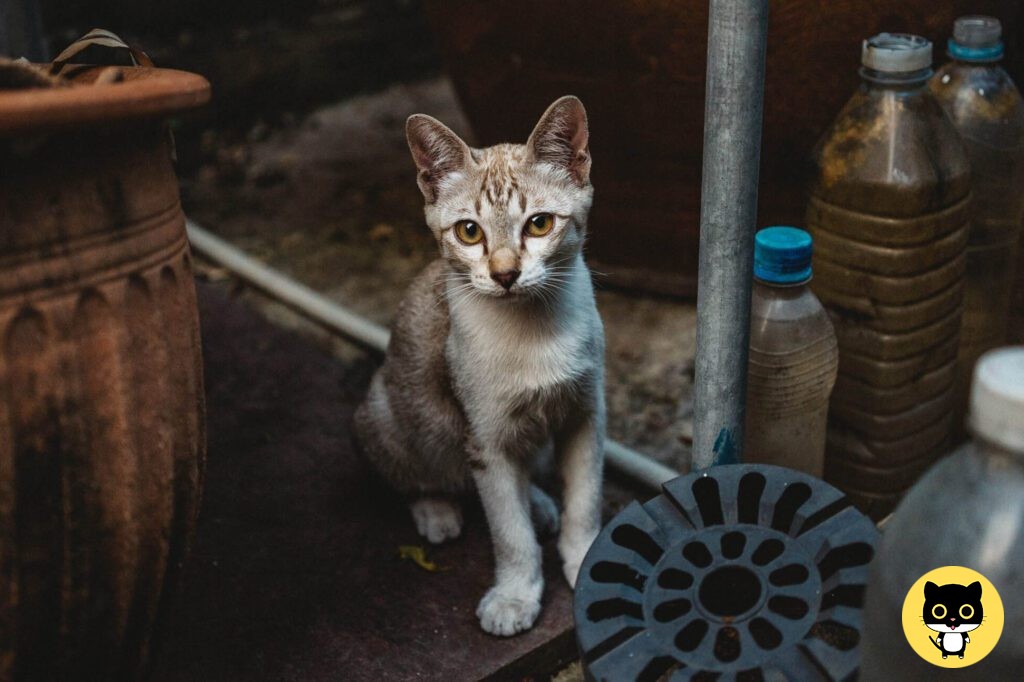
The Asian is best understood as an involved companion rather than simply as a shorthaired pedigree cat. It combines a graceful, athletic appearance with the curiosity, sociability and intelligence associated with Burmese-type cats. That combination can make life with an Asian rewarding for someone who wants a cat that participates in household routines, but it may be less comfortable for a home seeking a quiet, highly independent animal.
Quick Facts
| Quick fact | Asian |
|---|---|
| Type | British Asian breed group; classification varies by registry. |
| Adult size | Medium-sized and substantial, with a slender, muscular and athletic build. |
| Coat | Asian shorthairs have a fine, close, glossy coat; the semi-longhaired Tiffanie is treated separately in this directory. |
| Typical activity | Generally lively, curious, playful and socially involved. |
| Estimated lifespan | Approximately 16–18 years is a useful planning estimate, not a population life-expectancy figure. |
What “Asian” means
“Asian” is not a single universally defined appearance. It is a registry-dependent breed-group name, and the cat’s exact variety matters. In the GCCF system, the group includes Asian Self and Tortie, Smoke, Shaded or Burmilla, Tabby, and the semi-longhaired Tiffanie. Other organizations may treat Burmilla, Bombay, Tiffanie or Asian Shorthair as separate breeds, varieties or registration categories.
That difference affects how a buyer should interpret a listing. A cat with an Asian-type appearance is not necessarily a fully registered Asian, and a seller’s use of “Asian” may not tell you whether the cat is a particular variety or a related breed. Ask to see the pedigree, the registering organization, the registered breed or variety, and any registration restrictions. The breed description and registration policy illustrate why documentation is part of identifying the cat, not an administrative detail added afterward.
History and relationship to related breeds
The modern Asian developed in Britain from Burmese and Chinchilla Persian ancestry. Its Burmese influence helps explain the sleek body, expressive eyes and people-oriented character, while the group’s history also accounts for its range of coat colors, patterns and lengths.
An Asian is not interchangeable with a Burmese, Siamese or Oriental Shorthair. Those breeds can share features such as an elegant outline, lively intelligence or strong social bonds, but their standards and registration systems differ. Burmilla, Bombay and Tiffanie may occupy different positions in different organizations. When comparing cats, compare their documented breed identity rather than assuming that similar looks mean identical care or temperament.
Appearance and coat varieties
The Asian has a medium-sized but substantial build. The body is slender, muscular and athletic, with a broad chest, elegant legs and oval paws. The head is a blunt, broad wedge, framed by medium to large ears. Large, lustrous eyes and a medium-length tapering tail complete an appearance that is refined without looking fragile.
Approximate adult weights are often given as 5–7 kg for males and 3.5–5.5 kg for females, but those figures should not become a target in isolation. A sound body condition, muscle tone and proportion matter more than making an individual cat reach a particular number.
Shorthaired Asians have a fine, close coat with a glossy or satiny finish. It tends to show the body’s lines clearly and can feel light to the hand, but a fine coat is not the same as a hair-free home. Loose hairs can still collect on furniture, clothing and bedding.
Tiffanies have a fine, silky semi-long coat without a woolly undercoat. The coat is longer on the lower body, and the cat may have ear furnishings and a plume-like tail. These features add softness and visual drama, but they also create more places for knots to form, particularly around the lower body and tail.
Color and pattern are unusually important to the group’s identity. Recognized categories include Self and Tortie, Smoke, Shaded or Burmilla, and Tabby, with tabby forms such as ticked, spotted, mackerel and classic. Depending on the registry, variety and pedigree, permitted colors may include solid, silver, Burmese-restricted and tortie forms.
There is no single universal Asian eye color. Depending on the coat category, accepted colors can range from pale green through green, yellow-chartreuse and golden yellow to amber. A prospective buyer should therefore treat eye color as part of the documented variety rather than as a test of whether a cat “looks Asian.”
Temperament and life with an Asian
Daily interaction is central to the Asian experience. These cats are commonly described as lively, curious, intelligent, playful, sociable and interested in what their people are doing. They may follow household activity, investigate changes, initiate games or communicate when they want attention.
Affection does not always mean prolonged lap sitting. For one cat, it may mean following a person from room to room; for another, it may mean conversation, play, supervising chores or settling beside rather than on a lap. An owner who wants a cat that is present and responsive may find this deeply companionable. Someone who prefers a cat that rarely asks for engagement may find the same involvement demanding.
Asians are often described as affectionate and talkative without being especially noisy. That is a useful general expectation, not a guarantee of a particular vocal style. Related cats may call more insistently when bored, and individual Asians can differ in how much they use their voice. Meeting an adult, or asking a breeder for specific information about the parents and kitten, is more informative than relying on the label “quiet” or “vocal.”
Social homes can work well when introductions are handled carefully. Asians may live with children, dogs and other cats, but compatibility depends on the individuals and on the structure provided by the household. Introductions should be gradual, with separate early spaces, distributed food and litter resources, high resting places and escape routes. A sociable breed is not immune to tension over territory or social position.
Small pets deserve particular caution. One caregiver describes an Asian-group cat stalking pheasants. That account does not establish a universal hunting tendency, but it is a sensible reminder that a playful, alert cat must be physically separated from birds, rodents and other vulnerable animals.
Care, enrichment and grooming
Interactive play should be part of ordinary Asian care rather than an occasional extra. Wand toys, chasing games, food puzzles, climbing routes, scratching surfaces and places from which to watch the household give an active mind appropriate outlets. Rotating toys can preserve interest, while short play sessions spread through the day may work better than expecting one long session to satisfy the cat.
A home with observation places and quiet retreats supports both sides of the Asian temperament. A high shelf or cat tree lets the cat monitor activity, while a covered bed or undisturbed room provides a way to withdraw. This balance matters in busy homes, especially when children, visitors or other animals are present.
Shorthaired varieties are generally straightforward to groom. Weekly brushing is a reasonable starting point, with the frequency adjusted if loose hair, shedding or small tangles increase. The coat may be easy to comb, but that does not make the breed hypoallergenic or guarantee minimal hair around the home.
Tiffanies need more regular attention. Their silky length and furnishings give tangles more opportunity to develop, especially beneath the body and through the tail. Gentle, frequent combing is usually easier for the cat than waiting until a knot has tightened. Teaching grooming gradually also makes future inspections of the ears, claws and coat less stressful.
Neither a short coat nor a silky coat establishes low allergen exposure. An allergy-prone household should spend time with the specific cat before committing and should seek medical advice. Individual reactions vary, and coat texture alone cannot predict them.
Health and responsible buying
The clearest breed-relevant inherited concern identified for the Asian is Burmese hypokalaemia, also called hypokalaemic polymyopathy. It is an autosomal-recessive disorder associated with low potassium and episodes of weakness, and DNA testing is available. Breeding policy in the GCCF has required relevant hypokalaemia testing for active-register breeding Asians since January 1, 2018. The veterinary testing explanation describes the condition and the role of genetic testing.
A buyer should request test records linked to the actual parents and kitten, along with pedigree information and ordinary veterinary history. “Clear line” is not enough unless the breeder can explain what was tested, which test was used and how the result applies to the cat being offered.
Conditions found in ancestral breeds should not automatically be presented as established Asian-specific risks. The available breed material identifies hypokalaemia as the relevant concern here rather than turning every Burmese- or Persian-associated condition into an Asian diagnosis. This focused approach gives a buyer a more useful conversation with a breeder and veterinarian.
Asians may mature sexually young, so veterinary advice about neutering or breeding decisions is worthwhile early in the relationship. That point should not be confused with a fixed age for complete physical, coat or behavioral maturity; cats continue to develop as individuals.
Price, availability and long-term commitment
A UK breeder-platform listing checked on October 1, 2026, advertised Asian kittens at £1,000–£1,300, with a non-refundable £500 deposit. The listing stated that vaccinations, deworming and pedigree documents were included. This is a dated UK breeder asking-price example, not a completed-sale market range, and it should not be treated as a universal price for every Asian variety or country.
UK availability is demonstrated by breeder directories and Asian, Burmilla and Tiffanie breeder pages, although listings change and one checked page showed no kittens currently available. No reliable US availability estimate or dated adoption-fee range was established here. Prospective owners may need patience, travel and careful verification of a breeder’s registration and health documentation.
A lifespan estimate of approximately 16–18 years is useful for planning, although some breed information summarizes the expectation as 16 years. It is not a population life-expectancy study and is not a promise for an individual cat. The practical question is whether the household can plan for many years of veterinary care, changing nutritional needs, insurance or emergency savings, and possible changes in housing or work routines.
Is an Asian right for you?
The Asian may suit an engaged caregiver who enjoys play, conversation and a cat that takes an active interest in household life. It can be a strong match for someone prepared to provide enrichment, companionship and gradual social introductions, while the shorthaired varieties offer relatively manageable grooming.
The same breed may be a poor fit for a household wanting a completely self-contained cat or one that can routinely be left without meaningful interaction. Tiffanie caregivers also need to accept a greater coat-maintenance commitment, and any home with allergies, small pets, young children or several cats should assess the individual situation rather than rely on the breed name.
The most useful final assessment happens in two stages: verify the cat’s identity and health records, then meet or learn about the individual’s behavior. Ask how the cat responds to handling, visitors, being picked up, play, grooming and periods of absence. The Asian label offers a starting pattern; it does not replace the adult cat in front of you.
What owners and caregivers say
Owners and caregivers describe rewarding, close relationships with Asian-group cats. One caregiver living with several shorthaired Asians writes with strong affection for the group, an experience that supports the possibility of warm companionship without proving that every Asian will be equally demonstrative.
Early household socialization also has practical value. A UK breeder who raises Asian and Tiffanie kittens in the home connects positive personal experiences with the decision to breed and emphasizes a domestic upbringing. That is one breeding program’s experience, but it points toward useful questions for adopters: what household sounds have the kittens experienced, how have they been handled, and how do they respond to ordinary visitors and grooming?
Other accounts show why “affectionate” needs interpretation. A caregiver describing a Burmilla reports a cat waiting at the door and complaining loudly after the household had been out, while also reporting no inappropriate scratching or biting after the kitten remained with the breeder until 15 weeks. That story suggests a strongly social individual, not a rule about how long every Asian or Burmilla can safely be left alone.
Related-breed caregivers describe cats that follow people closely, cuddle, fetch, wake their owners early or call more loudly when bored. These experiences help make possible forms of Asian-type attachment easier to imagine, but they should not be relabeled as direct evidence about every Asian. The useful conclusion is that a prospective caregiver should decide whether they welcome proximity, conversation and play demands, then check how the particular cat expresses them.
 English