
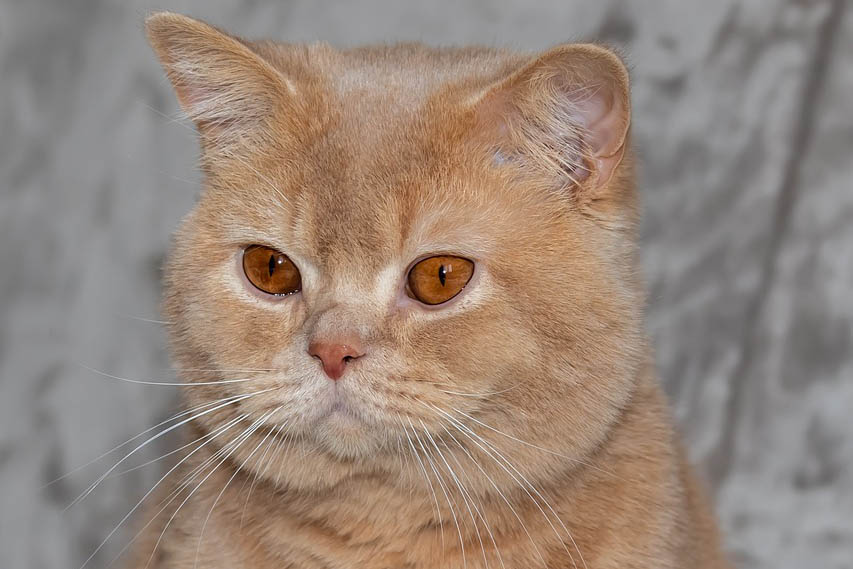
The British Shorthair is best understood as a substantial companion with a calm presence, not as a decorative “teddy bear” that automatically enjoys being carried. Its appeal lies in the combination of a rounded, powerful appearance, a usually quiet household manner and an ability to stay close without demanding constant attention. The practical question is whether you want that kind of relationship: companionship through shared space, with affection that may be offered on the cat’s terms.
Quick Facts
| Quick fact | British Shorthair |
|---|---|
| Adult build | Medium to large, compact, broad and muscular; slow to mature |
| Typical described weight range | About 8–11 lb for females and 10–16 lb for males; not a healthy-weight target |
| Coat | Short, dense, plush and substantially undercoated |
| Grooming | Usually weekly combing, with more during seasonal shedding |
| Activity | Generally calm and moderately active, with daily play still important |
| Recognition | A distinct pedigreed breed; color terminology and recognition vary by registry |
Identity, recognition and breed relationships
The British Shorthair is a distinct pedigreed breed, separate from domestic shorthairs, British Longhairs and other round-bodied cats. “British Blue” is not a separate breed; it describes a British Shorthair with a blue coat. That distinction matters when reading advertisements, comparing pedigrees or deciding whether a claimed color has formal status.
Recognition is not completely uniform between registries. TICA and CFA publish breed standards for the British Shorthair, while FIFe places the breed in Category 3 and has given additional golden varieties preliminary recognition from October 1, 2025. Golden, shaded, chinchilla and related descriptions should therefore be checked against the particular registry named on the pedigree rather than treated as interchangeable labels. A useful starting point is the current recognition information for additional golden varieties.
The unmistakable British Shorthair outline
The body is broad, compact and muscular, with a full chest, short strong legs, rounded paws and a thick tail that ends in a rounded tip. The head is broad and rounded, with full cheeks and large round eyes. Mature males may develop prominent cheek jowls, adding to the breed’s familiar broad-faced expression.
The rounded outline can make a cat look heavier than it is, but appearance alone cannot distinguish muscle, loose skin and fat. Descriptive adult ranges are often given as approximately 8–11 pounds for females and 10–16 pounds for males. These figures describe the population’s general size, not an ideal weight for every cat. A veterinarian’s body-condition assessment is more useful than comparing one cat with a breed photograph.
Development is gradual. British Shorthairs may continue gaining size and substance for roughly three to five years, so a young adult can still look less finished than a mature cat. Physical growth should also be separated from behavioral maturity: reaching sexual maturity does not necessarily mean that the cat has completed its social or emotional development.
Coat, colors and the reality of shedding
The coat is short but not slight. It is dense, plush and resilient, with enough undercoat to give the cat its springy, substantial texture. Recognized presentations include solids, tabbies, tortoiseshells, bicolors, smoke, shaded and chinchilla-related patterns. Eye colors depend partly on the coat or pattern and may include gold, copper, green, blue, hazel and permitted odd-eye combinations.
Short hair reduces the risk of long, trailing tangles, but it does not mean a hair-free home. Dense loose hair can collect on bedding, furniture and clothing, and it can compact or mat when grooming is neglected. Many healthy adults manage well with weekly brushing or combing; more frequent sessions may be useful during heavier seasonal shedding. The right routine is determined by the individual cat’s coat, shedding pattern and tolerance rather than by the word “shorthair.”
Practical preparation is simple but worthwhile: keep a suitable comb available, provide washable resting surfaces and expect to clean more often when the coat changes. British Shorthairs should not be described as hypoallergenic. Allergy responses vary, so someone with allergies should spend time with the specific cat before committing.
Temperament: nearby rather than constantly carried
The breed is generally calm, quiet and moderately active. A British Shorthair may spend much of the day observing household life, resting in a preferred place or moving between rooms, then engage in a lively burst of play. Calm does not mean inactive. Daily interactive play, opportunities to climb or explore, stable scratching equipment and retreat spaces help prevent an indoor cat from turning a low-key temperament into an under-stimulated routine.
Affection is often expressed through proximity. Following a person from room to room, sleeping nearby or choosing to share a room can be a strong social bond even when the cat does not want to be held. This is the central distinction for prospective caregivers: a cat can be attached, sociable and interested in its people without being a dependable lap cat.
Individual variation is substantial. Some British Shorthairs voluntarily sleep on laps or in a person’s arms, while others prefer the sofa beside someone or a nearby bed. A caregiver seeking a reliably cuddly cat may therefore be disappointed by relying on the breed image alone. Meeting an adult, observing how it responds to touch and asking about its established habits provide more useful information than a promise that the breed is either affectionate or aloof.
Handling should be cooperative rather than assumed. Support the cat’s body when lifting, allow it to end contact where possible and use gradual rewards to prepare it for brushing, carrier entry, nail care and veterinary examinations. A quiet cat is not necessarily consenting to prolonged restraint. Early, gentle practice can make necessary care easier without turning the relationship into a contest.
Home life and suitability
A respectful family may suit a British Shorthair well, provided children are taught not to chase, corner, carry or restrain the cat. Supervision matters because even a tolerant cat needs a way to leave an interaction. Dog and multi-cat compatibility depends less on the breed label than on introductions, the other animal’s behavior, separate resources and the availability of elevated or enclosed escape spaces.
An indoor home can work very well when the cat’s substantial build is accommodated. Choose sturdy scratching posts, stable climbing or resting equipment and litter facilities large enough for a broad-bodied cat. There is no evidence-based apartment-size rule or universal number of hours that every British Shorthair can safely spend alone. Household resources, enrichment, social contact and the individual cat are more informative than calling a home “small” or “large.”
The breed may suit someone who wants a relatively unobtrusive companion that shares the home without constant conversation or handling. It is less suitable for a person whose main goal is a cat that can always be picked up, carried around or expected to remain on a lap. That conclusion is not a judgment about affection; it is a distinction between wanting proximity and wanting physical access.
Everyday care and weight management
Routine care is moderate rather than elaborate. Comb the coat at least weekly for many adults, increase grooming when shedding rises, keep claws and teeth under observation and provide regular veterinary care. Daily play is useful even when the cat appears content to lounge. Short interactive sessions can encourage movement without expecting a naturally athletic, constantly active personality.
Food portions deserve particular attention. In one Australian veterinary primary-care population, 47.7% of adult British Shorthairs were classified as overweight under that study’s body-condition definition, and desexed males had the highest mean body weight. This figure is not a prediction for an individual cat, but it highlights a practical responsibility: measure food, check body condition and reassess portions after neutering, illness or a change in activity.
A broad face and heavy frame can disguise gradual weight gain. Ask a veterinarian to show you how to assess the ribs, waist and abdominal profile rather than using visual comparison with photographs. Treats, free-feeding and reduced activity can accumulate into a problem even in a cat that still appears graceful and energetic.
Health questions for caregivers and buyers
Hypertrophic cardiomyopathy, or HCM, is an important health concern to discuss with a breeder. In a Danish cohort of 329 British Shorthairs, 8.5% of cats were classified as HCM-positive and 4.3% as equivocal. Those are findings from one defined cohort and method, not a universal breed prevalence or a forecast for an individual cat.
When buying from a breeder, ask for documented echocardiographic screening of breeding cats interpreted by a suitably qualified veterinary cardiologist. A normal auscultation is not equivalent to a normal echocardiogram, and screening reduces uncertainty without guaranteeing lifelong freedom from HCM or another disease.
PKD1-associated polycystic kidney disease is another question for relevant Persian-related lines. Ask whether parents have appropriate PKD1 testing or kidney screening and request the results rather than relying on a verbal assurance. A breeder should also be willing to discuss family health history, veterinary records and what happens if a significant inherited condition is identified. Information on PKD1 testing in cats can help buyers understand what a genetic test does and does not establish.
Regular veterinary examinations remain necessary even when parents have been screened. Weight, dental health, kidney function, heart findings and general condition change over time, and no pedigree or test can replace attention to the individual cat.
Longevity, availability and cost
Longevity estimates differ because they come from different populations and methods. One UK veterinary-record category combining British cats estimated 9.58 years at birth; an earlier British Shorthair mortality dataset reported an 11.8-year median based on 69 deaths; and the GCCF gives a broad advisory range of 14–20 years. These figures should frame planning rather than promise a lifespan. Preventive care, body condition, inherited risk, environment and chance all influence an individual outcome.
In the United States, 2026 asking-price examples from breeders and price guides place many British Shorthair kittens around USD 1,200–3,500. One guide gives approximately USD 1,800–3,500 for pet-quality kittens and USD 4,000–7,500 for breeder- or show-quality kittens. These are U.S. asking or guide figures, not verified completed-sale averages. Lineage, color, breeding rights, documentation, location and transport can change the price substantially. A dated price guide is useful for context, but it should not be treated as a universal quotation.
Adoption can be less expensive but less predictable. A 2026 U.S.-oriented guide gives general shelter fees of about USD 75–200, while breed-specific rescue and rehoming availability changes quickly. A rescue listing may involve a mix or a cat without verifiable pedigree. Before paying an adoption fee, ask what identification, sterilization, vaccinations, veterinary treatment and records are included.
A responsible purchase is about more than obtaining the roundest face or rarest color. Confirm the cat’s identity and the registry relevant to its pedigree, see the living conditions, assess body condition and behavior, and request health documentation. If possible, meet the adult parents and observe how they respond to people. For an adult or rehomed cat, its known history and direct behavior may tell you more about handling tolerance, sociability and shedding than a kitten description can.
What owners and caregivers say
Owners and caregivers describe rewarding relationships with British Shorthairs, but the shape of those relationships varies. One owner described a cat that followed people from room to room and remained physically close while resisting prolonged lap contact. That is a useful example of companionship through proximity: the cat was socially involved without necessarily wanting to be held.
Boundary signals matter. A caregiver reported a cat that accepted a brief cuddle but scratched when petting continued beyond its tolerance. The practical lesson is not that British Shorthairs are aggressive. It is that a calm cat can still communicate “enough,” and caregivers who pause when the cat withdraws or stiffens are more likely to preserve trust.
Other caregivers expected a generally non-lap-oriented breed and found individual cats that slept on laps or in their arms. These experiences do not disprove the usual description; they show why a registry temperament summary cannot guarantee a particular household relationship. The same variation appears in vocal habits: although the breed is commonly described as quiet, some cats develop back-and-forth vocal routines with their people.
Shedding accounts also differ. Some owners describe short, dense hair appearing quickly on beds, clothing and furniture, with daily brushing and frequent vacuuming during heavier coat changes. Others find the shedding manageable. The useful preparation is therefore neither “no grooming” nor “constant maintenance,” but a willingness to adjust grooming and cleaning to the cat in front of you.
Taken together, these experiences support a clear suitability test. The British Shorthair is a strong match for someone who values a quiet, nearby companion, can provide measured feeding and daily movement, and is comfortable letting affection develop on the cat’s terms. It is a weaker match for someone choosing primarily for guaranteed lap contact, effortless handling or a hair-free home. Meeting the individual cat—and asking precise questions about its health, boundaries, shedding and history—turns an attractive breed image into a realistic caregiving decision.
 English