
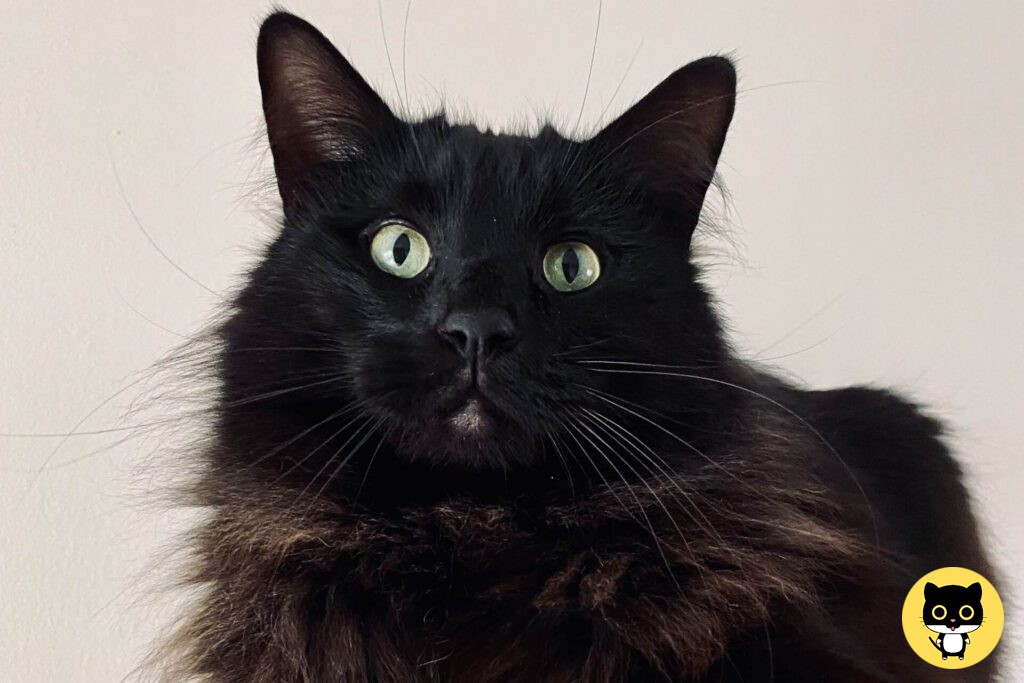
The Chantilly-Tiffany is best understood as a historically documented but currently difficult-to-source cat. Its appeal is easy to see: a medium-sized cat with a silky semi-long coat, a plumed tail, expressive gold-toned eyes and a reputation for close companionship. The harder question is whether a particular cat can be shown to belong to that breed rather than simply resemble its traditional appearance.
Quick Facts
| Characteristic | What to expect |
|---|---|
| Other historical names | Foreign Longhair, Tiffany, Chantilly and Chantilly-Tiffany |
| Build | Medium, balanced and semi-foreign, with a rectangular body |
| Coat | Silky semi-longhair with a ruff, tail plume, ear furnishings and hind-leg furnishings |
| Eyes | Yellow, gold or amber in the CCA-AFC experimental standard |
| Grooming | Often manageable, but the ruff, tail and furnishings still need regular checking |
| Current status | Historically established, but scarce and inconsistently recognized today |
| Health and lifespan | No validated breed-specific disease profile or reliable population lifespan estimate |
That distinction matters before appearance, grooming or temperament claims are used to make a decision. A dark, long-haired domestic cat may look remarkably similar without having Chantilly-Tiffany ancestry. Prospective caregivers should therefore assess both the cat in front of them and the quality of its records.
Identity, history and current recognition
The breed’s identity developed in North America under several names, including Foreign Longhair, Tiffany, Chantilly and Chantilly-Tiffany. Those names are part of the same historical story, but they should not be casually applied to every similar long-haired cat. The Chantilly-Tiffany is also distinct from the British or European Tiffanie and from the Asian Longhair, despite similarities in naming and appearance.
Recognition is not uniform. The Canadian Cat Association—American Cat Fanciers lists Chantilly as Experimental, while TICA lists Chantilly and Tiffany under Registration Only. CFA and FIFe do not include the breed in their current recognized-breed material. These classifications describe each organization’s current treatment; they do not by themselves prove that a particular cat has or lacks historical ancestry. Readers can compare the CCA-AFC breed listing with TICA’s registration rules when checking how an organization handles the name.
The practical consequence is limited availability and uncertain continuity. The historical breed is generally regarded as extinct or no longer supported by a clearly documented active breeding population, although it would be too strong to claim that no related cats exist anywhere. Anyone offered a kitten under this name should ask which registry recognizes the parents, what registration is actually available, and whether the pedigree can be traced through more than an attractive photograph or a coat-color description.
Color is particularly weak evidence of ancestry. A domestic longhair with chocolate or another dark coat may resemble the traditional type, but appearance alone cannot authenticate a breed. A shelter label, online guess or seller’s informal description should normally be treated as a resemblance claim unless pedigree records support something stronger.
Appearance and coat
The historical type is a medium, balanced cat rather than an extreme one. The experimental standard describes a semi-foreign build with a medium-length rectangular body, medium bone, a broad modified-wedge head and broad cheekbones. The ears are medium in size and furnished, while the tail tapers into a plume. Shortened oval paws complete an outline intended to look graceful without appearing fragile.
The coat supplies much of the breed’s visual character. It is described as full, silky and approximately two inches long, with a neck ruff, ear streamers, hind-leg furnishings and a richly plumed tail. Adult coat development is slow, with the full coat generally present by around 24 months. That figure concerns coat development only; it should not be read as a promise that the cat is physically or behaviorally mature at the same age.
Historical and registry descriptions emphasize chocolate and other solid dark colors, but broader color and pattern descriptions include black, cinnamon, blue, lilac and fawn, as well as mackerel, ticked and spotted tabby patterns. Eye color in the CCA-AFC experimental standard ranges through yellow, gold and amber, with deeper and more brilliant color preferred. A green halo may be permitted, while green and blue adult eyes are listed as objections in that standard.
A silky coat may feel lighter and less dense than the coat of some other long-haired cats, and breed-community descriptions commonly portray it as relatively low-shedding and resistant to matting. That does not make the home hair-free or the coat maintenance-free. Loose hair can still collect on furniture, and tangles can develop in the ruff, behind the ears, along the tail and in the leg furnishings.
Weekly grooming is a reasonable starting point for an individual whose coat stays smooth, but the correct schedule is the one that prevents knots and removes loose hair. A wide-toothed comb or suitable grooming tool should reach the areas where friction and furnishings encourage tangles. A cat that objects to brushing may need brief, positive sessions rather than one long attempt.
The coat should not be marketed as hypoallergenic. All cats produce Fel d 1, the principal cat allergen, and hair length or relatively low shedding does not establish low allergy risk. An allergic household should spend time with the individual cat and, where necessary, seek advice from an allergist rather than relying on the breed name.
Temperament and household suitability
The traditional temperament picture is affectionate, gentle, devoted and moderately active. Descriptions often portray a cat that prefers to remain near its people and communicates with soft sounds or chirps rather than loud, persistent vocalization. That can appeal to someone seeking an engaged companion rather than an aloof ornament.
Those descriptions are useful expectations, not guarantees. A breed label cannot promise that an individual will be a lap cat, enjoy being carried, tolerate extended handling, remain quiet, or cope happily with long periods alone. Meeting an adult cat and watching how it responds to touch, movement, unfamiliar people and brief separation is more informative than assuming that every Chantilly-Tiffany will behave like the historical ideal.
There is no reliable breed-wide evidence establishing that these cats are especially suitable for children, dogs, other cats, small pets, busy households or apartment living. Suitability depends on the individual’s socialization, previous experiences and current behavior. Children should interact under supervision, introductions to other animals should be gradual, and the cat should have hiding places, elevated escape routes and separate food, water, litter and resting resources.
A people-oriented cat may enjoy play, training and regular social contact, but that does not eliminate the need for independent retreat. An apartment can work if it provides climbing options, scratching surfaces, play and predictable quiet spaces. A large house is not automatically better if the cat has no secure place to withdraw.
Everyday care
Care is largely ordinary feline care plus closer attention to the semi-long coat. Feed a complete diet suited to the cat’s life stage, monitor body and muscle condition, provide fresh water, maintain litter hygiene and arrange preventive veterinary care. There is no established need for a special Chantilly-Tiffany diet, routine bathing program, outdoor access or unusual climate management.
Weight should be judged by body condition, muscle condition, activity and veterinary advice rather than by an invented breed target. No authoritative adult weight range by sex has been established for this breed. A cat that is naturally fine-boned should not be overfed to match a presumed size, while a less active cat may need its portions adjusted even if it appears structurally large.
Dental care, nail care, scratching opportunities and regular play are as important here as in any other cat. Safe vertical space and hiding places allow the cat to control its distance from household activity. Coat checks also provide a useful opportunity to notice skin changes, discomfort, reduced mobility or a sudden decline in grooming.
Hair swallowed during self-grooming can contribute to hairballs, although a light-feeling coat does not remove that possibility. Brushing can reduce loose hair, but repeated vomiting, constipation, appetite changes or unproductive retching calls for veterinary attention rather than simply more grooming.
Health, sourcing and longevity
No Chantilly-Tiffany-specific disease predisposition, validated genetic risk profile or population health survey has been established. That absence should not be turned into a claim that the breed has no health concerns. It means that a responsible assessment must rely on the individual cat’s veterinary history, family information and ordinary preventive care.
A claimed breeding line should come with more than a registration name. Ask for pedigree records, veterinary records, information about the parents and grandparents, a history of recurring problems and details of any health testing that was performed. Be cautious when a seller uses color, eye shade or a photograph as the main proof of breed identity.
No reliable current breed-specific purchase-price range or verified adoption fee can be stated. A genuine future price example would need to identify the region, currency, date, the cat’s age, whether it was offered as a companion or breeding animal, and whether the figure was an asking price or a completed sale. An ordinary shelter fee should not be relabeled as a Chantilly-Tiffany price simply because the cat has a similar coat.
Lifespan is equally difficult to estimate at population level. One former caregiver remembered a relationship of roughly 20 years with a cat that remained an important emotional companion, but that is an individual account rather than a breed estimate. It is best treated as evidence of what one cat experienced, not as a promise or expected upper limit for the breed.
Is the Chantilly-Tiffany a good choice?
The breed may suit someone who values a silky, distinctive coat and a potentially close, interactive relationship, and who is comfortable with regular coat checks and uncertainty around current sourcing. It is less suitable for someone who needs a readily available, uniformly recognized breed, a guaranteed temperament, a hypoallergenic cat or a reliable breed-specific health and lifespan profile.
The most responsible choice is therefore a two-part assessment. First, establish what the cat actually is through traceable records rather than visual resemblance. Second, judge whether the individual cat’s behavior, history and needs fit the household. If those records cannot be produced, describing the cat as a domestic longhair with Chantilly-like features is more accurate than treating the name as proven ancestry.
What owners and caregivers say
Caregivers who have formed close bonds with cats described under this name often emphasize proximity. One caregiver remembered a cat that followed people, sought cuddles, enjoyed being carried, played actively and chirped at birds. That combination suggests how rewarding a highly social individual can be: the cat is not merely present in the home but involved in its routines.
Another remembered a roughly 20-year relationship with a cat that hid in the couch rather than be left behind and remained a steady emotional companion through difficult periods. The emotional importance of that relationship is clear, but its length belongs to that particular cat. It cannot establish a general Chantilly-Tiffany lifespan.
Rescue and shelter experiences show the other side of the identity problem. A senior cat with an unknown history and a silky chocolate or dark longhair appearance prompted speculation about Chantilly-Tiffany ancestry. Such a cat may be a wonderful companion regardless of its pedigree, but resemblance cannot supply a documented family line.
Individual behavior also varies. Some caregivers describe an attached, conversational cat, while others describe an apparently independent and non-chirping lookalike. That variation is not a reason to dismiss the historical breed; it is a reason to meet the cat, ask about its history and let observed behavior carry more weight than an attractive label.
 English