
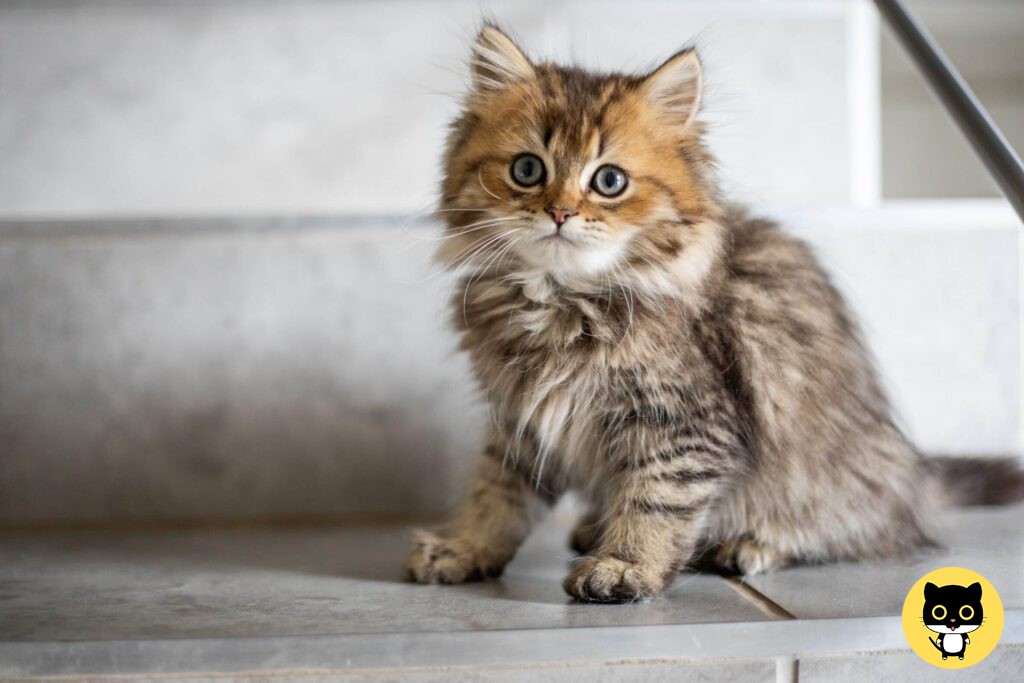
The Cymric is a distinctive, longhaired form of the Manx type: compact and rounded in outline, plush in coat, and variable in tail expression. For a caregiver, however, the important question is not simply whether a cat looks tailless. It is whether the individual’s identity, movement, elimination, social preferences and health history are clear enough to support a responsible decision.
Quick Facts
| Feature | Practical summary |
|---|---|
| Type | Medium-sized, compact, muscular and rounded |
| Coat | Soft, full, semi-long double coat that needs regular combing |
| Tail | May be absent, abbreviated, partially developed or longer, depending on the individual and standard used |
| Temperament | Often described as affectionate, curious, playful and interactive, with meaningful individual variation |
| Main health question | Whether Manx-type spinal development has affected movement, bowel function, bladder function or coordination |
| Availability | Potentially limited under the Cymric name; related terms may appear in listings |
| Longevity | Published estimates range broadly and should not be treated as a guarantee |
What the Cymric name means
“Cymric” is a registry-dependent identity. TICA and FIFe recognize the Cymric as a separate breed, while CFA places the equivalent longhaired form within its Manx Longhair divisions. This difference matters when reading advertisements, pedigrees or show information. A longhaired, tailless shelter cat may resemble a Cymric, but appearance alone does not establish a pedigreed breed name.
The relationship with the Manx is therefore central rather than incidental. The Cymric is not merely an unrelated longhaired cat with no tail; it represents the longhaired counterpart or type associated with Manx breeding. A prospective buyer should ask which registry terminology the breeder uses and request pedigree documentation rather than assuming that every longhaired Manx-type cat has the same formal classification. The [Cymric breed descriptions](https://tica.org/breed/cymric/) and [FIFe breed information](https://fifeweb.org/cats/breeds/cymric/) illustrate how recognition can differ.
Appearance: substantial body, soft outline
The body is compact without looking delicate. Cymrics are described as medium-sized cats with substantial bone, a broad chest, short back, deep flanks and prominent cheeks. Their hindquarters sit relatively high because the hind legs are longer than the front legs, giving the body a distinctive rounded and elevated profile. Approximate adult figures often cited are 8–10 pounds for females and 10–12 pounds for males, but body condition is more useful than an average weight. A healthy cat should be assessed by muscle, waist and palpable ribs rather than by trying to match a profile number.
The tail can be one of the most visually confusing features. Some Cymrics have no externally evident tail, while others have a small projection, a short remnant or a longer tail. Terminology used by registries and breeders can divide these categories more finely than an ordinary home description does. A partially tailed cat may therefore be called a Cymric in one context and described using a Manx-related term in another.
Tail length should not be treated as a health test. A rumpy-looking cat is not automatically free of spinal or elimination problems, and a cat with a partial or full tail is not automatically affected. The more useful observations are how the cat walks, runs, turns, jumps and uses the litter box, together with its veterinary history and the health of related cats.
The coat supplies much of the breed’s visual appeal. It is medium-length to semi-long, soft, silky, full and plush, with a double-coat structure. Some cats have conspicuous breeches on the hind legs, a ruff around the neck, and furnishings around the ears. Color and pattern allowances vary between standards, so a description such as “blue and white,” tabby or another color should be understood alongside the registry whose standard is being used. The [CFA Manx standard](https://cfa.org/breed/manx/) shows why the same cat may be discussed under a different formal category there.
Living with the coat
Regular combing is ordinary Cymric care, not an optional finishing touch. Weekly combing is a sensible starting point for many adults, with more frequent attention during heavier shedding or whenever the coat begins to tangle. Check the ruff, breeches, belly, backs of the hind legs and the area around the rear particularly carefully, since longer hair and friction can make knots easier to miss.
A coat can feel light and silky under the comb while still leaving noticeable hair around the home. There is no established universal shedding rate or single schedule that suits every Cymric. Coat density, season, age, grooming habits and the individual cat’s tolerance all influence the workload. If the cat develops mobility or continence difficulties, grooming may also become a hygiene task rather than simply a way to prevent mats.
The safest grooming routine is one the cat learns to accept gradually. Short sessions with a suitable comb, calm handling and attention to sensitive areas are more useful than waiting until the coat is badly tangled. A caregiver should be prepared to check underneath the cat and around the rear without assuming that a fluffy coat makes every hidden problem obvious.
Temperament and everyday companionship
Cymrics are commonly portrayed as engaged companions rather than ornamental cats. Breed descriptions emphasize affection, curiosity, playfulness and adaptability. Many may enjoy retrieving, climbing, jumping, following people through the home or manipulating objects. That combination can make them entertaining and socially rewarding, but it also means that daily interaction and a thoughtfully arranged environment are important.
Affection does not always mean prolonged lap sitting. One cat may seek contact by head-butting, rolling nearby, trilling or following a person from room to room, while another may prefer brief handling and shared activity. An owner describing longhaired cats noted striking differences even within one family: a small calico was very quiet, while her larger, rounder son had a prominent ruff, head-butted for attention and strongly objected to belly touching. That kind of variation is a reason to meet the adult cat when possible and to treat temperament descriptions as tendencies rather than promises.
Curiosity changes the safety plan. Store thread, yarn, needles, ribbons, elastic and similar objects securely, and inspect toys for pieces that can be swallowed. Climbing structures should be stable, with safe routes up and down. A cat that is athletic and inquisitive may need more environmental planning than a quiet cat who spends much of the day sleeping.
Social compatibility depends more on introductions and boundaries than on the breed label. Respectful children, suitable dogs and compatible cats may live successfully with a Cymric when introductions are gradual and the cat has retreat spaces, separate resources and supervision. Small animals require a more cautious assessment, since curiosity or predatory interest may make physical separation necessary. A household that expects every family member to handle the cat freely may be a poor match for an individual who dislikes restraint or belly contact.
Health: what deserves attention before adoption
The significant health issue is the Manx-type association with abnormal development of the sacral tail region and related spinal structures. Effects can range from no obvious signs to gait changes, hind-limb weakness, poor coordination, constipation, urinary or fecal dysfunction, paralysis or other neurological impairment. Veterinary references describe this as a developmental concern rather than a simple visual consequence of having a short tail. The [Merck Veterinary Manual overview of inherited and congenital nervous-system disorders](https://www.merckvetmanual.com/cat-owners/brain-spinal-cord-and-nerve-disorders-of-cats/congenital-and-inherited-disorders-of-the-nervous-system-in-cats) provides useful clinical context.
This does not make every Cymric a sick cat, and it does not justify treating every tailless cat as medically compromised. The practical difficulty is that tail appearance alone cannot provide a reliable answer. Before acquiring a kitten or adult, observe walking, running, turning and jumping where appropriate. Ask directly about constipation, urination, leakage, bowel control, litter-box habits and any history of weakness or unusual gait. Veterinary records and information about related cats are particularly valuable.
A normal-looking young cat is encouraging but not a lifelong guarantee. If movement, continence or coordination raises concern, a veterinarian may recommend a neurological examination, imaging or urinary testing. The goal is not to demand impossible certainty; it is to discover whether the individual already needs care that the household can realistically provide.
Extra care can range from minor adjustments to a major daily commitment. A cat with mobility or elimination problems may need an accessible litter tray, non-slip flooring, adapted bedding, rear-end cleaning and close monitoring of constipation or urinary retention. One caregiver describing a severely affected cat managed spinal fusion, urinary leakage, bowel sensitivity, modified flooring and accessible litter arrangements. That experience should not be generalized to every Cymric, but it demonstrates why a household should consider its capacity for practical nursing care before purchase or adoption.
Routine care for a healthy individual is more moderate: preventive veterinary visits, weight and body-condition monitoring, grooming, enrichment and attention to ordinary dental and parasite-care needs. The possibility of a more demanding outcome is the reason to investigate carefully, not a reason to assume that the breed cannot be a rewarding companion.
Suitability for different households
The Cymric may suit people who want an interactive cat and are comfortable evaluating an individual rather than buying a guarantee. A home that can provide daily play, climbing opportunities, regular combing and patient introductions may enjoy the breed’s social and curious qualities. Someone seeking a completely low-maintenance coat, a guaranteed lap cat or a predictable tail and temperament may be disappointed.
An indoor home with secure windows and doors is the sensible baseline. Controlled outdoor access may be appropriate for an individual cat and a particular setting, but there is no breed-wide rule that establishes safe outdoor freedom, climate tolerance or a fixed number of hours the cat can be left alone. Retreat spaces and multiple resource areas become especially important in busy homes or multi-cat households.
The health screening question is more consequential than the grooming question. Combing can be planned for and adjusted as the coat reveals its needs; spinal, bowel or bladder problems may require veterinary investigation and long-term accommodations. A prospective caregiver should therefore ask for movement and elimination information before becoming persuaded by the coat, eye color or tail silhouette.
Availability, naming and price
Finding a Cymric may require searching beyond one exact label. Listings may use Cymric, Manx Longhair, Semi-longhair Manx, longhaired Manx or Manx-type domestic longhair. Exact-name availability in ordinary shelters may be limited, and an advertisement can use a breed term loosely. Verify parentage, pedigree and health records before treating the label as proof of identity.
No defensible universal Cymric price should be assumed. A comparable, verified set of breeder asking prices or completed sales with region, currency, date, age, pedigree and companion-versus-show status was not established. That means it would be misleading to substitute a Manx price, a domestic-longhair adoption fee or a generic “rare cat” figure and present it as a Cymric benchmark. Ask each breeder or organization for a current, itemized price and clarify what registration, veterinary care, vaccinations, neutering, transport and guarantees are included.
The same caution applies to adoption listings. A lower fee does not reveal the cat’s health needs, and a higher price does not prove responsible breeding. Documentation and an honest account of movement, elimination and veterinary care are more informative than rarity language.
Lifespan
Published lifespan figures are estimates, not a Cymric population life table. Breed profiles give notably different ranges: TICA lists 16 years or more, PetMD gives approximately 10–14 years for Manx cats, and VCA lists 15–18 years for Manx cats. These figures can help frame expectations, but they cannot predict an individual Cymric’s lifespan or remove the importance of early health assessment and ongoing veterinary care.
A cat with no apparent neurological or elimination difficulties may live a long, active life, while another may need support much earlier. One owner remembered a blue-and-white Cymric who lived to 20, loved people and another cat, and remained intensely interested in chewing objects. That cat later required expensive surgery for foreign-body ingestion and developed megacolon. The story shows both the possibility of exceptional longevity and the fact that ordinary hazards can still shape a cat’s medical future.
What owners and caregivers say
Owners and caregivers describe Cymric and Manx-type cats as individuals with recognizable patterns but no single script. A longhaired cat may be quiet and small, while a littermate or close relative is larger, rounder, more vocal or eager to head-butt. One caregiver recalled a cat that ran with a rabbit-like motion, rolled for attention and disliked belly touching. These details make the breed more tangible: affection may be exuberant, physical and playful, but it still has boundaries that the household must respect.
Caregivers also describe the complication of naming a cat from appearance alone. A partial-tailed cat with a measured tail length can sit awkwardly between everyday descriptions and registry categories, while a tailless longhaired shelter cat may be better described as Manx-type or domestic longhair when pedigree evidence is absent. The useful lesson is not to win an argument over terminology. It is to match the name to the documentation and keep health decisions focused on the individual.
The most demanding accounts involve mobility, bowel or bladder function. Rear cleaning, accessible litter arrangements, adapted flooring and supportive bedding can become central parts of life with an affected cat. At the same time, caregivers emphasize a spectrum: some cats need substantial lifelong assistance, while others remain mobile and playful with only modest accommodations or continence management. A prospective owner should make room for both possibilities without assuming either one is inevitable.
The overall picture is of a potentially affectionate, entertaining and striking companion whose ordinary needs are manageable, but whose acquisition deserves unusually concrete questions. Confirm what the breed name means in the relevant registry, observe movement, ask about elimination and family history, inspect the coat and rear hygiene, and notice how the cat seeks or refuses contact. Those steps allow a caregiver to appreciate the Cymric’s charm without allowing its appearance—or its health concerns—to stand in for knowledge of the cat itself.
 English