
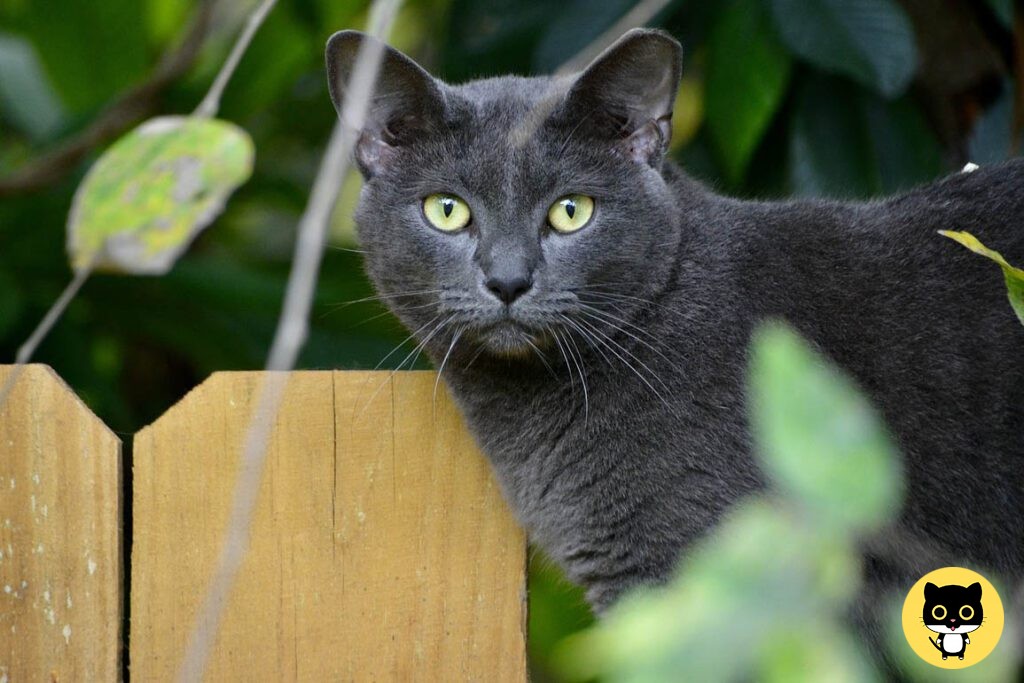
The Korat is a blue-gray Thai breed for people who want an involved companion rather than a cat that simply shares the house. Its short coat is relatively easy to maintain, but its curiosity, intelligence and interest in household activity can make daily companionship and environmental enrichment more important than grooming time.
Quick Facts
| Quick fact | Korat |
|---|---|
| Origin and tradition | Thailand; associated with the Si-Sawat tradition |
| Build | Compact, muscular and substantial for its size |
| Coat | Short, close, silky or smooth, single-layered |
| Recognized color | Blue with silver tipping |
| Typical adult weight descriptions | Females about 6–8 lb; males about 8–10 lb or more |
| Reported lifespan | Often described as 15 years or more; some are reported to reach 20 |
Identity, history and recognition
The Korat comes from Thailand and is linked with the traditional Si-Sawat name and image of a silver-blue cat. It is a formal breed recognized by CFA, TICA and FIFe, although those organizations can differ in registration rules, breeding requirements and the details of their standards. The CFA breed description, TICA profile and FIFe information are useful starting points for understanding those positions.
A blue-gray cat is not automatically a pedigreed Korat. The color is a clue, not proof of ancestry. A claimed Korat should come with a pedigree and appropriate registration documentation; without that history, it is more accurate to describe the cat by its appearance or as a Korat-type cat than to assume breed identity from silver-blue fur, green eyes or a heart-shaped head.
What a Korat looks like
The Korat combines a compact frame with more substance than its size might first suggest. It has a broad chest, firm musculature and a weight that should be judged alongside body condition rather than against a rigid number. Descriptions commonly place females around 6–8 pounds and males around 8–10 pounds or more, but a healthy individual may not fit that range neatly.
The head is characteristically heart-shaped, with large ears and large, rounded eyes. Adult eyes are expected to be green or predominantly green. Amber or yellowish tones can occur while a young cat is developing, so kitten eye color should not be treated as the final result.
The coat is short, close-lying and usually described as silky or smooth, with a single-layered feel. The established color is blue with silver tipping throughout the coat. Tabby markings, white patches and alternate established colors are not part of the usual Korat standard descriptions. A light-feeling coat can still shed hair and distribute dander around a home, so the breed should not be presented as hypoallergenic.
Slow maturation matters when assessing a young Korat. Body substance and adult eye color may continue developing for roughly two to four years, and sometimes longer. Someone choosing a kitten should therefore expect the adult appearance to unfold gradually rather than demand that a very young cat already look fully finished.
Temperament and everyday companionship
The Korat is generally described as active, playful, curious and people-oriented. That combination can produce a cat that joins household routines, investigates new objects, learns games and notices when its people are available. It is a form of companionship that rewards participation: a Korat may not be satisfied with food, a bed and occasional attention if the rest of its day is uneventful.
Play can include chasing toys, retrieving, climbing, solving food puzzles and learning simple reward-based behaviors. Daily interactive play is a sensible baseline, especially for a cat that becomes bored when its environment offers little to investigate. Scratching surfaces, stable high resting places, window views and safe opportunities to explore can turn a small home into a more interesting territory.
Apartment living is not ruled out by the breed’s activity level. The more useful questions are whether the home has vertical space, varied play, safe observation points and a caregiver who can provide regular social contact. Conversely, a large house does not solve the problem if the cat is routinely ignored. There is no reliable breed-specific number of hours that a Korat can safely be left alone, so the decision should be based on the individual cat and the household’s actual schedule.
People-oriented does not mean universally lap-oriented, quiet, easy to restrain or welcoming to every stranger. A Korat may follow a person through the home and still dislike being held in a particular way. It may enjoy close contact with its caregiver while retreating from visitors. Gentle handling, reward-based cooperation and respect for signals to stop are more dependable than assuming that a sociable breed will accept every form of physical attention.
Living with children, dogs and other cats
Compatibility with children or other animals depends on the individuals, the introduction and the household’s management. Children should be taught to let the cat approach, avoid chasing or holding it against its will and recognize when it wants distance. Supervision is especially important while a child and cat are learning one another’s boundaries.
Introductions to dogs or cats should be gradual, with separate resources and safe retreat areas. Food, water, litter boxes, beds and vertical escape routes help prevent competition. A cat can be affectionate with people yet territorial during a difficult introduction to another cat; those behaviors are not contradictory. They are different aspects of social compatibility, which is why a prospective caregiver should ask specifically about other animals rather than relying on a general label such as “friendly.”
Care, grooming and enrichment
Grooming is usually one of the easier parts of Korat care. Weekly brushing is a reasonable starting point, with adjustments for the cat’s loose hair, skin condition and tolerance. The short coat may reduce tangling and grooming labor, but it does not eliminate shedding or household dander. A person with allergies should spend meaningful time with the individual cat before making a commitment.
Enrichment is likely to require more planning than coat care. Rotate interactive toys, use food puzzles, provide scratching options and offer secure climbing or lookout areas. Short training sessions can give a bright, engaged cat an outlet without requiring elaborate equipment. Teaching a cue, targeting a toy or rewarding a calm trip into a carrier can also make future veterinary care easier.
Routine preventive care remains important even when no broad catalogue of Korat-specific illness is justified. Regular veterinary examinations, dental care, parasite prevention, vaccinations based on risk and monitoring of body condition all belong in the plan. The breed’s short coat should not lead a caregiver to overlook teeth, weight, mobility or changes in behavior.
Inherited health concerns and responsible purchase
The clearest documented Korat-specific inherited concerns are GM1 and GM2 gangliosidosis. These are autosomal-recessive neurological disorders, and DNA tests are available through veterinary laboratories for both conditions: GM1 testing and GM2 testing. A responsible breeder should be able to explain whether each parent is clear, a carrier or affected and provide laboratory documentation rather than relying on a general statement that the line is healthy.
These tests are targeted safeguards, not a guarantee against every possible illness. The available information does not support presenting FIP, PKD, HCM or a long general disease list as characteristic Korat predispositions. That distinction is useful: a buyer should take the documented gangliosidosis risk seriously without assuming that DNA screening makes ordinary veterinary care unnecessary.
Before reserving a kitten, ask for the pedigree, registration details, identification of both parents, GM1 and GM2 results, veterinary and vaccination records, early neurological history, socialization information and the contract’s return provisions. A breeder who cannot explain the test results or who treats questions about records as unreasonable is giving a prospective caregiver useful information about the purchase itself.
Availability, price and longevity
Korat kittens are less readily available in the United States than common domestic cats. Contacting several breeders and joining a waiting list may be necessary. One breeder page checked on October 2, 2026 reported no kittens immediately available, illustrating why timing and patience may matter more than finding the lowest advertised price.
No reliable universal U.S. purchase price has been established. Secondary pages have mentioned approximately US$400–800 and, in some cases, more than US$2,000, but those figures are asking or reported amounts rather than verified completed-sale ranges. They may also differ in registration, age, location, breeding rights and included veterinary care. A price should therefore be evaluated with its currency, country, date and sale terms attached.
Rescue is another route, although Korat-labeled cats are uncommon. Adopt-a-Pet showed an approximate US$50–300 rescue range and four nearby Korat-labeled listings on October 2, 2026. Those were adoption examples, not a market-wide valuation, and a rescue label may reflect appearance rather than documented pedigree. A cat’s personality and care needs remain important regardless of whether its ancestry is proven.
Long-term planning should allow for a substantial commitment. TICA reports that Korats commonly live 15 years or more and that some reach 20 years. That is a useful estimate for planning food, veterinary care and housing over time, not a promise for an individual cat.
Is a Korat a good fit?
A Korat may suit someone who wants an intelligent, playful companion that participates in household life and who can provide daily interaction, climbing opportunities and mental variety. The breed can work well in a modest home when the space is enriched and the caregiver is present and responsive.
It may be a poor fit for someone seeking a nearly maintenance-free cat, a reliably independent animal or a guaranteed lap cat. It is also not a sensible choice based only on silver-blue color or the hope of avoiding allergies. The strongest match is a caregiver prepared to assess the individual cat’s handling style and social responses, verify health records and accept that companionship can mean both affectionate closeness and a need for respectful boundaries.
What owners and caregivers say
Caregivers associated with the Korat and Thai Cat Association describe cats that are playful and cuddly, follow people through the home and seek laps. One owner described a cat that followed its caregiver, responded to a tongue-click, learned basic commands and sought close contact. These experiences fit a picture of a cat that can be attentive, trainable and physically affectionate.
Other experiences add useful qualifications. One caregiver described frequent meows and trills, persistent investigation of household objects and boredom when activity was lacking. That is a practical reminder that a quiet-looking home may not feel quiet or satisfying to the cat. Toys and furniture are helpful, but regular human participation may be the more important part of the arrangement.
A 2026 caregiver described a pedigree-identified Korat as sweet and cuddly with people but territorial during a difficult introduction to another cat. Other owners describe quieter or more reserved individuals, with differences in vocality, cuddling style and tolerance for physical contact. These accounts do not establish how common any one temperament is, and some online cats have uncertain pedigree. They do, however, illustrate why “affectionate” should be unpacked into separate questions: Does the cat seek people? Does it enjoy laps? How does it respond to handling, visitors and other animals? Meeting an adult cat and asking those specific questions can be more informative than relying on a breed promise.
Selected sources
Breed recognition and standards: CFA, TICA and FIFe. Health-testing information: UC Davis GM1 test and UC Davis GM2 test. Individual experiences: Korat and Thai Cat Association testimonials.
 English