
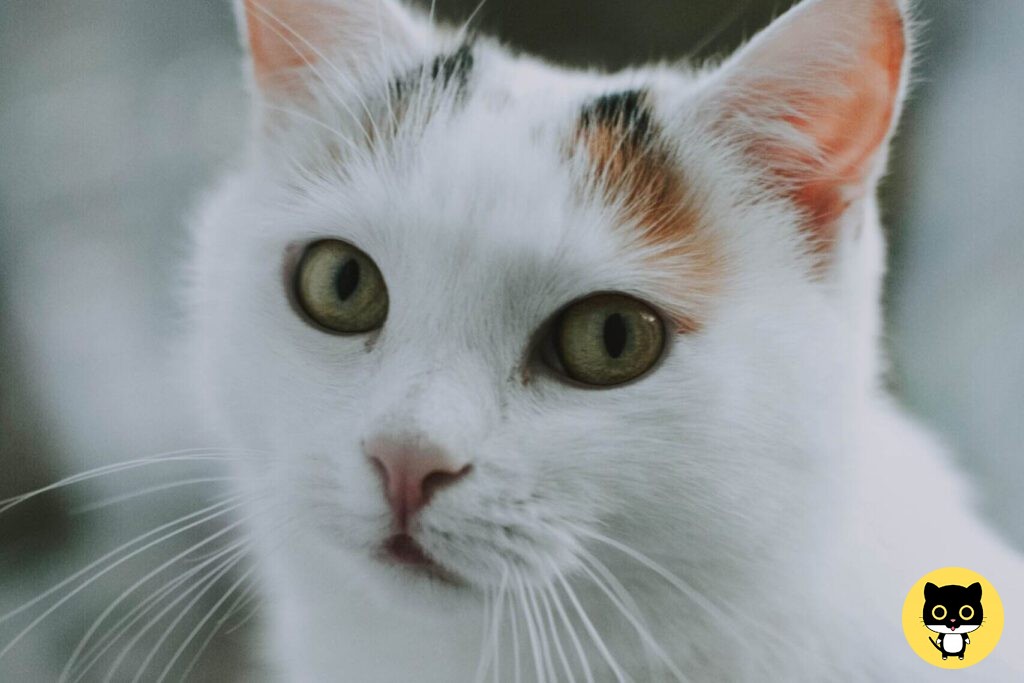
The Korean Bobtail is best understood as a description of a cat, not a predictable pedigree. The name is commonly used for Korean domestic cats with naturally short, bobbed or kinked tails. It is not currently listed as a standardized breed by CFA, TICA or FIFe; their breed lists and standards do not establish a Korean Bobtail profile. That distinction matters because a label that sounds like a breed may suggest expected size, coat, temperament, health screening and price when those expectations are not actually defined.
Quick Facts
| Type | Korean-labeled domestic cat with a naturally short or kinked tail |
|---|---|
| Recognition | No current CFA, TICA or FIFe standardized breed listing for “Korean Bobtail” |
| Most consistent feature | A shortened, bobbed or kinked tail with considerable individual variation |
| Coat and color | No established breed-specific requirements |
| Temperament | Individual history and behavior are more informative than the label |
| Health outlook | Assess the actual cat’s examination, records, tail function and lifestyle |
Identity and recognition
The label identifies a regional type more securely than it identifies ancestry. A Korean-labeled cat may be a domestic cat born in Korea, a rescued street cat, a foster cat, or a companion animal whose short tail has prompted an informal description. Without independently verifiable pedigree records, the name does not prove a particular bloodline or connection to a recognized bobtail breed.
Recognition is especially important when the seller presents the name as a formal breed. Japanese, American and Kurilian Bobtails are separately treated as standardized or recognized breeds in registry materials. A Korean Bobtail should not automatically be assigned to one of those breeds, and a short tail alone does not establish Manx ancestry. Readers comparing breed standards can check the CFA breed list, TICA breed standards and FIFe breed list.
A pedigree claim therefore needs documentation rather than appearance. Ask which registry issued the papers, whether the breeder can provide traceable parentage, and whether the registration is for an actual recognized breed or simply uses “Korean Bobtail” as a descriptive name. If those records cannot be checked independently, it is more accurate to regard the cat as an individual Korean domestic or short-tailed cat.
The tail: characteristic, but not self-explanatory
The shortened tail is the clearest shared physical feature. Some cats have a mildly shortened tail ending in a kink; others have a very short tail with several bends. The shape can differ substantially between individuals, so there is no single Korean Bobtail tail form that a caregiver should expect.
A short tail does not by itself reveal why the tail is short. Studies of Asian short-tailed cats have identified an HES7 variant associated with some shortened or kinked tails, while other short-tailed cats did not carry that variant. This supports genuine biological variation, but it does not establish one mutation for all Korean Bobtail-labeled cats or create a breed-wide health profile.
Function matters more than the silhouette. A naturally short tail may function normally, but an unusual appearance cannot rule out an old injury, pain, neurological difficulty or another cause. Have a veterinarian assess a tail that is painful, rigid, swollen or newly changed, particularly if the cat also shows an abnormal gait, weakness, poor balance or difficulty urinating or defecating. The practical question is not whether the tail looks “correct”; it is whether the cat moves, feels and eliminates normally.
Appearance beyond the tail
There is no established Korean Bobtail body standard. No reliable breed requirements define adult size, weight, body proportions or maturation schedule. A caregiver should describe the actual cat rather than assign it a required build or assume that all cats with the label will mature in the same way.
Coat length, texture, color and eye color are also not fixed varieties of this label. A Korean short-tailed cat may have a short coat or a longer, denser coat, and its color and eyes should be recorded as individual features rather than as evidence of a formal Korean Bobtail variety. A silky or light-feeling coat can still leave hair around the home, so the real household burden is best judged by meeting the cat and observing its coat.
There is no basis for calling the Korean Bobtail hypoallergenic. A shorter coat may be easier to manage than a long or easily tangled one, but it does not eliminate shedding or the allergens associated with cats. Coat-dependent grooming is a sensible approach: brush often enough to control loose hair and prevent tangles, increasing attention for a longer or denser coat.
Temperament and daily companionship
Temperament is not established at breed level, and that is the central suitability fact. There is no dependable Korean Bobtail profile for sociability, vocalization, independence, climbing, activity or tolerance of handling. One cat may be a relaxed lap companion while another may be wary, highly territorial or easily overstimulated.
Direct observation is more valuable than a promise attached to the name. When possible, meet an adult and watch how the cat responds to a visitor, gentle handling, restraint, sudden movement and recovery after being startled. Notice whether the cat seeks contact, chooses proximity without touching, retreats, gives clear warning signals or returns to interaction after a pause. These observations cannot predict every future behavior, but they provide more useful information than assuming that a short tail comes with a particular personality.
Handling boundaries deserve careful attention. A cat that tolerates children or being picked up may still need breaks, and a cat that warns by freezing, turning away, twitching its tail, growling or swatting should not be pushed. One owner described frequent vocal communication and biting when warning signals were missed; that account is useful as a reminder to read the individual cat, not as evidence that Korean Bobtails are generally aggressive.
Household compatibility should be assessed case by case. Ask about the cat’s history with children, visitors, cats and dogs rather than relying on the label. Give the cat a retreat space, use gradual introductions and supervise children. Small animals should be protected as potential prey, regardless of how gentle the cat appears during an initial meeting.
Indoor living and activity
Indoor-only life can be suitable, but the transition may require planning. A cat accustomed to streets, outdoor territory or a small but stimulating Korean apartment may find a quiet indoor home unfamiliar. Provide daily play, scratching surfaces, hiding places, resting areas, vertical space and opportunities to investigate different rooms. Puzzle feeders and chase games can help replace some of the movement and decision-making involved in outdoor life.
Outdoor experience does not prove that free roaming is necessary. Controlled outdoor access, such as a secure enclosure or harness work where the cat accepts it, can offer stimulation with fewer traffic, disease and conflict risks than unrestricted roaming. The right arrangement depends on the individual’s history, confidence and response to confinement.
Care and routine health
Care should follow ordinary feline needs rather than a special Korean Bobtail protocol. Feed an appropriate diet for the cat’s life stage and body condition, maintain dental and nail care, monitor the ears and skin, keep parasite prevention current and arrange regular veterinary examinations. No distinctive diet or care schedule has been established for this label.
The tail deserves attention during routine handling without becoming an object of constant manipulation. Learn what is normal for that cat, and avoid bending or testing a kinked tail. A veterinarian should examine pain, reduced sensation, weakness, gait changes or toileting problems. A short tail is not automatically a welfare defect, but neither should an attractive bob be assumed harmless without considering function.
Acquisition checks are more useful than a breed-specific disease list. No Korean Bobtail-specific disease panel, screening program or established health-risk list is available. Before adoption or purchase, request vaccination and parasite records, ask for clinically appropriate FeLV/FIV testing, arrange a veterinary examination and discuss whether the tail or neurological system needs particular assessment. A pedigree claim should be independently verifiable rather than accepted because the cat has the right appearance.
Price and availability
There is no supported Korean Bobtail purchase-price range. One private rehoming post in Leesburg, Virginia, dated approximately August 2026, asked for a $50 USD fee for a six-year-old Korean short-haired cat. The post described the amount as a private rehoming fee intended for donation to a shelter. It was not a breeder price, completed sale or estimate of a market range, so it should be treated only as a dated regional example. The original rehoming post supplies the context.
Availability is more likely to involve individual domestic, foster or rescue cats than an established breeder network. Rescue routes and Korean adoption groups may list short-tailed cats, sometimes with no adoption fee, but that availability does not demonstrate that a standardized breed exists or that it is rare. Import rules, ownership requirements and transport arrangements must be checked for the specific country and individual cat.
Longevity and assessing the outlook
A Korean Bobtail lifespan estimate cannot responsibly be separated from the individual cat. No breed-specific longevity estimate is established. Age, vaccination and parasite history, dental health, body condition, existing disease, living conditions and preventive care will usually tell a caregiver more about the cat’s outlook than the regional label.
An adult cat can offer useful information that a kitten cannot. Its established size, coat, handling preferences, energy level and medical history are easier to assess. This does not remove uncertainty, but it allows a prospective caregiver to make a decision from observed behavior and documented health rather than from assumed breed characteristics.
Is a Korean Bobtail right for you?
This label may suit someone interested in an individual cat rather than a guaranteed breed package. A caregiver who is comfortable evaluating temperament directly, supporting an uncertain background and arranging an ordinary veterinary workup may find a short-tailed Korean domestic cat to be a rewarding companion. The absence of a formal standard does not make the cat less worthy of care; it simply changes what can honestly be promised.
It is a poor fit for someone seeking predictable breed traits. If you want a defined adult size, recognized pedigree, established coat varieties, breed-specific health screening or a reliable temperament profile, a standardized breed with documented lineage is a more appropriate choice. Paying a premium for those expectations under the unsupported Korean Bobtail name would not be well justified.
The most useful decision sequence is practical: verify identity, examine function, observe behavior and review records. Ask what is documented, assess the tail and general health, meet the cat in relevant situations, and plan the home around its actual history. This approach treats uncertainty honestly while still leaving room for a strong human–cat relationship.
What owners and caregivers say
The most consistent lesson from caregiver experiences is variation. A caregiver rehoming Chanel, a six-year-old Korean short-haired cat in Leesburg, Virginia, described her as cuddly, playful, intelligent, interested in lap time and chase games, and tolerant of children and handling. The caregiver also reported that she managed moves from a small Korean apartment to a larger indoor-outdoor home. That experience suggests that a previously outdoor or space-limited cat can adapt, while also highlighting the need for exercise and stimulation in an indoor-only setting.
Other experiences show why warning signals and history matter. An owner described a Korean Shorthair with a naturally short, curled tail that communicated frequently and could bite when people missed its warnings. The owner questioned whether that behavior reflected the individual cat, its sex or its street background rather than a breed trait. That uncertainty is appropriate: the account is valuable for deciding what to observe, but it cannot establish how common the behavior is or what caused it.
Adoption experiences likewise point toward choosing the individual. Korean rescue and adoption discussions describe affection and sociability as variable among street and foster cats. Some cats may become close companions quickly; others need time, predictable handling and a carefully managed transition. The practical implication is encouraging rather than discouraging: uncertainty increases the value of meeting the cat, asking specific history questions and allowing adjustment time.
A short tail can be the beginning of the conversation, but it should not finish it. The strongest basis for choosing one of these cats is a sound examination, a functioning body, clear records where available and a relationship that feels manageable for both cat and caregiver.
Selected source notes
Recognition and breed classification can be checked through the CFA breed list, TICA breed standards and FIFe breed list. Research on short-tailed cats and the HES7 association is available through Asian cat tail-variation research and related genetic work.
The individual experiences and the dated rehoming-fee example are linked in the relevant sections above: Korean Shorthair behavior account, Leesburg rehoming post and Korean adoption discussion.
 English