
Compare Cat Breeds
Compare up to three breeds across all 53 characteristics. Values are shown directly so the differences are easier to scan.
| Characteristic |  Kurilian Bobtail |
|---|---|
| Body & development | |
| Adult size | Medium to large |
| Adult weight | Females 3.5–5.0 kg (7.7–11.0 lb); males 5.0–7.5 kg (11.0–16.5 lb) Kurilian Bobtails are muscular with marked sexual dimorphism; females are often about 3.5–5.0 kg (7.7–11.0 lb), males 5.0–7.5 kg (11.0–16.5 lb). |
| Build & distinguishing morphology | Brawny · strong boning · pom pom bobtail Build: brawny; strong boning; pom pom bobtail. |
| Maturation | 2-3 years The robust Kurilian Bobtail develops gradually; most frame growth occurs earlier, while the broad chest, powerful hindquarters and full adult musculature can continue developing until roughly 2–3 years. |
| Coat & appearance | |
| Coat length | Short · semi long Occurs in shorthaired and semi-longhaired forms. |
| Coat texture & undercoat | Soft silky · short or semilong · generally nonmatting Coat: soft silky; short or semilong; generally nonmatting. |
| Colors & patterns | Traditional solids tabbies with white Colors/patterns: traditional solids tabbies with white. |
| Eye colors | Yellow · green · gold · blue; coat-dependent Yellow, green and gold are common; blue can occur in coat varieties whose genetics permit it. |
| Coat & routine care | |
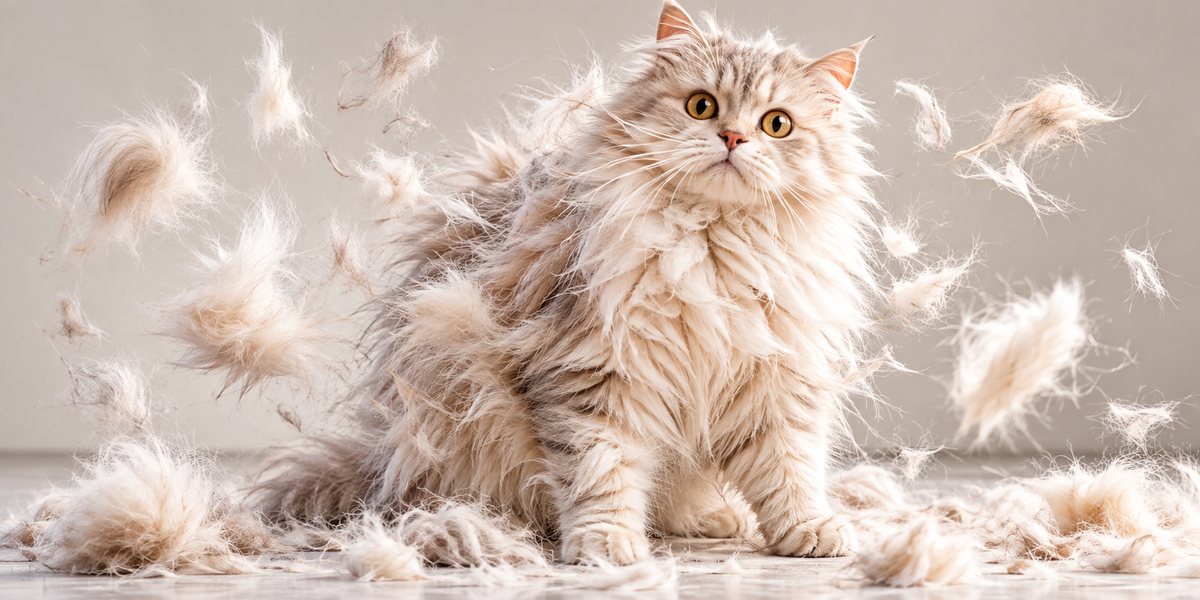
| Shedding | Moderate seasonal Moderate shedding with seasonal peaks from the weather-resistant double coat; longhairs shed more visibly. |
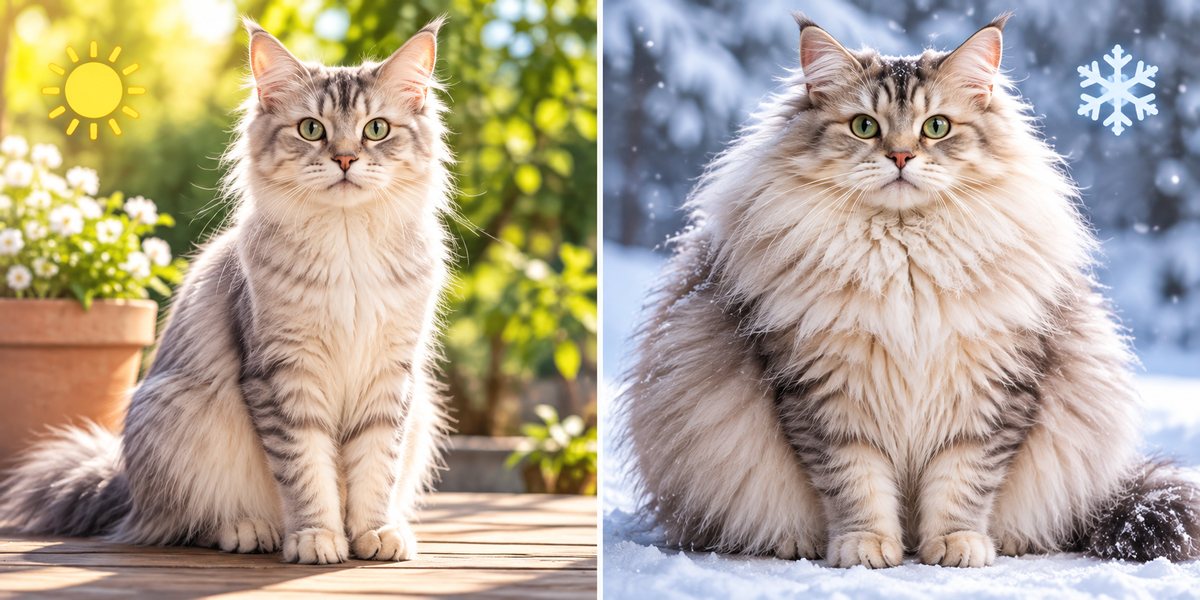
| Seasonal coat changes | Moderate seasonal shed The Kurilian Bobtail develops a practical weather-resistant coat that sheds more during seasonal transitions; semi-longhairs show the spring coat release particularly clearly. |
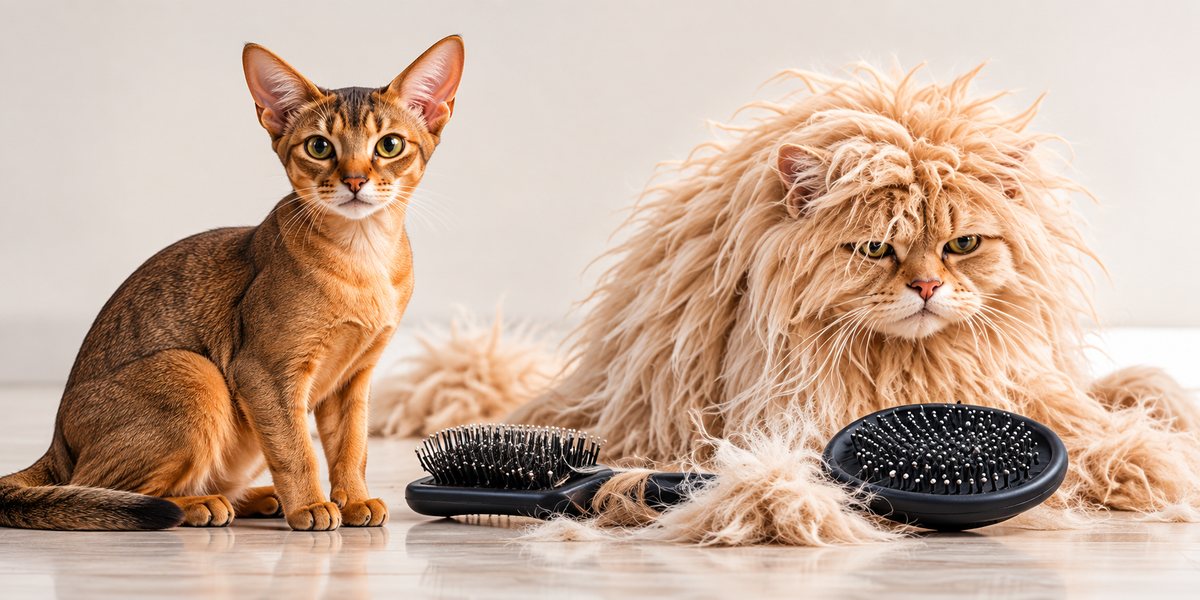
| Brushing & combing | Weekly Brush shorthairs weekly and comb semi-longhairs once or twice weekly; increase grooming when the weather-resistant coat sheds seasonally. |
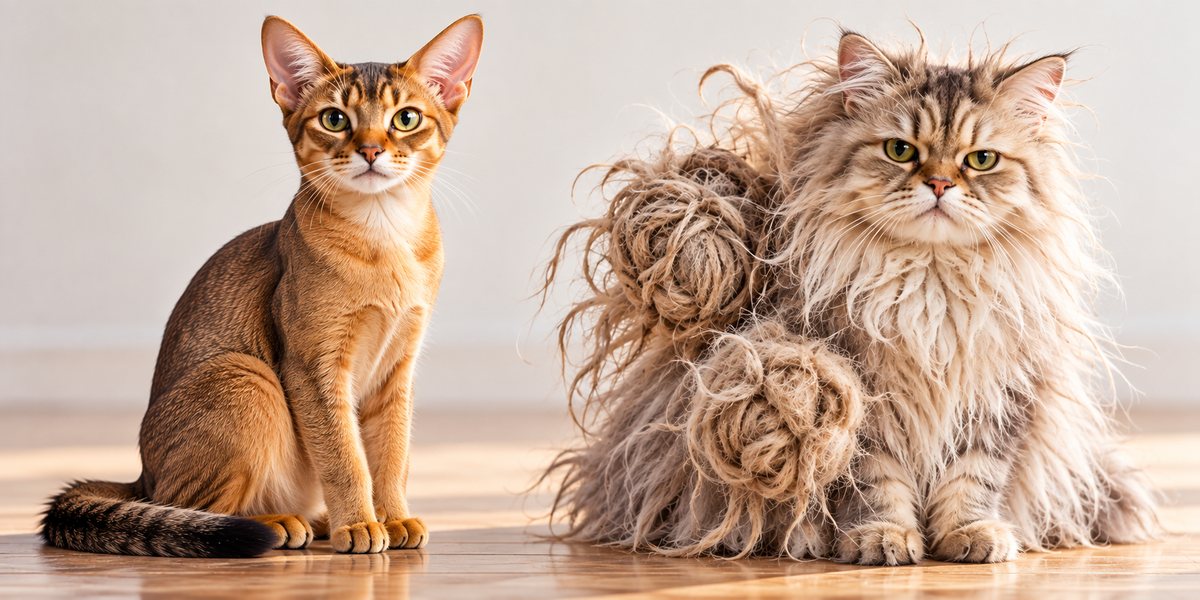
| Tangle & matting tendency | Low The silky coat is specifically easy to maintain in both lengths; occasional knots can occur in semi-long furnishings, but widespread matting is unusual. |
| Skin & bathing care | Bathing not routinely needed Routine bathing is generally unnecessary; bathe only when the coat is genuinely soiled or for a specific veterinary or grooming reason. |
| Distinctive routine care | Low-maintenance coat Both coat lengths are comparatively easy to maintain because the silky coat is not strongly prone to matting. |
| Allergy & allergen evidence | No breed specific reduction established There is no known reason to regard this breed as hypoallergenic. All cats produce allergens, and coat length or shedding alone does not determine allergy risk. |
| Activity & intelligence | |
| Activity level | Moderate |
| Playfulness | High |
| Climbing & jumping | High Powerful hindquarters and an active natural-breed background make the Kurilian Bobtail a strong jumper and climber; sturdy tall furniture is appropriate. |
| Enrichment demand | High High enrichment demand: its strong curiosity and play drive are well served by hunting games, climbing, puzzle feeding and varied exploration. |
| Learning & training | Very high Kurilian Bobtails are highly intelligent and notably trainable. |
| Curiosity & exploration | Very high They are inquisitive cats with a strong drive to investigate their surroundings. |
| Hunting & chasing tendencies | High Strong hunting behavior is expected; Kurilian Bobtails are robust natural cats with a reputation for capable hunting and an active interest in pursuit. |
| Personality & social | |
| Sociability with familiar people | Very high Kurilian Bobtails are sociable and strongly devoted to their people. |
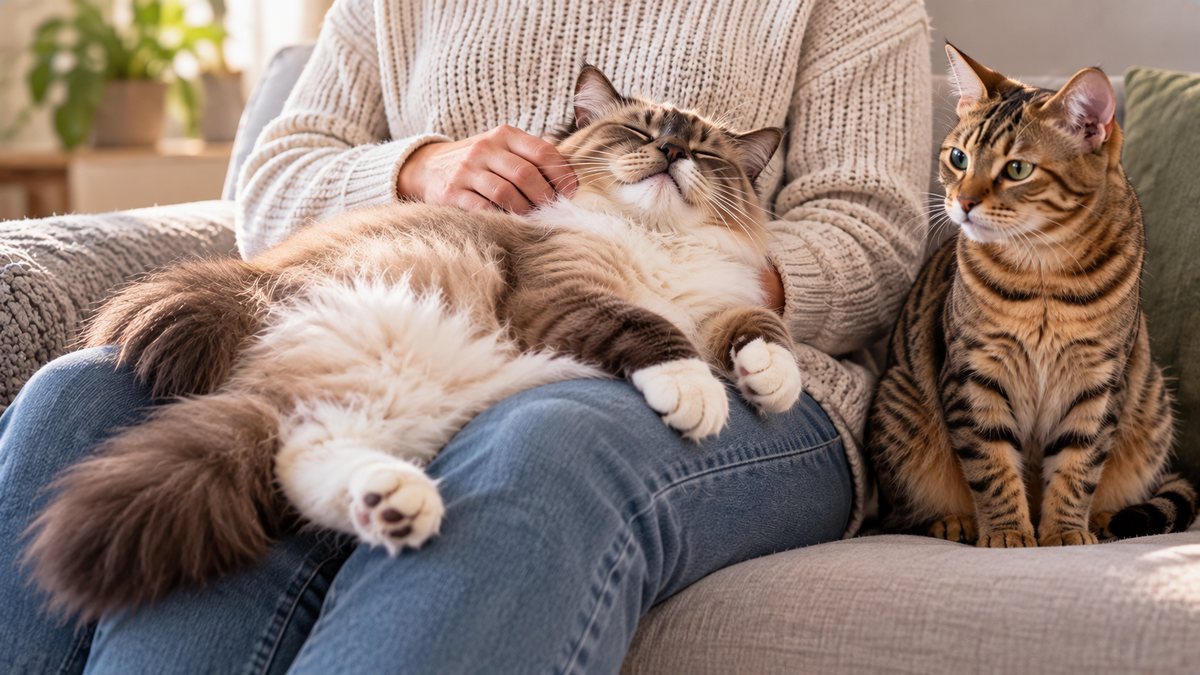
| Affection | Following · proximity · lap contact They combine devotion and close companionship with lap and bed contact when they choose it. |
| Lap & cuddling preference | High Many Kurilian Bobtails readily seek lap or bed contact with their people. |
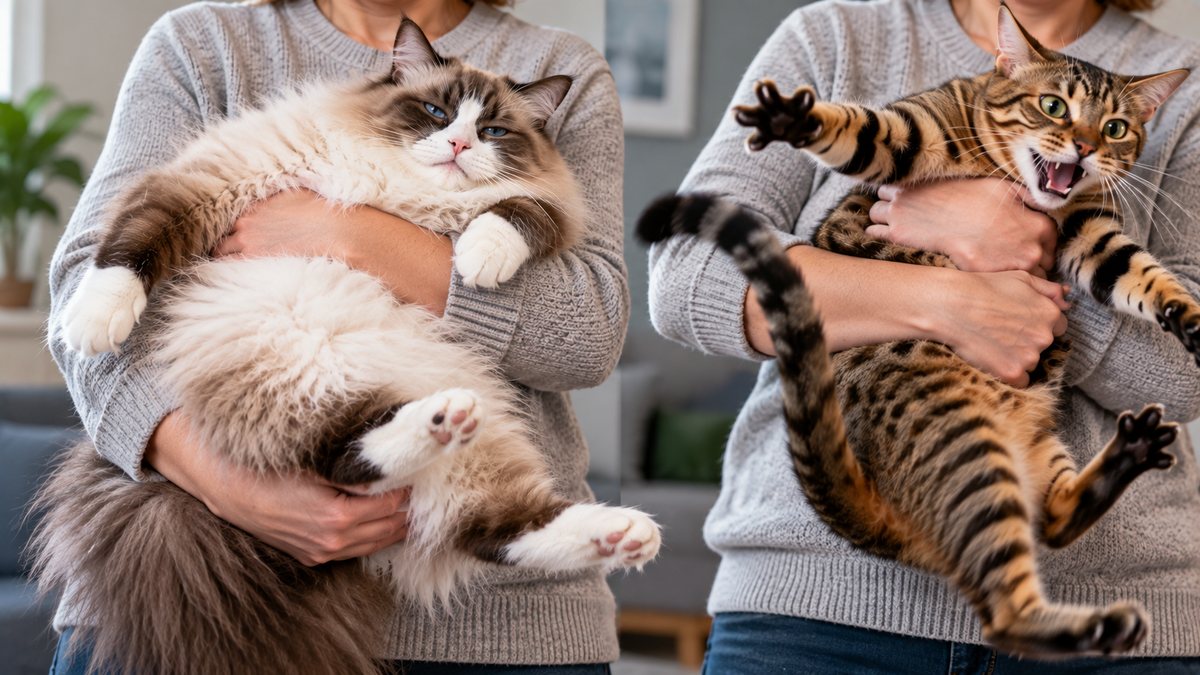
| Handling tolerance | High Kurilian Bobtails are confident, intelligent and strongly bonded to their households; most accustomed cats should accept practical handling well, though their powerful body favors secure rather than restrictive holding. |
| Independence & social demand | Independent but affectionate They combine notable independence with strong affection for familiar people. |
| Vocalization | High Distinctly communicative and talkative. |
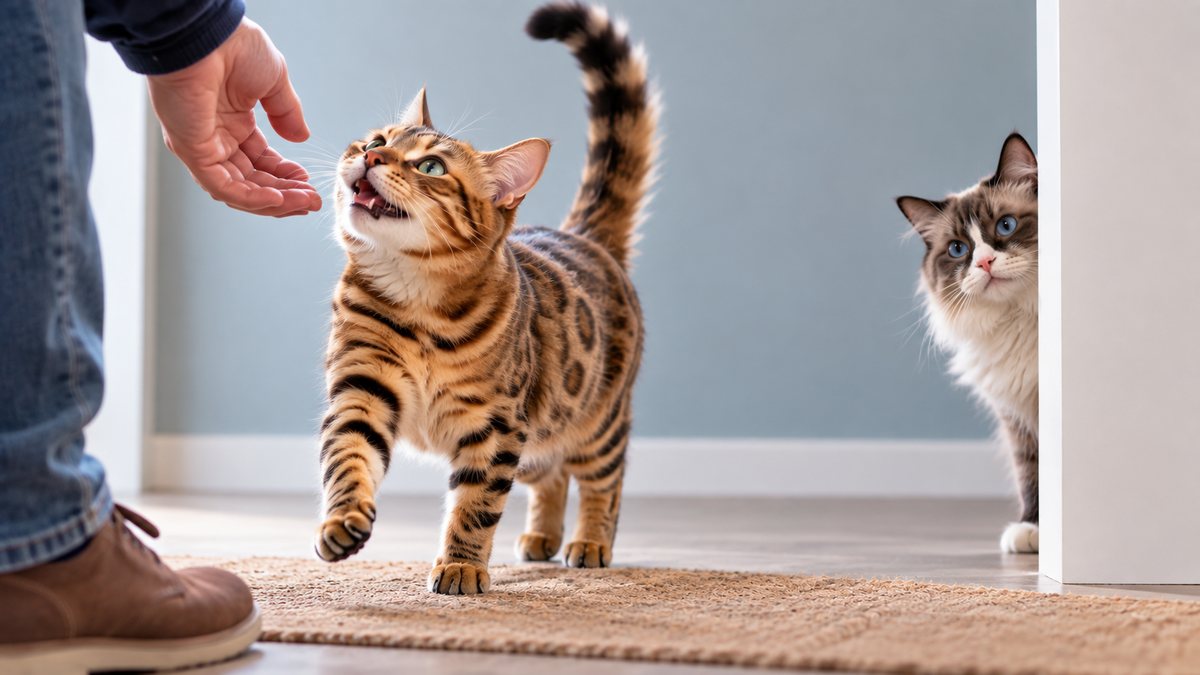
| Response to unfamiliar people | High Kurilian Bobtails are confident, intelligent and socially engaged; most are more inclined to investigate visitors than retreat, though they may assess first. |
| Adaptability to change | High Confident, intelligent, and exploratory Kurilian Bobtails generally adapt well to new environments, particularly when they retain space for climbing, play, and investigation. |
| Noise & busy-environment sensitivity | Low Confident, adaptable and robust, the Kurilian Bobtail generally copes well with activity and environmental change and is unlikely to require an unusually quiet household. |
| Defensive & conflict behaviour | Moderate Kurilian Bobtails are typically confident, active and socially capable, but their robust natural-breed temperament can include firm boundaries and strong hunting arousal. They are not generally conflict-seeking, yet poor introductions or resource pressure may elicit assertive responses. |
| Household & environment | |
| Living with children | Favorable tendency Their gentle, sociable temperament generally works well with children. |
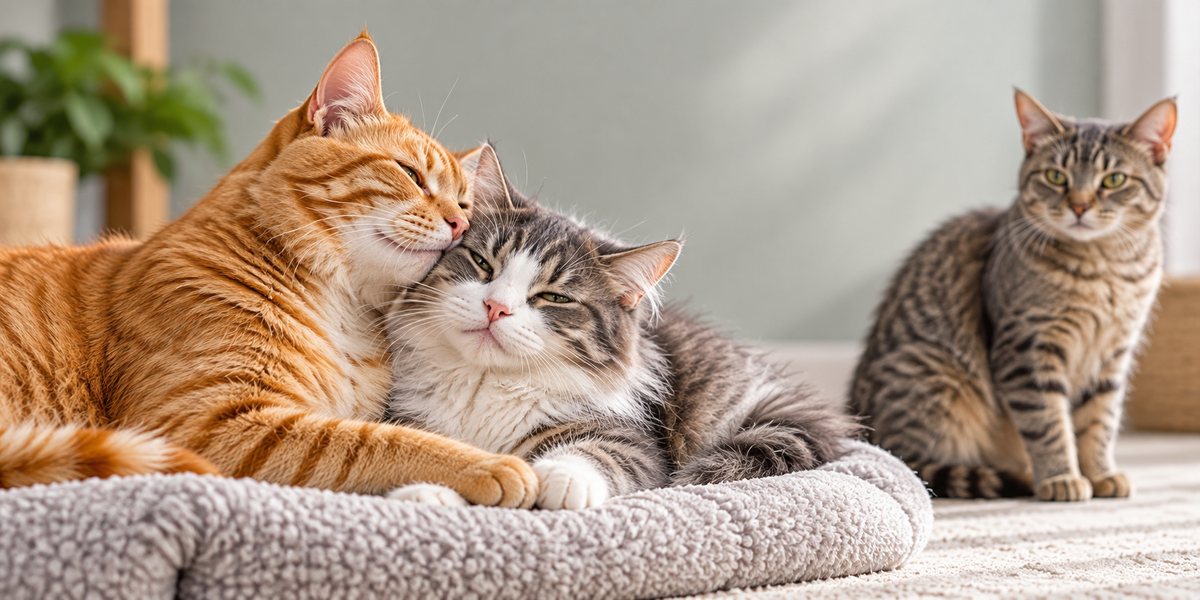
| Living with other cats | Favorable tendency Generally social and favorable toward compatible feline companionship. |
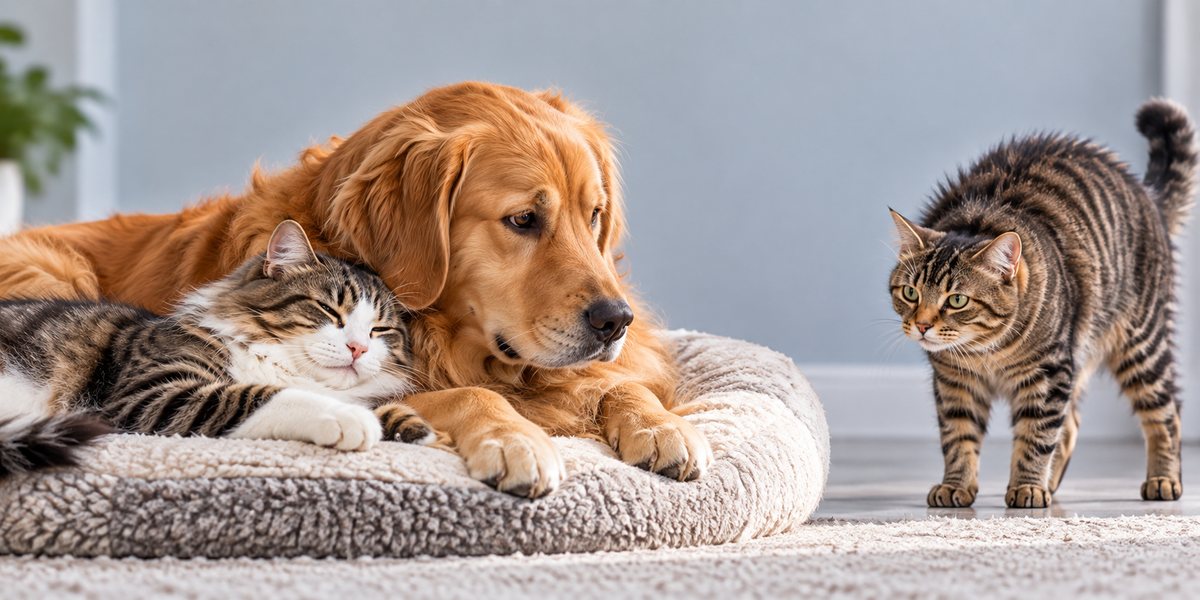
| Living with dogs | Good Kurilian Bobtails generally adapt well to cat-friendly dogs. |
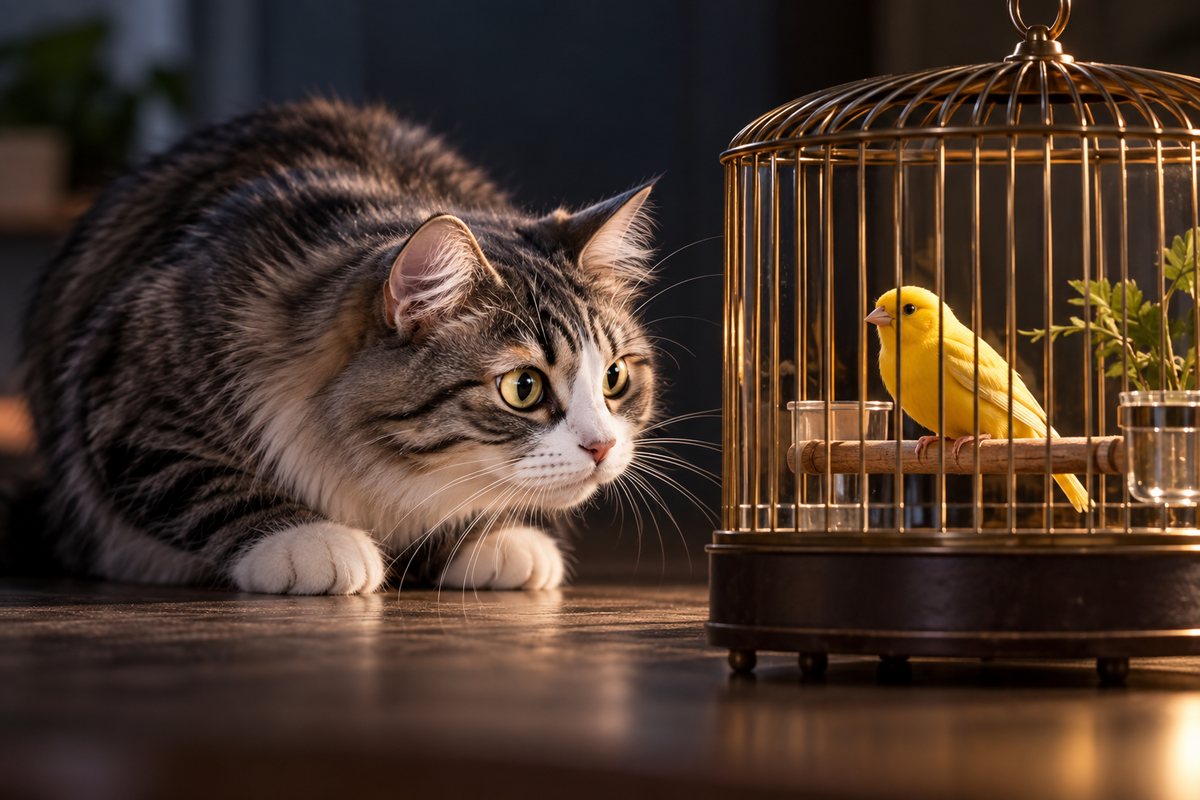
| Living around small pets | Additional caution Kurilian Bobtails are powerful, athletic natural-breed cats with a reputation for strong hunting ability. Birds, rodents and other small pets should be considered at elevated predation risk and kept securely separated. |
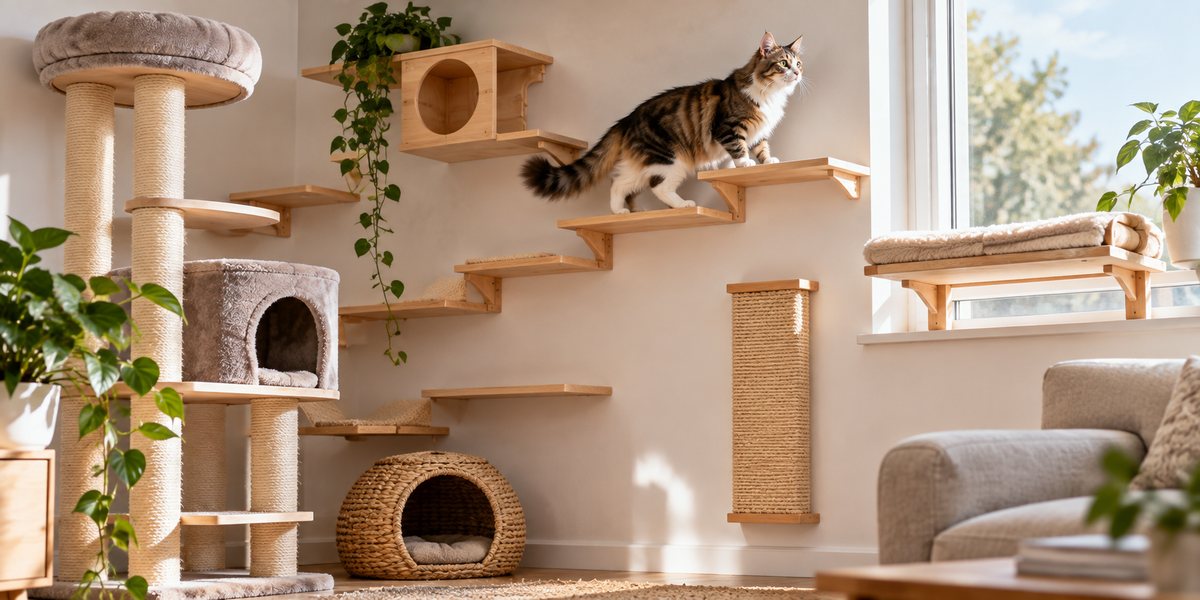
| Indoor & home environment needs | Active indoor enrichment Kurilian Bobtails are large, athletic natural-breed cats that need sturdy environmental resources. Strong climbing furniture, large scratching posts, vigorous hunting-style play and enough usable territory help an indoor cat express its physical capabilities. |
| Outdoor access considerations | Secure hunting control Kurilian Bobtails are powerful natural-breed cats with substantial hunting ability. Spacious secure outdoor access can suit their athleticism while reducing wildlife predation, territorial conflict and travel beyond the home. |
| Heat, cold & sun considerations | Cold adapted heat caution Kurilian Bobtails come from a cool, harsh island environment and often carry a substantial weather-resistant coat. They are well equipped for cold relative to many breeds, while sustained heat requires shade, water, airflow and cool resting areas. |
| Caregiver time & experience | Above average Kurilian Bobtails are robust, athletic cats that need sturdy enrichment and regular active play. Their coat can also require more grooming in longer-haired individuals, making them a somewhat higher-time commitment than a sedentary shorthaired companion. |
| Health & welfare | |
| Documented health predispositions | No major breed-specific predisposition is currently prominent The Kurilian Bobtail is a hardy natural breed with few recognized breed-specific health problems. |
| Screening & breeder questions | Ask for documentation relevant to the breed’s recorded health concerns Ask about hypertrophic cardiomyopathy, hip or joint disease and spinal or tail abnormalities in relatives, and whether breeding cats receive cardiac and orthopedic assessment. |
| Conformation-related welfare | Moderate tail concern Kurilian Bobtails have naturally shortened kinked tails. Breeding should preserve normal spinal and pelvic function, pain-free tail anatomy and powerful free movement rather than selecting simply for greater tail reduction. |
| Nutrition & weight management | Large active condition led Kurilian Bobtails are robust, muscular cats that can be large and active. Feed to maintain powerful muscle with a palpable waist and ribs, reducing intake if indoor life provides less exercise than the breed's natural activity profile. |
| Longevity | 15–20 years A reported life span of about 15–20 years is typical for the breed. |
| Cost & availability | |
| Purchase cost | High: $700–$2,000 Kurilian Bobtail: a practical breeder-market estimate is $700–$2,000. This reflects that it is an established in parts of Europe/Russia but uncommon in many other markets. |
| Adoption & rehoming cost | Very rare in rescue: $100–$600 when genuinely available Kurilian Bobtail: $100–$600 when genuinely available. The breed is scarce enough that a verified purebred rescue placement is unusual; transport may exceed the adoption fee. |
| Recurring ownership costs | Higher food/larger equipment · enrichment/toy replacement Their substantial athletic build can modestly increase food and sturdy-equipment costs. Coat care varies by length; otherwise routine veterinary, dental and enrichment spending is conventional, with tail comfort monitored rather than treated as a standing expense. |
| Availability, waits & import | Regionally available Kurilian Bobtails are well established in Russia and parts of continental and eastern Europe and have spread to other regions, but remain uncommon in many Western countries. Cross-border breeder searches are therefore fairly common. |
| Identity & real-world context | |
| Ownership & import restrictions | No known breed specific restrictions There are no known breed-specific ownership restrictions. Ordinary animal-welfare, identification, vaccination and cross-border import rules still apply where relevant. |
| Registry recognition | TICA: Championship-recognized / current breed identity · FIFe: fully recognized breed / mapped breed identity Currently recognized by TICA and FIFe in the FSC core matrix; it is not a separately recognized CFA breed identity in that matrix. |
| Similar breeds & identity distinctions | Japanese Bobtail Kurilian Bobtails are typically more substantial and powerful than Japanese Bobtails, with a short kinked tail whose shape varies individually. Japanese Bobtails tend to be finer and have the characteristic pom-pom presentation; pedigree and regional ancestry settle close cases. |
| Reported characteristic quirks | Every pom-pom tail is structurally individual The short pom-pom tail is a defining feature, and its exact shape and structure vary from cat to cat. |
Browse all 53 breed characteristics
Open any characteristic to compare all breeds on that dimension.





 English