
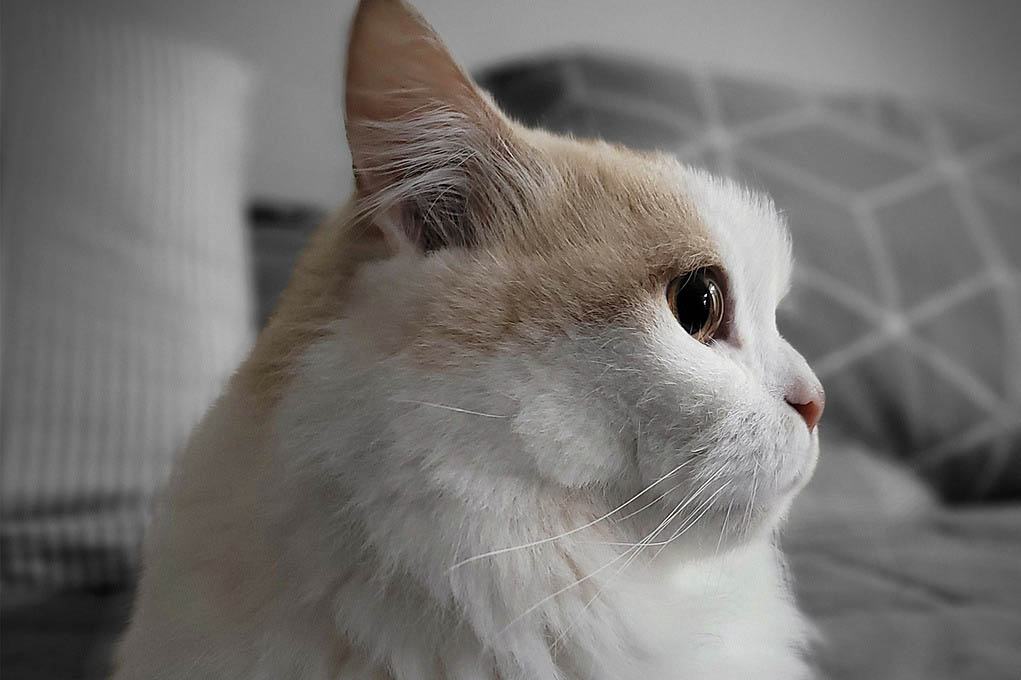
The Munchkin is an active, engaging cat whose short legs change more than its silhouette. It can run, climb, jump and seek close company, yet its deliberately shortened limb structure also gives caregivers a reason to think carefully about movement, access and long-term comfort. The central question is not simply whether a Munchkin can behave like an ordinary cat. It is whether you are prepared to enjoy an individual cat while monitoring the functional consequences of its unusual conformation.
Quick Facts
| Quick fact | Munchkin |
|---|---|
| Defining feature | Disproportionately shortened forelimbs and hindlimbs |
| Recognized coat forms | Shorthair and Longhair |
| Typical profile range | Approximately 5–9 lb (2.3–4.1 kg), with individual variation |
| Colors and eyes | All colors and divisions; eye color is not restricted by coat color |
| Reported longevity | Approximately 12–15 years in one estimate and 15–18 or more in another; these are not representative survival figures |
What is a Munchkin cat?
A Munchkin is defined by disproportionately short forelimbs and hindlimbs beneath an otherwise generally proportioned cat body. The short-limb trait is associated with a structural variant in the UGDH gene. In a published genetic study, researchers found no cats carrying two copies of the variant in their sample, a pattern consistent with dominant inheritance and with homozygous embryos probably not surviving. That finding explains why breeding practices and ancestry matter, but it does not mean that every Munchkin carrying one copy will inevitably develop illness.
The name should also be used precisely. The recognized Munchkin forms are Munchkin Shorthair and Munchkin Longhair; they are coat varieties within the breed identity. Minuet, Bambino, Minskin, Lambkin, Kinkalow and Dwelf are separate derived identities, not interchangeable names for a Munchkin. A seller using several of these labels should be able to explain the cat’s actual breed designation, ancestry and registration.
Recognition and breed classification
TICA recognizes the Munchkin and Munchkin Longhair in championship materials. Its standards allow all colors and divisions, and do not restrict eye color according to coat color. The breed is not listed among current CFA-recognized breeds and is absent from FIFe’s recognized-breed list. FIFe’s rules discuss Munchkin-type dwarfism and shortened limbs in the context of welfare and recognition policy, illustrating that registry recognition is not the same as universal agreement that the conformation is welfare-neutral.
Those positions answer different questions. A registry standard describes how a breed is classified and shown; it does not settle every veterinary question about deliberately shortened limbs. Conversely, concern about the conformation does not prove that every individual Munchkin is painful or impaired. A prospective caregiver needs both parts of the picture: know what the breed is, and assess the individual cat’s function.
Appearance, size and coat varieties
The Munchkin’s most obvious feature is its short legs, but the rest of the body is generally proportioned rather than miniature throughout. Adults are often described in the range of 5–9 pounds (2.3–4.1 kg). Longhair profile figures give approximately 5–7 pounds for females and 7–10 pounds for males. These are breed-profile ranges, not feeding targets. A healthy weight depends on frame, age, sex, muscle and body condition, so a veterinarian’s assessment is more useful than aiming for a number.
The Shorthair has a medium-to-short, semi-plush coat with a medium undercoat. The Longhair has a semi-long, silky coat with a moderate undercoat and may develop a ruff, britches and a plumed tail. Both varieties can appear in all recognized color divisions, and eye color is not limited by coat color. A soft or silky coat should not be mistaken for a low-shedding or hypoallergenic coat: either variety can leave hair around the home.
Temperament and life with a Munchkin
Munchkins are commonly described as playful, curious, active and sociable. Their legs do not automatically make them ground-bound. They may run through the home, climb furniture and jump onto beds or other elevated surfaces. The practical mistake is to interpret that ability in either direction: short legs do not mean a cat cannot enjoy an active life, but running and jumping do not prove that its limb mechanics are normal or that it is free from pain.
Social interest may be more reliable than any promise of a particular kind of affection. A Munchkin may follow people from room to room, supervise household activity from a high surface, bring energy to play or seek frequent petting. It may also prefer to sit beside a person rather than directly on a lap, tolerate being picked up without enjoying it, or become cautious around children and sudden movement. “Affectionate” should therefore mean a willingness to build a relationship, not a guarantee of lap sitting, easy handling or confidence with every visitor.
Individual history can matter greatly. A well-socialized kitten and an adult rescued from neglect may need very different introductions, even if both are Munchkins. A cat that initially hides or avoids other animals may be responding to fear, illness or previous treatment rather than expressing a fixed breed temperament. When possible, meeting an adult and observing how it responds to touch, play, grooming, lifting, visitors and other animals gives more useful information than the breed label alone.
Setting up an accessible home
An indoor home can suit a Munchkin well when essential resources do not require repeated high jumps. Put food, water, litter boxes and resting places on routes the cat can use comfortably. Climbing furniture can still be valuable: choose sturdy structures with low entry points and intermediate platforms rather than removing height and activity altogether. This gives the cat choices and lets it regulate its own effort.
Watch how the cat uses the home rather than imposing a blanket restriction. One Munchkin may find an efficient route onto a sofa or bed, while another may prefer a ramp, step or lower perch. Keep surfaces stable, avoid forcing a cat to leap from excessive heights, and provide quiet retreat spaces where children, dogs and visitors cannot follow. Small pets should be kept securely separated.
Free roaming is not a safe default simply because a particular Munchkin is athletic. Traffic, escape, predation and injury risks remain relevant, and mobility differences may make recovery from danger more difficult. A secure enclosure, cat-proof fencing or supervised outdoor time offers exploration while allowing the caregiver to account for the individual cat’s movement.
Grooming and routine care
Shorthair Munchkins generally need about weekly combing, while Longhairs generally benefit from combing about twice a week. The schedule should follow the cat’s actual coat: loose hair, tangles and early mats matter more than an inflexible calendar. Pay particular attention to the ruff, britches, tail and areas the cat cannot easily reach.
A cat with limited reach, excess weight, discomfort or poor tolerance for handling may need additional grooming help. Introduce brushing gradually and use short, calm sessions rather than wrestling with a resistant cat. A longhaired rescue that has experienced rough handling may need its cooperation rebuilt over time. Persistent mats, skin irritation or an inability to groom properly warrants veterinary and, where appropriate, professional grooming advice.
There is no established Munchkin-specific nutritional requirement. Feed a complete diet suited to the cat’s life stage, measure portions and monitor body condition. Avoiding excess weight is especially sensible when shortened or abnormal limbs may already carry additional mechanical demands. Regular play, food puzzles and accessible climbing options can support activity without making high jumping the measure of fitness.
Health and welfare considerations
The short-limb conformation is a functional welfare issue, not merely a visual characteristic. Genetic and radiographic work documents substantial shortening and abnormalities of limb bones. Veterinary and welfare discussions have raised possible concerns about altered mechanics, osteoarthritis, mobility impairment, lordosis, pectus excavatum and grooming limitations. Intervertebral-disc disease remains an unresolved question rather than an established universal Munchkin outcome.
The evidence does not justify two tempting but opposite conclusions. A Munchkin that plays enthusiastically is not thereby demonstrated to have normal biomechanics. Equally, the presence of shortened limbs does not establish that every Munchkin is in pain. One registry position is more reassuring about arthritis than some independent veterinary and welfare assessments, so the prudent response is lifelong observation rather than blanket reassurance or blanket condemnation.
Changes in behavior can be an early sign that something is wrong. Arrange veterinary assessment for reluctance to run, climb or jump; stiffness, lameness or an altered gait; reduced play; difficulty grooming or using the litter box; breathing difficulty; persistent back sensitivity; or a new abnormal posture. Do not wait for obvious crying or collapse: cats often conceal discomfort, and a gradual change from an individual’s normal behavior can be significant.
Buying, adopting and checking documentation
A responsible acquisition begins with information about the individual cat, not just a photograph of short legs. Ask for pedigree and registration details, parent and litter veterinary records, vaccination and parasite records, microchip information, ancestry and any cross-breeding details. Request a written return contract and clarify what happens if the cat later needs to be rehomed. A registry certificate identifies registration status; it is not a health guarantee.
Watch the cat move, play and groom if an in-person visit is possible. Notice whether it bears weight evenly, uses the litter box normally, reaches ordinary resting places and can tolerate gentle grooming. Ask to see the mother and, where appropriate, other related cats. A breeder who avoids questions about limb structure, health history or returns should be treated cautiously.
Adoption can offer another route. Munchkins may be encountered through shelters, rescues and owner rehoming as well as breeders, although local availability is variable. A general 2026 United States shelter-adoption guide gives approximately $50–$300, but that is not a Munchkin-specific fee schedule and may cover different services from one organization to another.
Price and availability
Dated United States asking-price examples checked in 2026 include approximately $800–$2,000 for a registered companion kitten in one market guide, about $1,000–$1,500 in veterinary guidance, and $3,200 from a named breeder whose price was updated March 16, 2026. These are asking prices rather than verified completed-sale prices. Region, pedigree, age, breeding or showing rights, shipping and included veterinary care can all change the amount. A lower adoption fee is not directly comparable with a breeder’s kitten price because the age, documentation and included services may be different.
Availability is similarly uneven. A prospective caregiver may need to consider travel, waiting lists, rescue availability and the quality of veterinary documentation rather than treating the first advertised kitten as the only option. Paying more does not remove the need to inspect records and observe the cat’s movement.
How long do Munchkin cats live?
Published estimates range from approximately 12–15 years in PetMD guidance to approximately 15–18 or more years in TICA material. These figures should be used for planning, not as a promise for an individual cat or as a representative Munchkin survival estimate. Genetics, breeding choices, body condition, preventive care, environment and unrelated illnesses all influence an individual lifespan.
Is a Munchkin the right cat for you?
A Munchkin may suit an attentive household that wants an active companion and is willing to provide enrichment, accessible routes, coat-appropriate grooming, careful weight management and prompt veterinary attention when movement or grooming changes. It may be a poor fit for someone attracted only to the appearance and expecting a guaranteed lap cat, effortless handling or proof that athletic behavior means the conformation carries no cost.
Children and dogs need gradual introductions, supervision and permanent retreat spaces. Meeting an adult is particularly valuable when temperament, handling tolerance or compatibility matters. The strongest match is a caregiver who can preserve the cat’s agency—allowing voluntary activity and choice—while adapting the environment and taking subtle changes seriously.
What owners and caregivers say
Owners and caregivers describe Munchkins as highly involved in household life. Some follow people from room to room, supervise activity from elevated surfaces, steal small objects for play or invent effective routes onto furniture. An adopter of a six-year-old rescue was surprised by how readily the cat leapt from the floor onto a bed, while other caregivers describe Munchkins running, climbing and jumping with enthusiasm.
Affection often appears as proximity rather than a single predictable behavior. One owner describes a very cuddly cat that avoids sitting directly on a lap but stays in contact on a sofa or in bed. Another newly adopted cat settled quickly, cuddling and sleeping with its new household almost immediately. These experiences support the idea of a socially engaged companion, but not a promise that every Munchkin will enjoy being carried, sit on laps or welcome unfamiliar people.
Handling and confidence can vary just as much. A caregiver describes a cat that follows people and demands continued petting but becomes shy around fast movement and nervous around children. Another reports a cat that tolerates being picked up without struggling while not particularly enjoying it. For a household with children, frequent visitors or other pets, observing those responses directly is more informative than relying on a general temperament description.
Rescue experiences also show why history deserves attention. A longhaired cat whose grooming cooperation had been damaged by poor handling needed daily face cleaning and brushing introduced gradually. Other rescued Munchkins initially showed fear, avoidance of other cats or stress-related coat damage after severe mistreatment, then became more confident and affectionate with veterinary care and a stable home. Those stories do not establish a breed-wide temperament, but they do show how much a patient caregiver can learn by separating an individual cat’s past from assumptions about the breed.
The most useful synthesis is simple: a Munchkin can be an entertaining, affectionate and energetic companion, while still requiring conformation-aware care. Its ability to run is worth preserving, not treating as proof that no monitoring is needed. Its social interest is worth enjoying, not turning into a promise of effortless handling. Choosing this breed responsibly means accepting both sides of that relationship.
Selected sources: Munchkin breed profile, Munchkin Longhair breed profile, published genetic study, feline welfare opinion, and veterinary breed guidance.
 English