
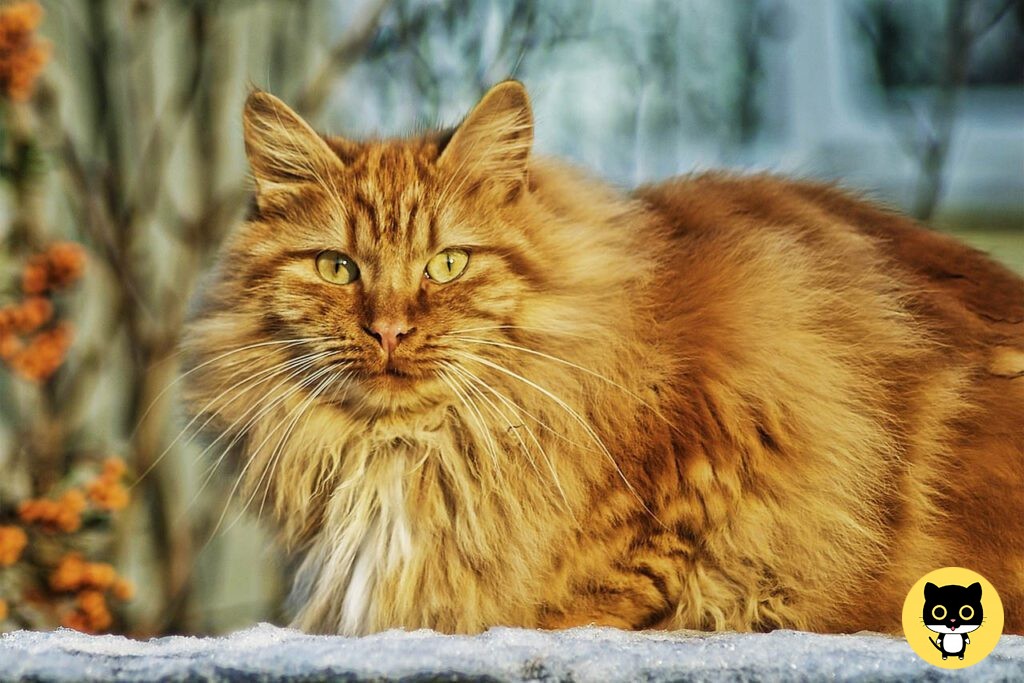
The Norwegian Forest Cat is a substantial, slow-maturing companion whose appeal comes with practical responsibilities. It can be sociable without being constantly cuddly, athletic without requiring outdoor freedom, and relatively manageable for a longhaired cat without being a low-maintenance one. The important question is not whether the breed’s image sounds attractive, but whether your household can support the individual cat behind that image.
Quick Facts
| Quick fact | Practical meaning |
|---|---|
| Adult planning range | About 8–12 lb (3.6–5.4 kg) for females and 12–18 lb (5.4–8.2 kg) for males; these are guides, not targets. |
| Maturity | Physical development may continue until approximately five years. |
| Coat | Dense, semi-longhaired and double-layered, with seasonal changes in fullness. |
| Typical household fit | A home that can provide sturdy climbing equipment, regular coat checks, interactive play and respectful handling. |
| Longevity planning | Published estimates range from approximately 9.95 years in one UK dataset to about 12–15 years in Norwegian breed-health material; neither is a guarantee. |
Identity, recognition and Norwegian roots
The Norwegian Forest Cat is a formally recognized breed in CFA, TICA and FIFe, but those organizations use different classification systems and may phrase their standards differently. A pedigree establishes breed identity within the relevant registry; a triangular head, long coat or large frame does not. Those features can occur in non-pedigreed cats as well.
The breed’s identity is closely tied to Norway, where its forest-cat type developed into a recognized pedigree breed. Today, the relationship between history and registration is important for buyers: a cat may resemble the breed strongly yet have no documented ancestry, while a pedigree confirms lineage without guaranteeing a particular personality, adult size or health outcome. Recognition is therefore useful evidence of ancestry, not a promise about the whole ownership experience.
Registry requirements matter when appearance or color is being discussed. CFA permits a broad range of traditional colors and patterns, including solids, tabbies, tortoiseshells, bicolors and white, while exclusions and eye-color rules differ between CFA, TICA and FIFe. If a particular color, pattern or eye color matters to you, check the standard of the registry under which the cat is registered rather than relying on a general breed description. The breed information and relevant breed standard provide useful examples of those distinctions.
What the Norwegian Forest Cat looks like
The adult Norwegian Forest Cat is muscular and substantial rather than merely fluffy. It has a moderate-length to rectangular body, heavy bone, a broad chest and powerful hindquarters. The head is triangular, with a straight nose profile; the ears are furnished, and the long tail is full and bushy. These proportions can make the cat look larger than its actual weight, especially when the winter coat is at its fullest.
Growth is deliberately unhurried. Full physical development is commonly placed at around five years, and the body, head, coat and behavior may mature on different schedules. A young cat may therefore look rangy before gaining breadth, or appear richly coated before its adult structure is complete. Weight alone is a poor measure of whether a cat is thriving. Muscle, body condition and veterinary assessment matter more than reaching a breed-associated number.
The coat is a dense double layer: a woolly undercoat supports longer, glossy guard hairs. It is often described as water-resistant or water-repellent, not waterproof. Seasonal change can be conspicuous, with a fuller coat in winter and a lighter one in summer. A silky or light-feeling coat can still leave considerable hair around the home, and softness does not prevent friction areas from tangling.
Temperament and the shape of companionship
The Norwegian Forest Cat often suits people who want an involved companion rather than a permanently portable one. Breed descriptions support an interactive, intelligent and playful cat, while individual caregivers describe cats that follow people, vocalize, settle nearby or take part in household routines. Sociability and tolerance of restraint are separate traits, however. A cat may greet its people, sleep beside them and accept ordinary petting while objecting strongly to being carried or held for a long time.
That distinction changes how affection should be assessed. If you want a guaranteed lap cat, the breed name cannot provide that assurance. Some individuals do seek laps and close naps; others prefer a nearby chair, a place at the end of the bed or a person’s company at a slight distance. Meeting an adult gives a prospective caregiver a better opportunity to assess preferences for handling, strangers, vocalization and physical closeness than a general breed description can.
Play and investigation are likely to be more important than a fixed daily exercise prescription. The breed’s muscular hindquarters and climbing ability support tall scratching posts, secure cat trees, shelves, hiding places and interactive play. Food puzzles, rotated toys and opportunities to investigate can help turn an active mind toward acceptable outlets. The amount of activity required remains individual, so the useful goal is to notice what keeps this cat engaged without leaving it chronically frustrated or overstimulated.
Indoor life can work well when the environment is designed vertically as well as horizontally. A small home is not automatically unsuitable if it offers elevated resting places, retreat areas, separated resources and regular play. A free-roaming lifestyle is not a breed requirement. A catio, enclosed garden or supervised outdoor access can provide novelty while reducing traffic, disease, predation and wildlife risks.
Living with the coat
Coat care is usually manageable when it is cooperative and consistent. A regular inspection and weekly combing may suit some cats, but combing should increase during seasonal shedding or whenever small tangles appear. Check the ruff, behind the ears, the armpits, belly and britches especially carefully. A tool that reaches through the coat to the undercoat is generally more useful than a brush that only smooths the surface.
Starting early matters because grooming is also a handling relationship. Short sessions, gentle pressure, pauses and rewards can teach a kitten that combing is predictable rather than threatening. An adult cat that has had unpleasant grooming experiences may need a slower plan. Some caregivers report that gradual brushing and treats improved cooperation; others have faced vocal protest, strong resistance and recurring knots that required professional grooming or clipping. Previous care and individual tolerance can matter as much as the coat itself.
Expect hair in the household and possible hairballs, particularly during seasonal coat change. Shedding is not a measure of allergen production, and the Norwegian Forest Cat has not been established as hypoallergenic. Anyone with allergies should spend time with the actual cat before making a commitment rather than treating coat length or a supposedly lighter texture as a reliable solution.
Food, equipment and everyday care
No distinctive Norwegian Forest Cat diet has been established. Feed a nutritionally complete diet appropriate to the cat’s life stage, then adjust portions for age, activity, neuter status and health. Feel the body as well as looking at it: a thick coat can conceal excess fat, while a large frame can make a healthy cat appear heavy. Regular veterinary checks are especially useful while a slow-maturing cat is still changing shape.
Equipment should be selected for the adult, not the kitten. Scratching posts need a stable base and enough height for a full stretch. Cat trees, shelves and window perches should tolerate a heavier, muscular cat moving quickly between levels. Place resources so the cat can rest, climb, eat, drink and use the litter area without being forced into a single crowded location.
Children and other pets can be suitable companions when introductions are gradual and supervised. The cat needs protected retreat spaces, multiple resources and the ability to end an interaction. Teach children to invite contact rather than chase, restrain or lift the cat. Friendliness toward people does not remove predatory behavior toward birds, rodents, reptiles or other small pets, so those animals require secure separation regardless of how gentle the cat seems with the family.
Health questions for a prospective buyer
The clearest breed-specific inherited-disease concern is glycogen storage disease type IV, a GBE1-related disorder that can be severe or fatal in affected cats. A buyer should request verifiable test results or tested parentage and ask how the breeder interprets those results. A carrier result is not the same as an affected cat, so the paperwork should identify the individual cat and the result clearly. Information about GSD IV testing can help a buyer understand the terminology.
Familial or suspected risk of hypertrophic cardiomyopathy has also been documented. Responsible breeding discussions may include cardiac examination history, echocardiography and relevant family information. A DNA result alone does not exclude every form of HCM, and a normal screening result is not a promise that an individual will never develop heart disease. Cornell’s overview of feline hypertrophic cardiomyopathy explains why clinical assessment matters.
Before placing a deposit, request the pedigree, veterinary records, test results, cardiac history for breeding cats, relevant family information and a written return policy. A pedigree verifies ancestry within a registry; it does not guarantee health, temperament, adult size or lifelong freedom from inherited disease. The quality of the breeder’s process and willingness to discuss difficult outcomes are more informative than a high price or impressive marketing language.
Longevity and the long-term budget
Longevity figures should be treated as planning estimates rather than promises. A UK VetCompass analysis reported a mean age at death of 9.95 years at birth for Norwegian Forest Cats, with a 95% confidence interval of 7.55–12.35 years; only 15 deaths contributed to that breed-specific estimate. Norwegian breed-health material reports approximately 12–15 years. These figures come from different populations and methods, so they should not be combined into one “typical” lifespan.
The practical implication is to plan for a potentially long relationship while keeping money aside for routine care, dental work, emergencies and conditions that cannot be predicted from a pedigree. Insurance or a dedicated veterinary fund can be sensible, particularly for a large, slow-maturing cat whose equipment and medication may also cost more than they would for a very small cat.
Price, availability and finding a cat
US purchase examples checked in 2026 included a breeder listing pet kittens from $2,000 and a market review citing approximately $1,400–$2,500. In Norway, one breeder listed domestic kittens at NOK 14,000, with separate export prices in Swedish kronor or euros. These are dated asking prices, not sale-price averages, and a high asking price is not evidence by itself of better breeding or health practices. The US breeder listing illustrates why it is useful to check what a price includes.
Adoption is less predictable. A dated US commercial estimate placed adoption fees for a suitable Norwegian Forest Cat or similar available cat at roughly $75–$300, but pedigreed cats are less consistently found through shelters and actual fees depend on region, age and included veterinary care. A lower adoption fee describes the initial transaction, not the total cost of caring for a longhaired, large adult cat.
Availability can change quickly. Breeders may show waitlists, no published litter or no kittens currently available, and importing can add vaccination, passport, transport and destination requirements. For cats entering the United States, USDA APHIS states that its federal animal-health requirements do not apply to pet cats, although other federal agencies, states and destinations may still impose rules. A buyer should confirm requirements for the actual route and state rather than assuming that a breeder’s export experience covers every journey.
Is the Norwegian Forest Cat a good fit?
This breed is a promising choice for a caregiver who values interactive companionship, climbing and investigation, and a distinctive seasonal coat. It is less suitable for someone seeking a self-maintaining decorative longhair, a guaranteed lap cat or a cat that will tolerate forced grooming and handling without preparation.
The best match is a household willing to design the environment, buy equipment that supports a substantial adult, teach cooperative grooming and judge body condition beneath the coat. It should also be comfortable with variation: one cat may be talkative and shadow-like, another quiet and selective, one eager for outdoor stimulation and another content with a well-designed indoor life. Meet the adult where possible, observe the parents and living conditions, verify health documentation and treat the individual’s behavior as more important than the breed stereotype.
What owners and caregivers say
Owners and caregivers often describe closeness with choice rather than constant physical contact. One caregiver described vocal, sociable cats that seemed almost shadow-like while still distinguishing sociability from lap behavior. Other caregivers describe cats that follow people or settle beside them instead of being carried, while some report lap contact and close naps. These experiences fit together: the breed may want participation in family life without wanting every form of touch.
Grooming produces an equally useful contrast. An owner who adopted an adult rescue found the coat difficult to manage, showing how previous care and handling history can shape the experience. Another caregiver described strong resistance, vocal protest and recurring knots beneath the neck or behind the legs, sometimes requiring professional grooming or clipping during heavy shedding. In contrast, gradual brushing paired with treats helped one previously resistant cat become more cooperative. The practical lesson is to build trust before the coat becomes a crisis.
Outdoor preference also varies. One caregiver portrayed a cat that was strongly interested in daily outdoor time, while other owners described satisfying indoor companionship, climbing and household interaction without treating free access outside as essential. Secure enrichment can answer curiosity without exposing a cat to the risks of traffic, disease, predation or harm to wildlife.
Individual voices range from unusually vocal to quiet, from strongly attached to one preferred person to openly affectionate with many people. A friendly cat may still resist being held; a reserved cat may enjoy ordinary petting and remain close by. Those differences are not a failure of the breed description. They are the reason a prospective caregiver should use the breed as a framework for likely needs, then assess the particular cat in front of them.
 English