
Compare Cat Breeds
Compare up to three breeds across all 53 characteristics. Values are shown directly so the differences are easier to scan.
| Characteristic |  Norwegian Forest |
|---|---|
| Body & development | |
| Adult size | Medium to large |
| Adult weight | Females 3.6–5.4 kg (7.9–11.9 lb); Males 5.4–8.2 kg (11.9–18.1 lb) Females are commonly about 3.6–5.4 kg (7.9–11.9 lb) and males about 5.4–8.2 kg (11.9–18.1 lb); full maturity produces a substantial cat. |
| Build & distinguishing morphology | Long powerful · triangular head · strong hindlegs Build: long powerful; triangular head; strong hindlegs. |
| Maturation | 3-5 years Norwegian Forest Cats mature slowly. They reach much of their height earlier but can continue developing their large frame, chest, musculature and full coat until roughly 3–5 years. |
| Coat & appearance | |
| Coat length | Long Long, weather-adapted coat. |
| Coat texture & undercoat | Semilong · woolly undercoat · coarse water repellent guard hairs Coat: semilong; woolly undercoat; coarse water repellent guard hairs. |
| Colors & patterns | Broad traditional palette Colors/patterns: broad traditional palette. |
| Eye colors | Green · gold · copper · blue · odd-eyed; coat-dependent Green, gold and copper occur widely; blue or odd eyes are possible in white cats. |
| Coat & routine care | |
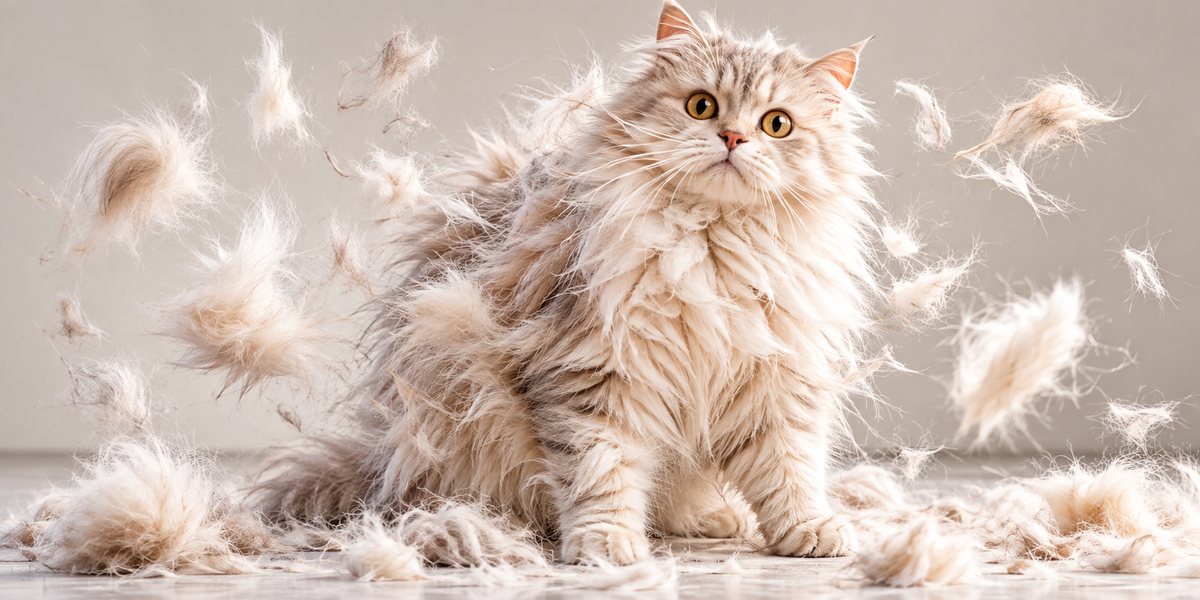
| Shedding | High seasonal High seasonal shedding, particularly when the heavy winter undercoat is released in spring. |
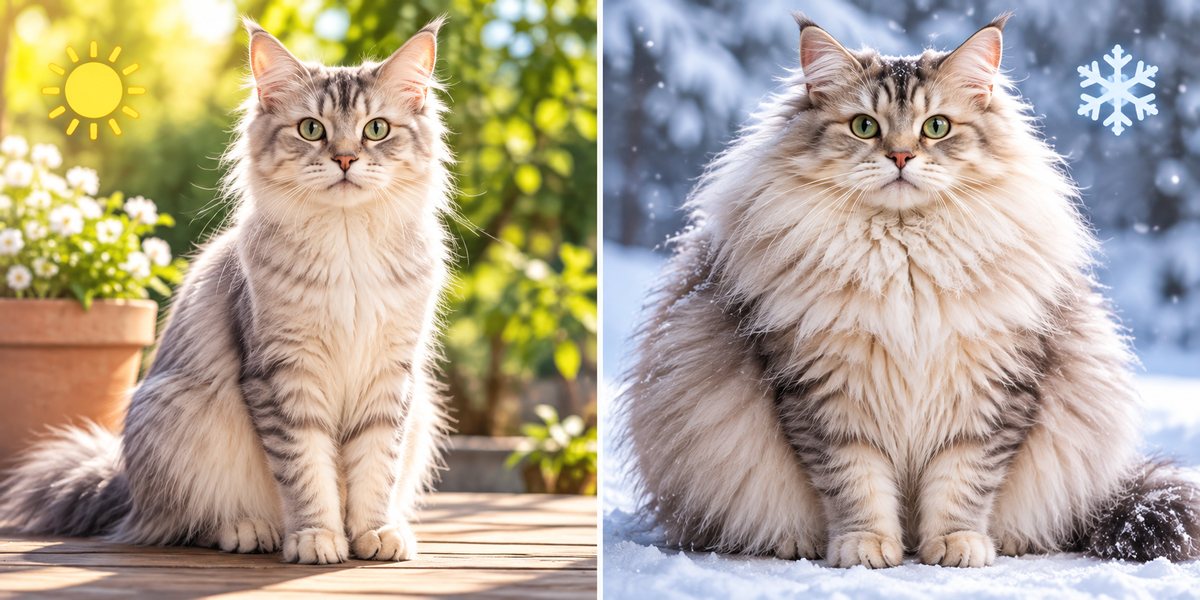
| Seasonal coat changes | Dense winter undercoat · shorter summer coat Seasonal coat: dense winter undercoat; shorter summer coat. |
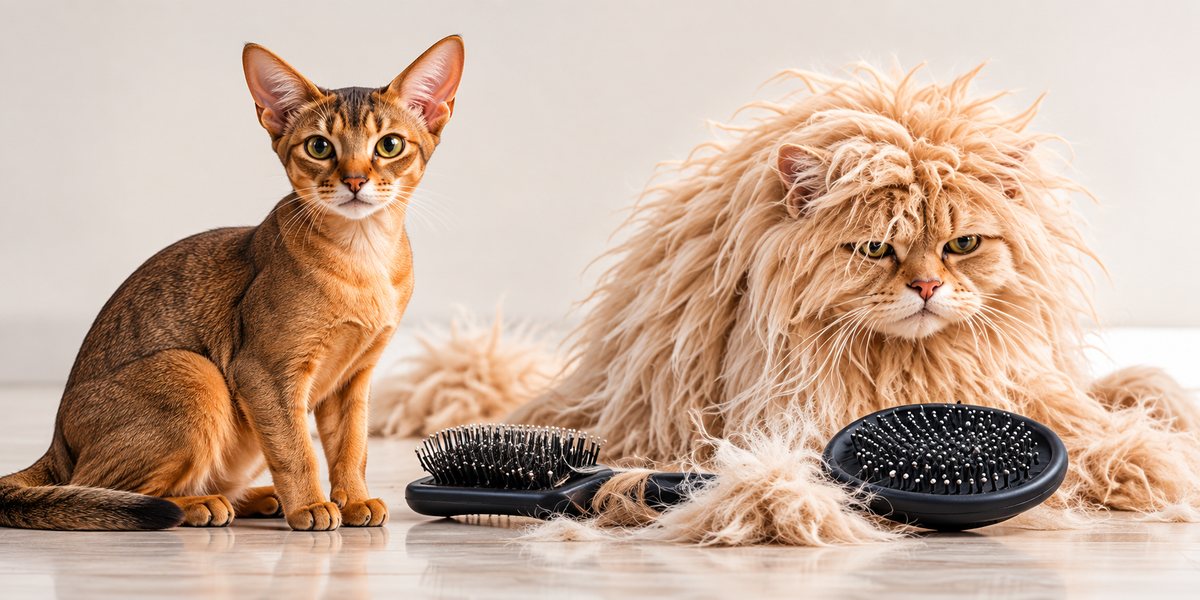
| Brushing & combing | Minimal regular · extra spring Brushing/combing: minimal regular; extra spring. |
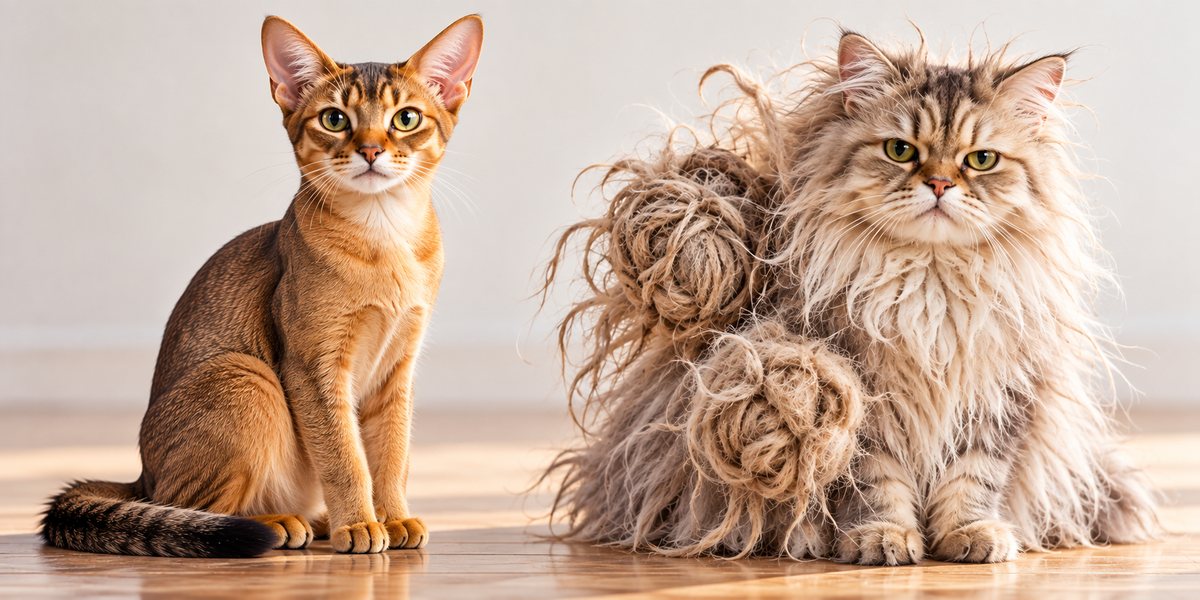
| Tangle & matting tendency | Moderate seasonal The coarse guard coat resists tangling, but the woolly undercoat can felt during seasonal shedding, especially around the ruff, belly and hindquarters. |
| Skin & bathing care | Bathing not routinely needed Routine bathing is generally unnecessary; bathe only when the coat is genuinely soiled or for a specific veterinary or grooming reason. |
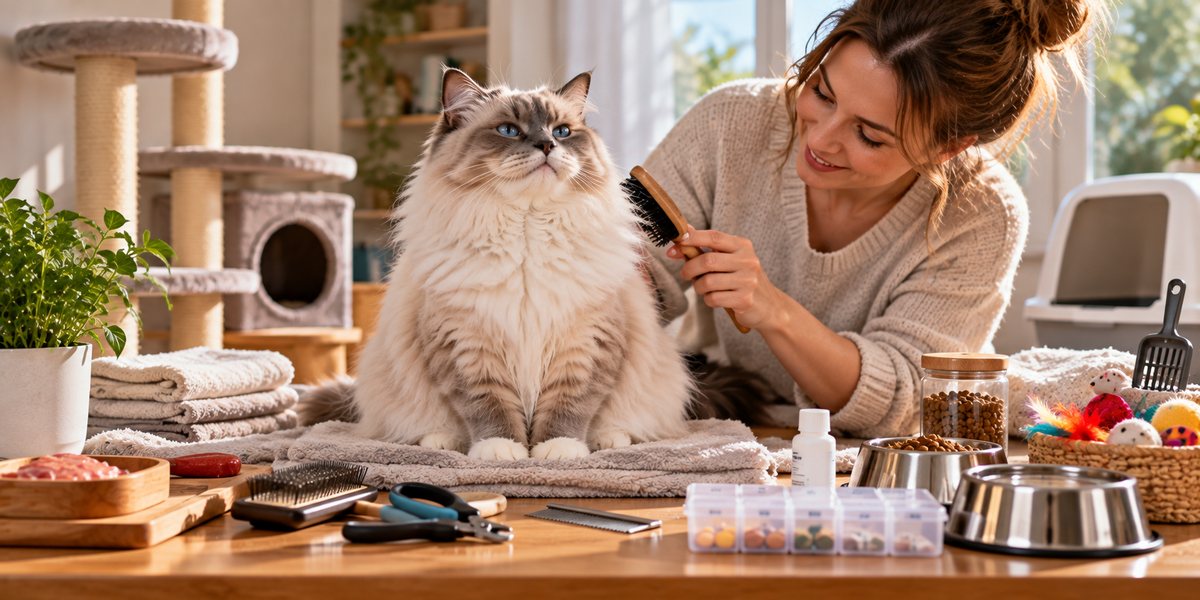
| Distinctive routine care | Usually modest grooming for the coat length The weather-resistant semi-long coat is surprisingly manageable, although seasonal shedding warrants extra grooming. |
| Allergy & allergen evidence | No breed specific reduction established There is no known reason to regard this breed as hypoallergenic. All cats produce allergens, and coat length or shedding alone does not determine allergy risk. |
| Activity & intelligence | |
| Activity level | High |
| Playfulness | High |
| Climbing & jumping | Very high |
| Enrichment demand | High High enrichment demand: substantial vertical territory, climbing, hunting games and daily play suit this powerful, active forest cat. |
| Learning & training | High Norwegian Forest Cats are intelligent and resourceful, with strong problem-solving ability. |
| Curiosity & exploration | High They are alert, resourceful explorers with a strong preference for climbing and elevated viewpoints. |
| Hunting & chasing tendencies | High Strong hunting behavior is likely in this athletic natural breed; climbing, stalking and chasing fit both its morphology and historical outdoor adaptation. |
| Personality & social | |
| Sociability with familiar people | High Norwegian Forest Cats are affectionate family companions but retain enough independence to be less socially demanding than many highly people-focused breeds. |
| Affection | Proximity · interactive playful · selective reserved Affection is friendly and involved without constant physical dependence. |
| Lap & cuddling preference | Low The breed often prefers nearby companionship to prolonged lap holding. |
| Handling tolerance | Moderate Usually calm and friendly for grooming and examination, but Norwegian Forest Cats often prefer freedom of movement to prolonged carrying; their large body should be supported securely. |
| Independence & social demand | Low Norwegian Forest Cats are affectionate family companions but comparatively independent and generally capable of occupying themselves. |
| Vocalization | Low Not excessively vocal; tends toward softer chirps and meows. |
| Response to unfamiliar people | Moderate Friendly but not necessarily immediately demonstrative with everyone. |
| Adaptability to change | High Robust, easygoing temperament supports broad household adaptation. |
| Noise & busy-environment sensitivity | Low to moderate Independent, confident and adaptable, the Norwegian Forest Cat usually copes well with normal household bustle and can retreat vertically when it wants distance. |
| Defensive & conflict behaviour | Low Norwegian Forest Cats are generally steady, self-possessed and socially tolerant. They tend to withdraw or reposition rather than escalate ordinary friction, though a large adult can enforce boundaries decisively when crowded or repeatedly provoked. |
| Household & environment | |
| Living with children | Favorable tendency Friendly, robust temperament generally suits respectful children. |
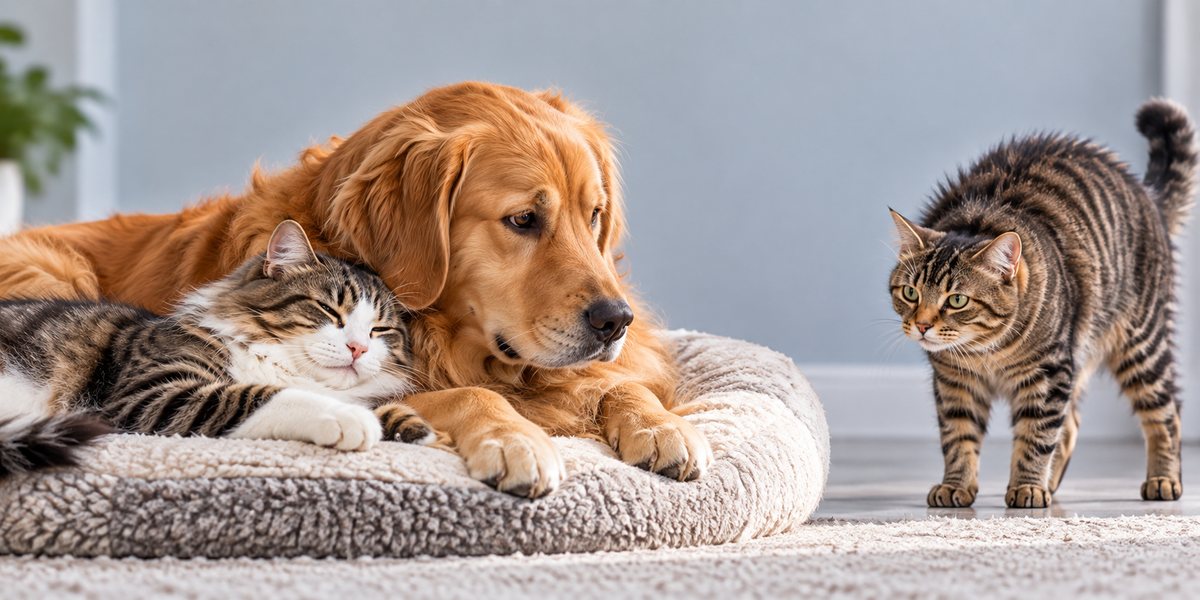
| Living with other cats | Often workable Norwegian Forest Cats are generally mild-mannered and socially adaptable, making them good candidates for multi-cat homes when introductions are gradual and each cat has enough space and resources. |
| Living with dogs | Moderate Easygoing independence can support compatible dogs after introduction. |
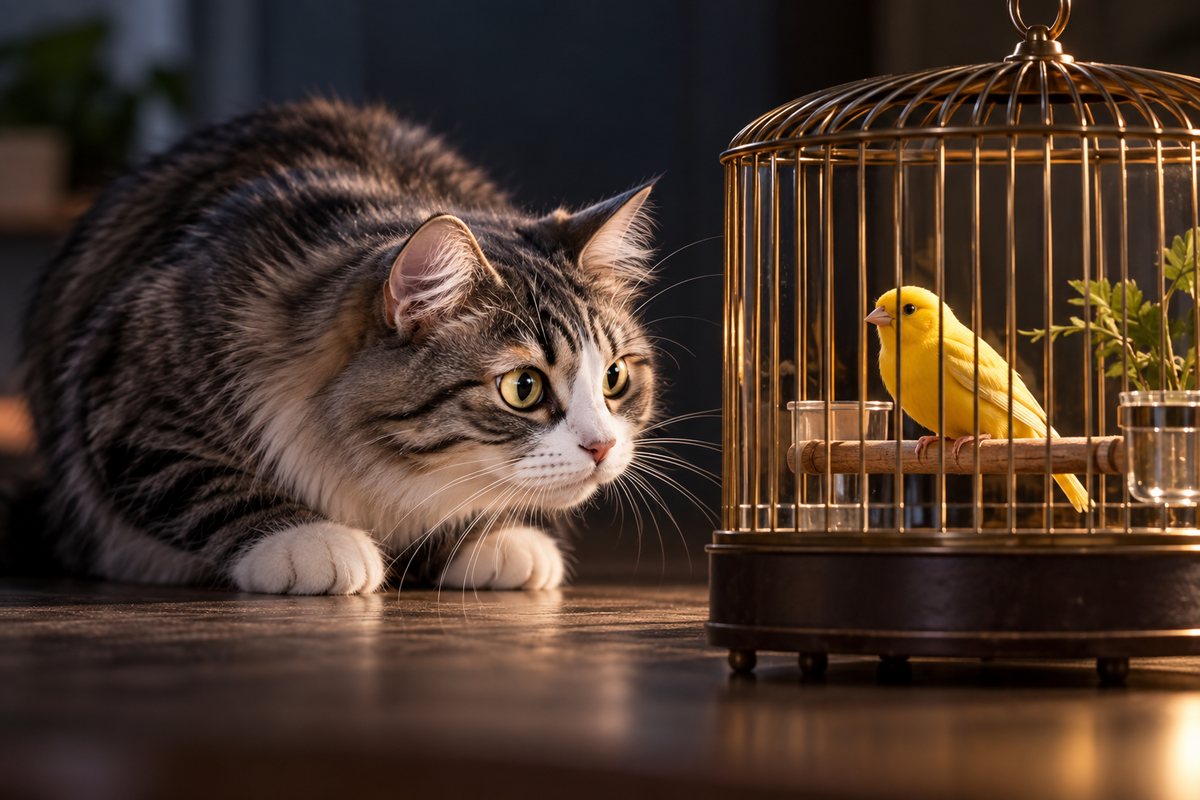
| Living around small pets | Additional caution Norwegian Forest Cats are large, athletic natural-breed cats with strong climbing and hunting ability. Their calm social demeanor does not make small animals safe; secure separation from birds and rodents is appropriate. |
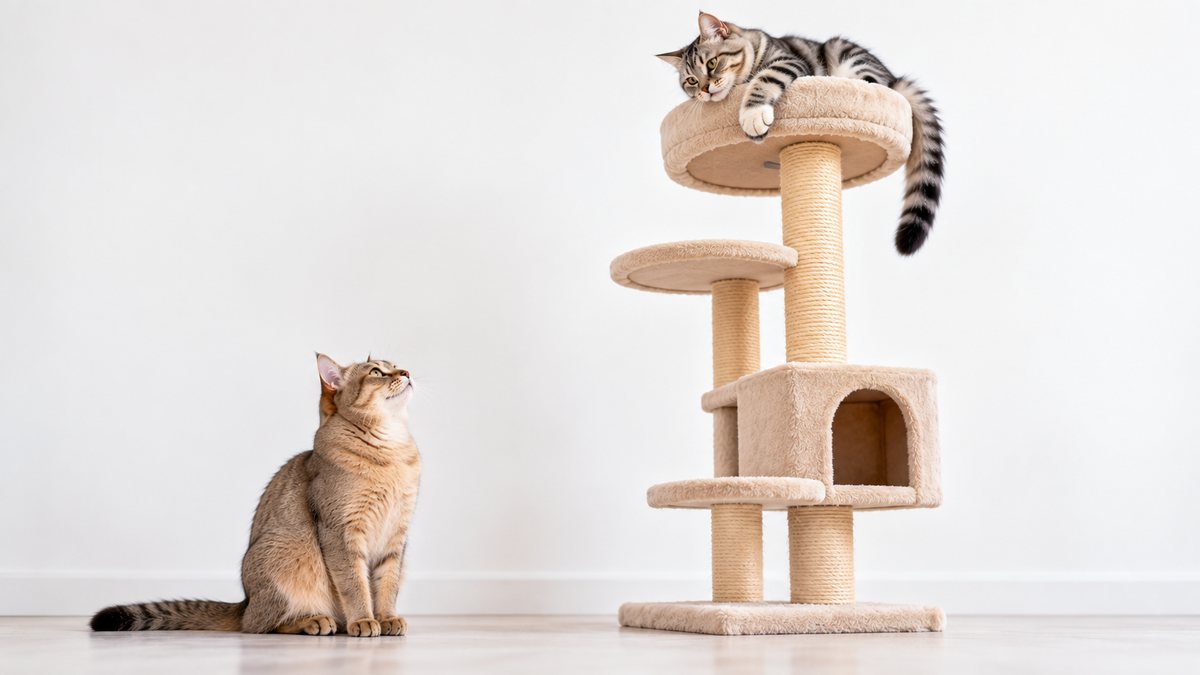
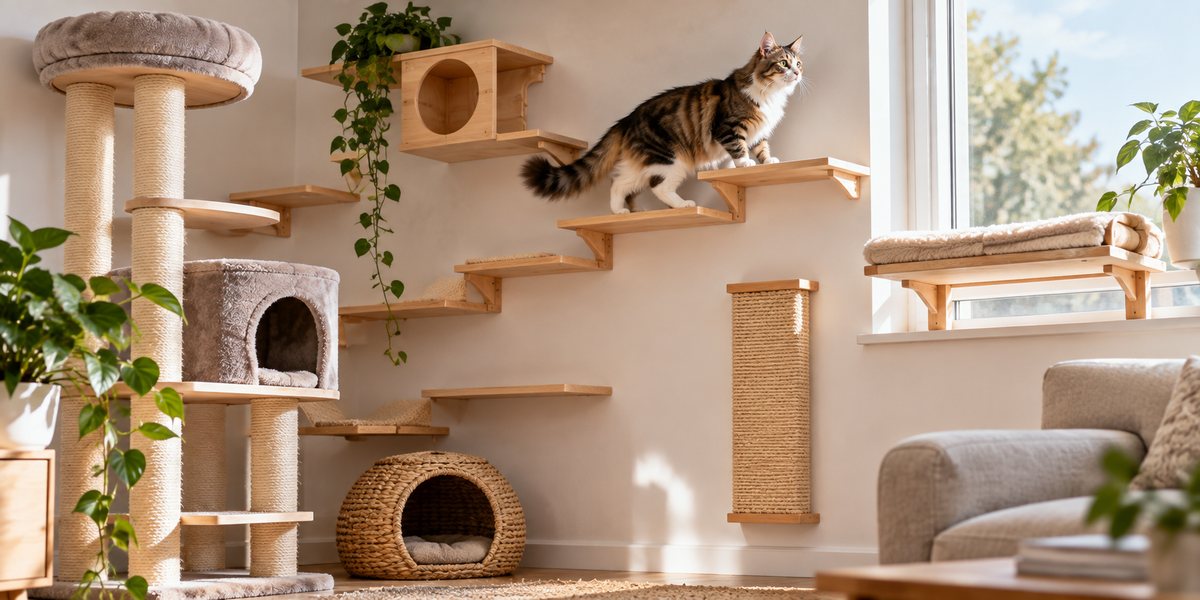
| Indoor & home environment needs | Robust vertical space · room to climb Norwegian Forest Cats are large, powerful climbers and need sturdy vertical territory sized for their body. Tall cat trees or shelves, large scratching surfaces, active play and cool comfortable resting areas suit their natural athleticism and heavy coat. |
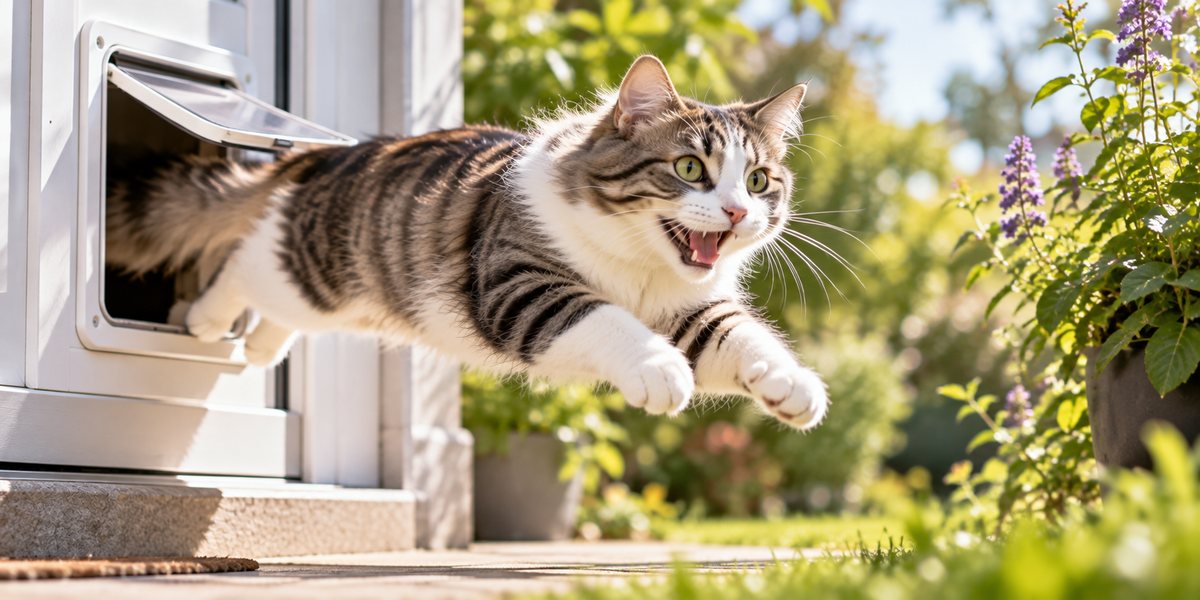
| Outdoor access considerations | Secure outdoor access possible · hunting management Natural outdoor adaptation exists, but hunting and general outdoor risks still require management. |
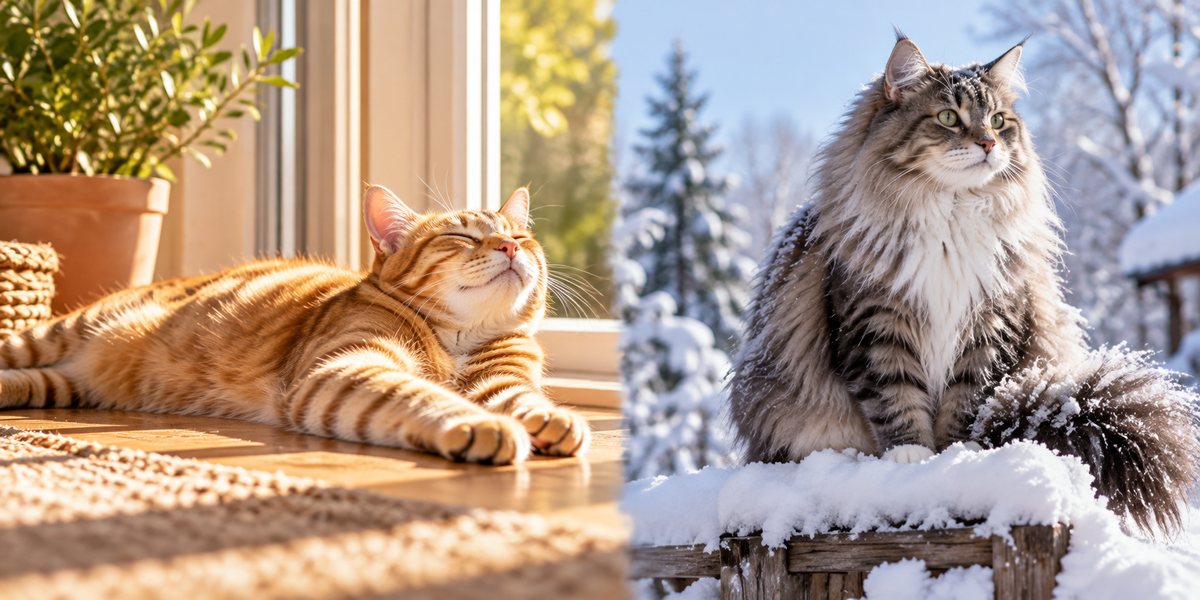
| Heat, cold & sun considerations | Cold adapted Dense weather-resistant coat is a clear adaptation to cold climates. |
| Caregiver time & experience | Moderate Coat care plus climbing/enrichment needs require regular but not specialist involvement. |
| Health & welfare | |
| Documented health predispositions | Moderate known risks Norwegian Forest Cats have recognized risks including hypertrophic cardiomyopathy, glycogen storage disease type IV and pyruvate kinase deficiency. Hip dysplasia is also reported, making cardiac, genetic and orthopedic history useful in breeding decisions. |
| Screening & breeder questions | Ask for GSD IV DNA status Ask for hypertrophic cardiomyopathy screening records and DNA results for glycogen storage disease type IV and pyruvate kinase deficiency. Also ask about hip dysplasia in parents and close relatives. |
| Conformation-related welfare | Moderate large size concern Norwegian Forest Cats are large, powerful climbers whose size should remain athletic and functional. Welfare selection should emphasize sound hips and joints, healthy body condition and climbing ability rather than pursuing maximum mass. |
| Nutrition & weight management | Large growth weight control Norwegian Forest Cats are large, athletic cats that mature gradually. Support steady growth rather than maximum growth, and keep adults lean to protect hips and climbing ability; dense coat makes hands-on condition checks essential. |
| Longevity | 12–16 years Norwegian Forest Cats commonly live around 12–16 years; cardiac disease and the rare inherited GSD IV disorder are important health variables within the breed. |
| Cost & availability | |
| Purchase cost | Moderate to high: $600–$1,800 Norwegian Forest: a practical breeder-market estimate is $600–$1,800. This reflects that it is an well-established breed with good availability in northern Europe. |
| Adoption & rehoming cost | Occasionally available: $75–$400 typical rescue/adoption fee Norwegian Forest: $75–$400 typical rescue/adoption fee. The breed is sufficiently numerous that genuine examples sometimes enter ordinary rescue or breed-rescue channels. |
| Recurring ownership costs | Coat maintenance · large robust climbing equipment Large size means above-average food, litter, carrier and cat-tree costs, and the seasonal coat needs good grooming tools. Cardiac and joint health considerations make insurance or a substantial veterinary reserve prudent. |
| Availability, waits & import | Widely available Norwegian Forest Cats have a large established breeder population across Scandinavia, continental Europe and many other regions. Availability is generally good in Europe and reasonable internationally, though responsible programs may still have waiting lists. |
| Identity & real-world context | |
| Ownership & import restrictions | No known breed specific restrictions There are no known breed-specific ownership restrictions. Ordinary animal-welfare, identification, vaccination and cross-border import rules still apply where relevant. |
| Registry recognition | CFA: recognized breed/division · TICA: Championship-recognized / current breed identity · FIFe: fully recognized breed / mapped breed identity Currently recognized in all three registries tracked by the FSC core matrix: CFA, TICA and FIFe. |
| Similar breeds & identity distinctions | Maine Coon Siberian Norwegian Forest Cats are distinguished from Maine Coons by a more triangular head and straighter profile and from Siberians by a less rounded, barrel-like body. All three have weather-resistant semi-long coats, so head and body structure matter more than fluffiness. |
| Reported characteristic quirks | Exceptional climber; often seeks cabinet-top height Powerful hind legs make high places especially attractive, and cabinet tops are ordinary destinations. |
Browse all 53 breed characteristics
Open any characteristic to compare all breeds on that dimension.






 English