Living with a RagaMuffin is less about owning a guaranteed “teddy bear” and more about understanding the difference between a breed tendency and an individual promise. This is a large, affectionate-looking, long-haired cat that may become a close companion, but its preferred way of showing affection can range from prolonged lap time to quietly following you from room to room. The right home is one that values sociability without demanding constant handling.
Quick Facts
| Quick fact | RagaMuffin |
|---|---|
| Size | Large and substantial; mature males may approach 20 lb and females about 15 lb |
| Coat | Long or semi-long, soft, plush and silky, with a ruff and full tail |
| Grooming | Usually regular combing, commonly once or twice weekly |
| Activity | Generally calm to moderately active, but still needs play and environmental enrichment |
| Longevity | Approximately 12–16 years as a planning estimate, not a guaranteed life expectancy |
| Best suited to | A caregiver who wants a substantial companion and can manage grooming, handling and sturdy equipment |
What the RagaMuffin is—and how it is recognized
The RagaMuffin is a distinct breed with close historical roots in the early Ragdoll movement. The name “Liebling” appears in the breed’s early history as a proposed name or cattery association; it does not describe a separate current breed. That history explains why RagaMuffins and Ragdolls are sometimes discussed together, but findings about Ragdoll health or behavior should not automatically be treated as findings about RagaMuffins.
Recognition is not uniform around the world. The Cat Fanciers’ Association grants the RagaMuffin championship status, while The International Cat Association lists it for registration rather than championship competition. Fédération Internationale Féline lists it as non-recognized, and the Governing Council of the Cat Fancy maintains its own breed listing and registration framework. These differences matter when a breeder discusses pedigree, registration, permitted colors or show status.
A pedigree, registered parent information and consistent health records are stronger evidence of breed identity than a large body, a plush coat or a gentle manner. Those features can occur in other cats, including mixed-breed cats. If registration matters to you, ask which organization issued the papers, what the parents’ registration status is and whether the kitten’s documentation transfers to you.
History and relationships with related cats
The RagaMuffin emerged from the same broad historical setting as the early Ragdoll, which is why the breeds share a reputation for softness of temperament and a substantial, semi-longhaired appearance. Similar ancestry does not make them interchangeable, however. Breed standards and accepted colors differ, and health information should be checked specifically for RagaMuffins rather than borrowed from the better-known related breed.
That distinction is useful for prospective caregivers because appearance can encourage assumptions. A cat that resembles a Ragdoll may not have Ragdoll registration, Ragdoll color restrictions or the same documented breeding history. Conversely, an unusual RagaMuffin color does not make it less of a RagaMuffin if its pedigree and registration support its identity.
Appearance: a large cat that keeps maturing
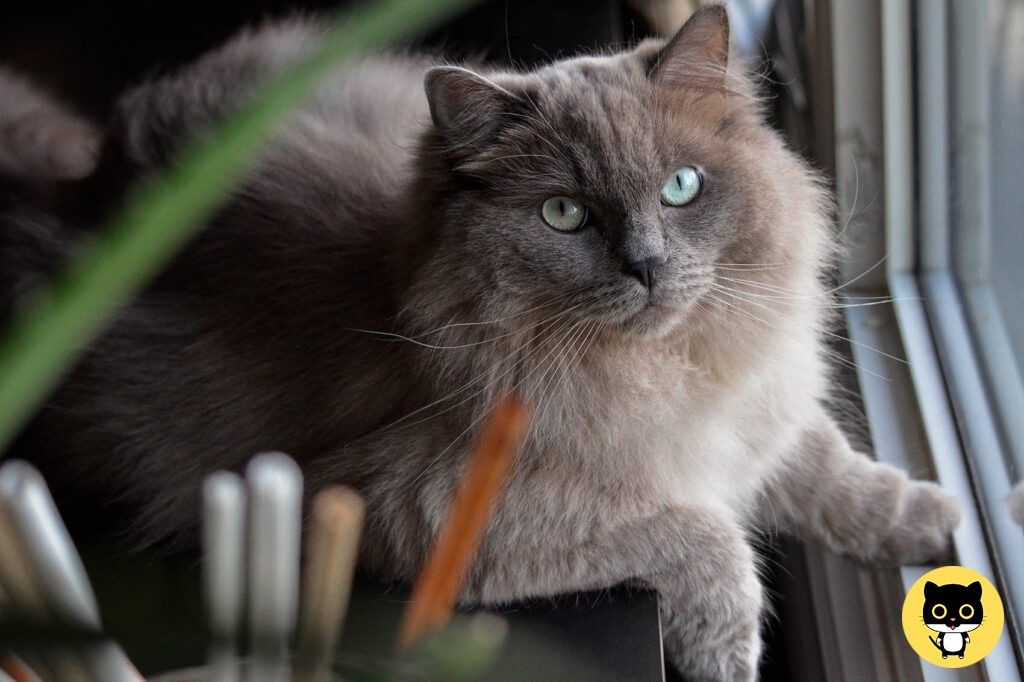
Size is one of the breed’s most practical characteristics. The RagaMuffin has a muscular, substantial body with a rectangular outline, broad chest and hindquarters, a rounded modified-wedge head, full cheeks and a rounded muzzle. Medium-sized rounded ears and a full, plumed tail complete the soft, balanced appearance.
Mature males may reach about 20 lb and females about 15 lb according to descriptive breed material. These figures are upper descriptions, not target weights. A healthy RagaMuffin should be assessed by body condition, muscle and veterinary guidance rather than by trying to make it as heavy as possible.
Growth can also be gradual. Some RagaMuffins may take approximately four years to reach full physical maturity. That extended development makes life-stage feeding and regular body-condition checks more important than simply providing extra food for a kitten that is expected to become large. A veterinarian can help distinguish healthy growth from excess weight.
Coat, colors and eye variants
The coat is long or semi-long depending on the description being used, and is typically soft, plush and silky. A full neck ruff and a generously furnished tail give the breed much of its distinctive outline. The texture is often described as relatively resistant to tangling, but that does not mean every RagaMuffin has an effortless coat.
RagaMuffins may occur in solid, tabby, tortoiseshell, calico, bicolor, smoke and shaded patterns, along with pointed-related categories whose acceptance depends on the applicable standard. Eye color is also tied to coat category in some standards. For example, the CFA standard specifies aqua eyes for mink cats and yellow or gold through green eyes for sepia cats, while other coat categories permit different eye colors. When appearance or showing matters, check the current standard used by the breeder and registry rather than relying on a general breed description. The published breed standard gives one detailed example of these distinctions.
A silky coat can still leave hair around the home. The RagaMuffin should not be described as non-shedding, low-shedding or allergy-safe. Removing loose hair with a comb may reduce what is deposited on furniture, but it does not remove the allergens that cause reactions in sensitive people.
Temperament: affectionate does not always mean cuddly
RagaMuffins are generally presented as calm, affectionate and people-oriented. Many will want to share household life closely: they may greet people, settle nearby or follow a caregiver between rooms. That social interest can make the breed a rewarding companion without necessarily producing a cat that enjoys being carried or held for long periods.
The most useful distinction is between proximity and restraint. A RagaMuffin may seek your company while preferring to keep its paws on the floor. Another may actively choose laps, belly rubs or being carried. Neither pattern invalidates the breed description. Genetics, early socialization, previous handling and the individual cat’s temperament all contribute to how affection is expressed.
Activity is usually better described as low to moderate than as intensely athletic. A relaxed temperament does not remove the need for play. Provide interactive toys, scratching surfaces, hiding places and stable resting or climbing equipment. Because an adult can be heavy, cat trees, shelves, beds and carriers should be sized and secured for a substantial animal rather than bought only for a small kitten.
Children, visitors and other animals
A RagaMuffin can be a good prospect for a household that wants a companionable cat, but no breed description can guarantee tolerance of children, dogs, other cats or unfamiliar visitors. Children should be taught to let the cat approach, avoid chasing or restraining it and recognize signs that it wants a break. The cat should always have an escape route and a quiet area where nobody follows.
Introductions work best when they are gradual and when each animal has access to separate food, water, litter and resting resources. A calm cat may still become frightened by a boisterous dog or an unpredictable child. Similarly, apparent gentleness toward people does not establish safe behavior around prey animals. Birds, rodents, reptiles and other vulnerable pets require secure separation regardless of how mild the RagaMuffin appears.
If you are choosing an adult cat, observe how it responds to touch, lifting, brushing, unfamiliar rooms and new people. If you are choosing a kitten, ask how it has been handled and exposed to ordinary household experiences. Meeting the individual cannot predict every future behavior, but it gives you more useful information than a promise that the breed is always cuddly.
Grooming and everyday care
Regular combing is part of responsible RagaMuffin care. A long-toothed comb once or twice a week is a practical starting point, and some cats need more frequent attention. Work through the ruff, armpits, belly, britches, hindquarters and tail, checking all the way down to the skin. These areas can hide knots even when the surface coat looks smooth.
The right schedule follows the individual coat. A relatively tangle-resistant texture may make grooming easier than expected, while a dense coat, seasonal shedding or a cat that dislikes brushing can make the task more demanding. Visible hair around the home is also normal. Combing can collect loose hair before it falls, but it cannot make the cat allergen-free.
Most RagaMuffins do not need routine bathing. Bathing or professional grooming may be appropriate after severe soiling, with certain skin problems or when serious matting has developed. A calm reputation should not be used to justify forced handling. Cooperative grooming, short sessions, rewards and gradual carrier and handling training are safer ways to preserve trust.
Neglected long fur can become painful, trap debris and make veterinary handling more difficult. Start grooming habits early, but do not assume a kitten that accepts a few strokes will automatically tolerate a full adult grooming session. Build duration gradually and seek veterinary or professional grooming advice when mats are close to the skin.
Health, testing and long-term planning
There is no established RagaMuffin-specific prevalence estimate for inherited disease in the supplied breed material. Hypertrophic cardiomyopathy, or HCM, and polycystic kidney disease, or PKD, are nevertheless important subjects to raise with a breeder because breed materials and breeding policies address them.
Ask for traceable parent testing, family health history and clinically appropriate cardiac information. A test result or screening program is useful evidence, not a guarantee that a kitten will never develop heart, kidney or another medical problem. HCM can involve changes that require veterinary assessment, and a genetic or screening result does not replace ongoing care. Discuss records with your veterinarian rather than treating a breeder’s brief assurance as a complete health evaluation. Background information on feline HCM can help buyers understand why cardiac questions matter.
The reported longevity estimate for RagaMuffins is approximately 12–16 years. This is useful for planning food, insurance, veterinary care and household arrangements, but it is not a measured population life expectancy or a promise for any individual cat. Maintaining a healthy body condition, arranging preventive veterinary care and responding promptly to changes in appetite, movement, grooming or behavior are more useful than focusing on a single number.
Availability and price
Availability is limited and varies by region. A prospective buyer may encounter a waitlist, need to travel or arrange transport, and find that adult cats and kittens are offered at very different times. These practical delays are reasons to investigate a breeder before a kitten becomes available rather than making a rushed decision based on photographs alone.
Published United States breeder examples checked on or before October 2, 2026 included asking prices of approximately US$1,000–$4,000 before stated tax from one breeder, with a US$300 non-refundable deposit, while another listed kitten adoption fees beginning at US$3,000. These are dated published asking or adoption prices, not completed-sale data or a market average. Buyers should confirm what registration, vaccinations, contracts, transport and health guarantees are included. Examples can be reviewed through Mirror Mirror’s adoption information and Ragamuffins’ available-kittens page.
Rescue pricing is usually lower but less predictable. United States examples included adult-cat fees of approximately US$80–$100, kitten fees of US$100–$120 and a named six-year-old female RagaMuffin listed at US$250. These fees may cover different veterinary services, transport arrangements or rehabilitation costs, and rescue availability is episodic. A rescue cat’s identity and history may also be less fully documented than those of a pedigreed kitten.
Is a RagaMuffin right for you?
The best fit is a caregiver seeking a large indoor companion who can provide regular combing, sturdy furnishings, enrichment, veterinary care and patient handling training. This home can appreciate affection whether it arrives as lap time, a greeting at the door, a cat beside the sofa or a companion shadowing its people around the house.
The poorer fit is someone choosing the breed because it promises a guaranteed lap cat, a hypoallergenic coat or a maintenance-free longhair. A large cat that dislikes restraint can be challenging to groom, medicate or transport safely, so handling tolerance should be treated as a central suitability question rather than a minor personality detail.
Before committing, make three checks. Meet the individual and watch its response to touch, grooming and unfamiliar people. Verify pedigree and understand which registry’s rules and documents apply. Finally, request traceable health records and family information, interpreting testing as risk management rather than a guarantee. These steps turn an appealing breed image into a realistic decision about the cat who will actually share your home.
What owners and caregivers say
Owners and caregivers describe a wide range of affectionate relationships. One caregiver remembered a senior RagaMuffin as an exceptionally devoted lap cat who wanted near-constant attention and cuddling. Other cats showed attachment differently, following people from room to room, greeting them at the door or remaining close while accepting only brief holding.
Handling preferences can differ sharply even among cats described as coming from good breeding backgrounds. One caregiver found that a cat enjoyed being carried and having its belly rubbed, while another described a cat that ran when approached and tolerated being held for only about ten seconds. Food rewards worked better for that cat than forced contact. A ten-month-old RagaMuffin described by another owner was still not especially cuddly, a useful reminder that kitten age and individual development matter.
Grooming stories show a similar contrast. Some cats accept brushing readily, while others resist bathing, unfamiliar rooms or professional grooming. One owner described obsessive self-grooming and a need for weekly or even daily coat attention despite a coat that did not mat easily. Other caregivers saw neglected fur develop deep knots or collect fecal debris.
Together, these experiences do not cancel the breed’s generally gentle reputation; they give it a practical boundary. A RagaMuffin may be an affectionate companion, but affection does not specify a preferred kind of contact, and a manageable coat does not eliminate grooming. The caregiver who succeeds is the one prepared to notice the individual cat’s signals, build cooperation gradually and enjoy companionship that may be expressed through closeness rather than constant cuddling.
 English