
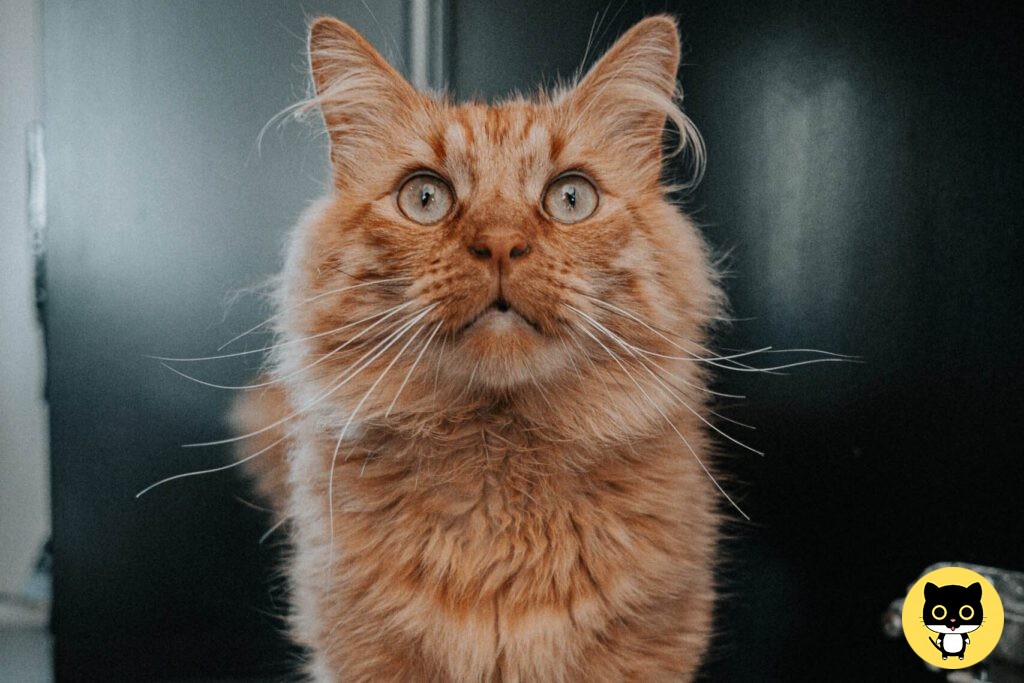
The Somali is an alert, athletic cat with a soft semi-long coat, a full brush-like tail and a strong interest in what happens around it. It often suits a home that enjoys an involved companion—one that may climb, investigate, play and supervise household activity—rather than a cat chosen mainly for quiet independence or guaranteed lap cuddling.
Quick Facts
| Relationship | Closely related to the Abyssinian; generally regarded as its semi-longhaired counterpart |
|---|---|
| Build | Lithe, athletic and muscular, with long legs and a full tail |
| Coat | Soft, fine, dense and semi-long, with a ruff, breeches and a brush-like tail |
| Typical activity | Alert, curious, playful and physically capable |
| Grooming baseline | Weekly combing, adjusted for the individual coat and shedding |
| Published lifespan estimates | Approximately 10–19+ years, 12–14 years or 11–16 years depending on the reference; these are estimates, not survival statistics |
What the Somali is
The Somali is a recognized pedigree breed closely related to the Abyssinian and generally treated as its semi-longhaired counterpart. That relationship explains the shared ticked, agouti coat pattern, but appearance alone does not establish breed identity. A domestic cat can have a similar pattern or coat length, so pedigree or registry documentation is important when confirming that a cat is a Somali.
Formal recognition developed in the late twentieth century. The Cat Fanciers’ Association records Somali registration from 1976 and championship status from 1979. The breed is recognized by CFA, TICA and FIFe, while the GCCF recognizes both Somali and Somali Shorthairs. These systems do not use entirely interchangeable terminology: accepted colors, eye colors and the treatment of shorthaired variants can differ between registries. A prospective buyer should therefore ask which registry’s standard and registration rules apply. The CFA breed information, TICA breed page and GCCF description are useful starting points.
Appearance and coat
The Somali has a graceful but substantial outline. Its body is athletic and muscular rather than cobby, with long legs, large ears and a slightly rounded wedge-shaped head. Almond-shaped eyes, a full tail and an overall impression of alert balance complete the look. Descriptions of size vary slightly: CFA describes the breed as medium to large, while TICA uses medium. Those terms reflect differences in standards rather than two fundamentally different types of cat.
The coat is what most clearly distinguishes the Somali from its shorthaired relative. It is semi-long, soft, fine and dense, with extra length around the neck, on the hind legs and across the tail. The tail should look full and brush-like rather than thin. Ticking gives each hair alternating bands of color, producing an agouti appearance rather than the continuous stripes of an ordinary tabby. Coat color and ticking may continue to develop as a young cat matures, sometimes into young adulthood, so a kitten’s final presentation may not be fully settled.
Color names depend on the registry. CFA lists ruddy, cinnamon, blue and fawn, and permits gold or green eyes. TICA includes chocolate and lilac as well as silver versions and lists amber among the possible eye colors. GCCF uses terminology that includes usual, sorrel, red, cream and tortie categories. These names should not be transferred casually from one registry to another; when registration matters, compare the cat’s papers with the relevant standard rather than relying on a color label used by a seller.
Living with a Somali
Daily life with a Somali is usually shaped more by curiosity and movement than by coat maintenance. This is a cat likely to notice a new object, inspect a high shelf or turn an ordinary household routine into an opportunity for participation. Sturdy climbing furniture, window perches, secure observation points and places to retreat give that interest somewhere appropriate to go.
Interactive play is particularly valuable. Chase toys, feather toys, puzzle feeders, foraging activities and toys rotated rather than left unchanged can help keep an active cat engaged. A Somali does not necessarily require a large house: a small home can work well when it has usable vertical space and regular interaction. The practical inference is that behavioral richness may matter more than floor area alone. A larger but unstimulating home will not automatically meet the needs of an inquisitive, athletic cat.
Household boundaries may need to be managed rather than simply announced. Some caregivers describe Somalis investigating counters, shelves and other places people would prefer them to avoid. Redirecting the cat toward a permitted perch or activity is usually more useful than expecting the breed’s intelligence to make it naturally compliant. Secure windows, balconies and outdoor enclosures are important because an interested climber and explorer can find hazards quickly. Supervised access or a secure enclosure is safer than unrestricted roaming.
There is no dependable breed-wide rule for how long a Somali can be left alone. Some cats spend periods sleeping or playing independently, while others become bored or persistently seek attention. The better planning question is whether the individual cat receives enough play, social contact, environmental choice and predictable routine for its temperament. A person away from home for long periods should arrange enrichment and interaction rather than assume that a second cat will solve the problem.
Temperament and relationships
Somalis are commonly described as alert, lively, curious, playful and socially engaged. “Social” does not necessarily mean “lap cat.” A Somali may follow a person, greet them, vocalize, play nearby or supervise chores while preferring brief physical contact to prolonged holding. One caregiver’s friendly cat sought proximity and offered morning head bumps without wanting extended cuddling; another described a young Somali as highly affectionate, vocal and eager to interact. Both patterns fit within the useful range of breed experience.
That distinction matters for anyone choosing a cat for physical affection. A Somali may want to be part of family life without accepting restraint or remaining on someone’s lap. Meeting an adult cat is the clearest way to assess its handling preferences. When choosing a kitten, ask the breeder specifically about the kitten’s response to being touched, carried, groomed and approached, rather than accepting “friendly” as a complete temperament description.
Children can be a good match when they learn calm, respectful interaction. They should not chase, corner, carry or force contact, and the cat needs elevated or separate spaces where it can withdraw. This is more realistic than calling every Somali universally child-safe. The same principle applies to dogs: gradual introductions, supervision, a compatible individual dog and reliable escape routes are more important than the breed label alone.
A second cat may enrich some Somali households, especially when play styles and ages are compatible. It is not automatically necessary. Some caregivers describe a Somali enjoying an active feline companion, while others describe a cat content as an only cat when provided with toys and stimulation. Another cat entering personal space can also produce tension. If adding a companion, plan slow introductions, separate resources, multiple resting areas and opportunities for each cat to avoid the other.
Small prey animals require a different standard of caution. Human sociability, or even apparent friendliness toward a dog, does not demonstrate safety with birds, rodents or rabbits. Physical separation and secure enclosures are the responsible baseline.
Grooming and routine care
Weekly combing is a sensible starting point for the Somali coat. Some cats need once-weekly attention, while others benefit from combing twice a week, particularly during heavier shedding or when the ruff and breeches begin to tangle. The coat is often relatively resistant to matting, but “manageable” does not mean hair-free: a Somali can still shed around the home and can develop knots if loose hair is left in place.
Routine bathing is generally unnecessary unless the cat becomes oily or is being prepared for exhibition. Ordinary feline care remains important: nail trimming, dental care, parasite prevention, vaccinations and veterinary examinations should be tailored to the individual and local veterinary advice. There is no established Somali-specific bathing, diet, hydration, climate or outdoor-walking schedule that replaces normal cat care.
The breed should not be marketed as hypoallergenic. Its coat may feel silky and relatively light in the hand, but it still produces shed hair and the proteins responsible for cat allergies. Anyone with allergies should spend time with the particular cat and consider medical advice before committing.
Health questions and responsible buying
Some inherited concerns in Somali and related lines have actionable testing pathways. Pyruvate kinase deficiency can affect red blood cells, and progressive retinal atrophy variants include PRA Rdy and PRA rdAc. Prospective buyers should ask for verifiable test results or documented clear parentage for the relevant conditions. A laboratory result should identify the cat or parent animals clearly; a verbal assurance that a line is “healthy” is not an equivalent record. The UC Davis Veterinary Genetics Laboratory information explains relevant testing considerations.
Renal amyloidosis has been reported in Abyssinian and Somali lines. That makes family-history questions worthwhile, particularly questions about unexplained kidney disease or early renal deaths. It does not justify presenting the condition as inevitable or assigning every Somali a universal risk percentage. Genetic testing also cannot eliminate every inherited or acquired disease, so a good health decision combines documented testing, veterinary examination, transparent family history and sensible ongoing care.
Published longevity figures vary. TICA gives an estimate of 10–19-plus years, GCCF gives 12–14 years and PetMD gives 11–16 years. Taken together, these support planning for a cat that may live into the low or middle teens, with some individuals living shorter or longer lives. They are breed-reference estimates, not a standardized population survival curve or a promise about any particular cat.
Availability and price
Finding a Somali may require patience. CFA notes that breeder numbers are relatively small and that prospective buyers may wait for a kitten. Availability can vary by country and region, as well as by color, sex, breeding status, registry, import rules and whether a breeder has a suitable litter. A difficult local search does not by itself prove that the breed is globally rare, and a short-haired, ticked cat offered without pedigree documentation is not necessarily a Somali.
No dependable region- and date-specific purchase-price range was established. One informal United States online caregiver discussion mentions approximately USD 1,500 in an unclear asking-or-purchase context, but the date, seller terms, pedigree status and whether a sale actually occurred are not clear. It should not be treated as a representative current price. Before comparing prices, ask whether the figure is an asking price or completed sale, what country and date it applies to, whether registration and breeding rights are included, and what health documentation and early veterinary care are provided. Adoption fees are likewise too dependent on local rescue conditions to summarize responsibly as a universal Somali figure.
A careful acquisition conversation should cover registration, parentage, genetic testing, vaccination, parasite treatment, contract terms, return arrangements and the kitten’s social history. The breeder should be willing to discuss renal disease and unexplained kidney problems in the family, not only provide test results for named genetic conditions.
Is a Somali a good fit?
The Somali is a strong fit for a caregiver who wants an observant, interactive companion and is prepared to provide daily play, climbing opportunities, household management and regular coat care. It can live successfully in an apartment when the environment is arranged for movement and choice. It may suit a family with respectful children or a carefully introduced dog, but individual temperament and the quality of introductions matter.
It is a less predictable choice for someone seeking a reliably quiet cat, a guaranteed lap cat, effortless compatibility with another animal or a breed that can be left without planned engagement. The most useful decision rule is not simply “house or apartment,” “single cat or multi-cat,” or “affectionate or independent.” Ask whether the household can support an active mind and accept a relationship based on participation, play and proximity—even if physical cuddling is limited.
What owners and caregivers say
Owners and caregivers describe rewarding relationships with Somalis, but their accounts differ in exactly the ways that matter to a prospective adopter. One owner describes a friendly, inquisitive cat who joins household activity, accepts some petting and gives morning head bumps, yet prefers being near people to being held for a long time. Another caregiver describes a young Somali as very affectionate, vocal and eager to interact. Together, these experiences make “social” a more useful description than “cuddly”: the cat may want involvement without offering the same kind of contact every person expects.
Play is another recurring theme. Some caregivers see the happiest behavior during chase games and feather-toy sessions, sometimes alongside another active cat. Another reports a Somali comfortable as an only cat when toys and stimulation are available. The practical lesson is not that every Somali needs a feline companion, but that every Somali needs an outlet for its energy and curiosity. Matching play style, distributing resources and introducing animals gradually are more reliable than buying a second cat to meet a presumed breed requirement.
Caregivers also describe the management that comes with an inquisitive personality. A cat that investigates counters or ignores household boundaries may require redirection, secure storage and more carefully chosen climbing locations. Some accounts mention boredom, persistent attention-seeking or feistiness when another cat enters personal space. Others describe a cat that spends substantial time sleeping or playing alone. These contrasts are why an adult’s known behavior—or a breeder’s detailed account of a kitten’s handling, vocalization and play—is more informative than a promise that the breed has one fixed temperament.
The best Somali home is therefore not defined by a particular square footage or family structure. It is a home prepared to offer interaction without forcing it, stimulation without chaos, companionship without assuming lap behavior, and health documentation without treating testing as a guarantee. For the right caregiver, that combination can make the Somali an engaging and unusually present companion.
 English