
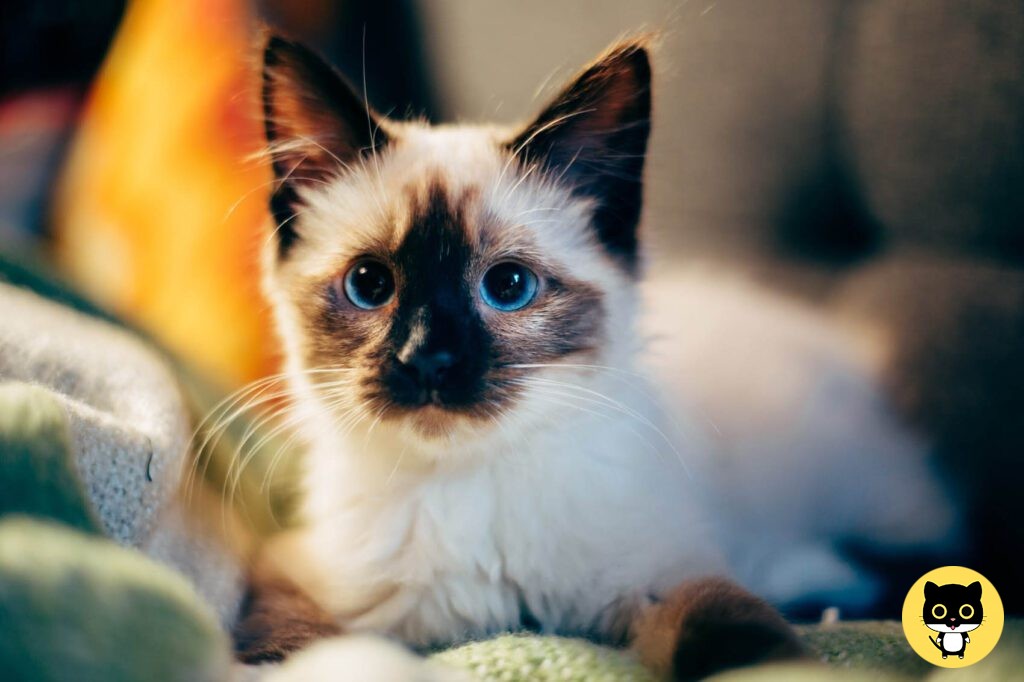
The Toybob is a small, bobtailed cat with a large personality, but its appeal is easiest to understand when “small” is not confused with delicate. A well-structured Toybob is compact, muscular and proportionate, with a solid chest and broad rib cage rather than a frail or dwarf-like frame. The short tail is part of its identity, but a bobtail by itself does not prove that a cat is a Toybob. Pedigree records, parentage and registration are much stronger evidence than size or tail shape alone.
Quick Facts
| Quick fact | Toybob |
|---|---|
| Origin | Developed as a distinct pedigreed breed in Russia |
| Body | Small, compact, muscular and proportionate |
| Tail | Short bobtail with kinked vertebrae; never docked or forcibly straightened |
| Coat | Shorthair and Longhair forms |
| Activity | Playful, agile and interactive without necessarily being frantic |
| Grooming | Usually weekly attention, adjusted to coat length and loose hair |
| Availability | Limited and dependent on a small number of breeders |
Identity, history and recognition
The Toybob is a distinct breed associated with Russian development, not a miniature Russian Blue, British Shorthair, Manx, Japanese Bobtail or Munchkin. Its small body and bobbed tail can invite comparisons with other cats, but those features are not enough to establish identity. A prospective buyer should expect a registered pedigree and a clear account of the parents, rather than relying on an unusual appearance or a seller’s description.
Recognition is still developing and differs between registries. The Cat Fanciers’ Association states that the Toybob reached championship status in 2025. The International Cat Association currently places it in its Advanced New Breed program, while the Fédération Internationale Féline’s current breed list does not include Toybob. These differences do not make the cat itself less real; they affect which pedigrees, shows and registration pathways a buyer may encounter. Anyone purchasing for breeding or exhibition should confirm the requirements of the particular registry in advance.
The breed’s history is therefore closely tied to careful development and record-keeping. That matters in practical terms because the defining combination of small stature and a kinked bobtail can otherwise be imitated by unrelated cats. A registry pedigree cannot guarantee health or temperament, but it provides a more reliable answer to the basic question of what the cat is.
What a Toybob looks like
The Toybob should look small without looking weak. Its body is compact and strong-boned, with a substantial chest and broad rib cage. The head may be rounded or a modified wedge, and the eyes are large and rounded. Ears have rounded tips, while the hind legs are slightly longer than the front legs. These proportions help distinguish a sound, naturally small cat from one selected simply for extreme miniaturization.
The tail is a defining feature rather than a decorative extra. It is short and formed from kinked vertebrae, but it should not be completely absent or surgically docked. The standards also reject disproportionate, Munchkin-like legs. A caregiver should never try to straighten the tail; it is part of the cat’s anatomy, and rough manipulation could cause pain or injury.
Adult size should be judged with age and structure in mind. Full physical maturity is described at approximately one and a half years, so a kitten or young cat may not yet show its settled adult proportions. Precise adult weight should not be promised: figures attached to individual listings, including a one-year-old female listed at 3.5 pounds and an estimate of six pounds or less, are not a validated breed-wide weight range. Function matters more than achieving the smallest possible number. Good movement, healthy body condition and normal development are more useful signs than novelty-sized appearance.
Coat types, colors and everyday grooming
Both Shorthair and Longhair Toybobs are documented. The Shorthair has a dense, plush, medium-short coat with an undercoat. The Longhair is softer and plush, with furnishings, a ruff, britches and a fuller tail. Coat length changes the grooming routine, but neither form should be treated as maintenance-free.
Weekly brushing is recommended for the Shorthair, while a steel comb is useful for the Longhair. The Longhair is described as rarely matting or tangling, but “rarely” is not the same as “never.” Check behind the legs, around the ruff and at the britches, particularly during seasonal coat changes. Shedding is generally described as low to moderate, yet even a light-feeling coat can leave hair on clothing, furniture and floors. Low shedding does not establish that the breed is hypoallergenic or that it will produce less allergen exposure for a particular household.
Color and pattern are not limited to blue, gray or seal point. The cited standards accept all colors, divisions and patterns. Pointed Toybobs may be frequently seen, and pointed cats are expected to have blue eyes under the cited rules; eye-color allowances vary with the coat category. A buyer who has a specific color preference should discuss the actual breeding plans rather than assume that the breed comes in only one familiar appearance.
Temperament and life with a Toybob
Companionship is usually expressed through participation and proximity rather than through a promise of constant cuddling. Toybobs are described as active, agile, playful and interactive, but not excessively active. Many enjoy following a caregiver from room to room, settling nearby, joining a lap or communicating with quiet chirps and trills. Some enjoy blankets or sleeping under covers. A cat can be deeply people-oriented while still deciding when it wants to be touched.
That distinction is important when assessing suitability. Sociability does not guarantee that a Toybob will accept restraint, welcome every visitor or cope comfortably with long periods alone. An adult described by breeder-owner Meg Lambert, for example, was quiet and closely bonded with another cat but shy around visitors, watching unfamiliar people from a hiding place. That is not a contradiction of a companion-oriented temperament. It suggests that attachment to familiar people and confidence with strangers are separate qualities.
Meeting the actual cat is therefore more informative than choosing from a breed description alone. Watch how the kitten or adult responds to ordinary handling, grooming, unfamiliar voices and recovery from a brief surprise. Ask what happens when the cat wants space. A caregiver who values an involved household companion and respects boundaries is more likely to be satisfied than someone seeking a guaranteed lap cat with no reservations.
Home environment and family life
An indoor home can suit a Toybob well when it offers activity as well as safety. Provide interactive play, scratching surfaces, stable climbing or perching options, hiding places and comfortable resting areas. Small size does not remove the need to jump, explore, make choices and use the home confidently. Secure windows and stable cat furniture are especially important for a compact, agile animal.
Supervised outdoor access, such as a secure catio or harness training, is safer than free roaming. A small body may make some hazards less obvious, not less serious. Check gaps, balconies, unstable shelves and access to appliances or open windows from the cat’s perspective.
Respectful families may be a good match, and some Toybobs live comfortably with compatible cats or calm, cat-safe dogs. Introductions should be gradual, with separate food, water, litter and resting resources at first. Every animal should have an escape route and a place where it cannot be pursued. Children must not carry, squeeze, chase or pull the Toybob’s tail, regardless of how tolerant an individual cat appears.
There is no Toybob-specific evidence establishing safe prey-drive behavior around birds, rodents, reptiles or other small pets. The responsible default is physical separation. A cat’s small size or reported gentleness is not a substitute for secure housing and supervision.
Care, handling and health questions
Routine care is relatively straightforward: feed an appropriate complete diet, monitor body condition, maintain dental and claw care, arrange regular veterinary examinations and provide daily interaction. The breed does not require a specialist household simply because it is rare, but it does benefit from caregivers who notice changes in movement, appetite, toileting and behavior.
No Toybob-specific disease predisposition or mandatory screening panel is established in the reviewed information. That is useful context, not a lifetime health guarantee. A careful buyer should request the pedigree and registration records, veterinary examination details, parent health history, documented genetic-test results, vaccination and parasite records, and information about gait, tail structure, constipation and urinary function.
The short tail should not automatically be equated with the spinal, neurologic, bowel or bladder problems associated with some Manx-related conditions. At the same time, a breeder should not promise that every Toybob tail is medically risk-free. Pain, weakness, an abnormal gait, constipation, incontinence or unusual sensitivity around the tail warrants veterinary assessment. The practical question is how the individual cat moves and functions, not whether its tail resembles another breed’s tail.
Handling should be gentle and observant. Some cats may enjoy brushing but dislike contact with the tail or hindquarters. Never test tolerance by repeatedly touching a sensitive area. Instead, ask the breeder to demonstrate the cat’s normal handling routine and observe whether the cat can move away, recover and re-engage without distress.
Longevity, availability and price
A validated Toybob population life-expectancy estimate has not been established. Secondary and breeder-community sources give figures such as 14 to 15 years or beyond 15 years, but these are estimates rather than survival data. A buyer should plan for the financial and emotional commitment of a normal long-term cat relationship without treating a quoted number as a promise.
Availability is limited and breeder-dependent. The small breeder base can mean waiting, referrals to other established catteries or assistance with importing a cat. This scarcity can make an attractive kitten feel difficult to refuse, but rarity is a reason to verify more carefully, not to lower standards.
For a concrete market reference, U.S. breeder asking-price examples checked on October 2, 2026 included approximately $2,500–$3,000 for a pet kitten, $1,750 for a listed silver-tabby male, $4,500 for a one-year-old show-quality female and $3,000 for another kitten. These are asking prices, not completed-sale prices or adoption fees, and they should not be treated as a universal market rate. The price should come with documentation, a written contract, clear health and registration information, and an opportunity to ask questions about the parents.
A sensible purchase review includes more than photographs. Confirm which registry will record the cat, whether the parents are registered, how the breeder documents the bobtail and gait, what veterinary care has been provided, and what support is offered after the kitten leaves. Ask to see the living conditions and, when possible, meet the mother and the actual kitten. A very small body, dramatic tail or fashionable color is not a substitute for sound structure and responsible records.
Is a Toybob right for you?
The Toybob is most likely to suit an attentive caregiver seeking a small, social and playful indoor cat. It can work well for someone who enjoys a cat that follows household activity, communicates softly and may seek a lap or nearby resting place, but who is equally willing to accept shyness, personal boundaries and individual variation.
It is a less suitable choice for someone wanting a guaranteed cuddler, a hypoallergenic pet, a cat that will happily tolerate long isolation, or a novelty purchase that can be judged by appearance alone. The best decision depends on the individual’s behavior, the breeder’s documentation and the household’s ability to provide safe enrichment and respectful handling.
What owners and caregivers say
Owners and caregivers describe rewarding relationships with Toybobs, often emphasizing closeness without portraying the cats as uniformly outgoing. Some follow their person, choose a lap over a toy, sleep under blankets or use chirps and trills to stay involved in household life. These are appealing qualities for someone who wants a companion that participates in daily routines rather than simply occupying the room.
Other experiences add useful boundaries to that picture. Tommy, described by breeder-owner Meg Lambert, enjoyed brushing but disliked touch to his short tail. He was quiet, shy with visitors and inclined to watch strangers from a hiding place, while maintaining a close relationship with another cat. Breeder-community descriptions likewise portray Toybobs as devoted and playful, sometimes comfortable with friendly animals, while noting that unfamiliar people and very young children may require patience and supervision.
Individual quirks, including unusual squeaks or a so-called “Toybob tongue,” belong to particular cats rather than to a promise about the breed. Taken together, these experiences point toward a practical conclusion: the Toybob may be affectionate, entertaining and strongly bonded, but good companionship includes giving the cat control over contact. Meeting the actual cat, observing its recovery from ordinary activity and respecting its retreat spaces will tell a prospective caregiver more than the smallest body or the shortest tail ever could.
 English