
Compare Cat Breeds
Compare up to three breeds across all 53 characteristics. Values are shown directly so the differences are easier to scan.
| Characteristic | 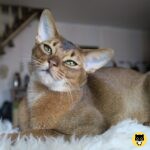 Abyssinian |
|---|---|
| Body & development | |
| Adult size | Medium |
| Adult weight | Females 2.7–4.1 kg (6.0–9.0 lb); Males 3.2–5.4 kg (7.1–11.9 lb) Females are commonly about 2.7–4.1 kg (6.0–9.0 lb) and males about 3.2–5.4 kg (7.1–11.9 lb); the breed is lean and muscular rather than heavy. |
| Build & distinguishing morphology | Foreign · lithe · muscular · medium long Build: foreign; lithe; muscular; medium long. |
| Maturation | 12-18 months Most Abyssinians reach adult height and length by about 12 months, then continue adding muscle and adult body condition through roughly 18 months. |
| Coat & appearance | |
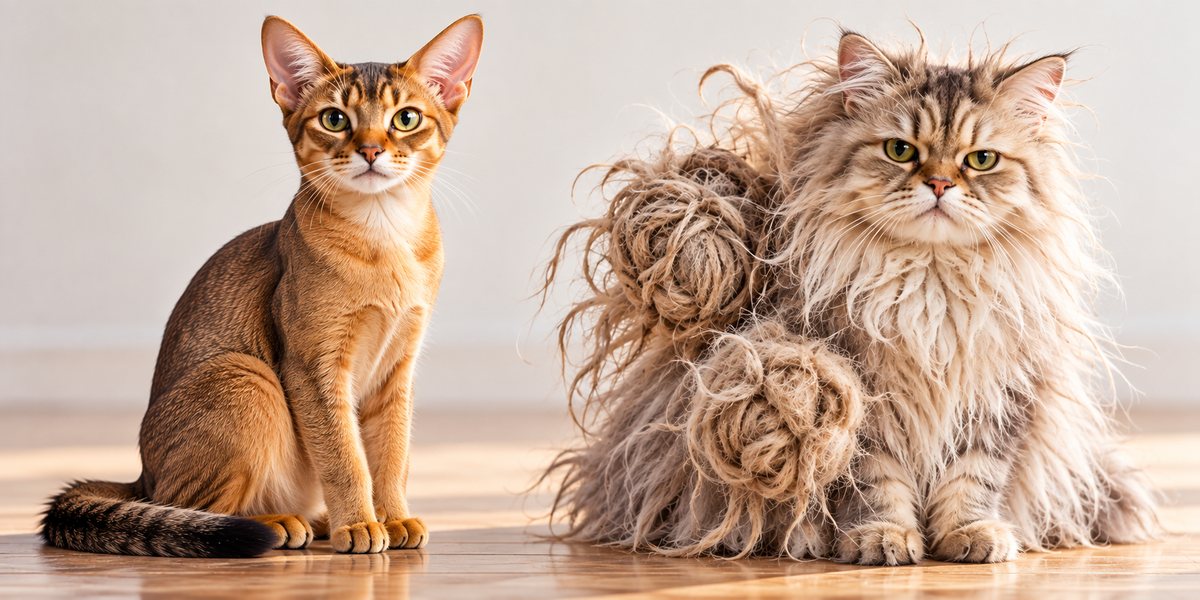
| Coat length | Short Short-haired coat. |
| Coat texture & undercoat | Short · soft resilient · agouti ticked Coat: short; soft resilient; agouti ticked. |
| Colors & patterns | Ruddy · cinnamon · chocolate · blue · fawn · lilac · silver variants Colors/patterns: ruddy; cinnamon; chocolate; blue; fawn; lilac; silver variants. |
| Eye colors | Gold · amber · green Gold, amber or green, typically clear and expressive. |
| Coat & routine care | |
| Shedding | Low Low shedding; the close, fine coat has little loose hair compared with dense double-coated breeds. |
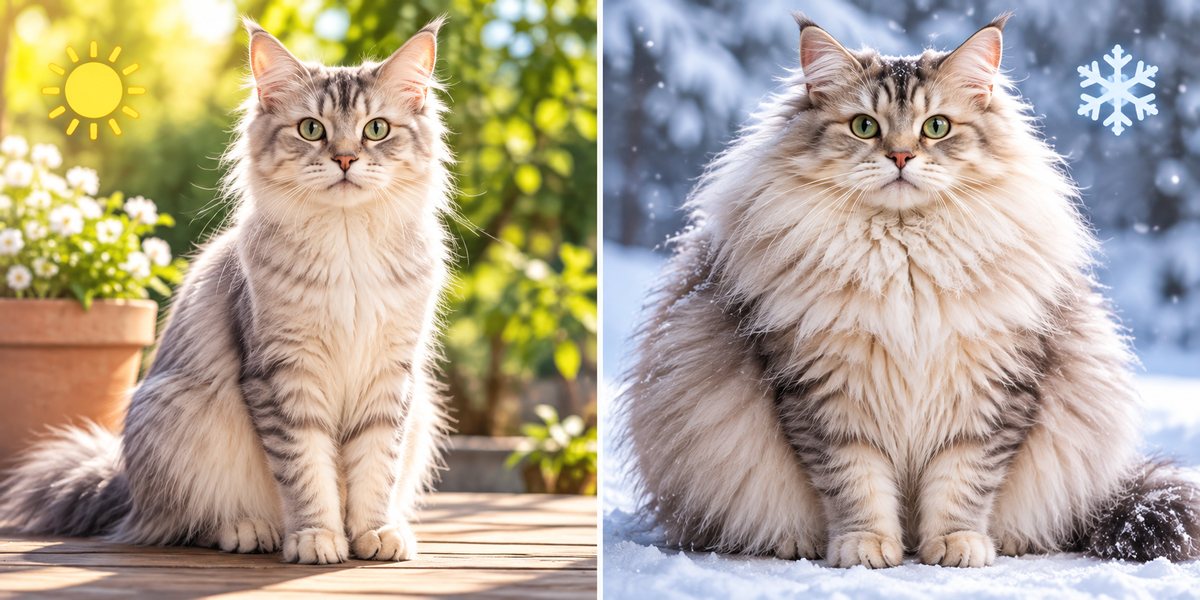
| Seasonal coat changes | Modest seasonal change The short, close Abyssinian coat changes only modestly with the seasons; a small rise in loose hair is more likely than a dramatic coat blow. |
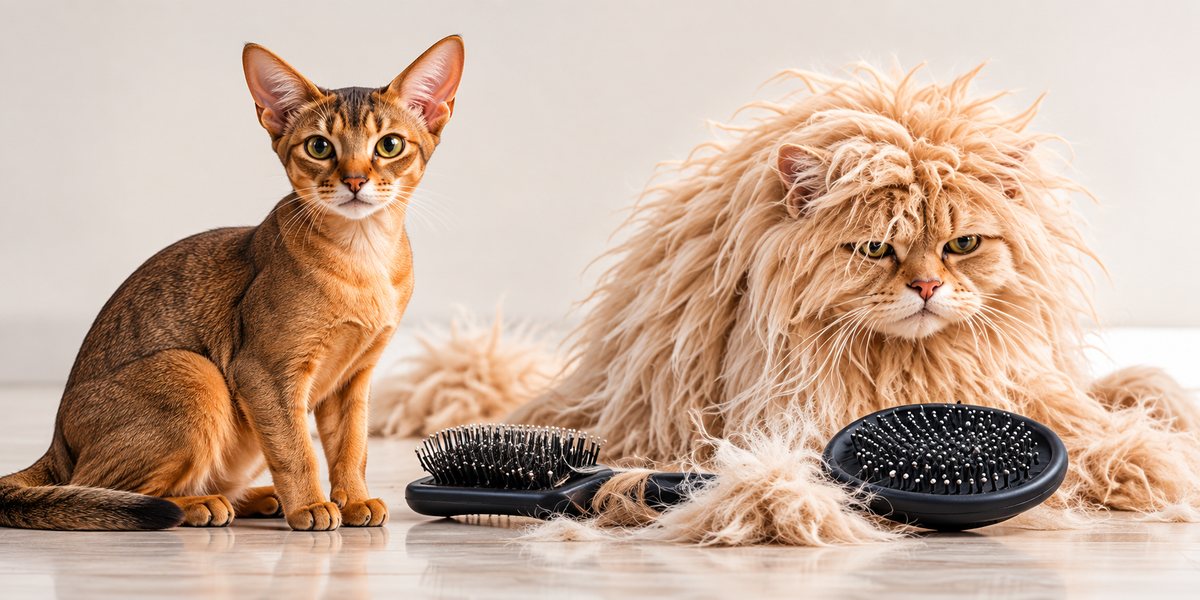
| Brushing & combing | Occasional Brushing/combing: occasional. |
| Tangle & matting tendency | Very low The short, close ticked coat rarely tangles; an occasional light brushing is normally enough to keep loose hair from collecting. |
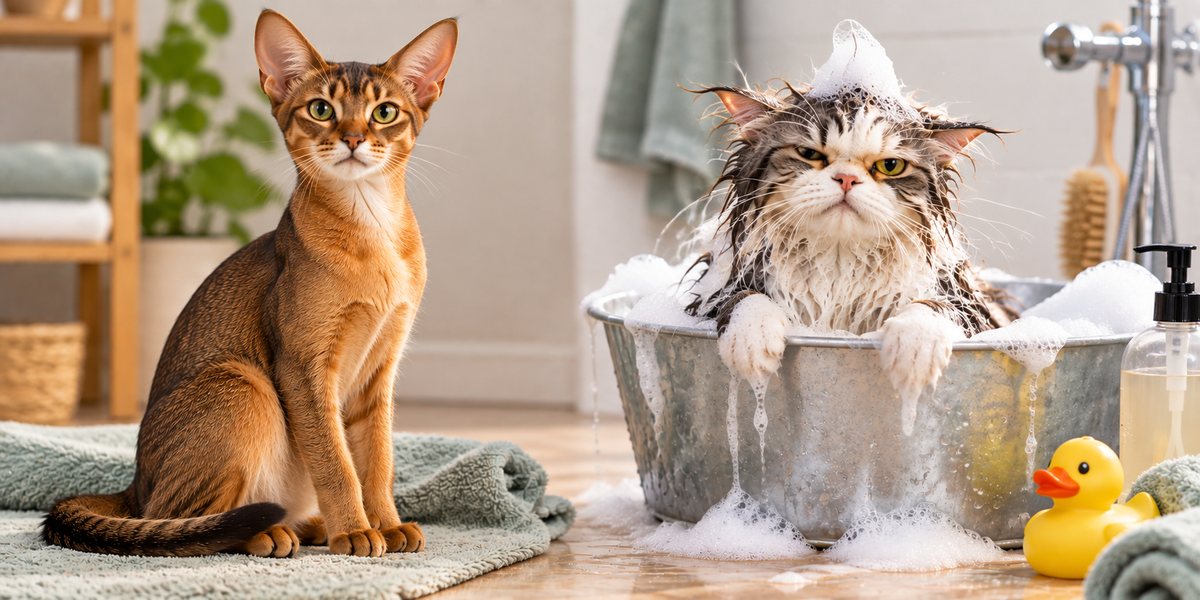
| Skin & bathing care | Bathing not routinely needed Routine bathing is generally unnecessary; bathe only when the coat is genuinely soiled or for a specific veterinary or grooming reason. |
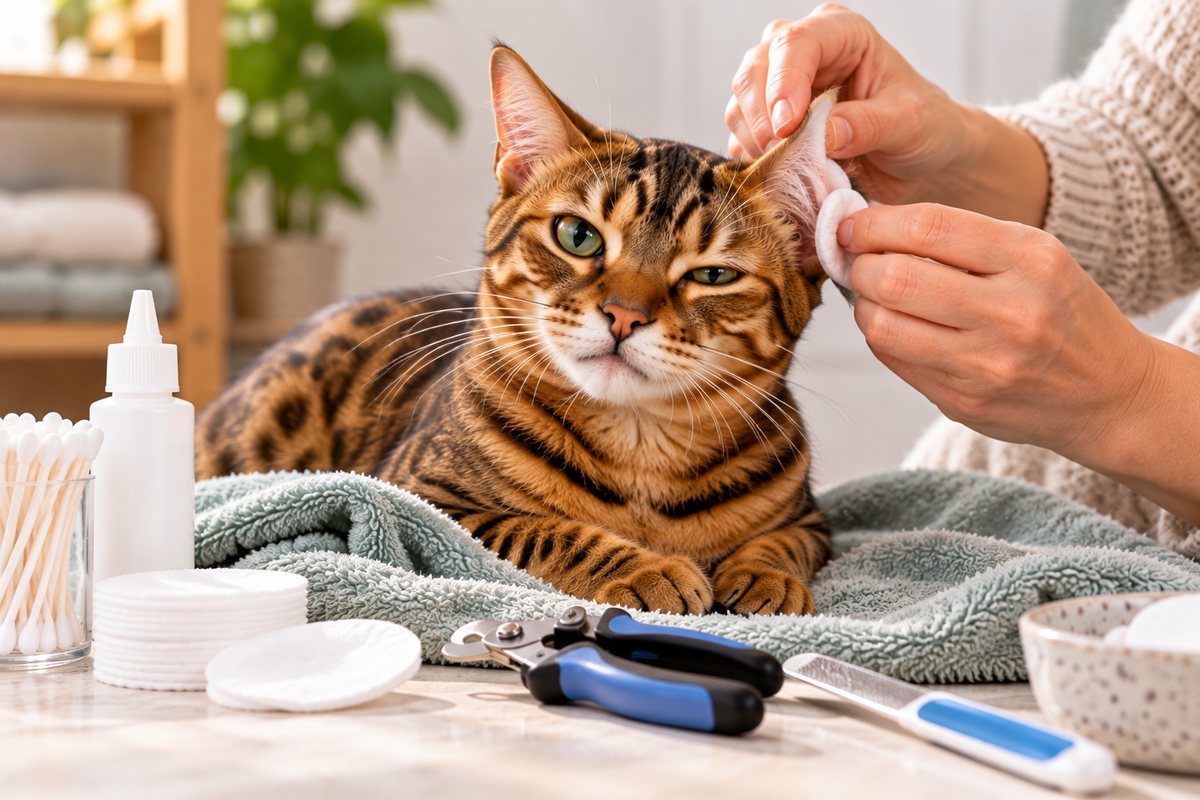
| Distinctive routine care | Easy coat care The short ticked coat is straightforward to maintain with ordinary light grooming. |
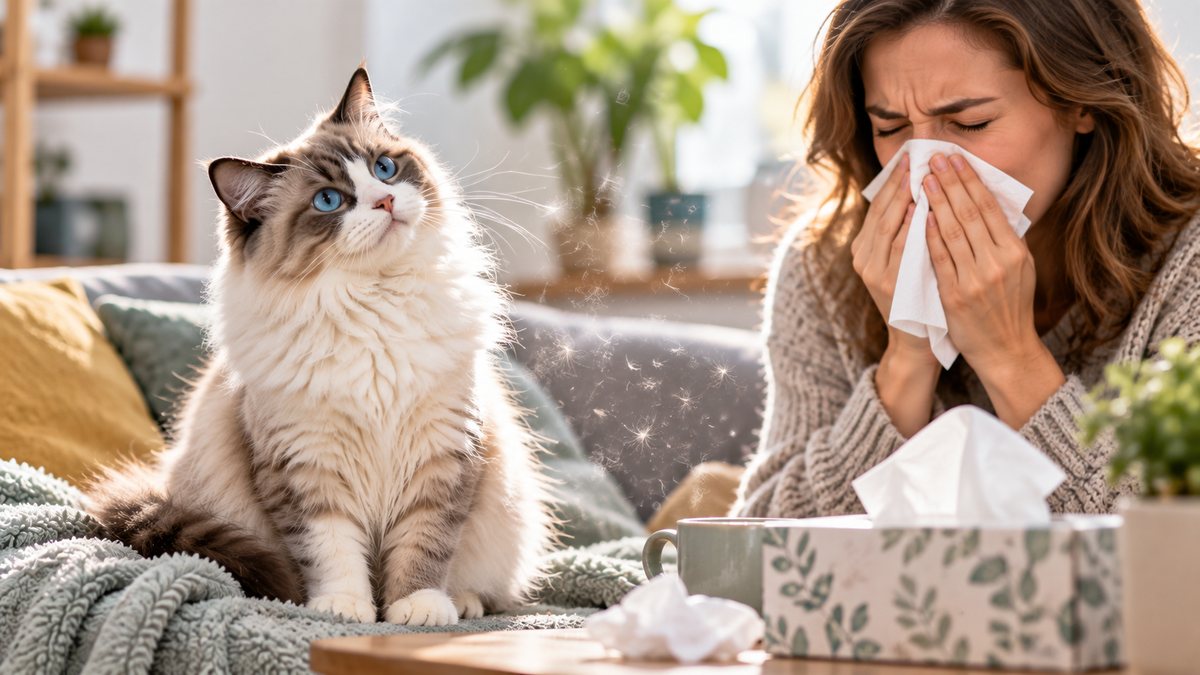
| Allergy & allergen evidence | No breed specific reduction established There is no known reason to regard this breed as hypoallergenic. All cats produce allergens, and coat length or shedding alone does not determine allergy risk. |
| Activity & intelligence | |
| Activity level | Very high |
| Playfulness | Very high |
| Climbing & jumping | Very high |
| Enrichment demand | Very high Very high enrichment demand: this exceptionally active, curious climber needs frequent interactive play, vertical routes, exploration and changing puzzle challenges. |
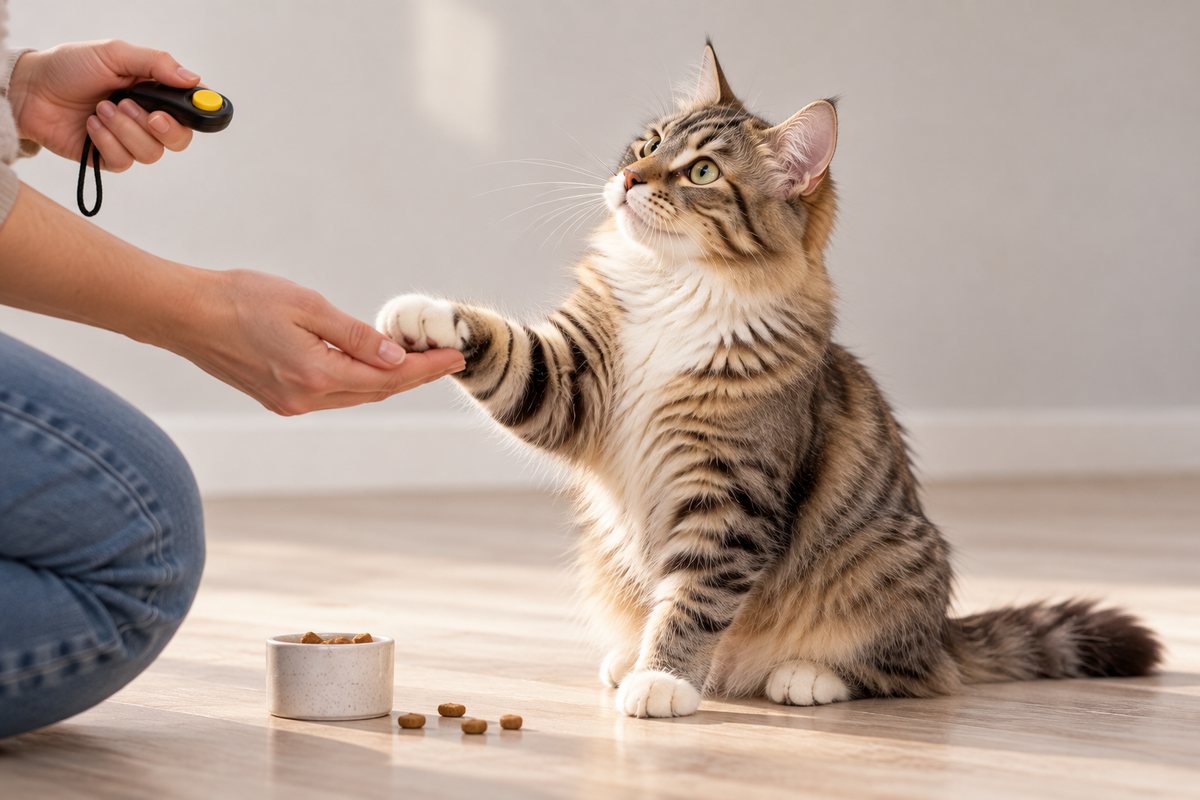
| Learning & training | High Abyssinians are exceptionally bright, interactive learners; puzzle solving, target work and fast-moving reward games suit their need to stay mentally engaged. |
| Curiosity & exploration | Very high Abyssinians are intensely curious and exploratory; they routinely investigate high places, openings and changes in their environment and rarely ignore an accessible new space. |
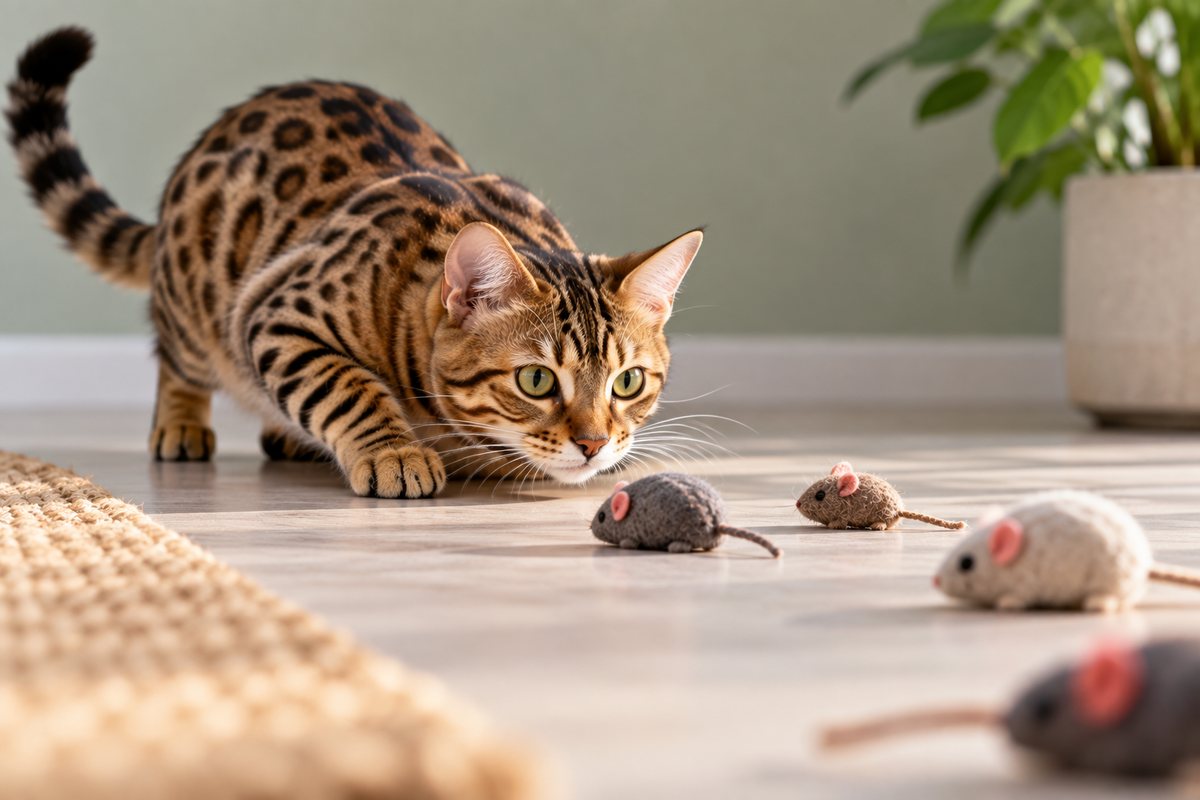
| Hunting & chasing tendencies | High Very strong chase-and-pounce play is expected: the breed's exceptional activity, curiosity and quick movement make moving toys especially compelling. |
| Personality & social | |
| Sociability with familiar people | Very high Abyssinians are intensely people-oriented and usually want to participate in nearly every household activity. |
| Affection | Following · interactive playful · proximity Affection is expressed through following, participation and active interaction rather than passive possession. |
| Lap & cuddling preference | Low |
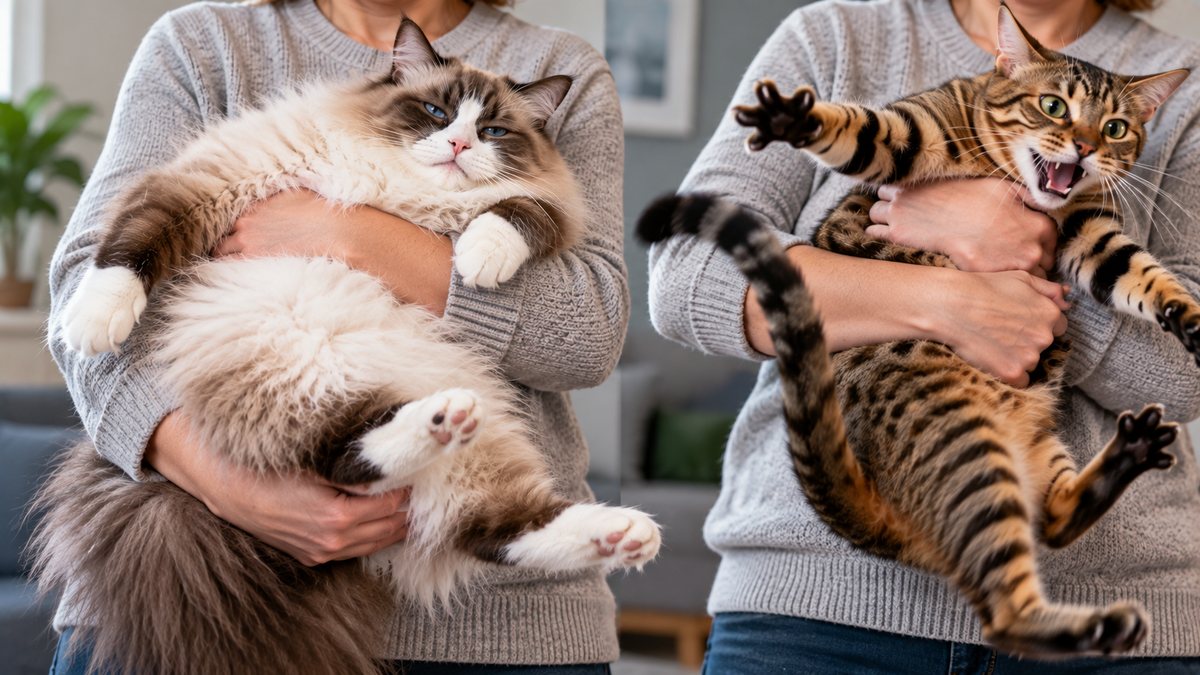
| Handling tolerance | Moderate Usually tolerant of brief, gentle handling, but this active breed commonly prefers choosing its own position to being held for long periods. |
| Independence & social demand | Very high Abyssinians are intensely interactive and inquisitive, usually wanting frequent participation in whatever their people are doing. |
| Vocalization | Low Abyssinians are generally not especially talkative, although they communicate readily through behavior and quieter sounds. |
| Response to unfamiliar people | High Abyssinians are typically bold, interactive and curious, so most investigate unfamiliar people readily rather than remaining withdrawn. |
| Adaptability to change | High Well-socialized Abyssinians are adaptable and can cope well with changing environments. |
| Noise & busy-environment sensitivity | Low Confident, athletic and intensely curious, the Abyssinian usually copes well with an active household, though abrupt unfamiliar bangs can still startle it. |
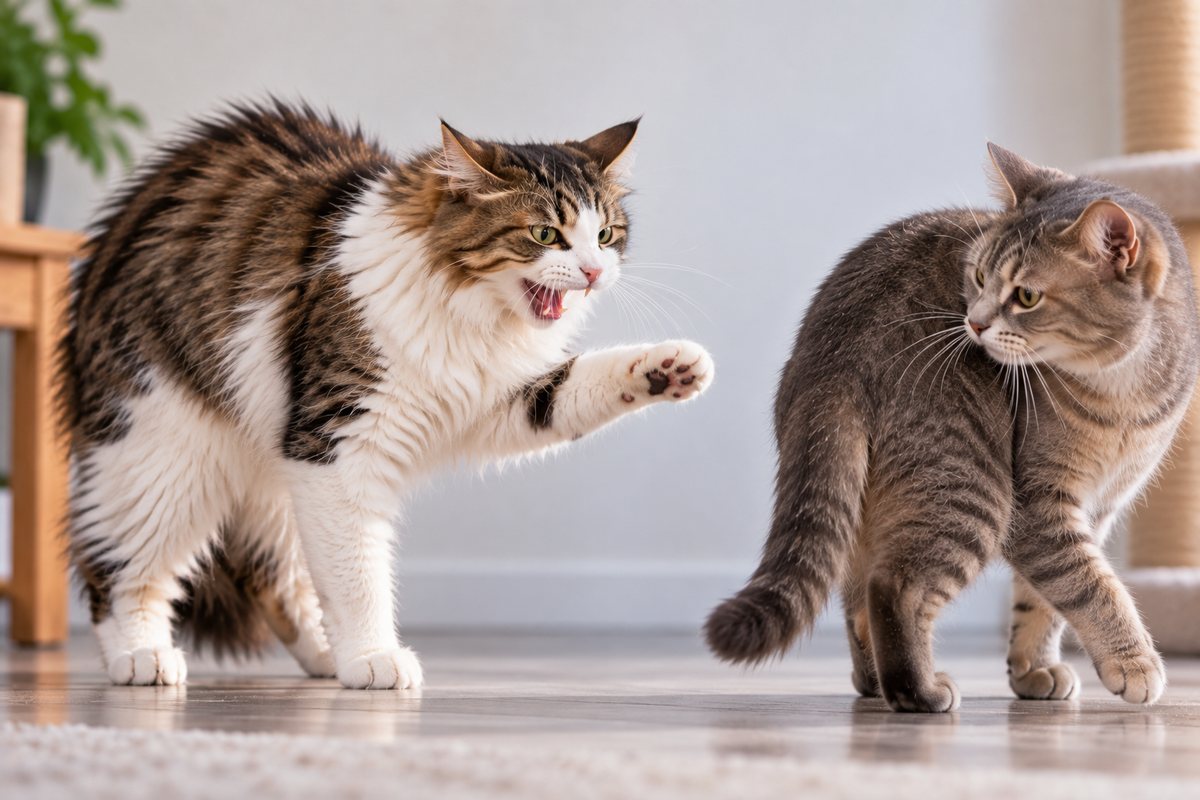
| Defensive & conflict behaviour | Low Usually confident and busy rather than confrontational. An Abyssinian is more likely to escape restraint or redirect into activity than seek conflict, though frustration can produce sharp boundary-setting. |
| Household & environment | |
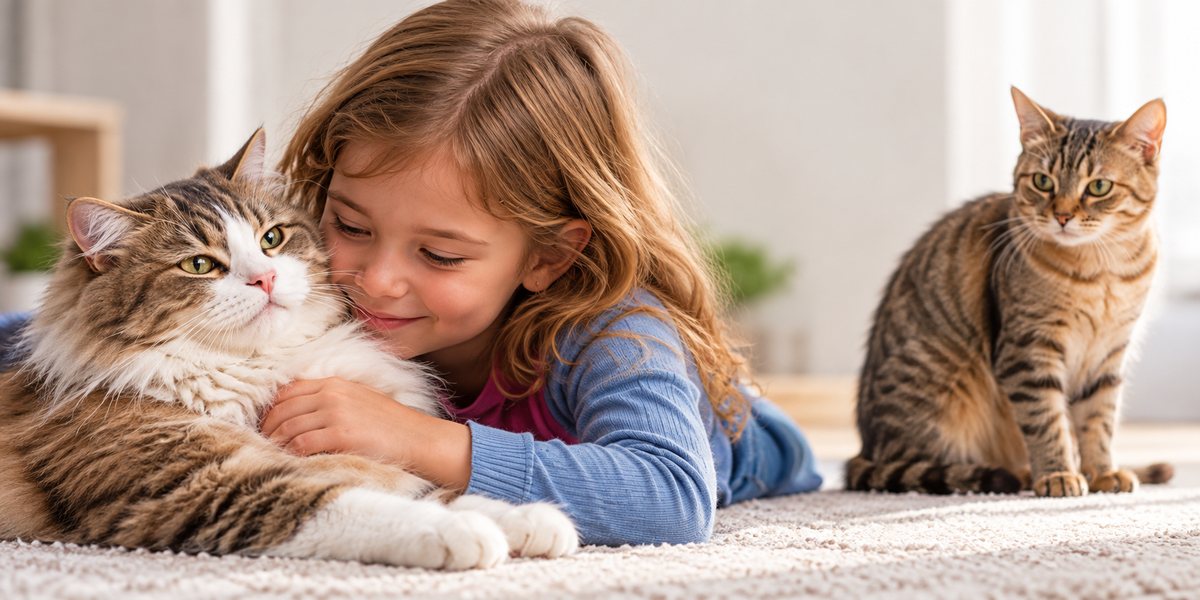
| Living with children | Often workable Highly interactive Abyssinians can suit respectful active children, but do not necessarily enjoy prolonged restraint. |
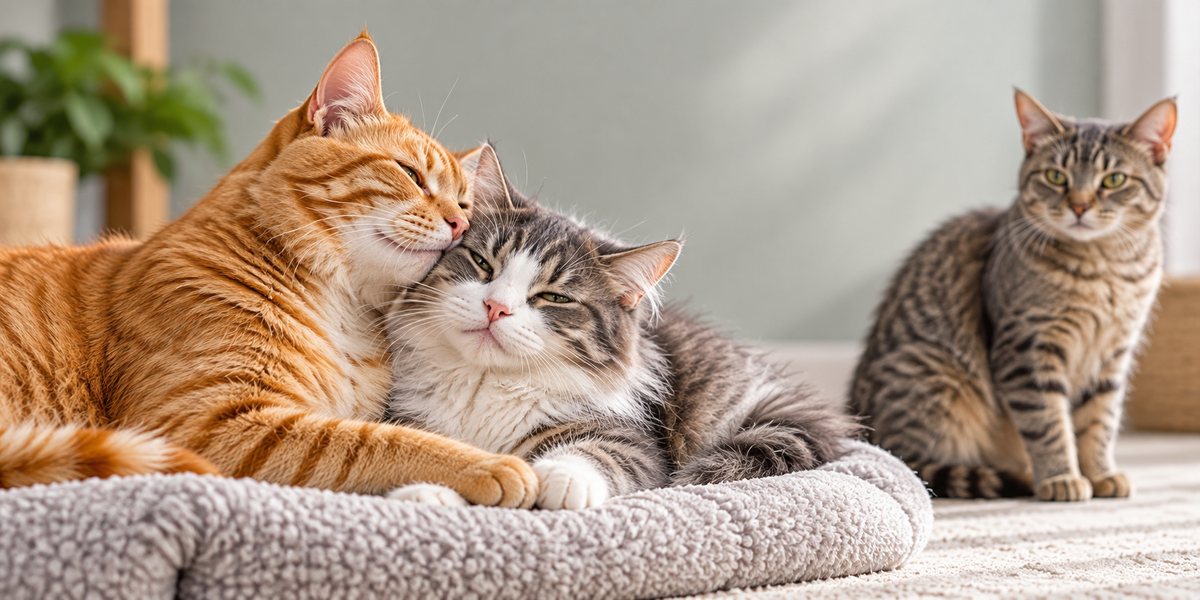
| Living with other cats | Often workable Abyssinians are highly social and playful, so many enjoy a compatible feline companion; their intensity can overwhelm a quiet or elderly cat, making energy matching and gradual introductions important. |
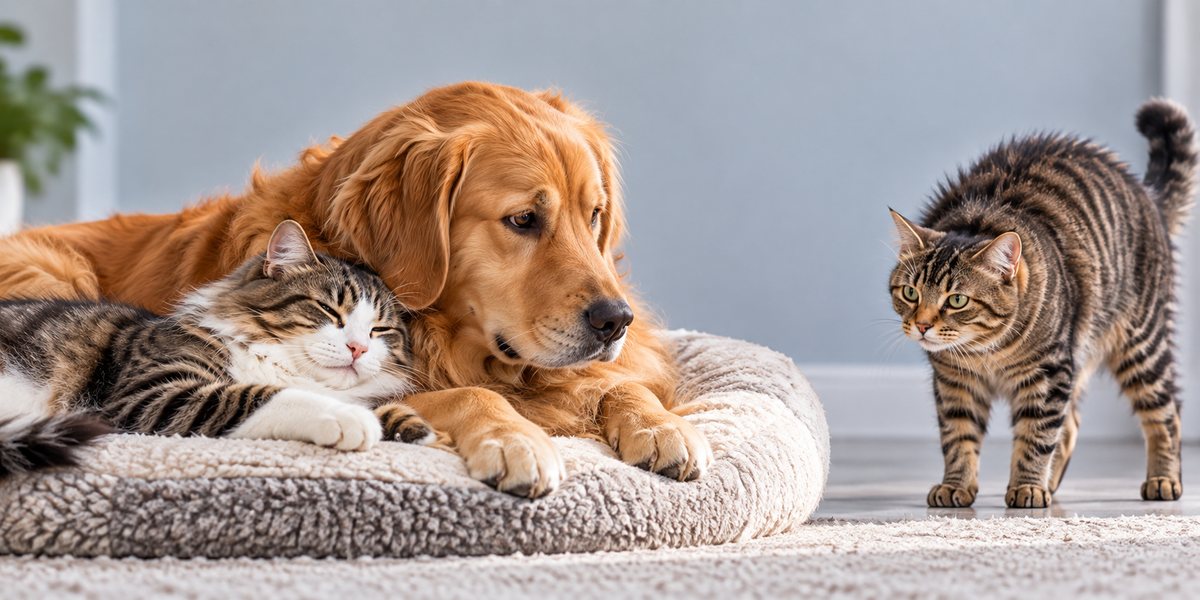
| Living with dogs | Moderate Social confidence can support dog households when introductions are appropriate. |
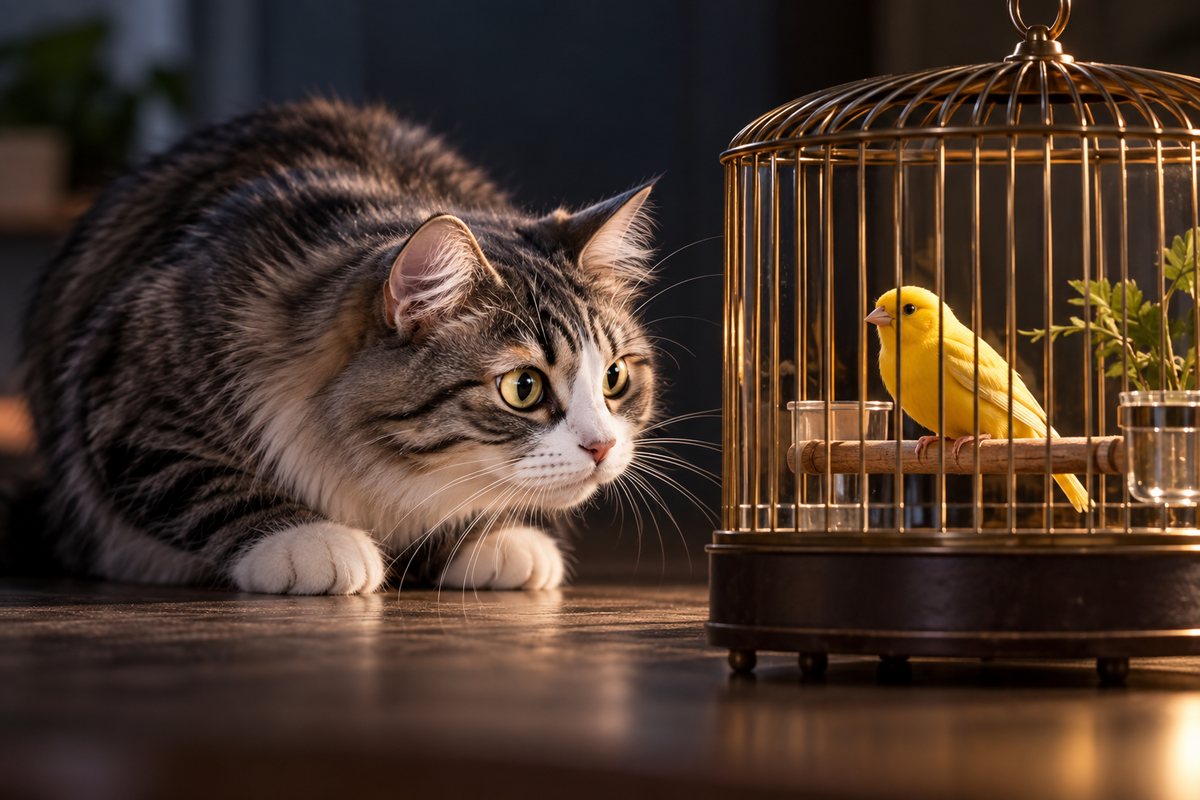
| Living around small pets | Additional caution Abyssinians are intensely active, curious and quick to pursue moving objects. Their athletic stalking, chasing and pouncing make birds, rodents and other small pets high-risk companions unless securely separated. |
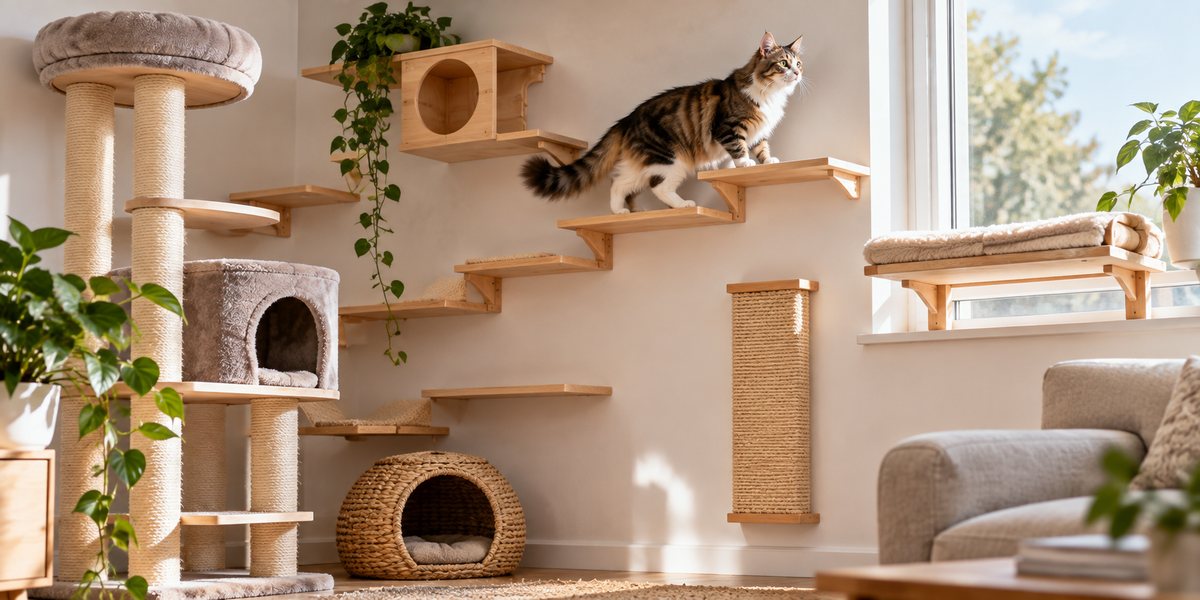
| Indoor & home environment needs | Vertical space · high enrichment · interactive home Abyssinians need a vertically rich, highly interactive indoor environment. Tall climbing routes, high observation points, puzzle feeding and frequent active play suit a cat that explores continuously and wants to participate in household activity. |
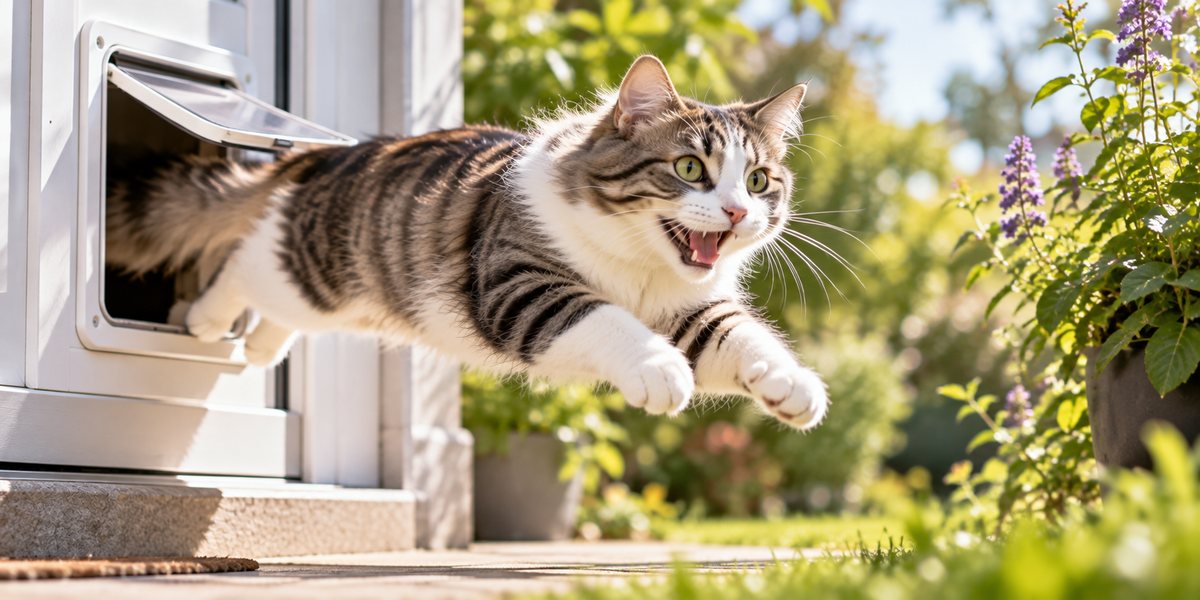
| Outdoor access considerations | Secure high activity Abyssinians are intensely curious, athletic climbers and may relish outdoor exploration, but that same curiosity can carry them far or into danger. A large catio, enclosed garden or harness work provides challenge without unrestricted roaming. |
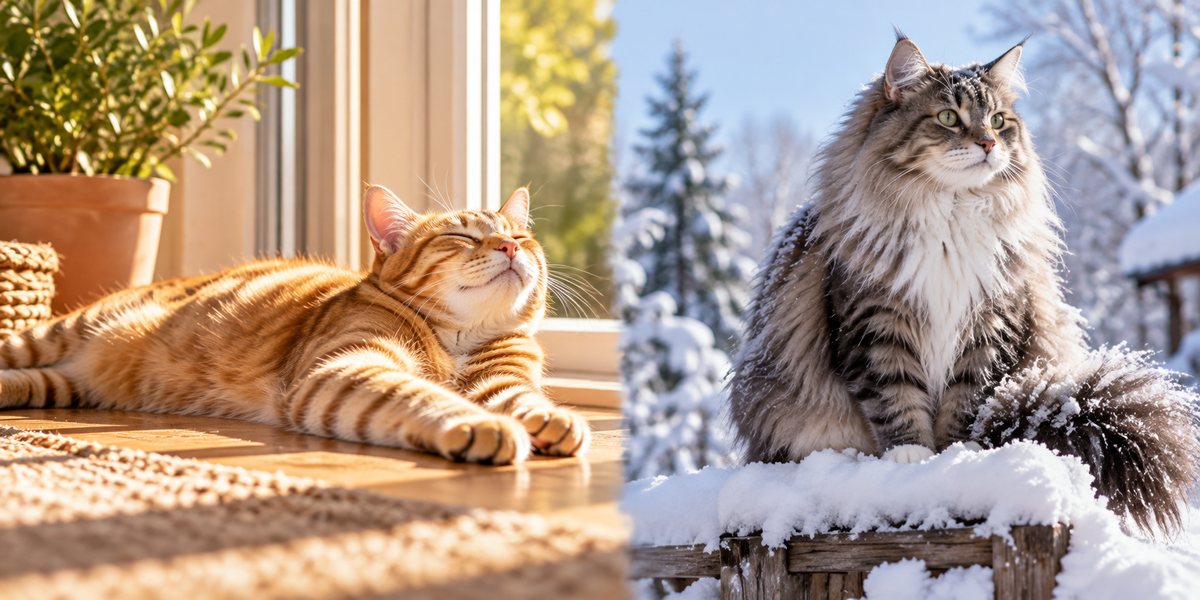
| Heat, cold & sun considerations | Shortcoat warm climate Abyssinians have a close short coat and lean athletic body, so they generally favor warm, dry conditions over prolonged cold. Provide warm indoor retreats in winter and shade, water and reduced exertion during extreme summer heat. |
| Caregiver time & experience | High Very high activity, curiosity and social involvement create substantial daily engagement needs. |
| Health & welfare | |
| Documented health predispositions | Elevated known risks Abyssinians have well-established inherited risks including pyruvate kinase deficiency and progressive retinal atrophy. Renal amyloidosis and patellar luxation are also reported, so genetic testing and family health history are important breeding considerations. |
| Screening & breeder questions | Ask for PK-def DNA status · Ask about PRA genetic/eye screening Ask for DNA results for pyruvate kinase deficiency and progressive retinal atrophy, and ask whether renal amyloidosis has occurred in the family. Request the actual laboratory results for both breeding parents. |
| Conformation-related welfare | Low conformation concern Abyssinians have a moderate, athletic conformation without a defining structural extreme. Welfare-focused selection should preserve sound joints, normal chest and jaw structure and muscular condition rather than pushing the breed toward excessive slenderness. |
| Nutrition & weight management | High activity condition led Abyssinians are lean, highly active cats and may need more energy than sedentary breeds, but visible leanness should not automatically trigger overfeeding. Use muscle condition and hands-on body-condition scoring and adjust portions as activity changes. |
| Longevity | 14–17+ years; some reach their 20s A practical lifespan estimate for an Abyssinian is about 14–18 years, with some well-cared-for individuals reaching 20 years or more. |
| Cost & availability | |
| Purchase cost | High: $900–$2,000 Abyssinian: a practical breeder-market estimate is $900–$2,000. This reflects that it is an established pedigree breed with steady demand. |
| Adoption & rehoming cost | Uncommon in rescue: $100–$500 typical rescue/adoption fee Abyssinian: $100–$500 typical rescue/adoption fee. The breed does appear in rescue, but much less often than mixed-breed cats or the most numerous pedigrees. |
| Recurring ownership costs | Enrichment/toy replacement Baseline food, litter and preventive veterinary costs are ordinary, but Abyssinians benefit from a steady enrichment budget: durable climbing furniture, puzzle feeders and interactive toys may be replaced more often than for a sedentary cat. |
| Availability, waits & import | Widely available Abyssinians are established internationally and breeders can be found in many countries, though they are less ubiquitous than the largest companion breeds. Local waiting lists are still normal, but cross-border sourcing is usually unnecessary in major cat-fancy markets. |
| Identity & real-world context | |
| Ownership & import restrictions | No known breed specific restrictions There are no known breed-specific ownership restrictions. Ordinary animal-welfare, identification, vaccination and cross-border import rules still apply where relevant. |
| Registry recognition | CFA: recognized breed/division · TICA: Championship-recognized / current breed identity · FIFe: fully recognized breed / mapped breed identity Currently recognized in all three registries tracked by the FSC core matrix: CFA, TICA and FIFe. |
| Similar breeds & identity distinctions | Somali Abyssinians are most easily confused with Somalis because they share the same basic type and ticked color genetics. The practical distinction is coat length: Abyssinians have a close short coat, while Somalis carry a semi-long coat with a fuller ruff and tail. |
| Reported characteristic quirks | High-place seeking and unusually persistent involvement in household activity are characteristic Abyssinian quirks. Abyssinians are famous for seeking high vantage points and involving themselves in whatever their people are doing. |
Browse all 53 breed characteristics
Open any characteristic to compare all breeds on that dimension.

 English