
Compare Cat Breeds
Compare up to three breeds across all 53 characteristics. Values are shown directly so the differences are easier to scan.
| Characteristic | 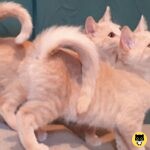 American Ringtail |
|---|---|
| Body & development | |
| Adult size | Medium |
| Adult weight | 3.2–6.8 kg (7.1–15.0 lb) Adults are commonly around 3.2–6.8 kg (7–15 lb), with substantial individual variation. |
| Build & distinguishing morphology | Medium to large · long athletic · moderate bone · ringed tail The American Ringtail is medium-to-large, long and athletic with moderate bone; its defining structural feature is the flexible tail carried in a ring over the back. |
| Maturation | 18-24 months The moderate, athletic American Ringtail is expected to reach near-adult size around a year and continue muscular filling-out into roughly 18–24 months. |
| Coat & appearance | |
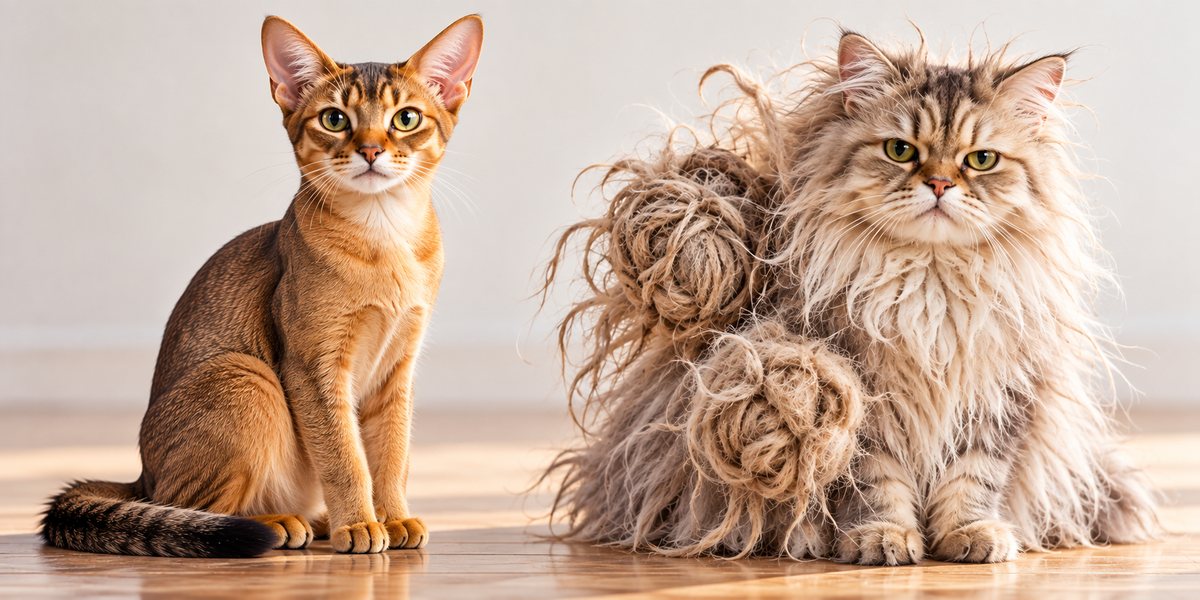
| Coat length | Short to medium American Ringtails generally have a short to medium-length coat lying close to the body, with some variation in density and length between lines. |
| Coat texture & undercoat | Short to medium · soft resilient · moderate undercoat The Ringtail coat is generally soft but resilient, short to medium in length, with enough undercoat to give body without becoming woolly. |
| Colors & patterns | Broad domestic palette; solids · tabbies · bicolors · tortoiseshells The developing breed occurs across the broad domestic palette, including solids, tabbies, bicolours and tortoiseshell-type combinations. |
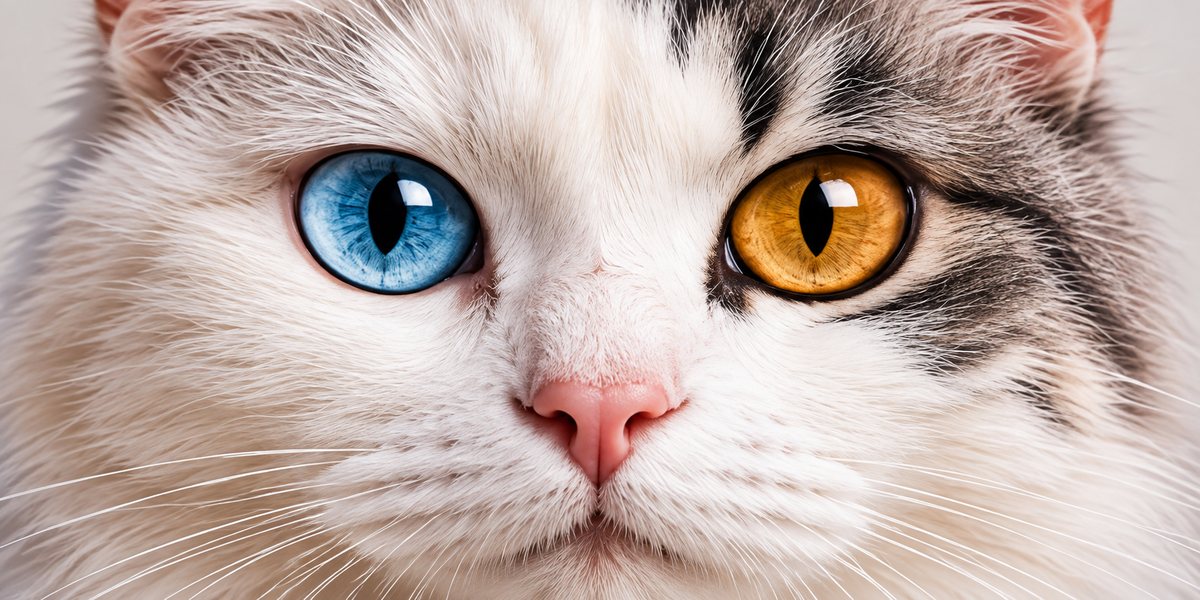
| Eye colors | Green · gold · copper · blue; coat-dependent A broad domestic-cat range is expected, including green, gold and copper, with blue possible in white or pointed cats. |
| Coat & routine care | |
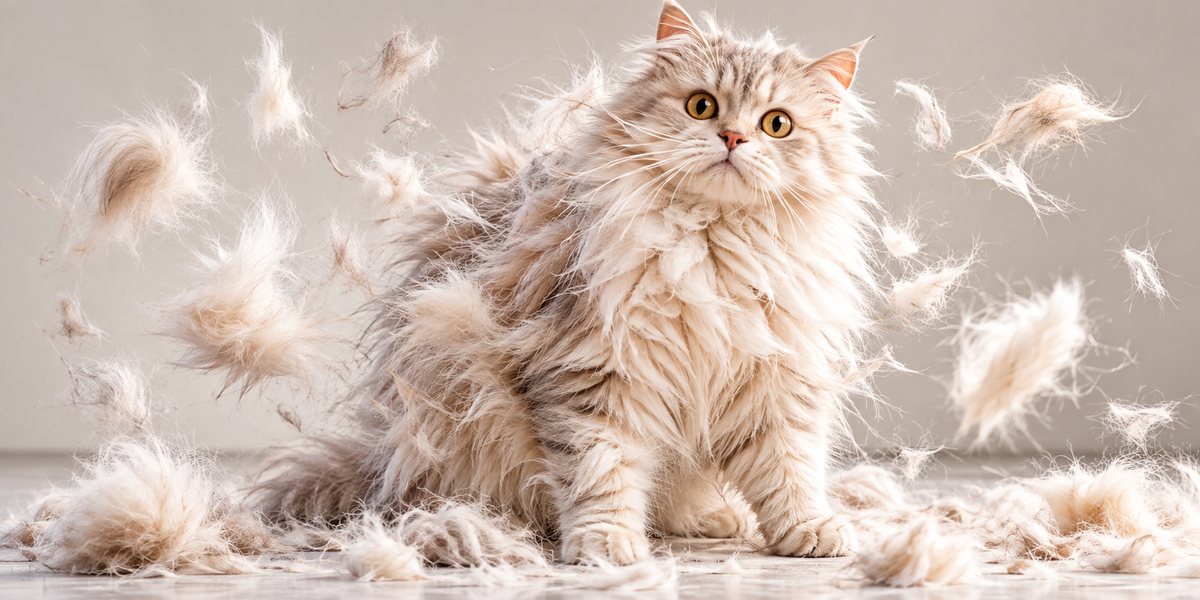
| Shedding | Moderate Moderate shedding from the short-to-medium coat; longer-coated individuals leave more visible hair. |
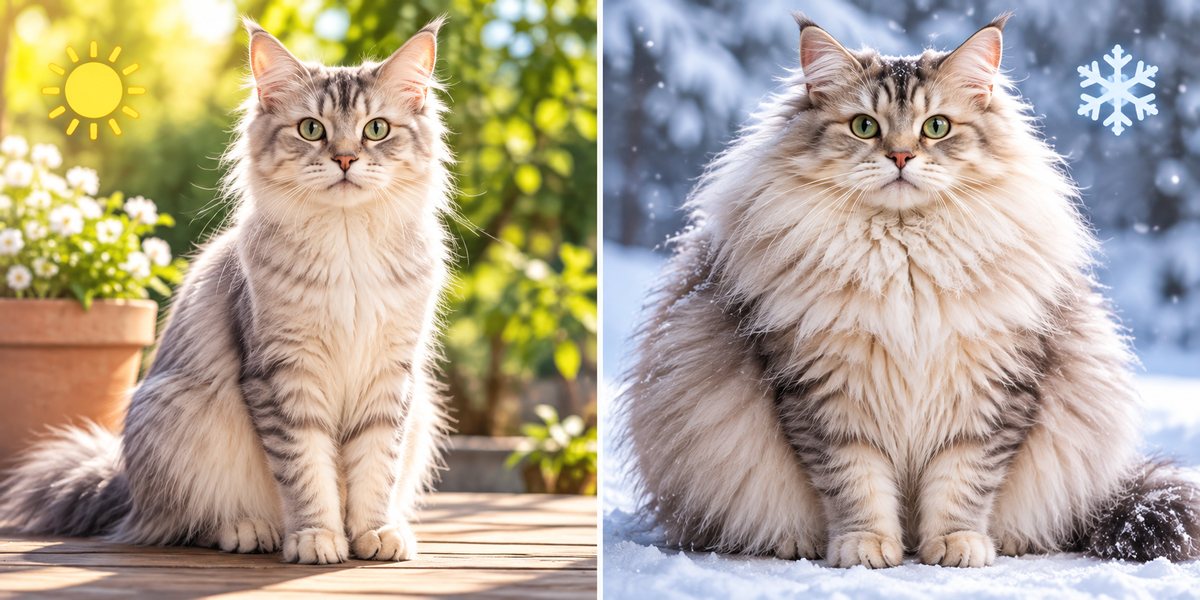
| Seasonal coat changes | Moderate spring fall change The Ringtail’s short-to-medium coat and moderate undercoat usually produce a visible spring and autumn turnover, stronger in longer-coated individuals. |
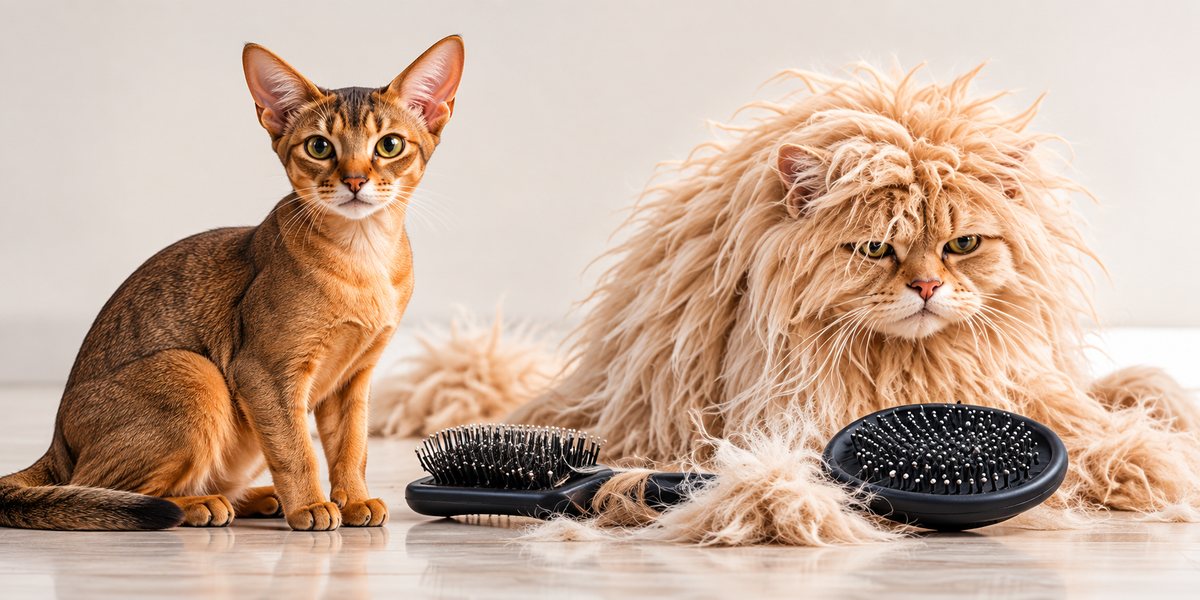
| Brushing & combing | Weekly or as needed Weekly combing is a practical starting point, increased when the coat is changing or beginning to tangle. |
| Tangle & matting tendency | Low to moderate The soft short-to-medium coat is not strongly mat-prone, but seasonal undercoat and friction areas can produce small tangles in fuller-coated cats. |
| Skin & bathing care | Bathing not routinely needed Routine bathing is generally unnecessary; bathe only when the coat is genuinely soiled or for a specific veterinary or grooming reason. |
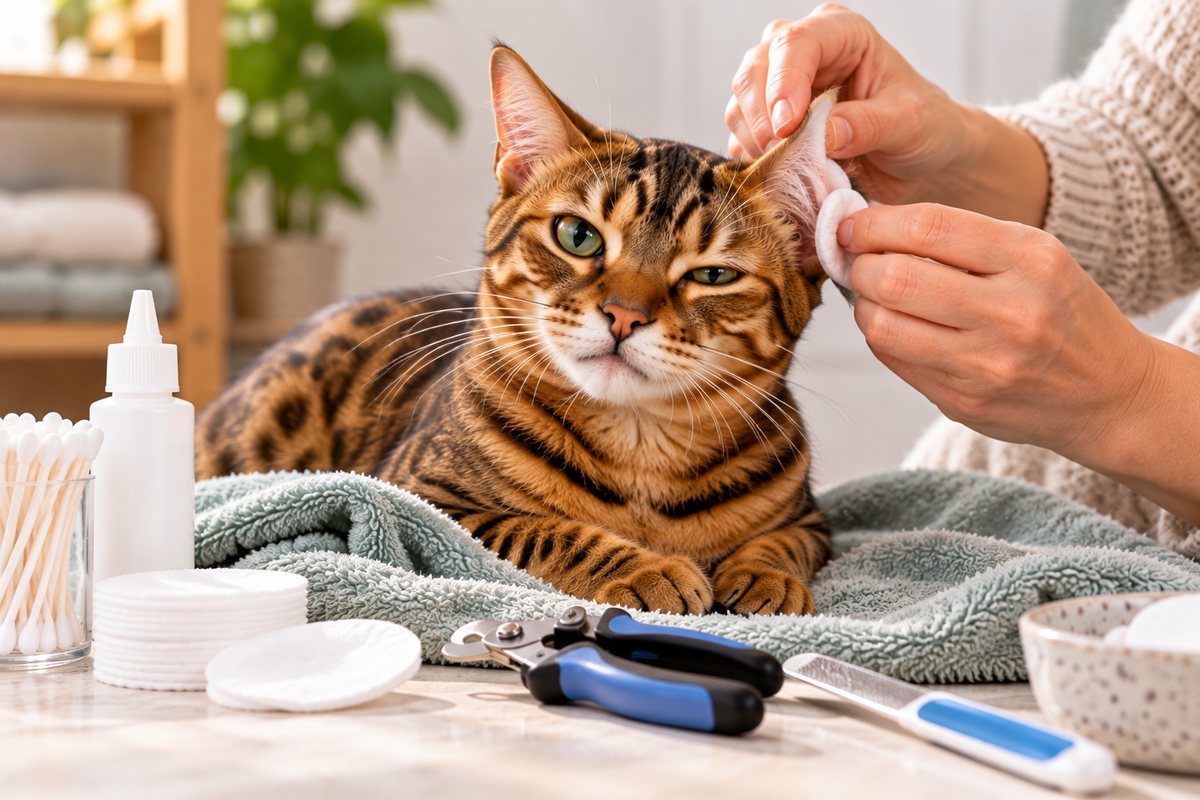
| Distinctive routine care | Coat plus tail check Routine grooming is straightforward, but the curled tail should remain flexible and pain-free. Include normal nail, ear and dental care and notice any new reluctance to move or hold the tail normally. |
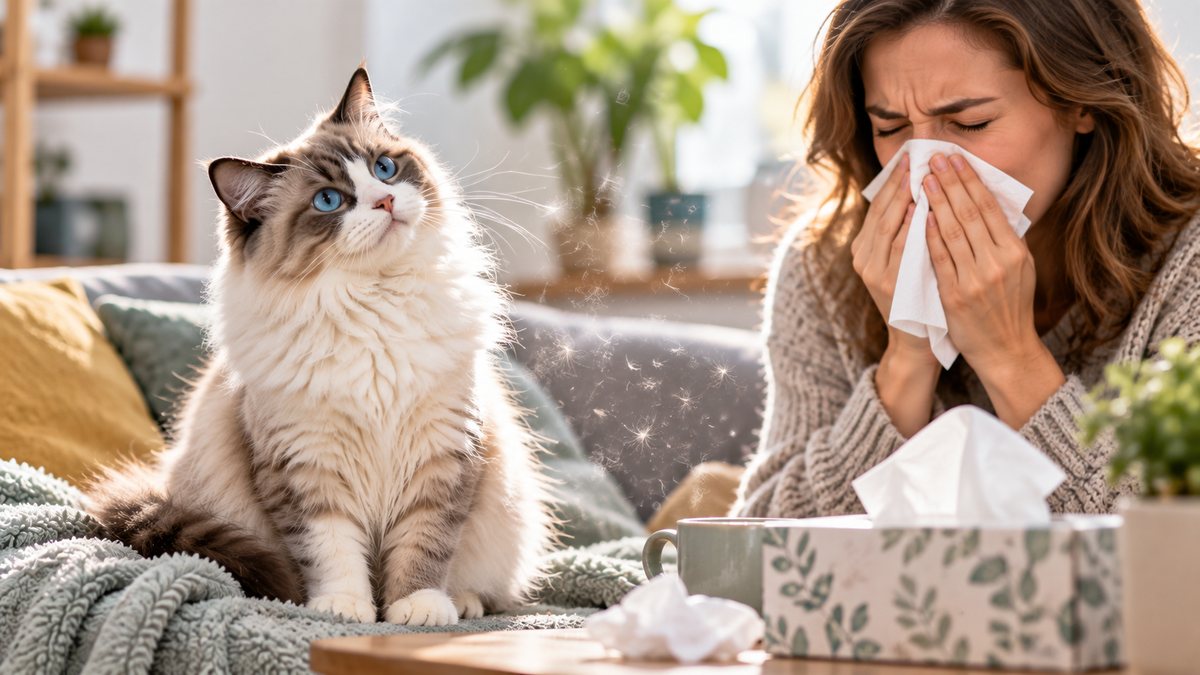
| Allergy & allergen evidence | No breed specific reduction established There is no known reason to regard this breed as hypoallergenic. All cats produce allergens, and coat length or shedding alone does not determine allergy risk. |
| Activity & intelligence | |
| Activity level | Lively and active. |
| Playfulness | Moderate to high Moderately to highly playful, with curiosity and object play likely to remain noticeable into adulthood. |
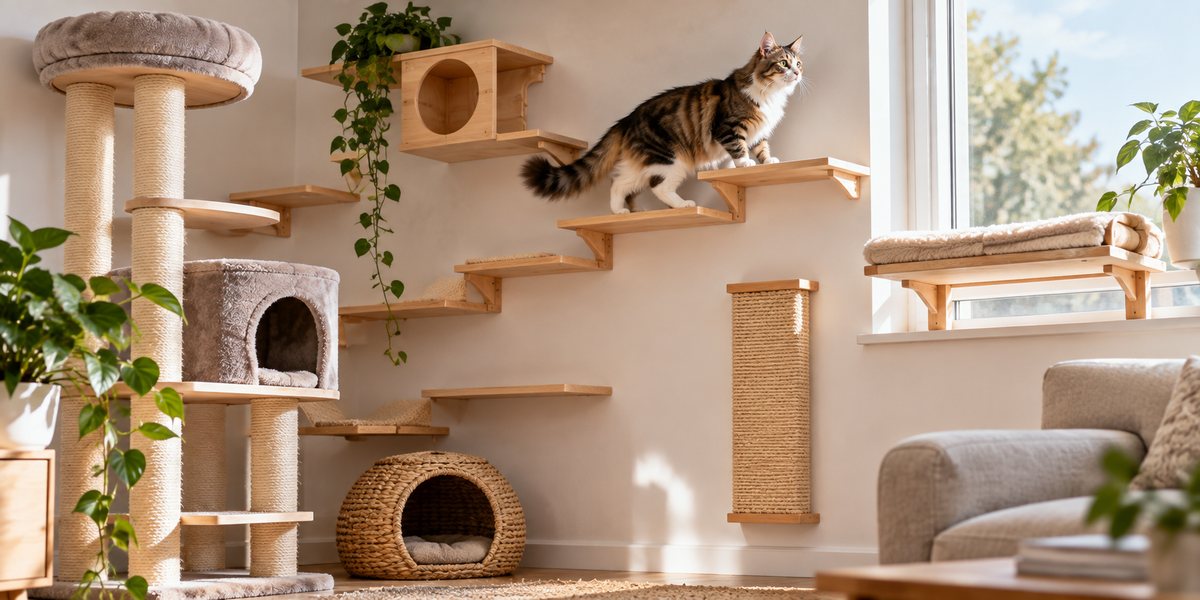
| Climbing & jumping | Moderate The Ringtail has ordinary athletic feline ability and benefits from climbable furniture, though its defining tail carriage does not imply exceptional jumping demand. |
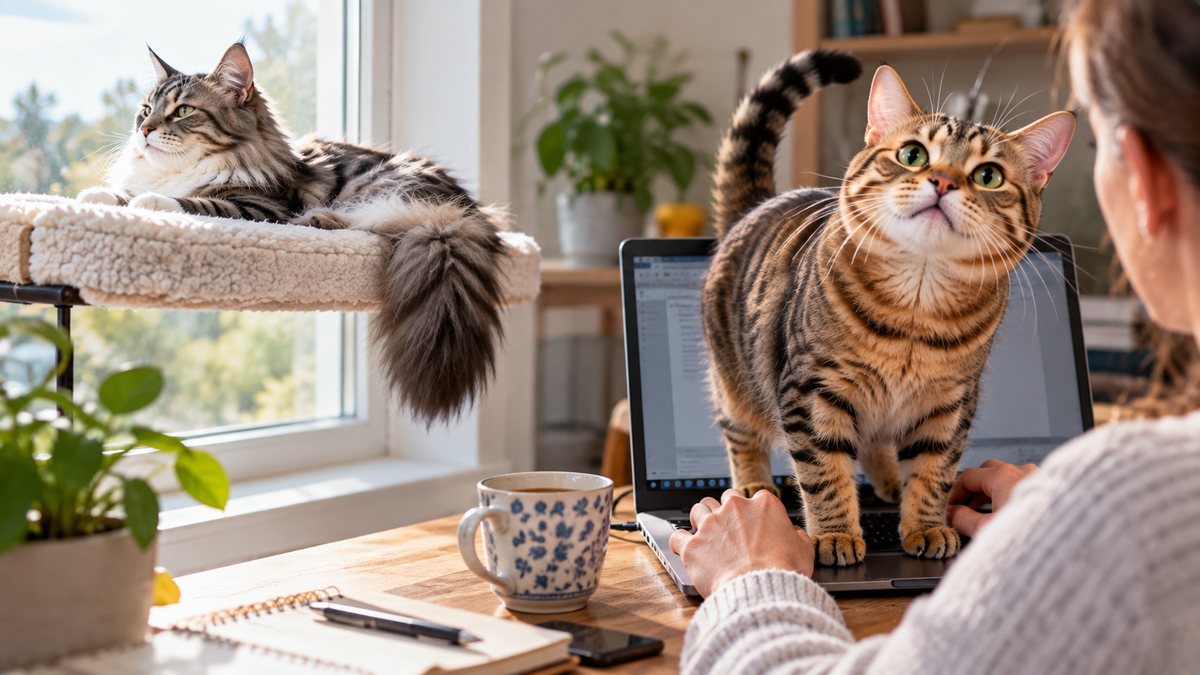
| Enrichment demand | Moderate Moderate-to-high enrichment demand: regular interactive play, exploratory opportunities and several comfortable elevated routes suit its lively, curious nature. |
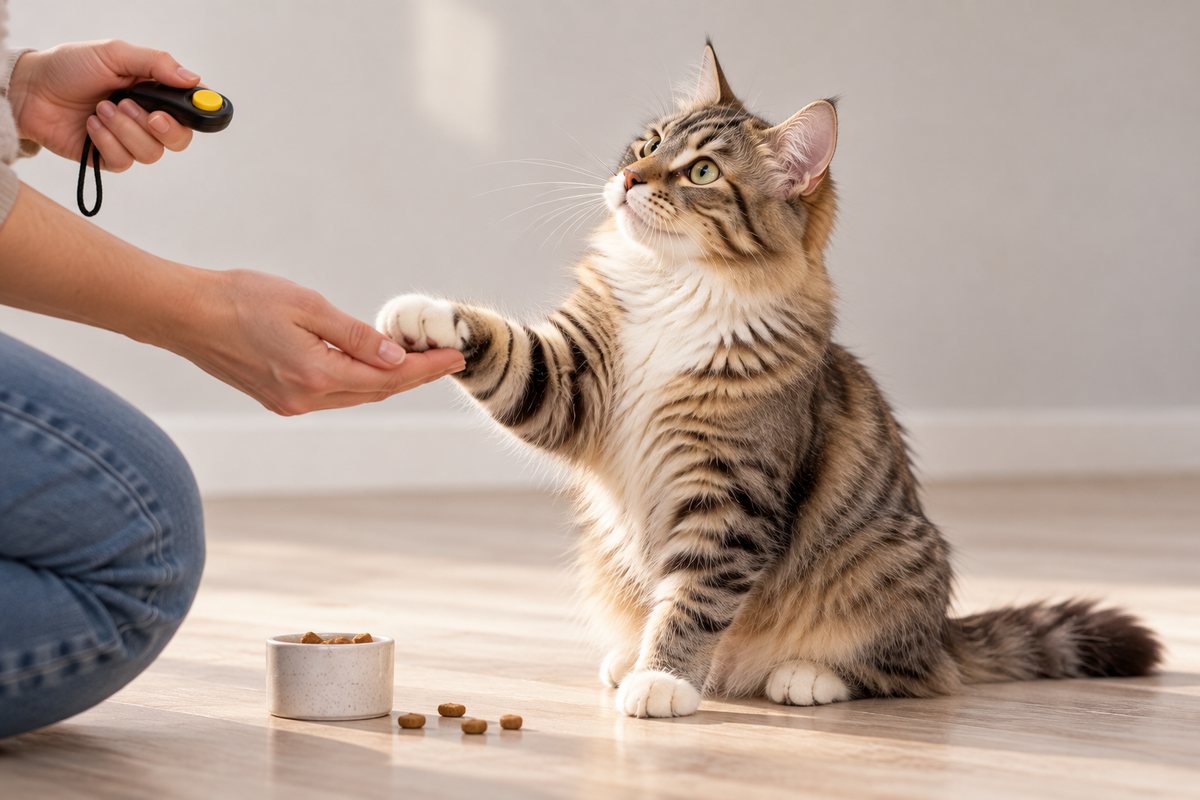
| Learning & training | Moderate The American Ringtail should learn ordinary routines, handling cues and simple reward-based behaviours well; there is not strong evidence that trainability is an exceptional breed trait. |
| Curiosity & exploration | High Curiosity is a characteristic part of the American Ringtail temperament. |
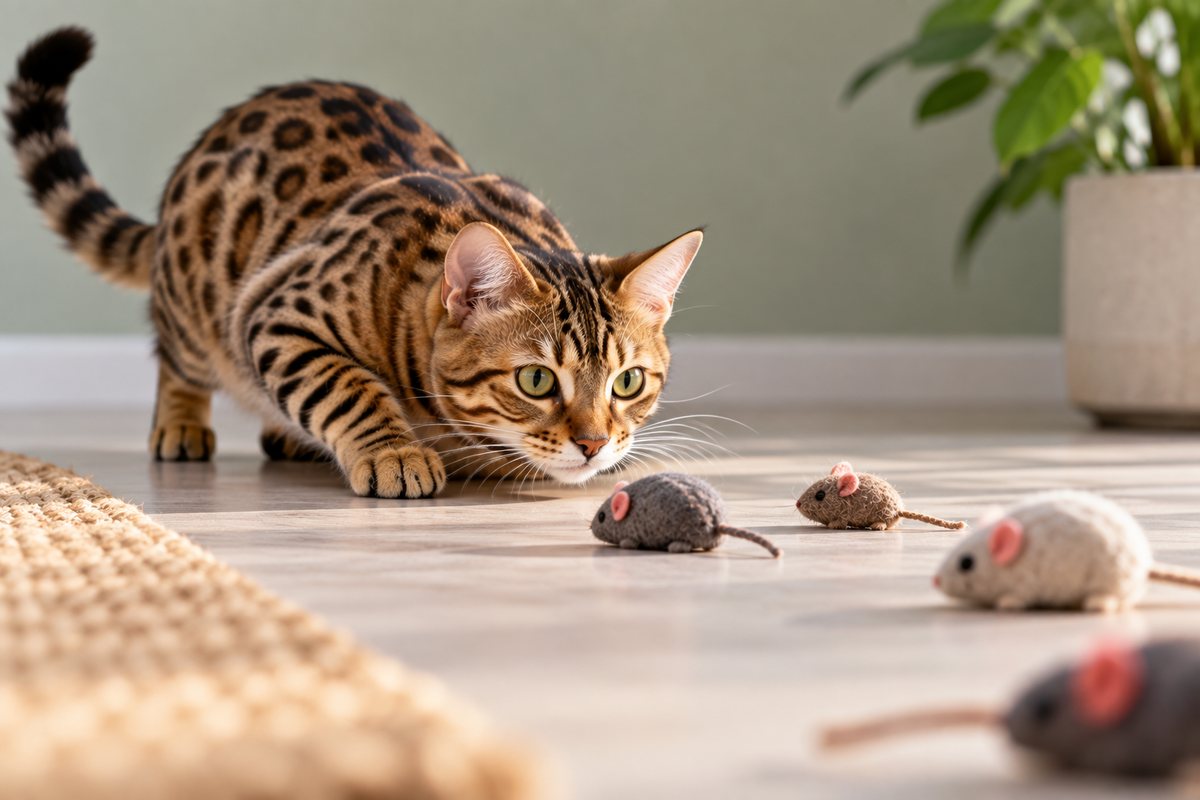
| Hunting & chasing tendencies | Moderate to high Expect ordinary-to-moderately strong feline chasing behavior; the breed's active, curious profile supports regular stalk-and-pounce play without evidence for an extreme prey drive. |
| Personality & social | |
| Sociability with familiar people | High American Ringtails are generally affectionate and outgoing with people. |
| Affection | Affectionate · outgoing · interactive Affection tends to be open and interactive rather than markedly aloof. |
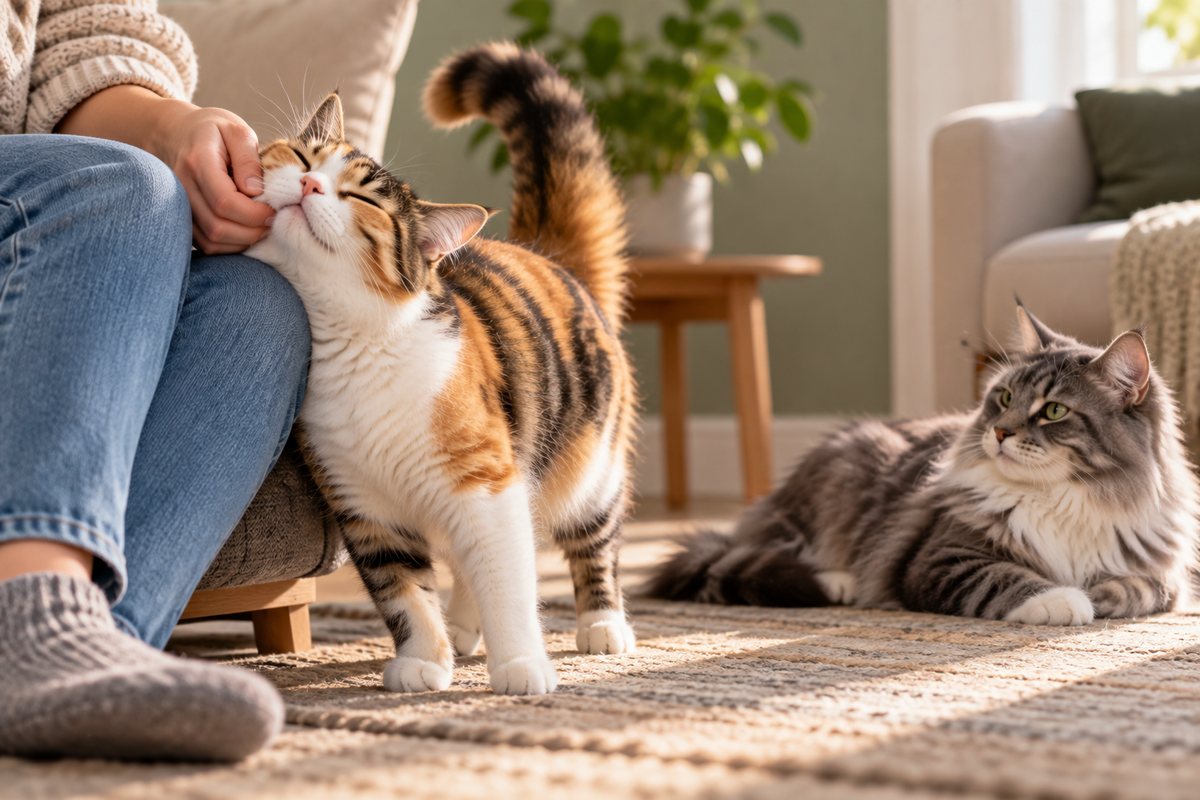
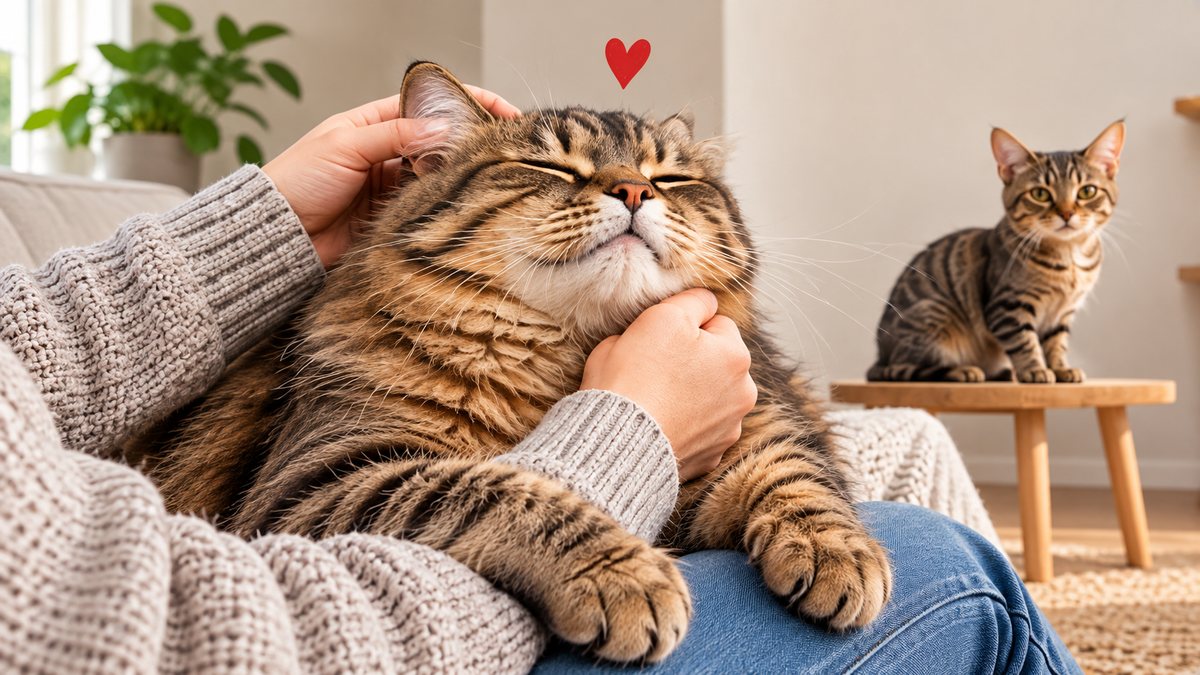
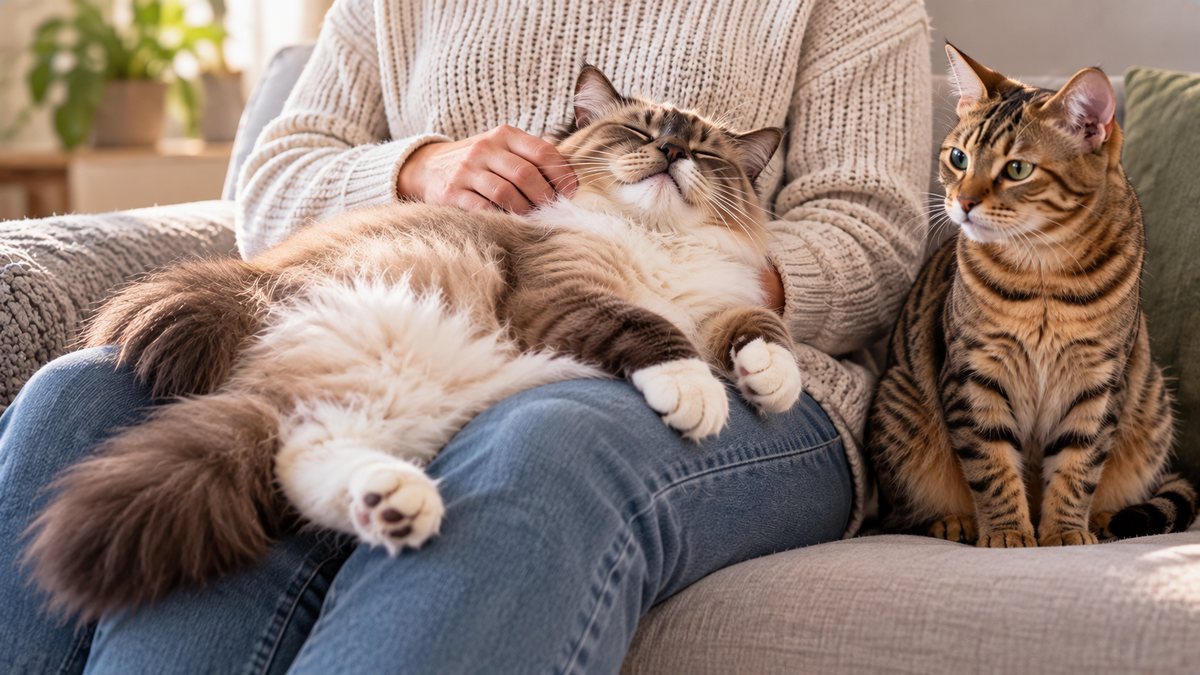
| Lap & cuddling preference | High American Ringtails tend to be people-oriented and relaxed with trusted family, making lap and close-body contact fairly common when they settle. |
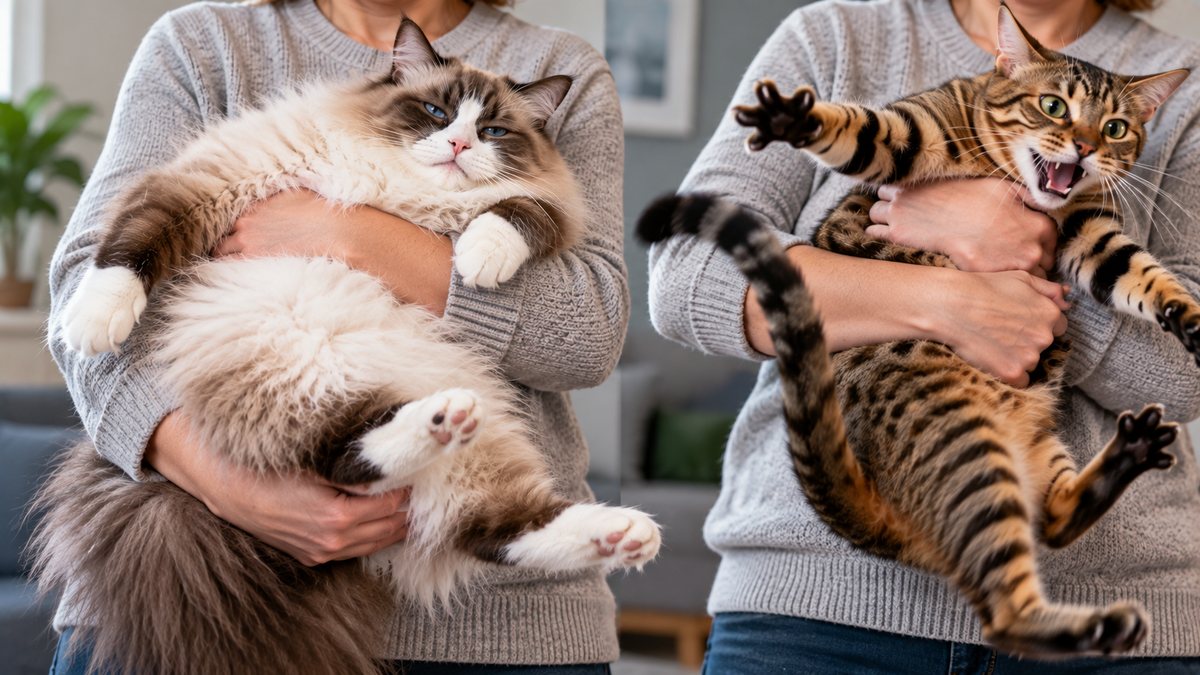
| Handling tolerance | Moderate Usually sociable enough for routine handling, although the breed remains athletic and may prefer interactive contact to prolonged restraint. |
| Independence & social demand | Moderate American Ringtails tend to enjoy family company without being relentlessly dependent; regular attention is welcome rather than constantly demanded. |
| Vocalization | Often vocal. |
| Response to unfamiliar people | High American Ringtails are generally people-oriented and curious, so unfamiliar people are more likely to prompt investigation and friendly contact than prolonged avoidance. |
| Adaptability to change | High American Ringtails are typically flexible household cats: their mixed domestic background and sociable temperament favor adjustment to routine changes, visitors, and new environments when introductions are gradual. |
| Noise & busy-environment sensitivity | Moderate Usually sociable and curious, the American Ringtail should handle normal activity reasonably well but may retreat from sustained or chaotic noise. |
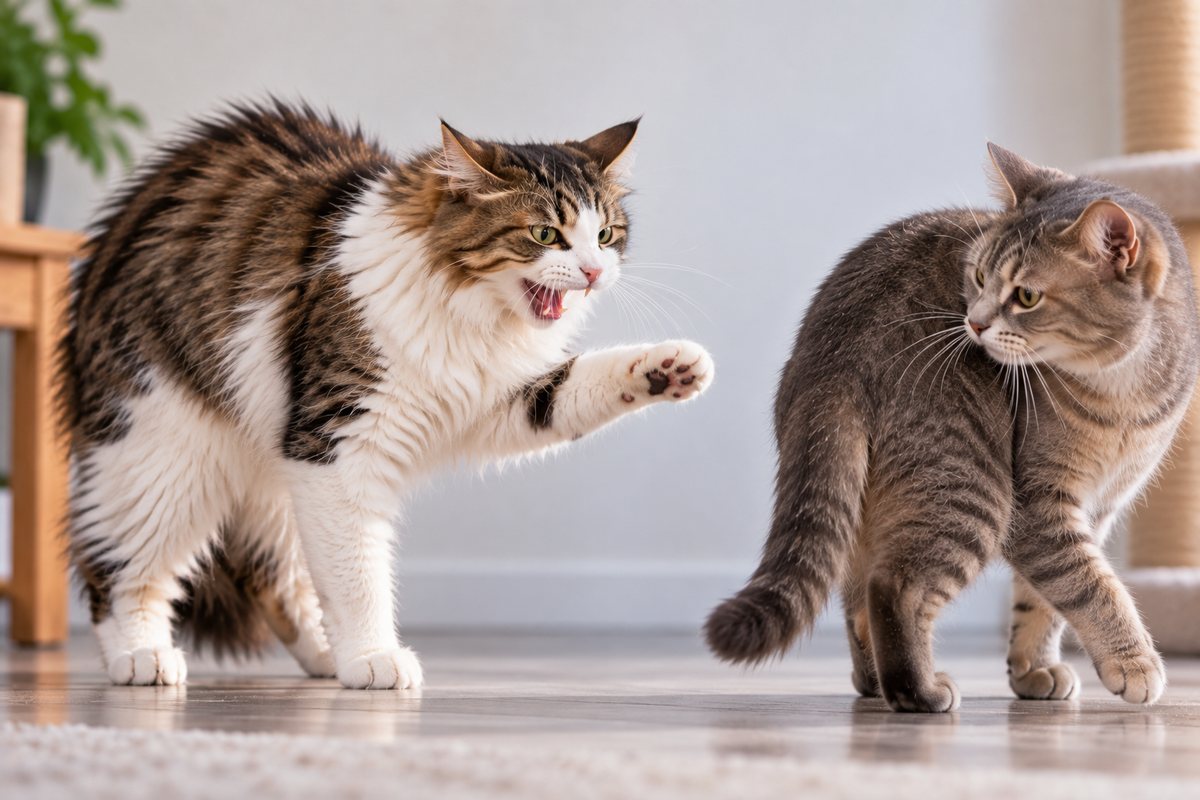
| Defensive & conflict behaviour | Low The Ringtail is generally sociable and adaptable, but retains an athletic, alert natural-cat style. Ordinary defensiveness should be low; crowding or poor introductions can still trigger territorial boundary-setting. |
| Household & environment | |
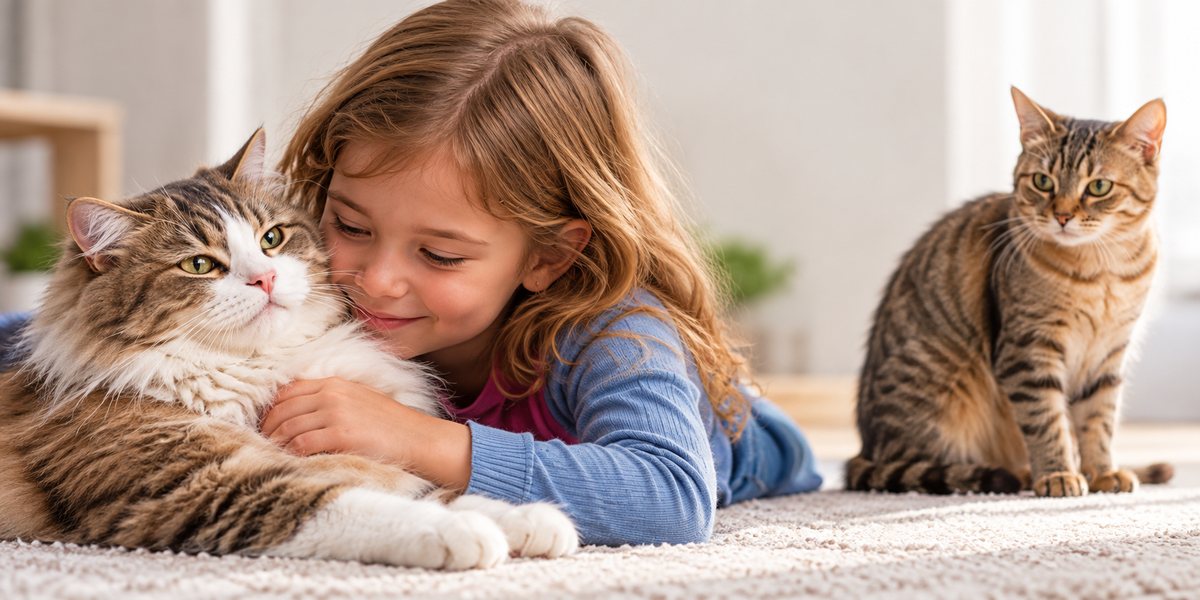
| Living with children | Good American Ringtails are generally sociable, adaptable cats and should fit well with respectful children who enjoy interactive play. Their flexible tail must never be pulled or manipulated, and the cat should always be able to leave handling. |
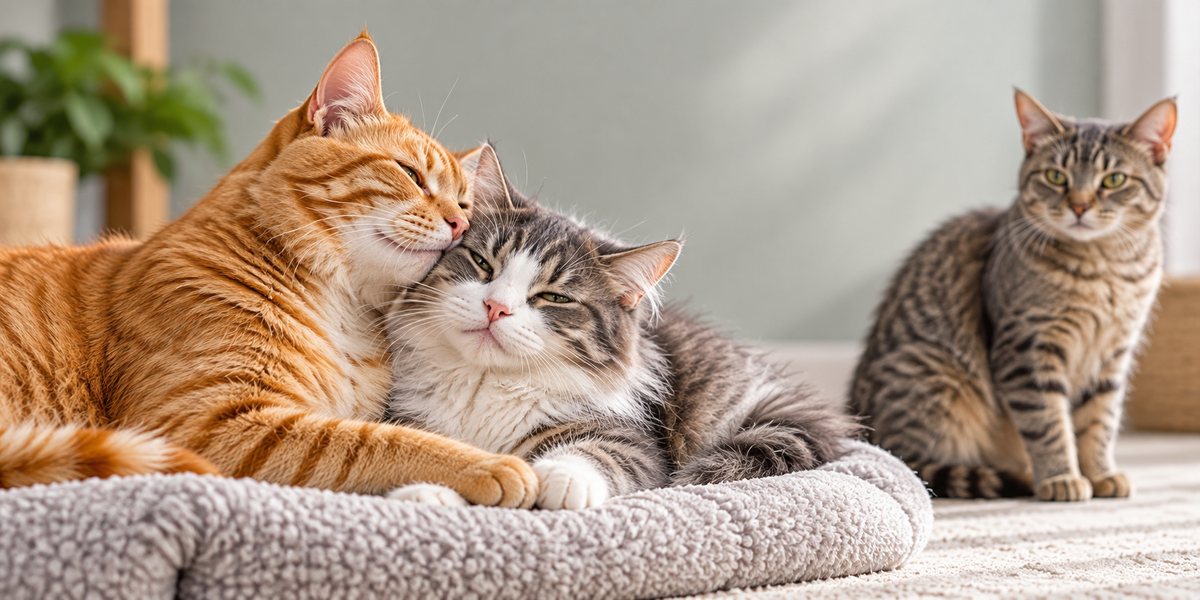
| Living with other cats | Often favorable American Ringtails are commonly affectionate and outgoing, so coexistence with other cats is often favorable; success is strongest with careful introductions and enough separate resting and feeding spaces. |
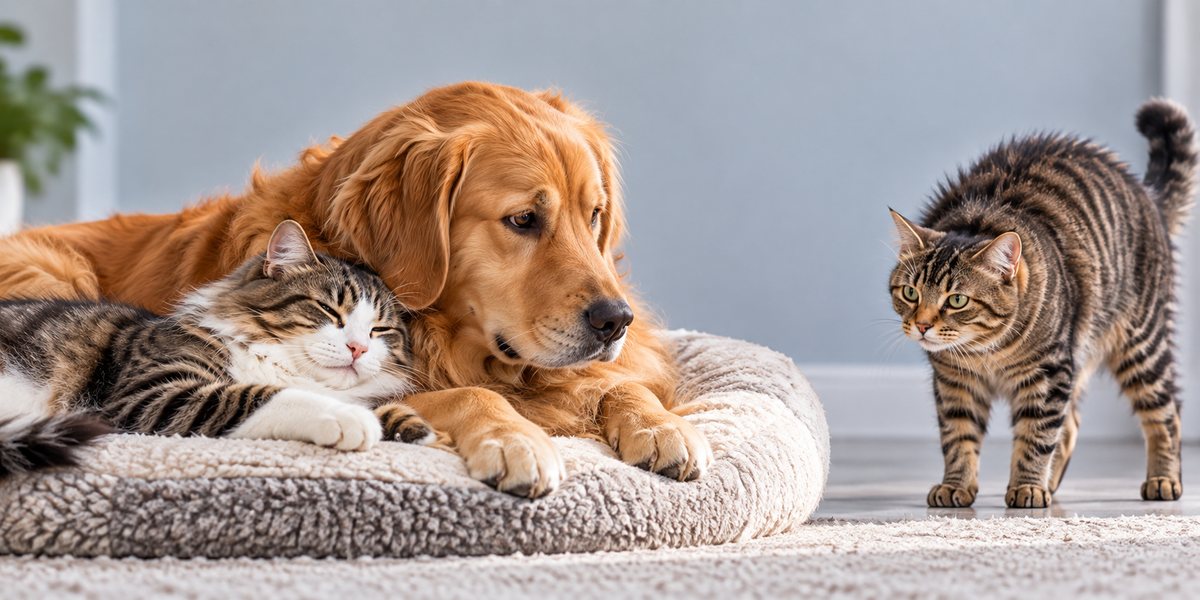
| Living with dogs | Good American Ringtails tend to get along with other animals, including compatible dogs, after sensible introductions. |
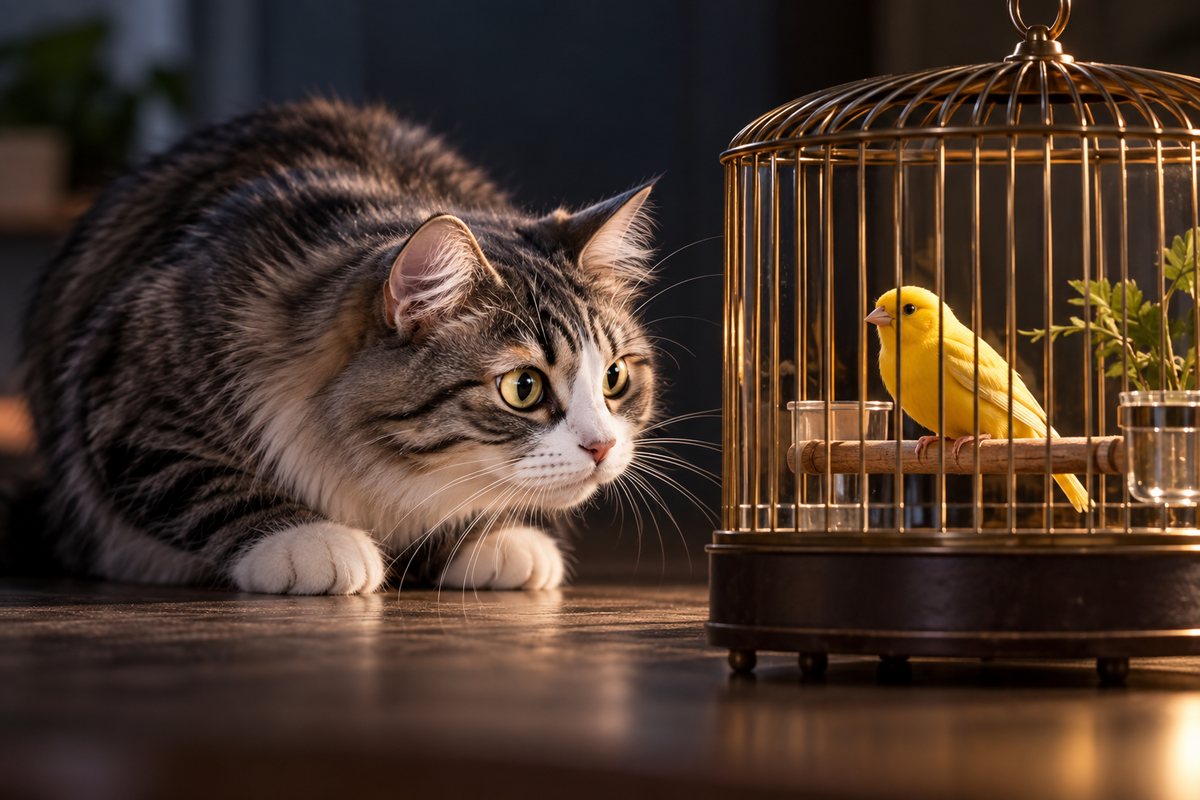
| Living around small pets | Normal predatory caution American Ringtails are not especially defined by hunting intensity, but they remain cats with normal predatory behavior. Small mammals and birds should have secure cat-proof housing rather than relying on apparent friendliness. |
| Indoor & home environment needs | Balanced indoor American Ringtails are adaptable companion cats with ordinary feline environmental needs. Multiple perches, scratching sites, hiding places, window views and daily interactive play should provide a good indoor baseline without requiring specialized housing. |
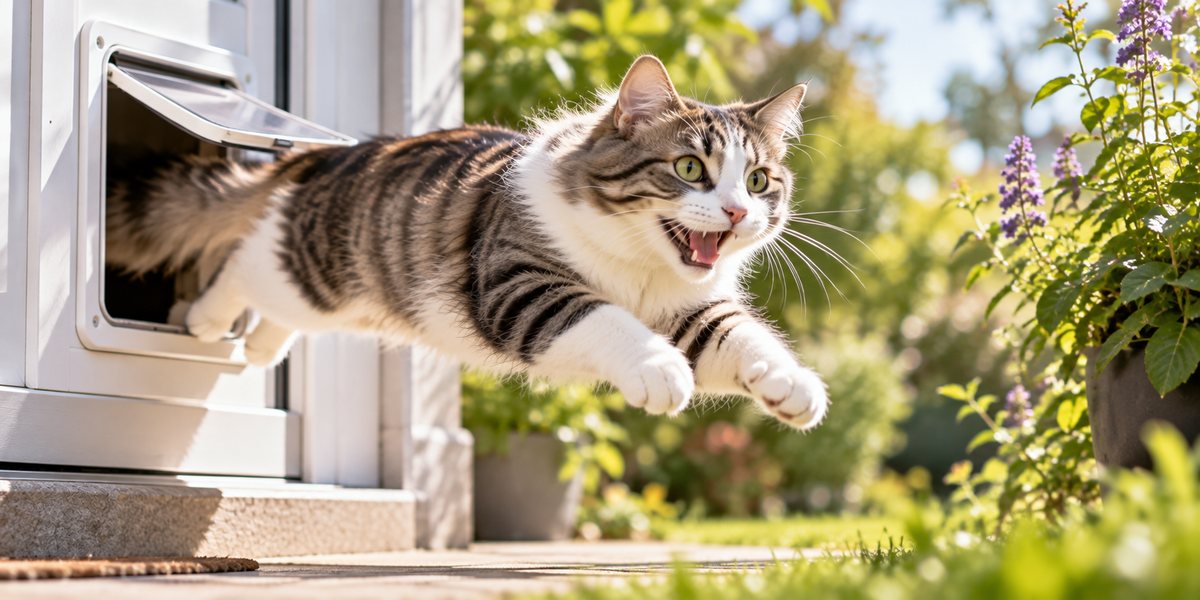
| Outdoor access considerations | Secure optional American Ringtails can live fully indoors when adequately enriched. If outdoor experience is offered, a secure enclosure or harness is preferable to free roaming, protecting an adaptable, curious cat without making outdoor access a requirement. |
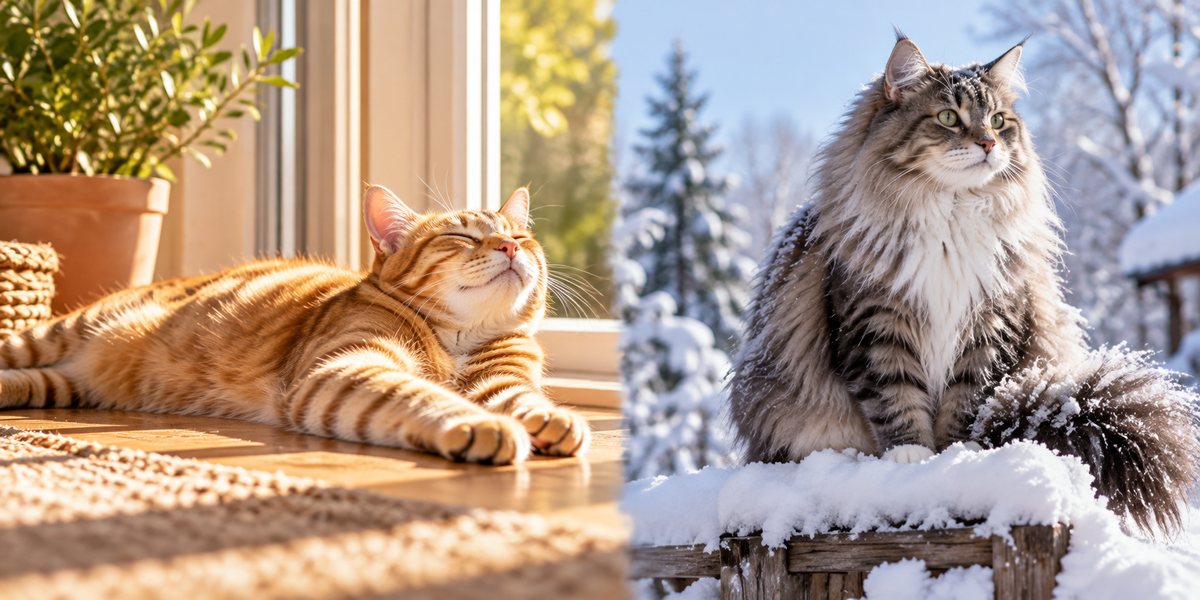
| Heat, cold & sun considerations | Moderate coat adaptable American Ringtails occur with ordinary short or longer coats and have no established extreme-climate specialization. Comfortable indoor temperatures, dry shelter, shade and water are appropriate, with adjustments based on the individual's coat density. |
| Caregiver time & experience | Moderate American Ringtails are adaptable companion cats with no established specialist-care burden. Daily play and social contact, routine grooming and ordinary preventive health care should be manageable for most committed caregivers. |
| Health & welfare | |
| Documented health predispositions | Limited specific risk American Ringtails are a small, developing population without a well-established breed-specific disease syndrome. Their curled tail should remain flexible and comfortable; otherwise health assessment should emphasize family history, genetic diversity and ordinary feline screening. |
| Screening & breeder questions | Ask what health problems are tracked in the lines and request actual test results Ask whether curled tails in the line remain fully flexible and pain-free, whether spinal or pelvic problems have occurred, and how the breeder monitors heart, kidney and general health in this small developing population. |
| Conformation-related welfare | Moderate tail concern The American Ringtail's tail curls over the back but should remain flexible and pain-free. Breeding should preserve normal vertebral function and free tail movement rather than selecting for a rigid or increasingly extreme curl. |
| Nutrition & weight management | Moderate condition led American Ringtails have no known special nutritional requirement. Feed a complete life-stage diet and use body condition, muscle condition and activity—not the curled tail or breed label—to set portions. |
| Longevity | 13–17 years The American Ringtail is generally robust and not defined by a major life-shortening syndrome; about 13–17 years is a reasonable working range. |
| Cost & availability | |
| Purchase cost | Very high: $1,200–$3,000+ American Ringtail: a practical breeder-market estimate is $1,200–$3,000+. This reflects that it is an very rare developing breed, so scarcity and transport can dominate price. |
| Adoption & rehoming cost | Very rare in rescue: $100–$600 when genuinely available American Ringtail: $100–$600 when genuinely available. The breed is scarce enough that a verified purebred rescue placement is unusual; transport may exceed the adoption fee. |
| Recurring ownership costs | Typical cat costs Recurring expenses are close to normal cat ownership: food, litter, preventive care and enrichment. The unusual tail itself should not create a routine cost, although new pain or reduced flexibility warrants veterinary evaluation. |
| Availability, waits & import | Very rare American Ringtails remain a small developing breed with very limited breeder numbers. In most countries there may be no active local source, so finding a genuine breeding program is substantially harder than simply joining a routine kitten waiting list. |
| Identity & real-world context | |
| Ownership & import restrictions | No known breed specific restrictions There are no known breed-specific ownership restrictions. Ordinary animal-welfare, identification, vaccination and cross-border import rules still apply where relevant. |
| Registry recognition | No separate current CFA/TICA/FIFe recognition American Ringtail is not a separately recognized current breed identity in CFA, TICA or FIFe within the FSC core registry matrix; recognition by smaller, national or experimental registries can differ. |
| Similar breeds & identity distinctions | Other curled tail cats The American Ringtail is defined by a tail that curls over the back yet remains flexible. That differs from bobtail breeds, where the tail is structurally shortened, and from an ordinary cat that merely carries a normal-length tail high when excited. |
| Reported characteristic quirks | Individual quirks often center on play and exploration American Ringtails characteristically carry the tail curled over the back when relaxed or interested, yet can straighten it. Owners may notice the tail becoming an unusually expressive part of greeting and exploration. |
Browse all 53 breed characteristics
Open any characteristic to compare all breeds on that dimension.
 English