
Compare Cat Breeds
Compare up to three breeds across all 53 characteristics. Values are shown directly so the differences are easier to scan.
| Characteristic | 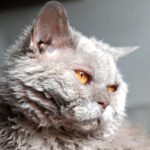 Selkirk Rex |
|---|---|
| Body & development | |
| Adult size | Medium to large |
| Adult weight | 3.0–7.0 kg (6.6–15.4 lb) Selkirk Rex cats are medium to large and heavy-boned; about 3.0–7.0 kg (6.6–15.4 lb) is a practical range, males often larger. |
| Build & distinguishing morphology | Heavy boning · muscular · slightly rectangular Build: heavy boning; muscular; slightly rectangular. |
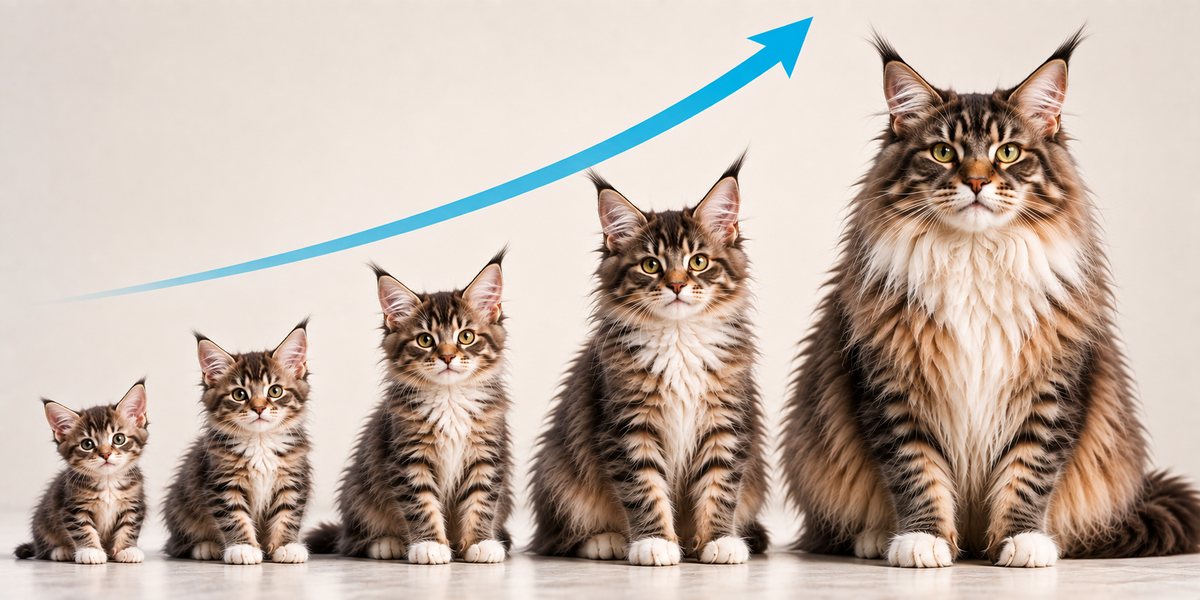
| Maturation | 2-3 years Selkirk Rex cats mature relatively slowly: their substantial body continues broadening after the first year, and full physical and coat maturity is typically reached around 2–3 years. |
| Coat & appearance | |
| Coat length | Short · long Occurs in both shorthair and longhair curly-coated forms. |
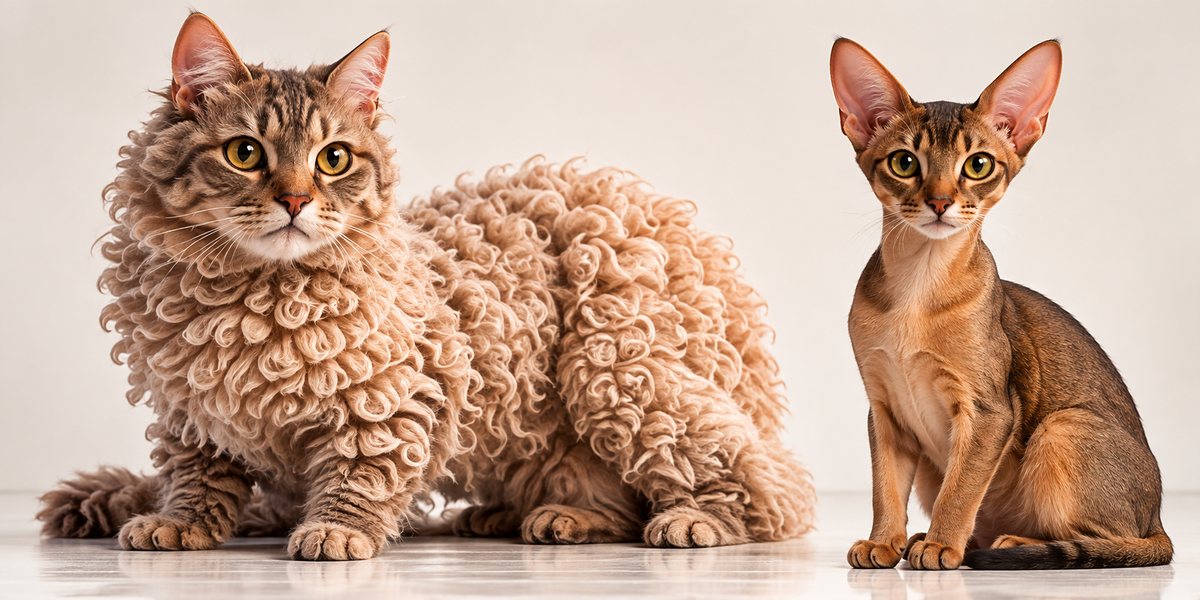
| Coat texture & undercoat | Dense · plush · curly guard down awn · coarse guard overall soft Coat: dense; plush; curly guard down awn; coarse guard overall soft. |
| Colors & patterns | Rainbow all Colors/patterns: rainbow all. |
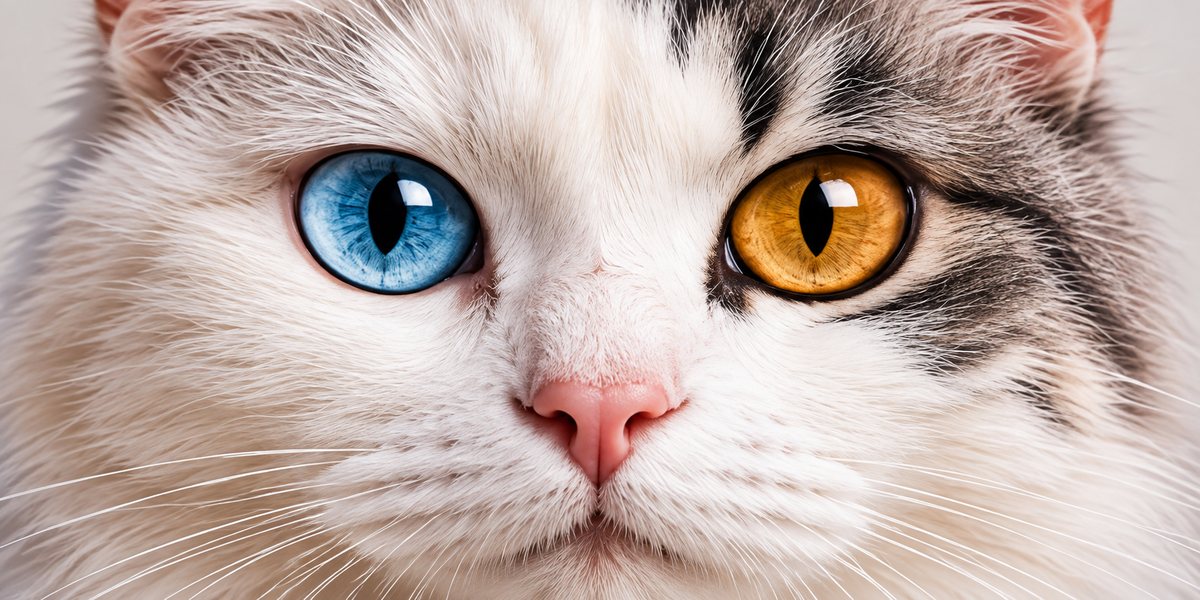
| Eye colors | All eye colors; coat-dependent All usual feline eye colours occur and generally correspond with coat colour. |
| Coat & routine care | |
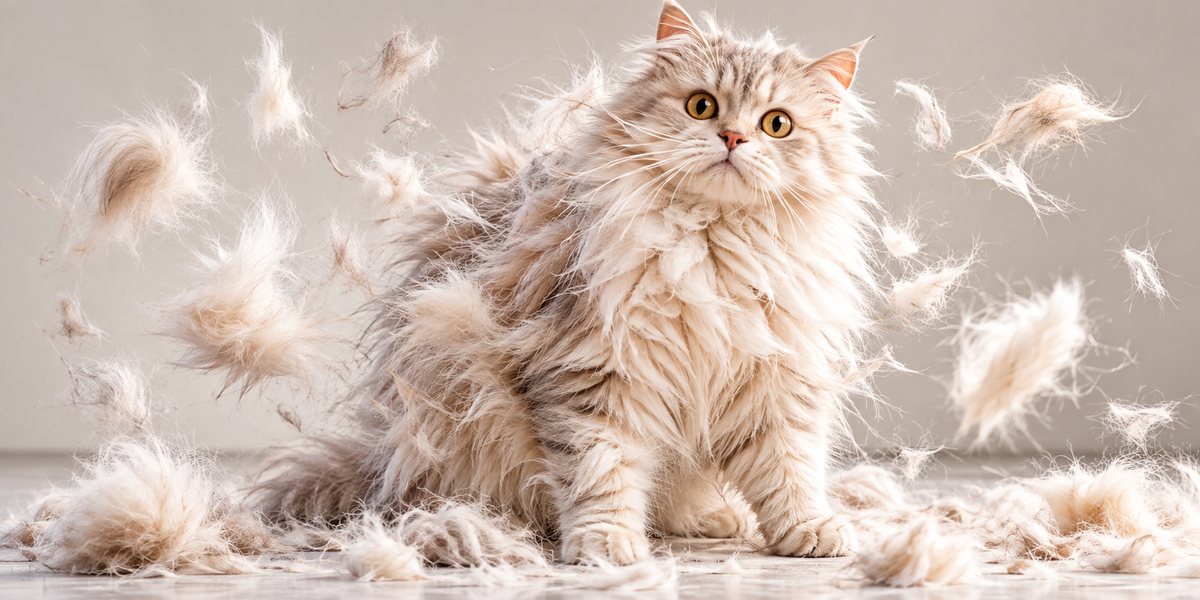
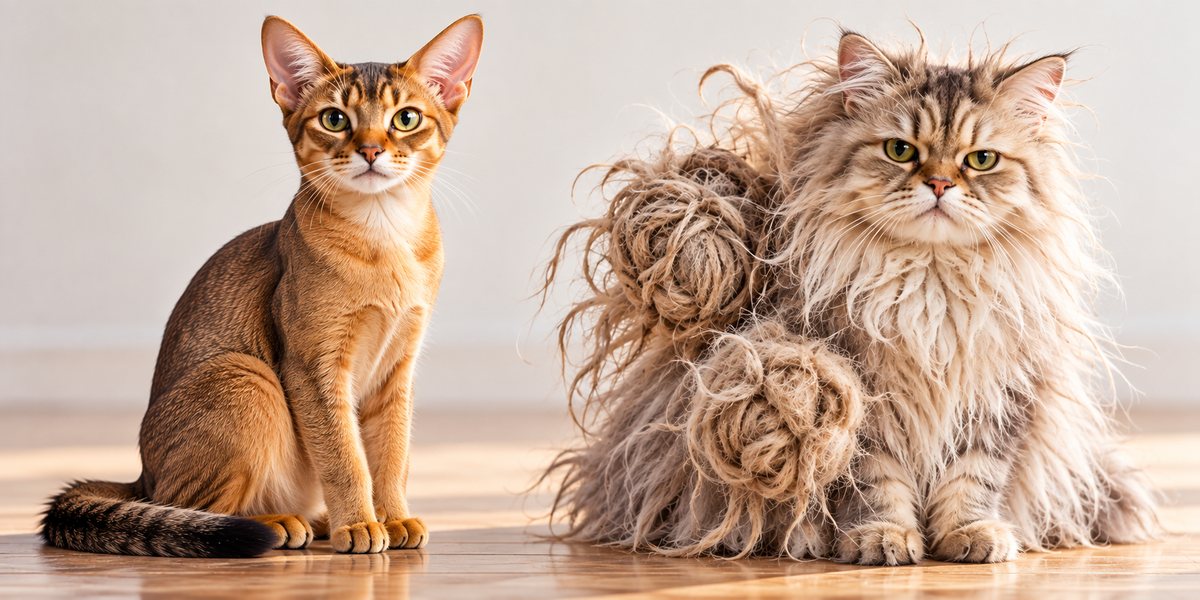
| Shedding | Moderate Moderate shedding; the dense curly coat can hold loose hairs in the curls rather than dropping them immediately. |
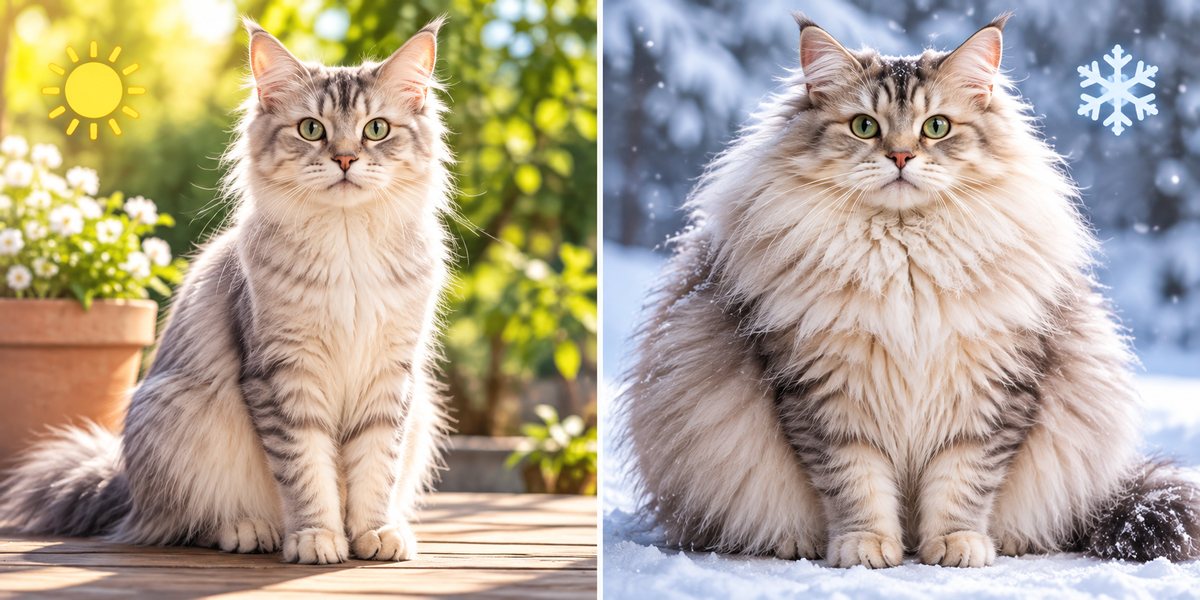
| Seasonal coat changes | Moderate seasonal shed The dense Selkirk Rex coat undergoes a moderate seasonal turnover; loose hairs can remain caught in the curls, making shedding more apparent during grooming. |
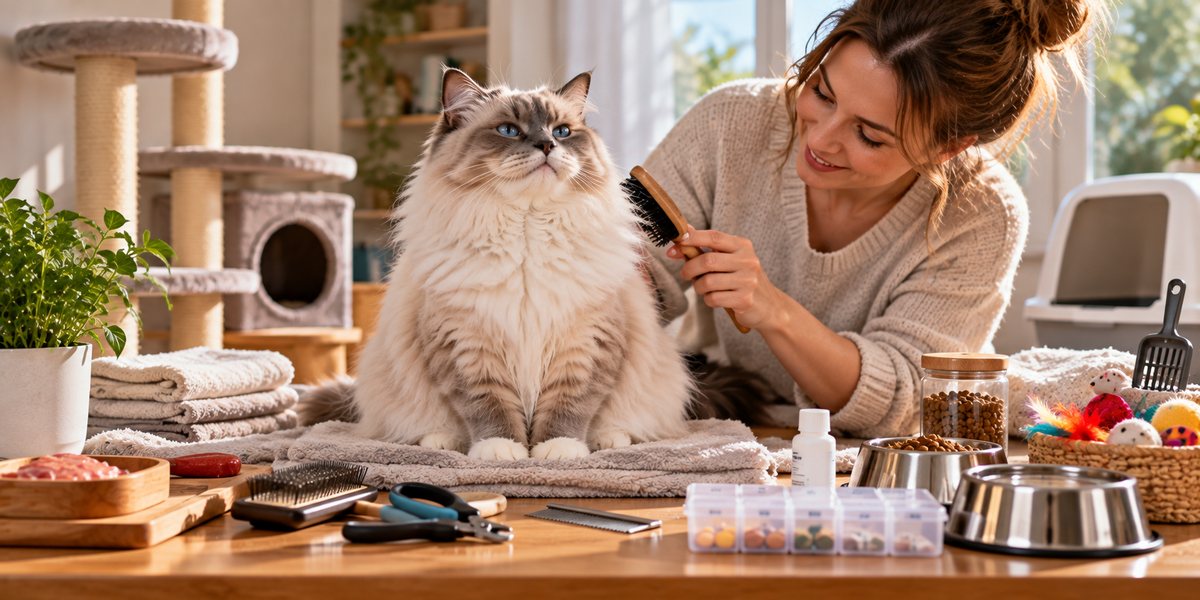
| Brushing & combing | Couple times week Brushing/combing: couple times week. |
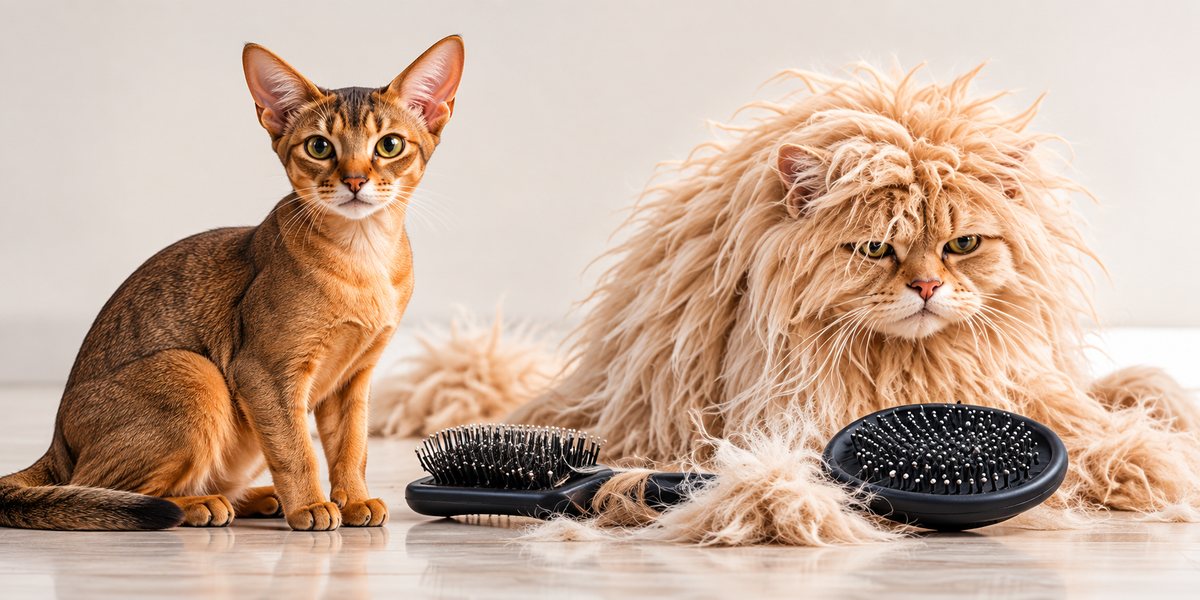
| Tangle & matting tendency | Moderate to high Dense curls can interlock and felt, especially in longhaired Selkirks; gentle combing is needed because overbrushing can also disrupt the characteristic curl. |
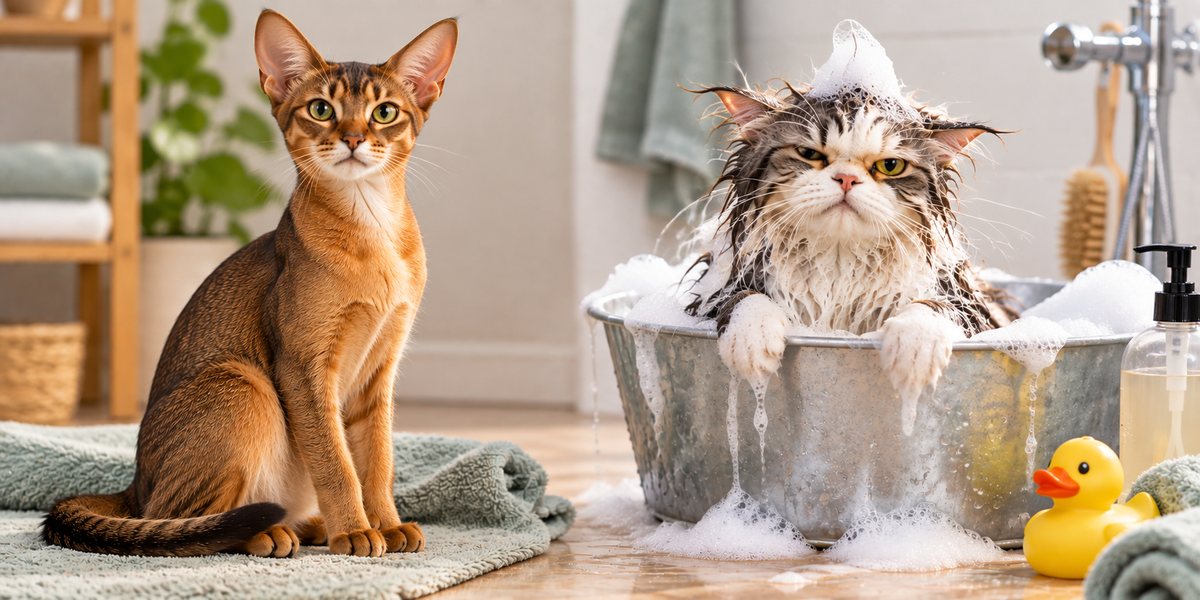
| Skin & bathing care | Bath rare · moisturizing shampoo and air dry if needed Skin/bathing: bath rare; moisturizing shampoo and air dry if needed. |
| Distinctive routine care | Gentle curl-preserving coat care The curls benefit from gentle combing and finger-fluffing rather than aggressive brushing or blow drying. |
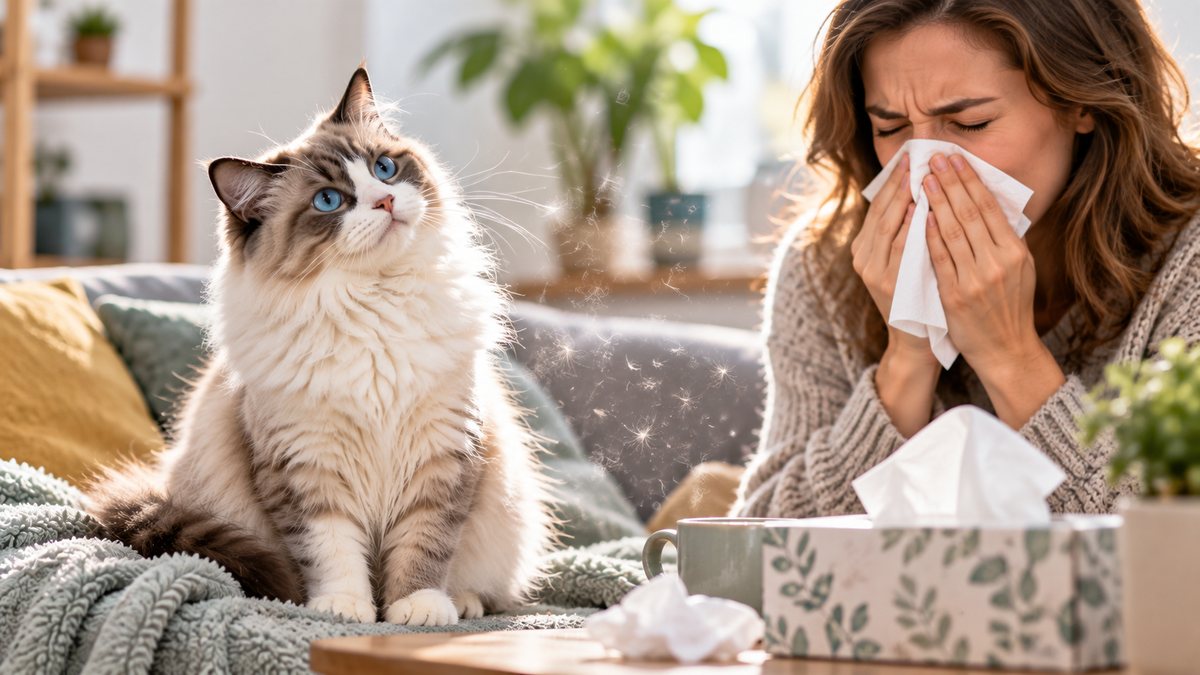
| Allergy & allergen evidence | No breed specific reduction established There is no known reason to regard this breed as hypoallergenic. All cats produce allergens, and coat length or shedding alone does not determine allergy risk. |
| Activity & intelligence | |
| Activity level | Moderate |
| Playfulness | High |
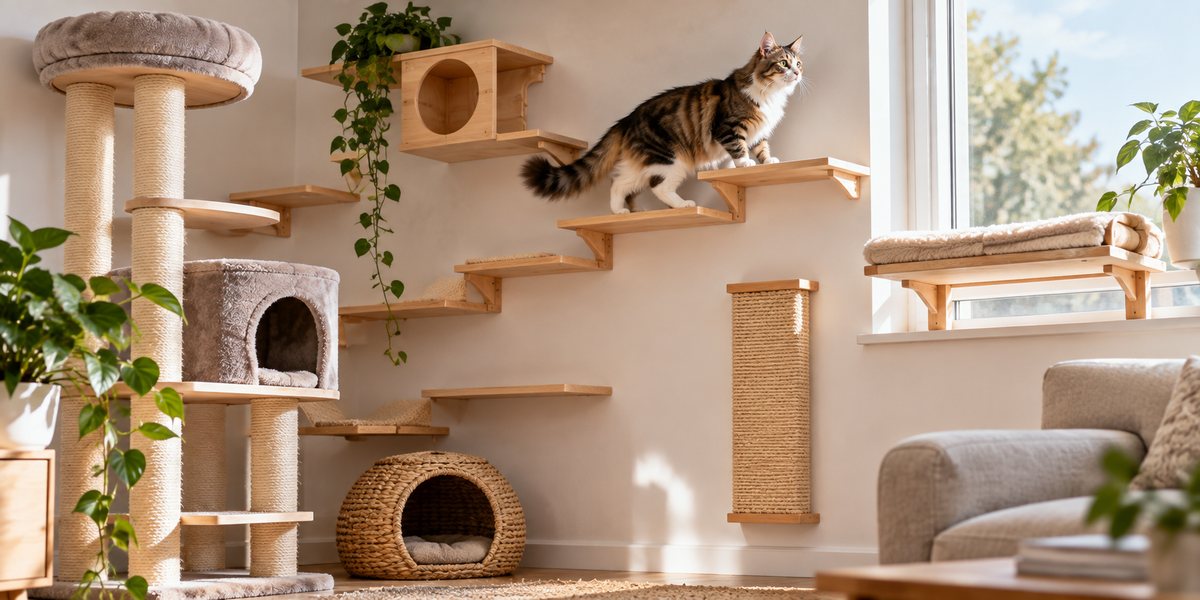
| Climbing & jumping | High The Selkirk Rex is playful but relatively substantial in build; sturdy cat trees and broad perches support regular climbing without requiring extreme agility. |
| Enrichment demand | High High enrichment demand: daily interactive play, climbing and varied toys suit its strong play drive and curiosity despite a moderate overall activity level. |
| Learning & training | Moderate The Selkirk Rex is generally patient and people-oriented, making routine learning and simple reward-based training straightforward even if it is less driven than highly athletic breeds. |
| Curiosity & exploration | High Selkirk Rex cats are playful and sociable but generally easygoing; curiosity is moderate to high, with steady interest in people and novelty rather than constant high-speed exploration. |
| Hunting & chasing tendencies | High A moderate-to-strong chase interest is likely; Selkirks are playful and curious but generally less frenetic than the most athletic rex and oriental breeds. |
| Personality & social | |
| Sociability with familiar people | Very high Selkirk Rex are affectionate, people-oriented and easygoing cats that generally enjoy steady family companionship. |
| Affection | Lap contact · proximity · interactive playful Affection combines close contact with gentle playful companionship. |
| Lap & cuddling preference | High Strong cuddling/lap tendency is commonly supported. |
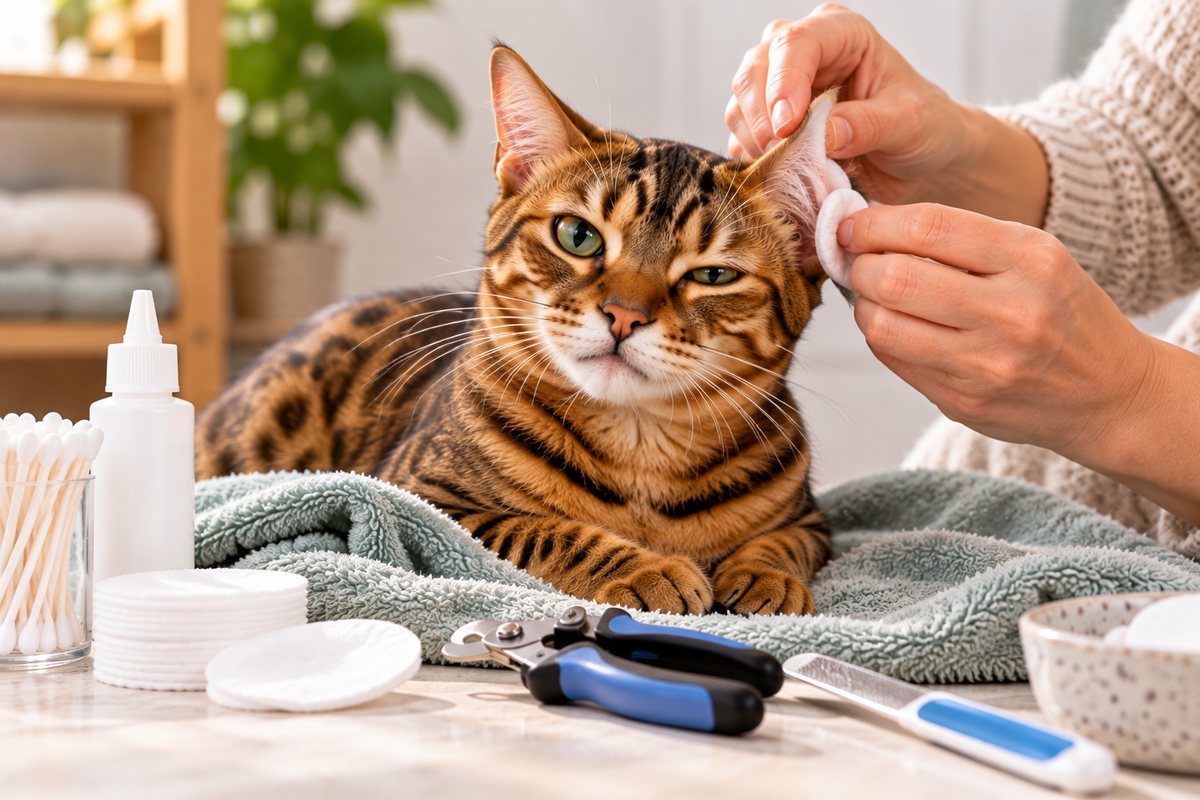
| Handling tolerance | High The Selkirk Rex is generally patient, affectionate and easygoing, traits that suit grooming and routine examination; dense curls should be handled without rough pulling. |
| Independence & social demand | Moderate Social and affectionate without the unusually high dependence of Oriental-type breeds. |
| Vocalization | Low to moderate; individual conversational style varies Usually quiet to moderately vocal; Selkirks tend to be sociable and communicative without the persistent voice associated with Oriental breeds. |
| Response to unfamiliar people | High Easygoing temperament supports visitor acceptance. |
| Adaptability to change | High Selkirk Rex cats are typically patient, sociable, and easygoing, traits that usually make them resilient to ordinary changes in household routine and composition. |
| Noise & busy-environment sensitivity | Moderate Selkirk Rex cats are typically patient and easygoing; normal family bustle is usually acceptable, but their relaxed style does not imply a preference for constant loud stimulation. |
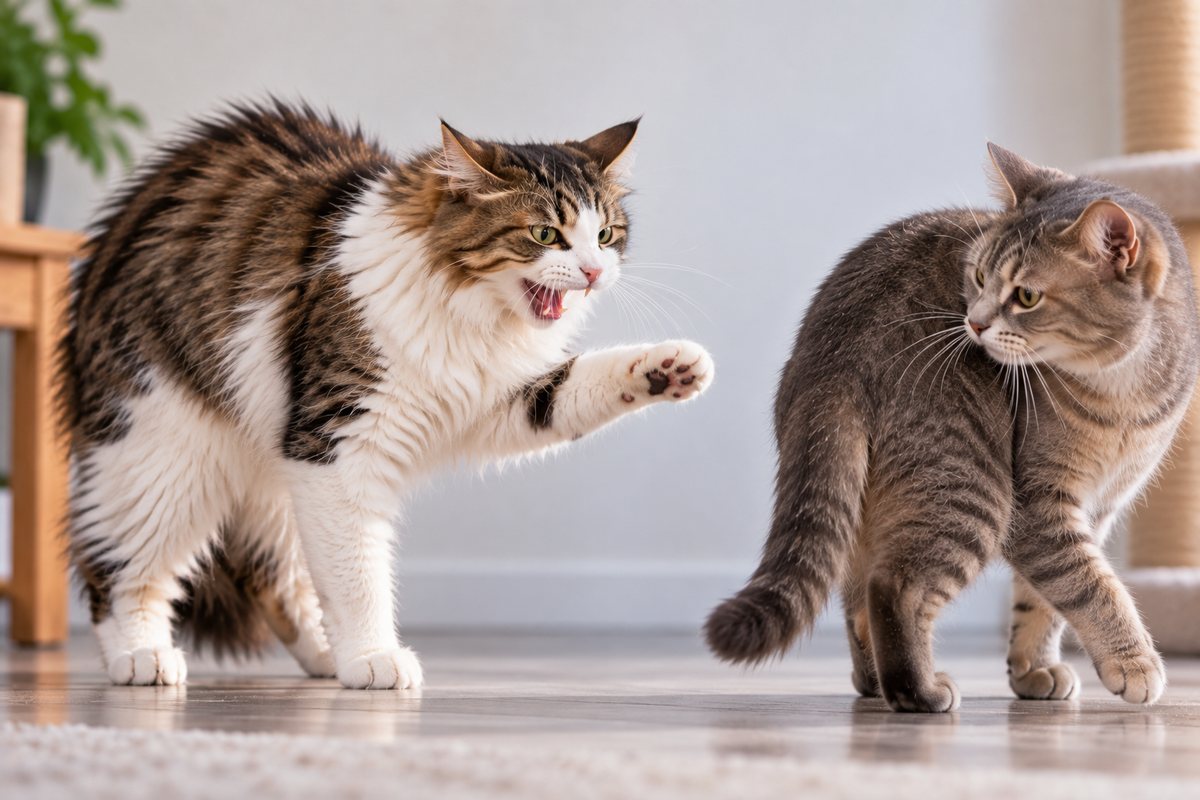
| Defensive & conflict behaviour | Very low Patient, tolerant temperament supports low ordinary conflict tendency. |
| Household & environment | |
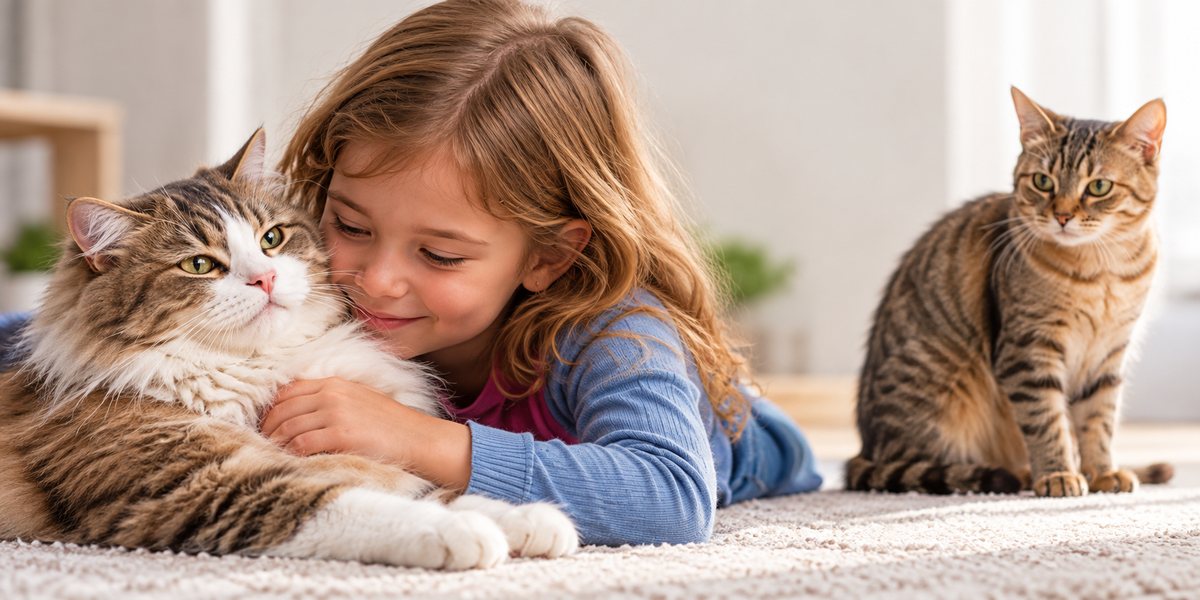
| Living with children | Favorable tendency Patient, tolerant temperament generally suits respectful children. |
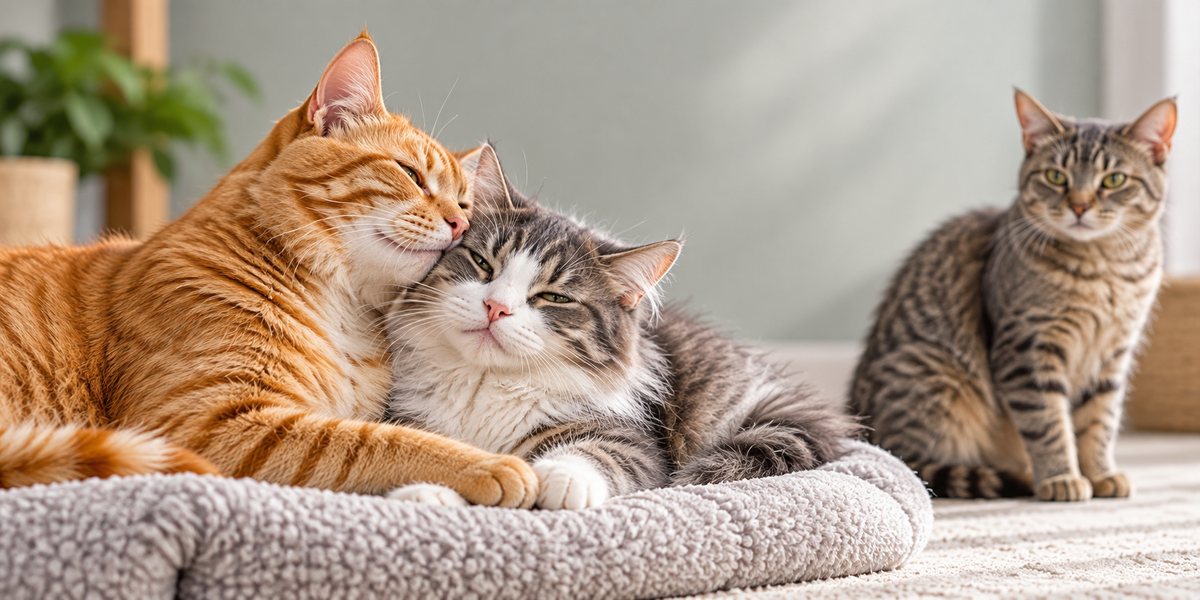
| Living with other cats | Often workable |
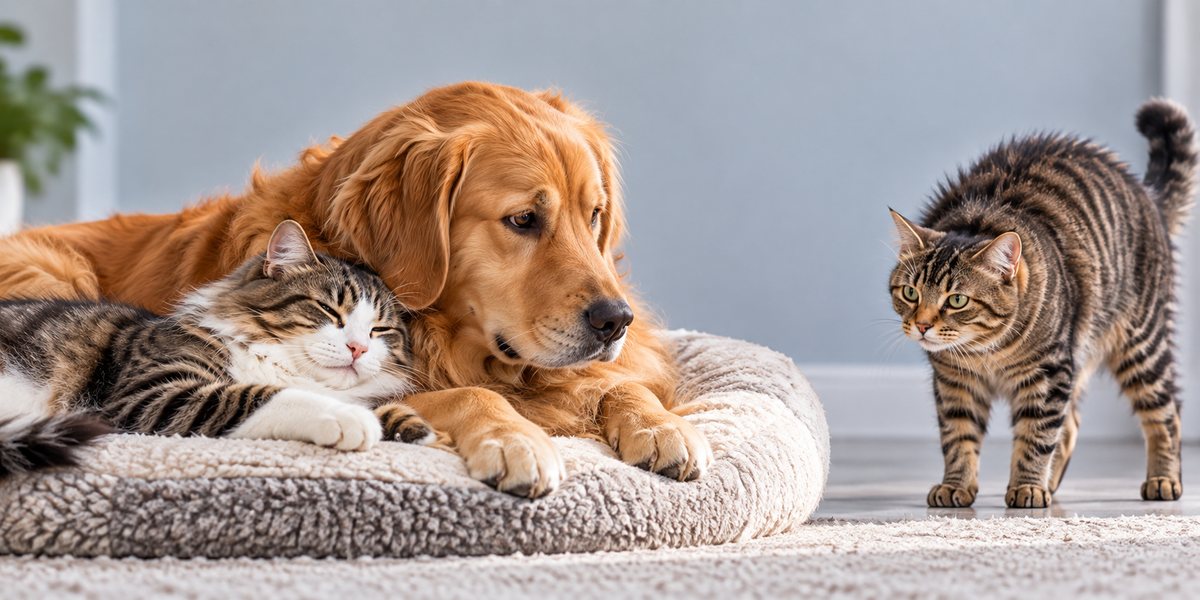
| Living with dogs | Good Easygoing sociability generally supports compatible dogs. |
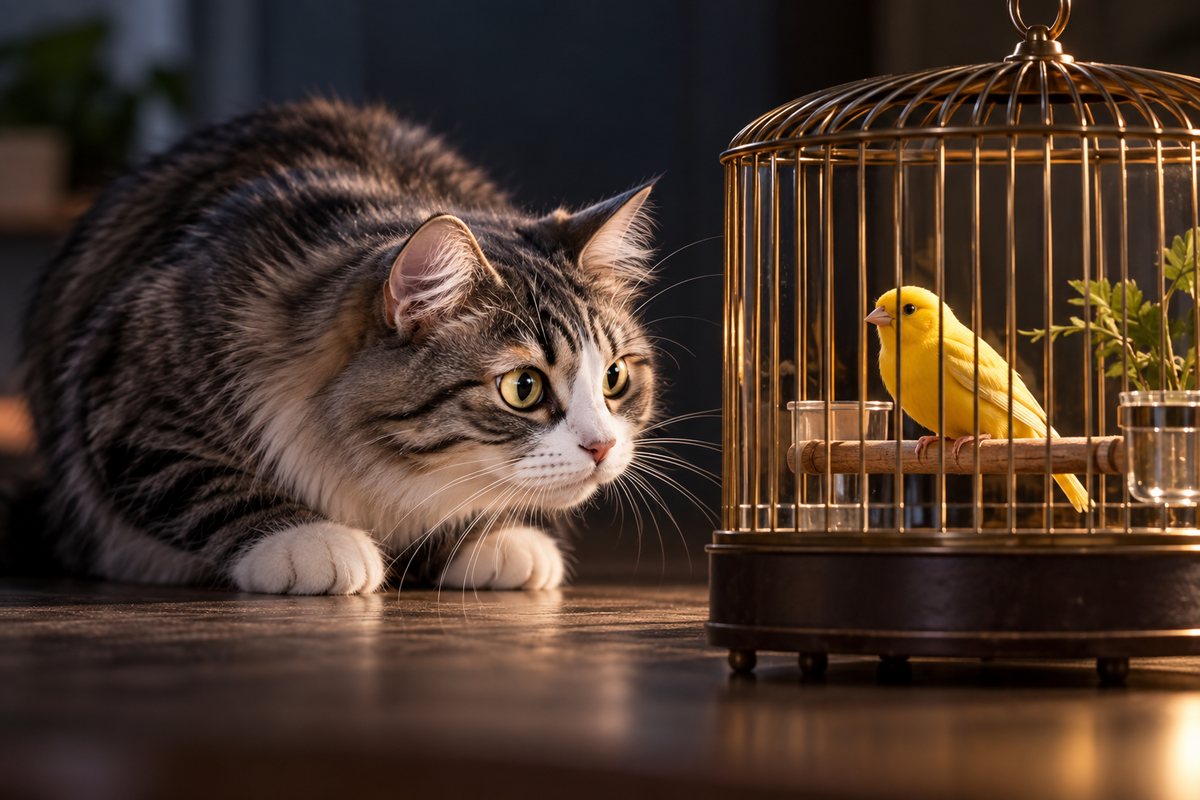
| Living around small pets | Normal predatory caution Selkirk Rex cats are generally calm, moderate companions and are not defined by unusually high prey drive. They remain cats, however, so birds, rodents and similar pets should be securely separated from unsupervised access. |
| Indoor & home environment needs | Companionship · routine coat care Home needs are moderate, with emphasis on companionship and coat-specific care. |
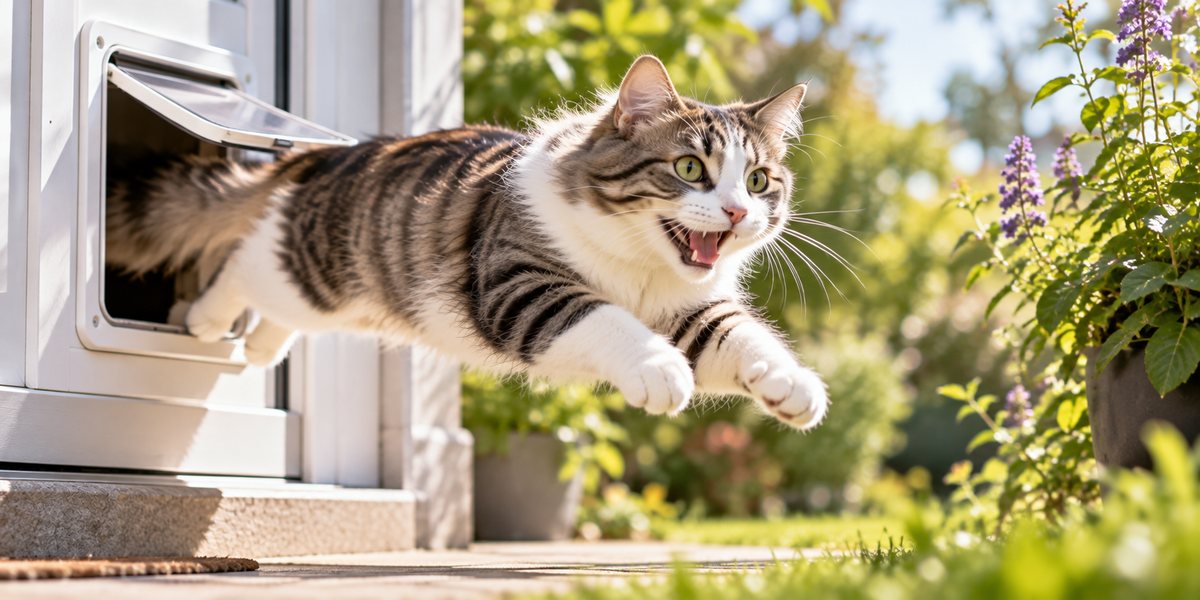
| Outdoor access considerations | Secure optional Selkirk Rex cats are generally moderate companions and do not need unrestricted outdoor access. A secure catio or enclosed garden can add exercise and sensory interest while keeping the cat protected. |
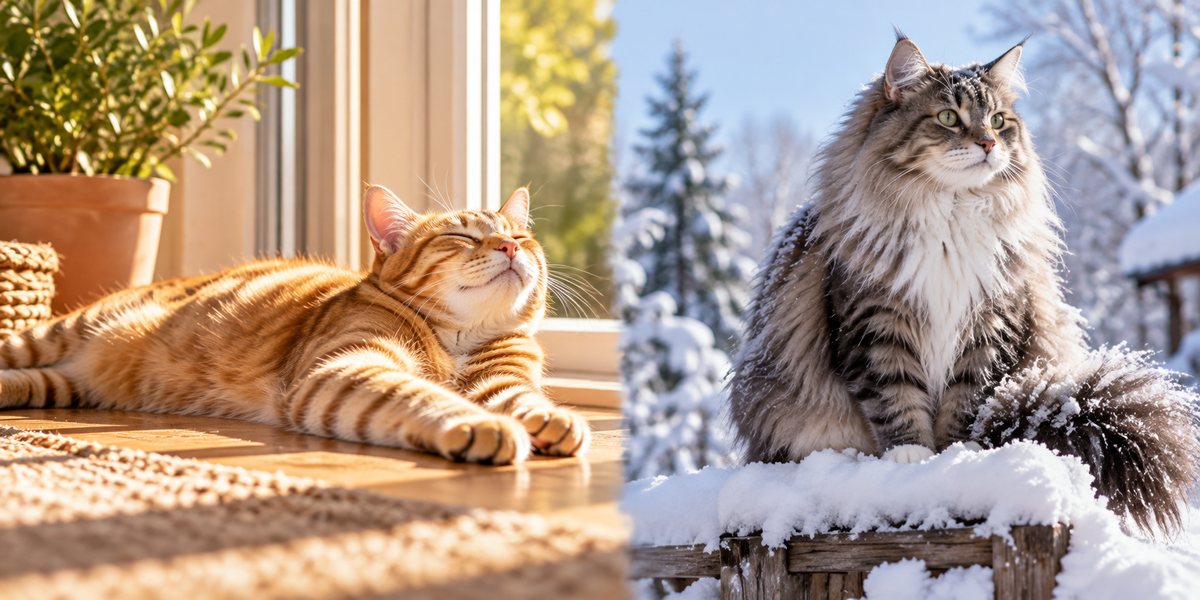
| Heat, cold & sun considerations | Dense curly heat caution Selkirk Rex cats have a dense curly coat that provides substantial insulation. They generally handle cool conditions well but need shade, water, airflow and cool resting surfaces during sustained heat. |
| Caregiver time & experience | Moderate Coat maintenance and social needs require regular involvement. |
| Health & welfare | |
| Documented health predispositions | No major breed-specific predisposition is currently prominent The Selkirk Rex is generally regarded as a healthy breed without a single dominant breed-specific disorder. |
| Screening & breeder questions | Ask for documentation relevant to the breed’s recorded health concerns Ask whether breeding cats are screened for polycystic kidney disease and hypertrophic cardiomyopathy where ancestry warrants it, and ask about hip, skin and coat problems in close relatives. |
| Conformation-related welfare | Low coat heavy type Selkirk Rex cats combine a curly coat with a substantial body. Welfare selection should maintain healthy skin, whiskers and coat, normal facial proportions and free movement rather than intensifying curl, heaviness or facial shortening. |
| Nutrition & weight management | Large coated weight watch Selkirk Rex cats are substantial and densely coated, so visual assessment can underestimate fat. Use hands-on body-condition scoring and measured meals, maintaining muscle while avoiding the assumption that a round, plush outline should also be heavy. |
| Longevity | 12–16 years Selkirk Rex cats commonly fit a roughly 12–16-year range; responsible screening for health issues inherited through Persian and British-type ancestry can improve lifetime outlook. |
| Cost & availability | |
| Purchase cost | High: $800–$2,000 Selkirk Rex: a practical breeder-market estimate is $800–$2,000. This reflects that it is an recognized rex breed with a moderate specialist breeder base. |
| Adoption & rehoming cost | Uncommon in rescue: $100–$500 typical rescue/adoption fee Selkirk Rex: $100–$500 typical rescue/adoption fee. The breed does appear in rescue, but much less often than mixed-breed cats or the most numerous pedigrees. |
| Recurring ownership costs | Coat-specific maintenance The curly coat needs appropriate home grooming but rarely requires automatic professional care. A substantial body can raise food costs modestly, while dental/preventive veterinary care and breed-family cardiac/orthopedic awareness round out the budget. |
| Availability, waits & import | Moderately available Selkirk Rex cats have established breeders across North America, Europe and other regions but remain a minority breed. A regional breeder can often be found with patience, with coat length and particular colors affecting waiting time. |
| Identity & real-world context | |
| Ownership & import restrictions | No known breed specific restrictions There are no known breed-specific ownership restrictions. Ordinary animal-welfare, identification, vaccination and cross-border import rules still apply where relevant. |
| Registry recognition | CFA: recognized breed/division · TICA: Championship-recognized / current breed identity · FIFe: fully recognized breed / mapped breed identity Currently recognized in all three registries tracked by the FSC core matrix: CFA, TICA and FIFe. |
| Similar breeds & identity distinctions | British Longhair LaPerm Selkirk Rex cats are distinguished by a plush curly coat on a substantial body. Straight-coated relatives can resemble British-type cats, while LaPerm curls occur on a more moderate body and usually form a looser, less plush coat. |
| Reported characteristic quirks | Individual quirks often center on play and exploration Selkirk Rex cats are sometimes nicknamed for a tousled 'bad hair day' appearance, and many pair that comic coat with a patient habit of staying near household activity. |
Browse all 53 breed characteristics
Open any characteristic to compare all breeds on that dimension.

 English