
Compare Cat Breeds
Compare up to three breeds across all 53 characteristics. Values are shown directly so the differences are easier to scan.
| Characteristic | 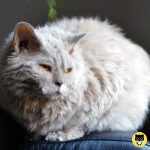 Lambkin |
|---|---|
| Body & development | |
| Adult size | Small |
| Adult weight | 2.3–4.1 kg (5.1–9.0 lb) Adults are generally around 2.3–4.1 kg (5–9 lb). |
| Build & distinguishing morphology | Dwarf short legs · curly coat · selkirk rex munchkin derived The Lambkin combines short Munchkin-derived legs with a curly Selkirk Rex-derived coat. |
| Maturation | 12-18 months The short-legged Lambkin generally reaches most adult dimensions during the first year, although coat development and body condition can continue through roughly 12–18 months. |
| Coat & appearance | |
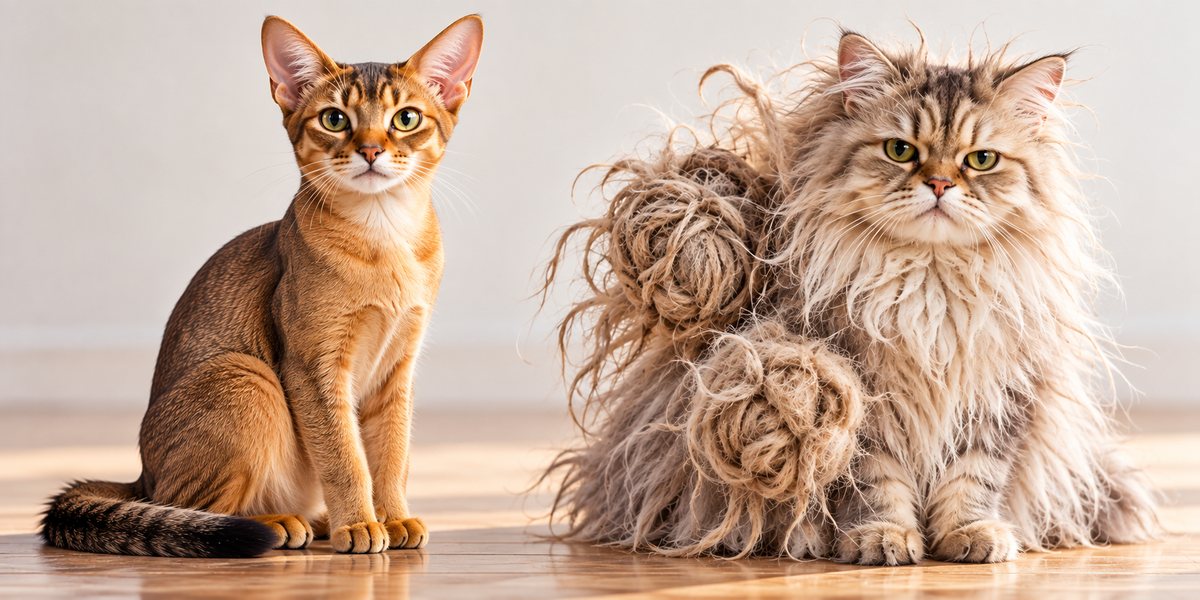
| Coat length | Variable The defining coat is rex/curly, but coat length and expression require a richer categorical record than a simple short/long label. |
| Coat texture & undercoat | Curly short or long · plush · moderate undercoat The Lambkin combines a curly Selkirk-derived coat with short or longer length; texture is plush and soft, with a moderate undercoat contributing to the curl. |
| Colors & patterns | Broad palette; solid · tabby · tortie · pointed · bicolor Selkirk Rex/Munchkin ancestry gives the Lambkin a broad palette including solids, tabbies, torties, points and white spotting. |
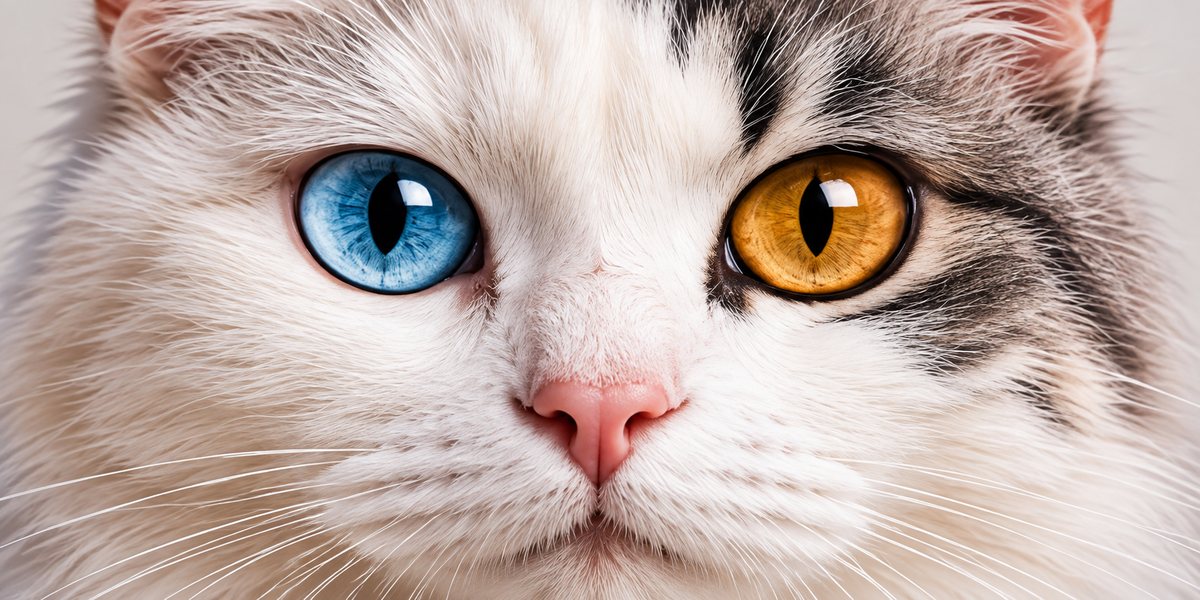
| Eye colors | All eye colors; coat-dependent Selkirk Rex/Munchkin ancestry supports a broad coat-dependent range, including gold, green and blue. |
| Coat & routine care | |
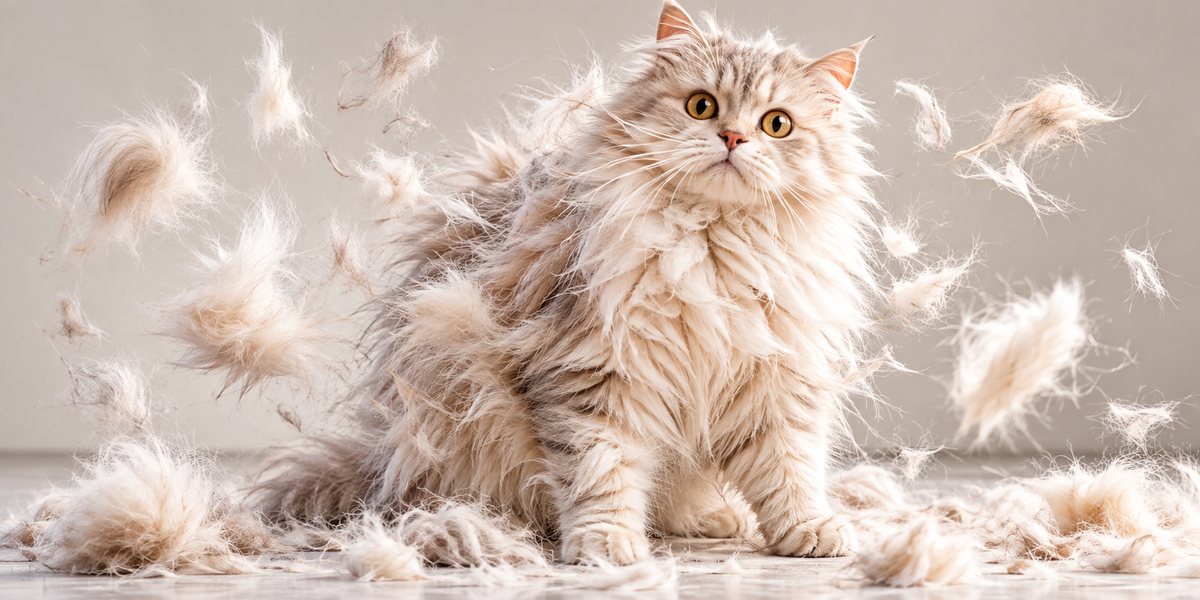
| Shedding | Low to moderate Low to moderate shedding; the Rex-influenced curly coat may reduce loose hair, while coat density varies among individuals. |
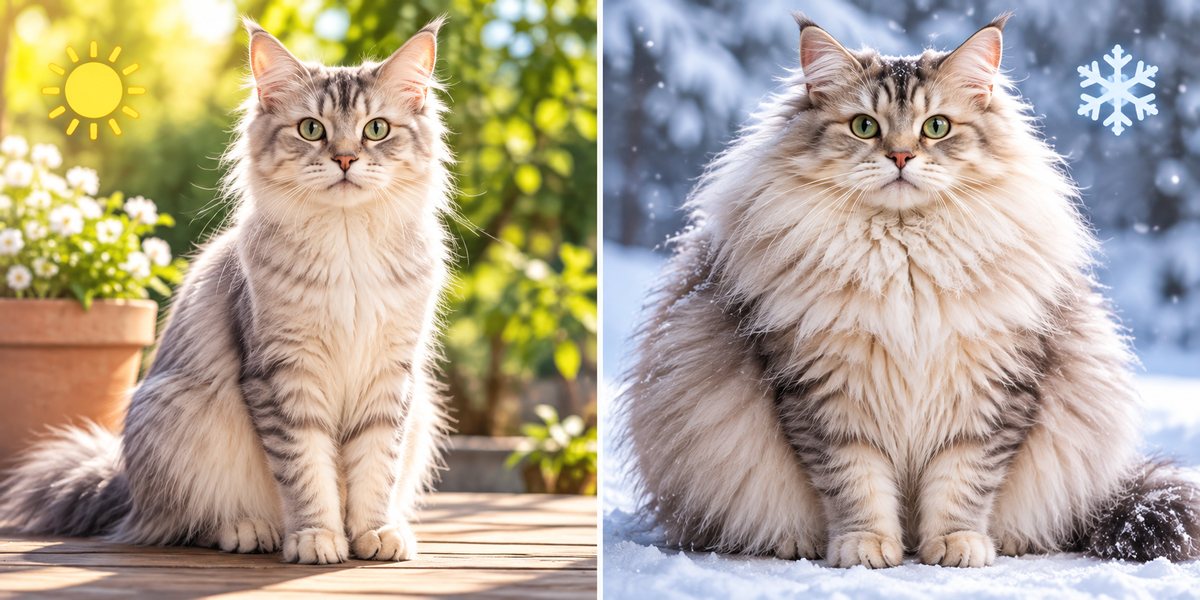
| Seasonal coat changes | Mild to moderate seasonal change The Lambkin’s curly coat can change modestly with the seasons; longer-coated cats may release more hair in spring, with curls retaining some loose hairs until grooming. |
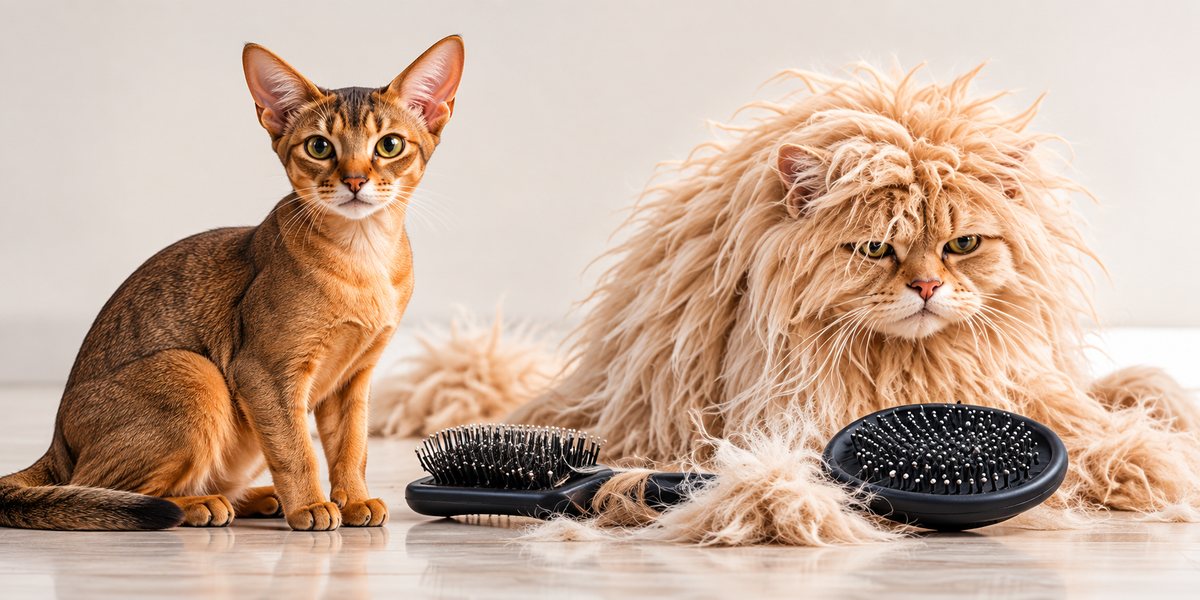
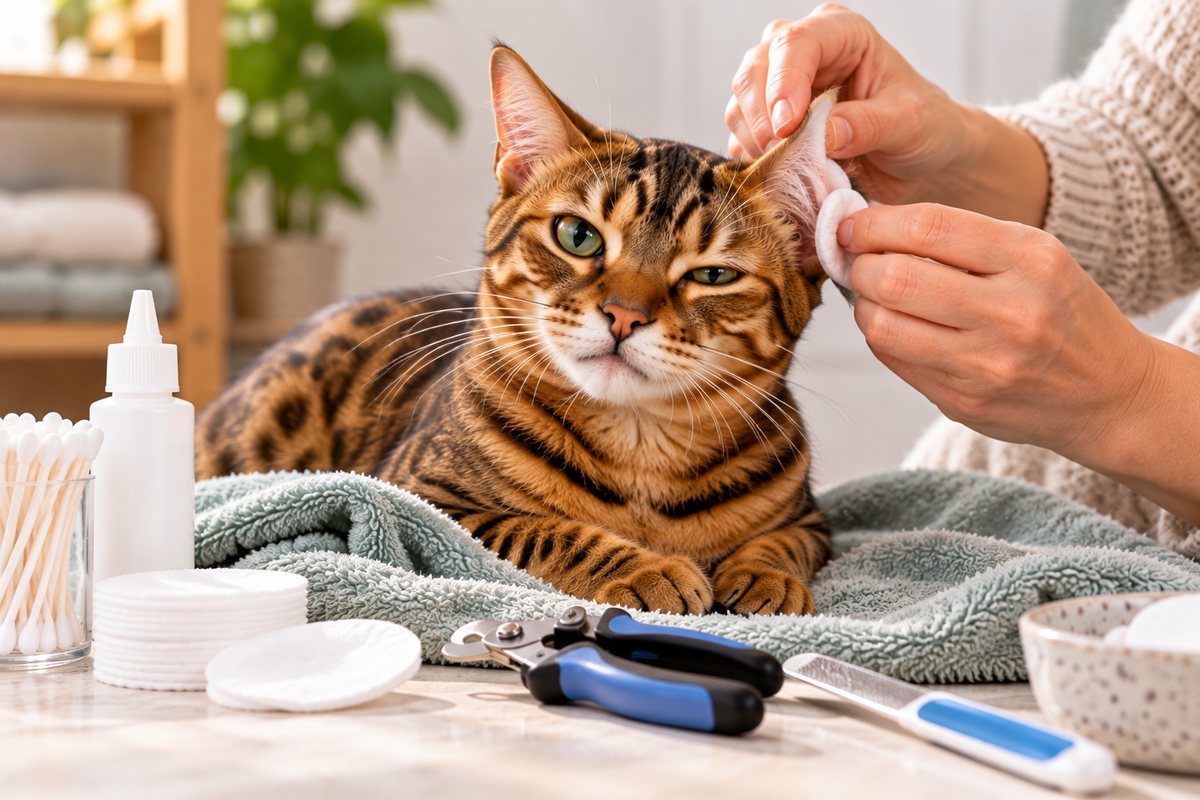
| Brushing & combing | The curly coat benefits from gentle combing several times a week to control tangles. |
| Tangle & matting tendency | Moderate The curly plush coat can interlock and felt if neglected, particularly in longer-coated Lambkins and in friction areas. |
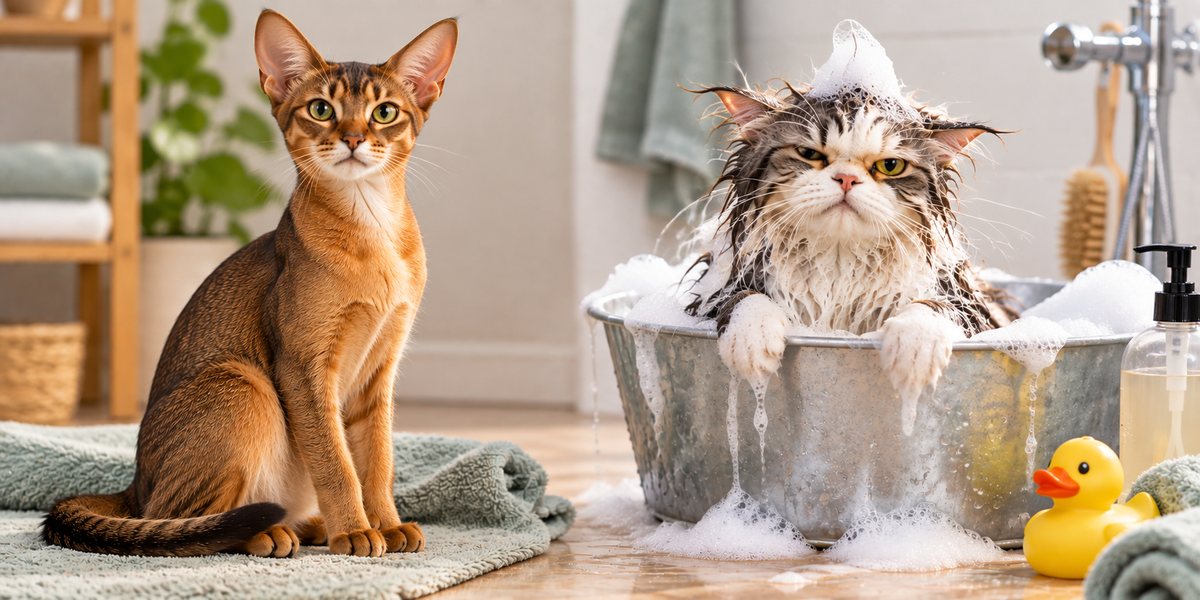
| Skin & bathing care | Bathing not routinely needed Routine bathing is generally unnecessary; bathe only when the coat is genuinely soiled or for a specific veterinary or grooming reason. |
| Distinctive routine care | Dwarf rex mobility care Lambkins need gentle care of the curly coat plus a lean body condition and accessible home layout. Routine handling should include checking joints, spine and jumping comfort so mobility changes are noticed early. |
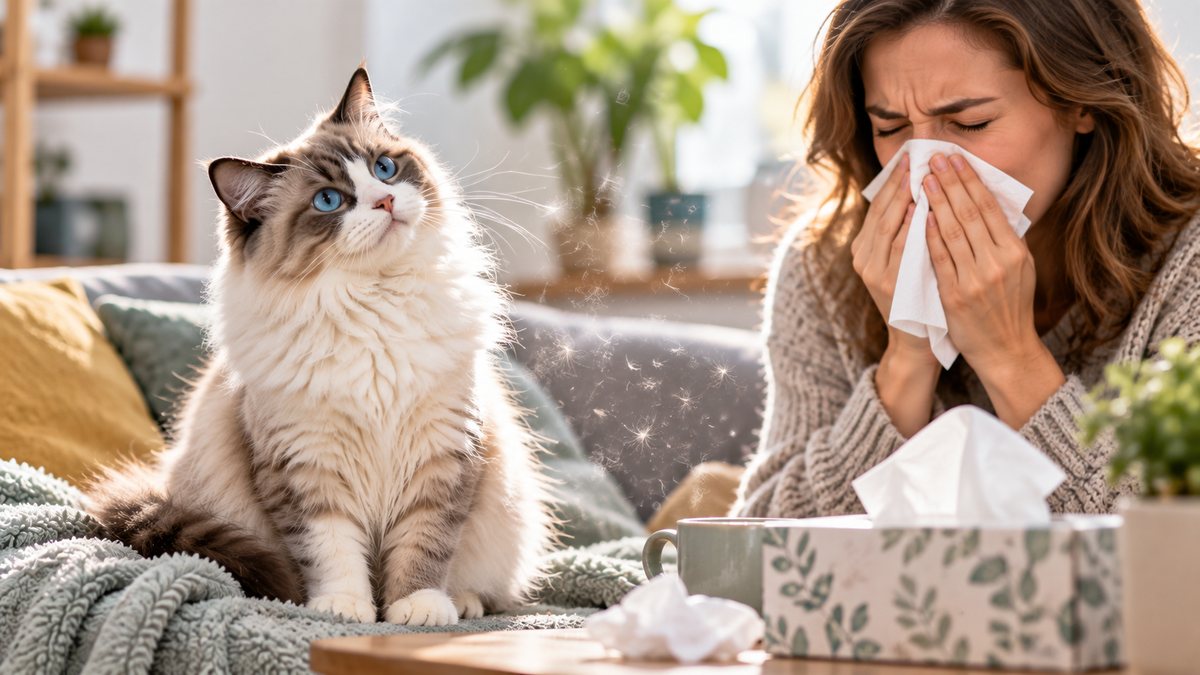
| Allergy & allergen evidence | No breed specific reduction established There is no known reason to regard this breed as hypoallergenic. All cats produce allergens, and coat length or shedding alone does not determine allergy risk. |
| Activity & intelligence | |
| Activity level | Moderately active, with playful bursts rather than sustained high activity. |
| Playfulness | Playful but generally gentle and calm. |
| Climbing & jumping | Moderate to high The Lambkin is playful but its short-legged ancestry argues for accessible, staged climbing rather than reliance on large jumps to reach high places. |
| Enrichment demand | High Moderate-to-high enrichment demand: puzzle play and varied accessible activities are useful for its curiosity, while exercise should respect its short-legged conformation. |
| Learning & training | Moderate The Lambkin should manage ordinary household learning and simple reward-based behaviours well; its physical build makes low-impact training more appropriate than athletic trick work. |
| Curiosity & exploration | High Lambkins combine Munchkin and Selkirk Rex ancestry; expect moderate curiosity and playful investigation, with short-legged conformation affecting access more than the underlying interest in novelty. |
| Hunting & chasing tendencies | Moderate to high Expect moderate chase motivation. Playfulness is present, but the short-legged build makes ground-level stalking and short pursuits more suitable than high-impact chasing. |
| Personality & social | |
| Sociability with familiar people | High Lambkins are generally affectionate and socially engaged with their households. |
| Affection | Gentle · calm · affectionate Affection tends to be gentle, calm and openly affectionate. |
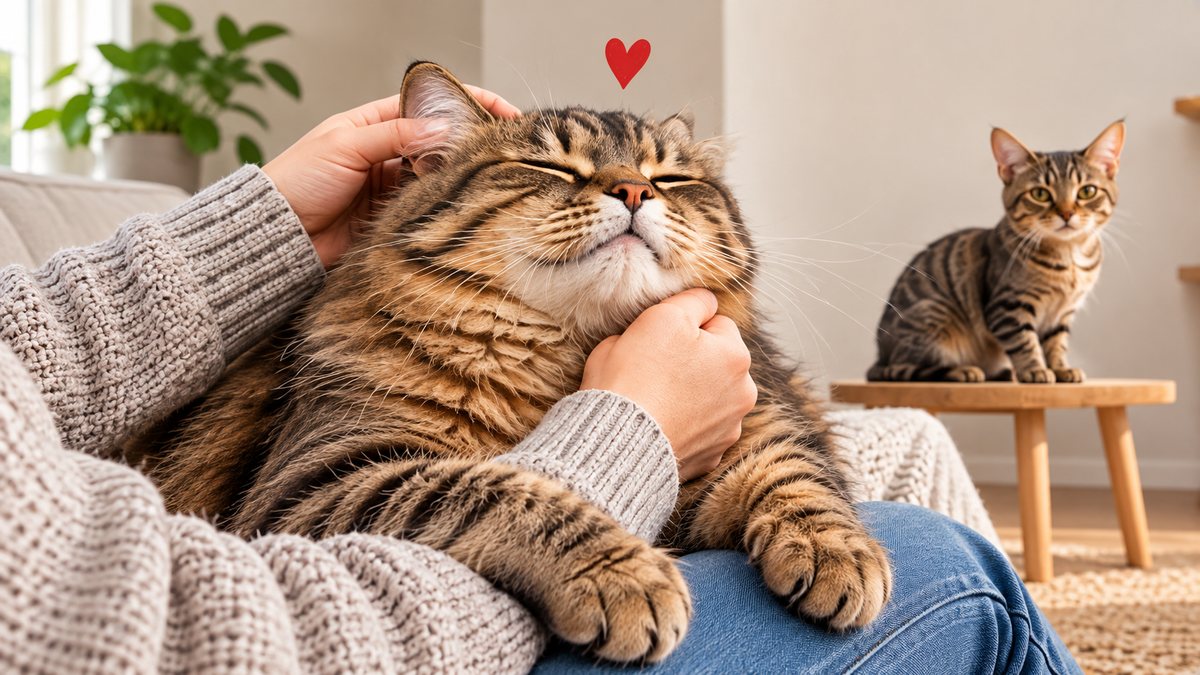
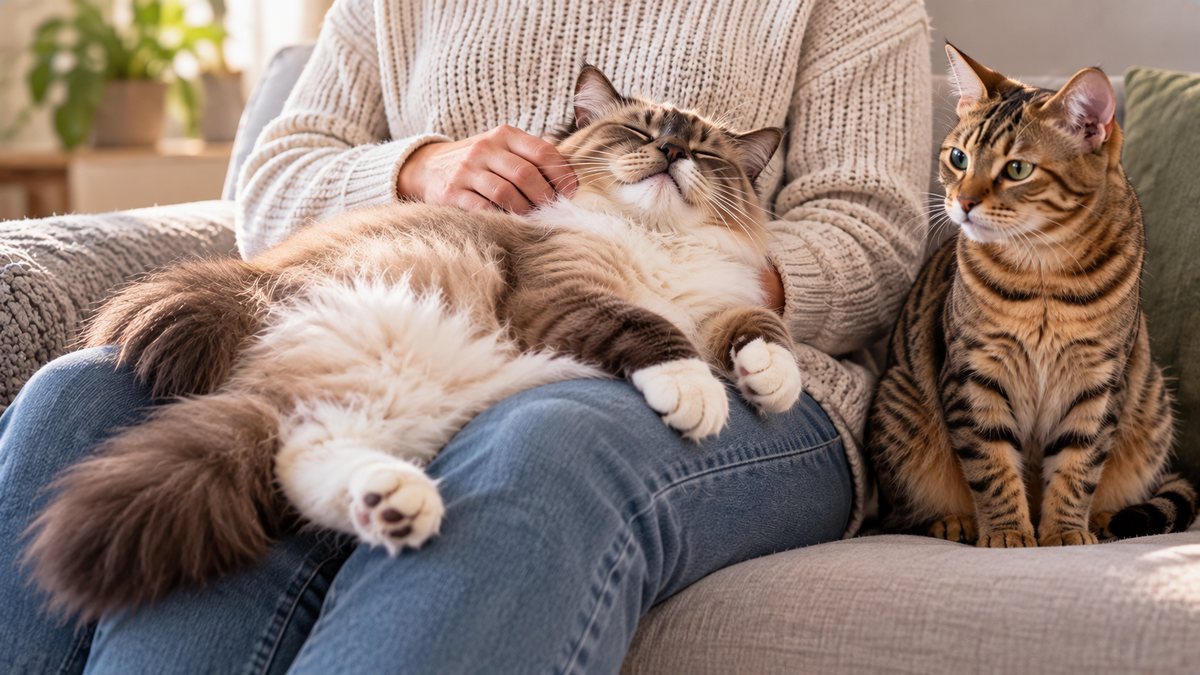
| Lap & cuddling preference | High Lambkins are bred as gentle companion cats and typically enjoy close contact; their calm periods often include cuddling or resting against a person. |
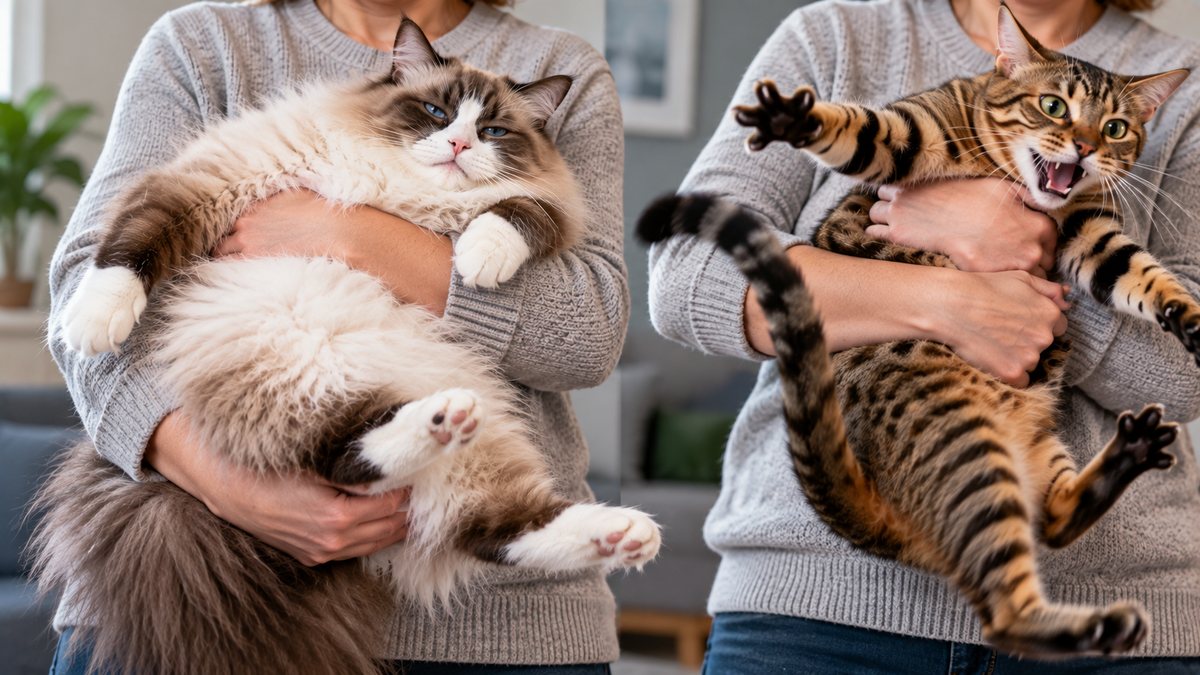
| Handling tolerance | High Lambkins are generally tolerant cats when handled respectfully. |
| Independence & social demand | Moderate to high social demand Lambkins are generally gentle companion cats that appreciate regular household company, though their social demand is not usually extreme. |
| Vocalization | Low to moderate; individual conversational style varies Moderately vocal is the best estimate from its Selkirk Rex and Munchkin ancestry; sociable cats may call for interaction without constant loudness. |
| Response to unfamiliar people | High Lambkins are generally gentle, companion-oriented cats; unfamiliar people are likely to be met with mild curiosity and friendly acceptance once the cat feels secure. |
| Adaptability to change | Moderate Lambkins are companion-oriented and can settle well, but their small stature and short-legged build make a calm, carefully arranged transition preferable to abrupt environmental change. |
| Noise & busy-environment sensitivity | Moderate Lambkins are bred for a gentle companion temperament; ordinary family noise should be tolerable, but their calm style and short stature favor a home with safe retreat from rough bustle. |
| Defensive & conflict behaviour | Low Lambkins are generally companion-oriented cats from Munchkin- and Selkirk-derived lines, so serious conflict tendency should be low. Their short legs can reduce escape options, making gentle handling and easy access to retreats important when they feel pressured. |
| Household & environment | |
| Living with children | Favorable tendency Lambkins are generally considered suitable for respectful families with children. |
| Living with other cats | Favorable tendency Lambkins generally do well with compatible cats after appropriate introductions. |
| Living with dogs | Moderate Lambkins are generally gentle companion cats, but their short legs can reduce their ability to escape a pursuing dog. A calm, proven cat-friendly dog can be a good housemate if rough play is prevented and accessible refuges are provided. |
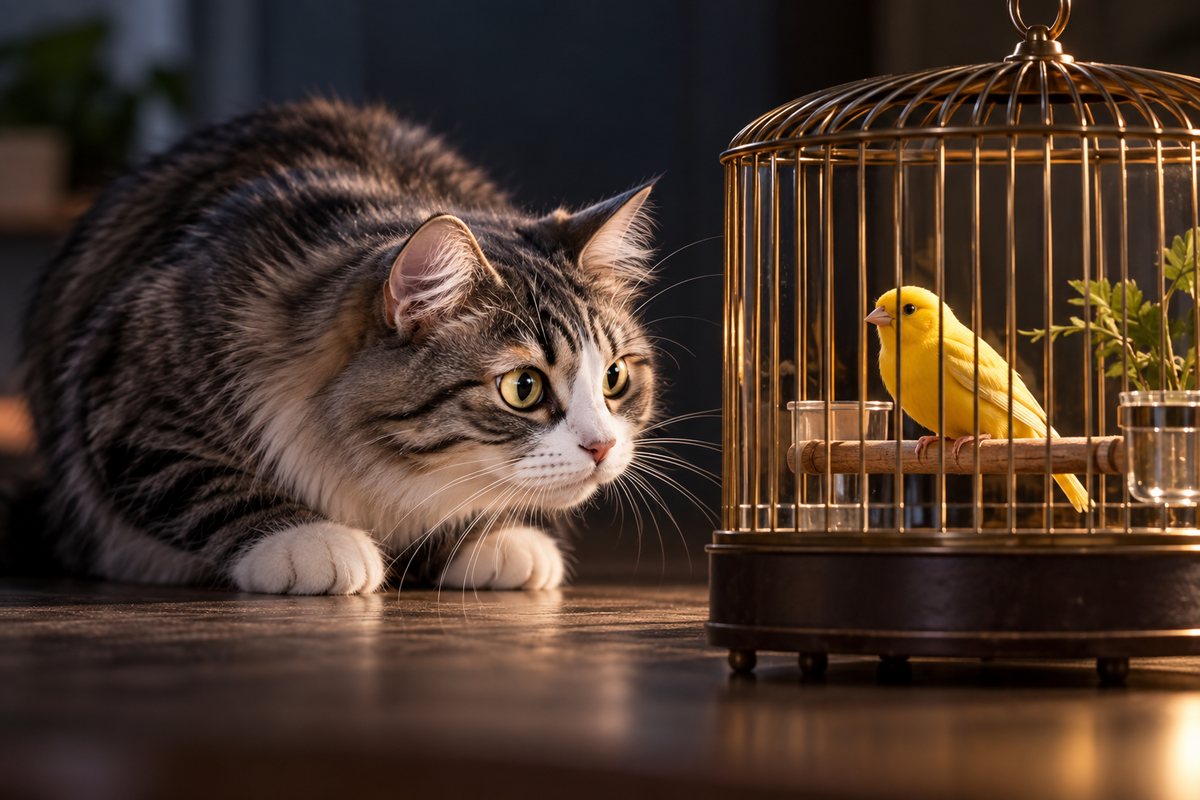
| Living around small pets | Normal predatory caution Lambkins are generally gentle, short-legged companion cats, but physical stature does not eliminate stalking or pouncing. Small pets should remain securely separated, while mobility differences may affect how easily an individual cat can pursue them. |
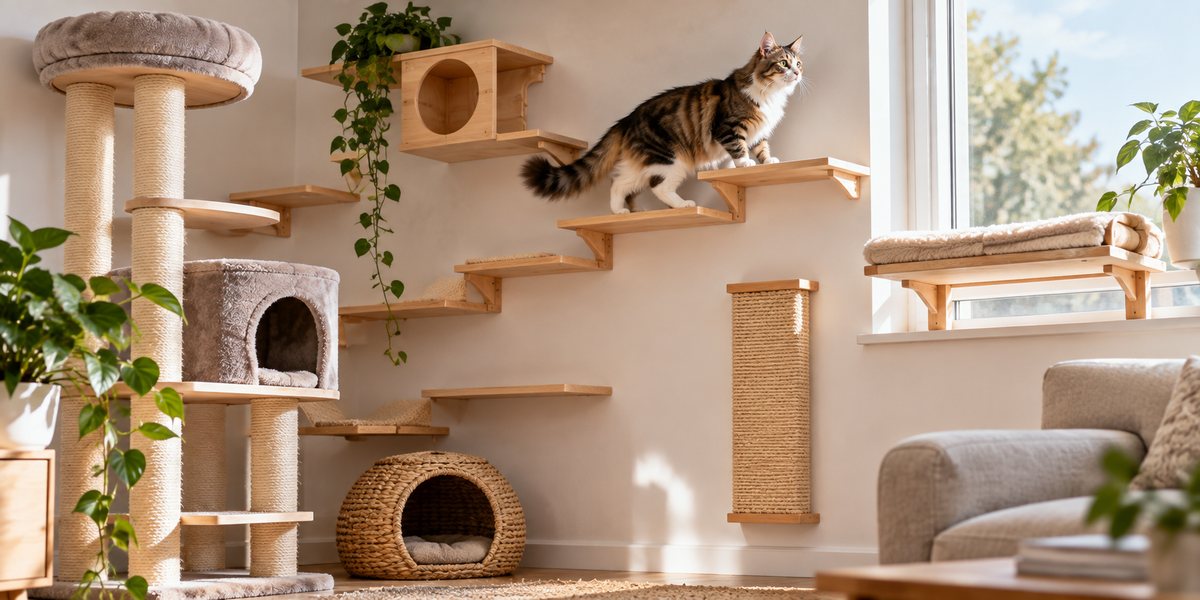
| Indoor & home environment needs | Accessible enriched indoor Lambkins are short-legged cats, so useful enrichment should be accessible rather than simply tall. Stable steps, low-to-moderate perches, easy-entry resources, scratching surfaces and regular interactive play allow activity without demanding large jumps. |
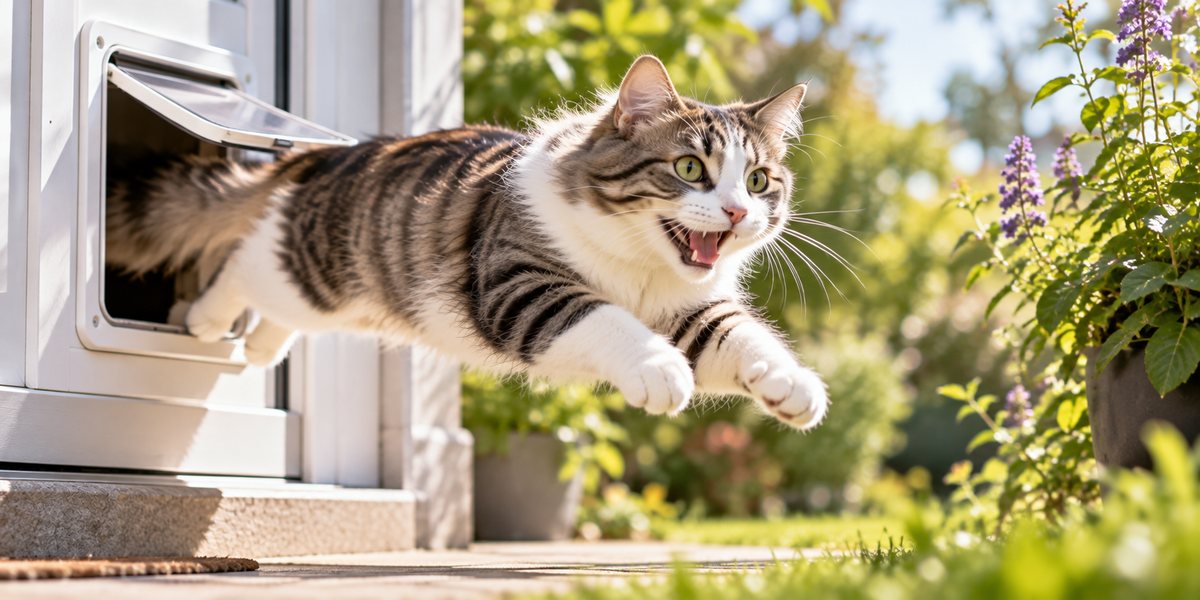
| Outdoor access considerations | Secure accessibility Lambkins are short-legged cats and should not have to rely on speed or large jumps to escape outdoor hazards. A secure enclosure with accessible routes can provide fresh air and sensory enrichment without the risks of unrestricted roaming. |
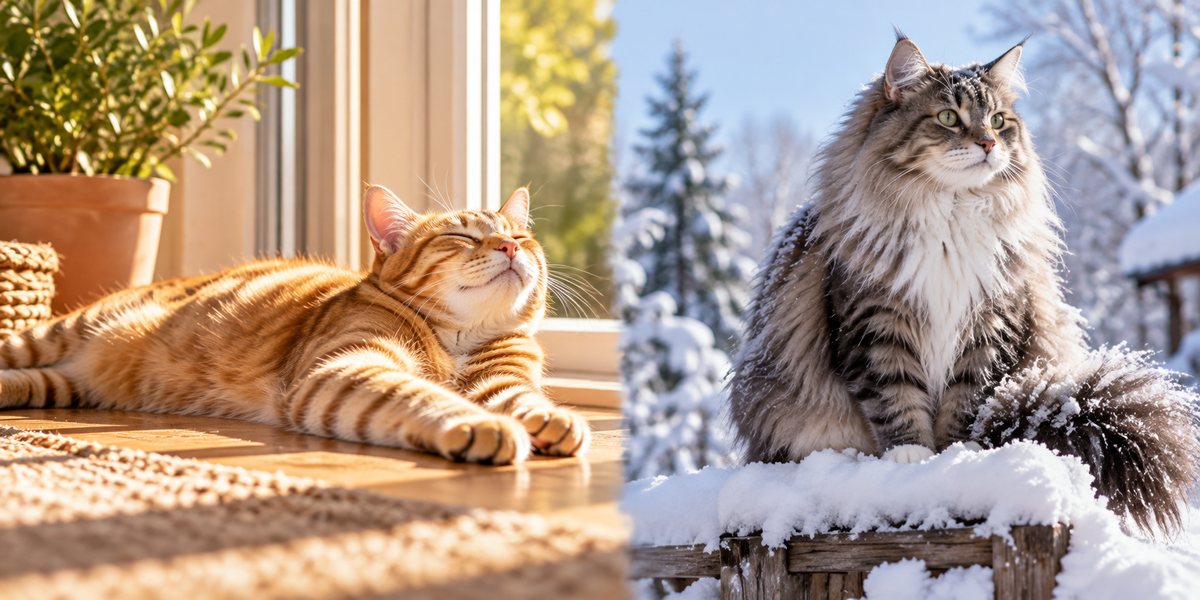
| Heat, cold & sun considerations | Variable coat adaptable Lambkins can carry curly coats of varying length and density, making insulation individual rather than uniform. Provide warmth for lightly coated cats, cooling options for fuller coats and avoid exposing short-legged individuals to extreme ground temperatures. |
| Caregiver time & experience | Above average Lambkins combine short legs with a curly coat, so care includes accessible home design, weight and mobility monitoring and gentle coat maintenance. Their social needs are manageable, but conformation makes the routine more involved than for a conventional cat. |
| Health & welfare | |
| Documented health predispositions | Elevated conformation risks Lambkins combine short-legged dwarfism with a Rex-type curly coat. Their main breed-specific concern is conformation: caregivers and breeders should monitor joints, spine, mobility and body weight, while also managing any skin or coat problems associated with the curly phenotype. |
| Screening & breeder questions | Ask what health problems are tracked in the lines and request actual test results Ask how the breeder evaluates joints, spine and mobility in short-legged cats, whether curly-coated relatives have recurring skin problems, and what cardiac and general health screening is performed before breeding. |
| Conformation-related welfare | Dwarfism requires orthopedic attention The short-legged dwarf conformation warrants particular attention to orthopedic comfort, mobility and healthy body condition. |
| Nutrition & weight management | Dwarf weight joint control Lambkins are short-legged, making lean body condition particularly important for joints and spine. Measured portions and accessible daily play should prevent extra mass from compounding the mechanical effects of dwarf conformation. |
| Longevity | 12–15 years For the rare Lambkin, roughly 12–15 years is a cautious estimate based on its Selkirk Rex and short-legged ancestry rather than a large breed-specific longevity dataset. |
| Cost & availability | |
| Purchase cost | Very high: $1,500–$3,500+ Lambkin: a practical breeder-market estimate is $1,500–$3,500+. This reflects that it is an very rare short-legged curly-coated designer breed. |
| Adoption & rehoming cost | Very rare in rescue: $100–$600 when genuinely available Lambkin: $100–$600 when genuinely available. The breed is scarce enough that a verified purebred rescue placement is unusual; transport may exceed the adoption fee. |
| Recurring ownership costs | Typical cat costs Lambkins combine curly-coat care with dwarf-cat mobility management. Routine food and litter are ordinary, but accessible furniture, joint/spinal monitoring and a meaningful veterinary reserve can make lifetime costs higher than for a structurally typical cat. |
| Availability, waits & import | Very rare and variable Lambkins are a rare experimental dwarf Rex type with few breeders. Availability is sporadic and health-focused evaluation of short-legged conformation should outweigh urgency to secure a scarce kitten. |
| Identity & real-world context | |
| Ownership & import restrictions | No known breed specific restrictions There are no known breed-specific ownership restrictions. Ordinary animal-welfare, identification, vaccination and cross-border import rules still apply where relevant. |
| Registry recognition | No separate current CFA/TICA/FIFe recognition Lambkin is not a separately recognized current breed identity in CFA, TICA or FIFe within the FSC core registry matrix; recognition by smaller, national or experimental registries can differ. |
| Similar breeds & identity distinctions | Selkirk Rex Munchkin Lambkins combine a Selkirk-Rex-like curly coat with Munchkin-derived short legs. A Selkirk Rex has normal leg length, while a Munchkin may have a straight coat; both traits together characterize the Lambkin type. |
| Reported characteristic quirks | Individual quirks often center on play and exploration Lambkins can combine a teddy-bear appearance with determined play, often finding low or staged routes onto furniture rather than abandoning climbing. |
Browse all 53 breed characteristics
Open any characteristic to compare all breeds on that dimension.

 English