
Compare Cat Breeds
Compare up to three breeds across all 53 characteristics. Values are shown directly so the differences are easier to scan.
| Characteristic |  Kinkalow |
|---|---|
| Body & development | |
| Adult size | Small |
| Adult weight | 2.3–4.1 kg (5.1–9.0 lb) Adults are generally around 2.3–4.1 kg (5–9 lb). |
| Build & distinguishing morphology | Dwarf short legs · compact · curled ears The Kinkalow combines a compact, short-legged dwarf build with backward-curled ears. |
| Maturation | 12-18 months The small, short-legged Kinkalow generally completes most growth within its first year, with adult muscle and body condition developing through roughly 12–18 months. |
| Coat & appearance | |
| Coat length | Short · semi long Kinkalows can occur with short or somewhat longer semi-long coats, reflecting the coat-length variation inherited from their Curl and Munchkin ancestry. |
| Coat texture & undercoat | Short or semi long · soft · moderate undercoat Kinkalows can be short or semi-longhaired, generally with a soft coat and moderate undercoat; longer individuals show more tail and body furnishings. |
| Colors & patterns | Broad palette; solid · tabby · tortie · pointed · bicolor Kinkalows inherit a broad Curl/Munchkin palette, including solids, tabbies, torties, pointed colours and white spotting. |
| Eye colors | All eye colors; coat-dependent Curl/Munchkin ancestry permits a broad coat-dependent range, including gold, green and blue. |
| Coat & routine care | |
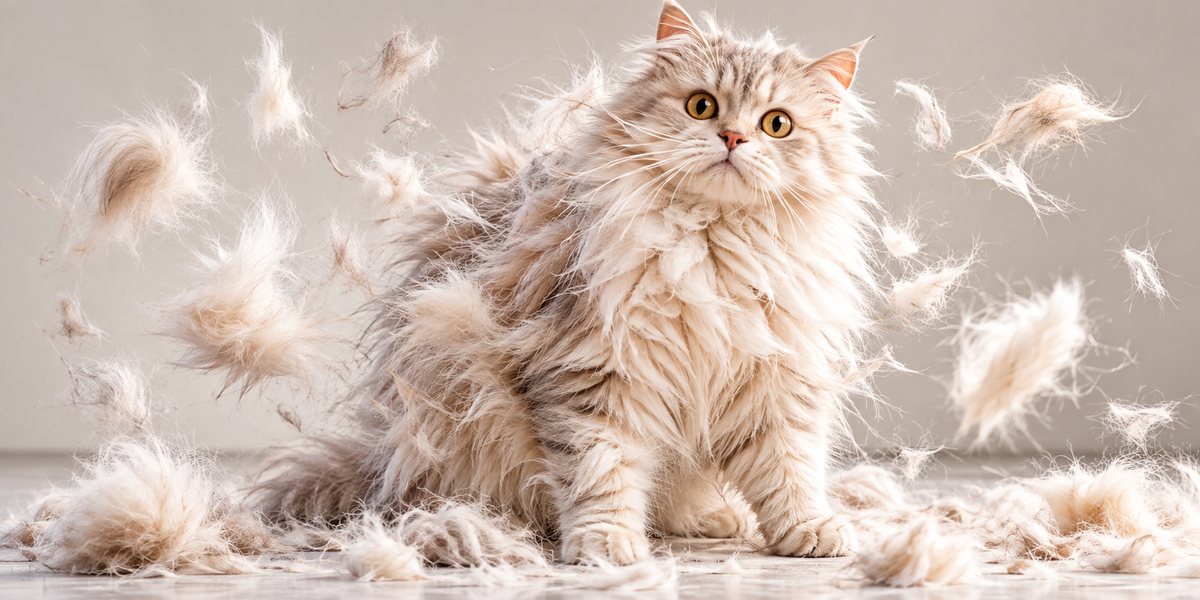
| Shedding | Low to moderate Low to moderate shedding in shorthairs; longhaired Kinkalows shed more visibly and may show stronger seasonal turnover. |
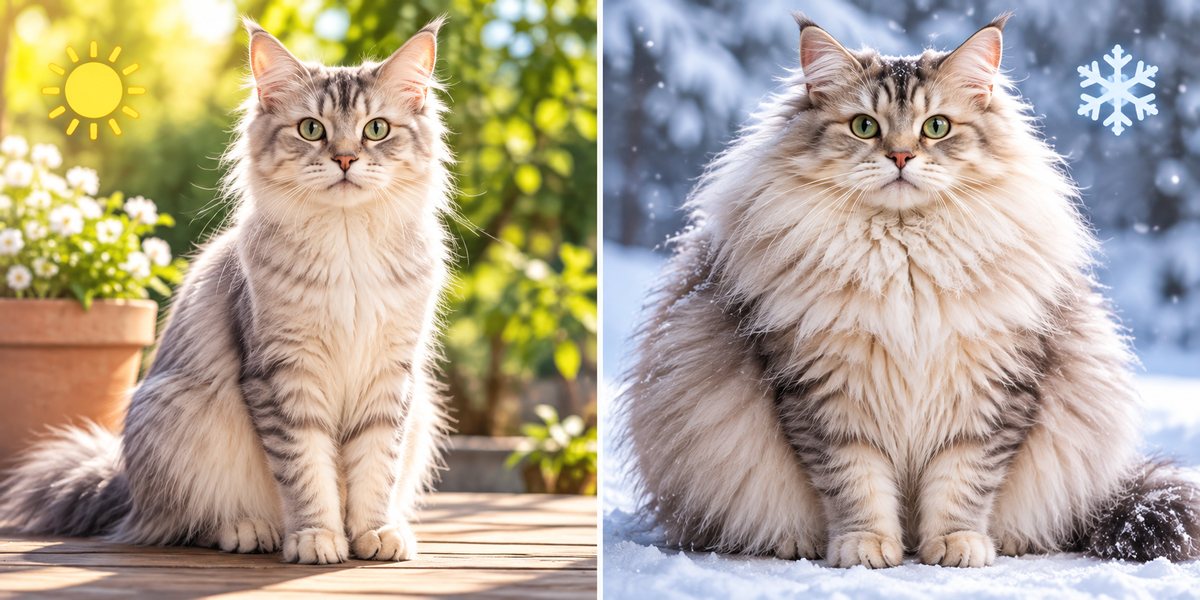
| Seasonal coat changes | Mild to moderate seasonal change Kinkalows can be short- or semi-longhaired; seasonal change is usually mild to moderate, with longer and more undercoated cats showing the clearer spring shed. |
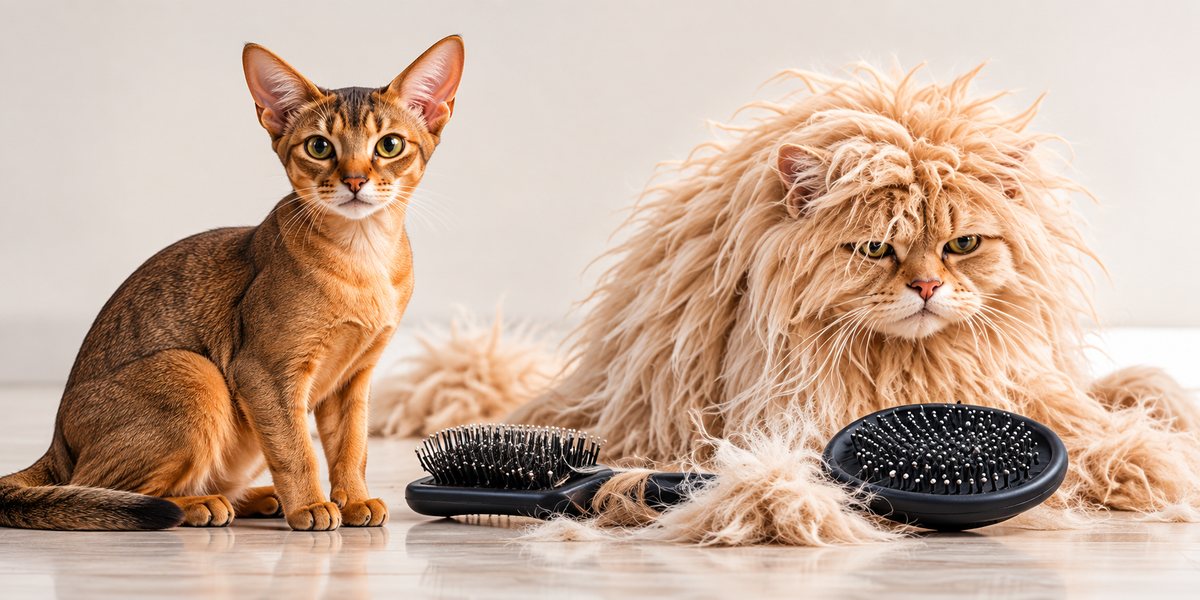
| Brushing & combing | Weekly or as needed Weekly combing is a practical starting point, increased when the coat is changing or beginning to tangle. |
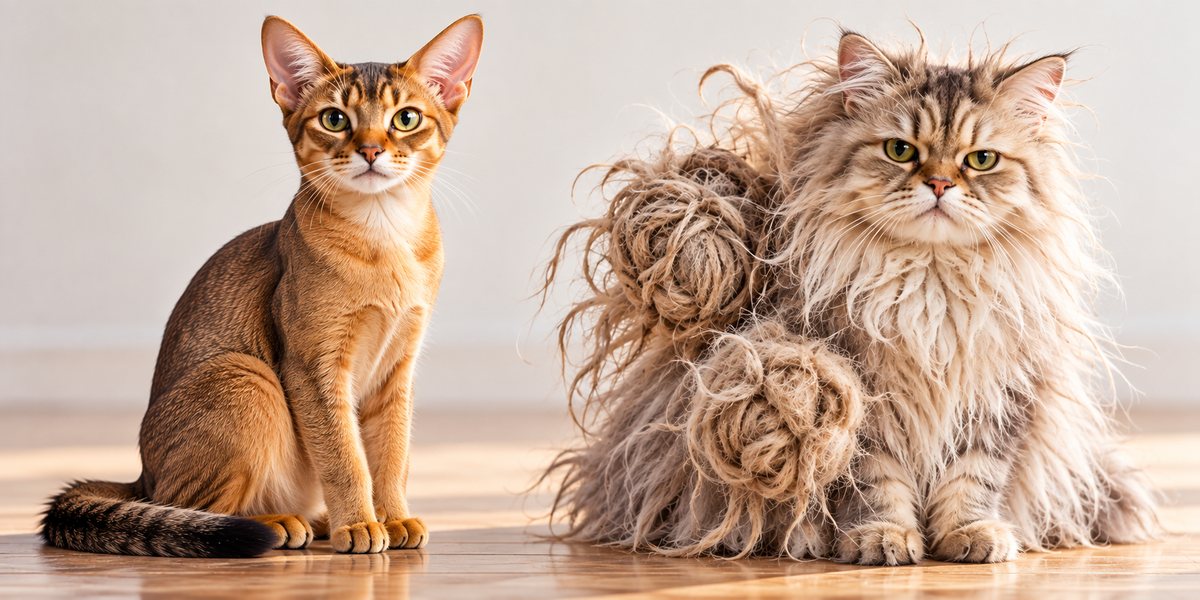
| Tangle & matting tendency | Low to moderate by length Short coats have little risk; semi-long Kinkalows may knot around the belly, legs and tail furnishings but are not typically heavy mat formers. |
| Skin & bathing care | Bathing not routinely needed Routine bathing is generally unnecessary; bathe only when the coat is genuinely soiled or for a specific veterinary or grooming reason. |
| Distinctive routine care | Dwarf ear mobility care Keep Kinkalows lean, provide accessible climbing and litter facilities and monitor gait, spine and jumping comfort. Curled ears should be checked gently for cleanliness and irritation without forceful manipulation. |
| Allergy & allergen evidence | No breed specific reduction established There is no known reason to regard this breed as hypoallergenic. All cats produce allergens, and coat length or shedding alone does not determine allergy risk. |
| Activity & intelligence | |
| Activity level | Active and playful. |
| Playfulness | High Kinkalows are characteristically playful and lively. |
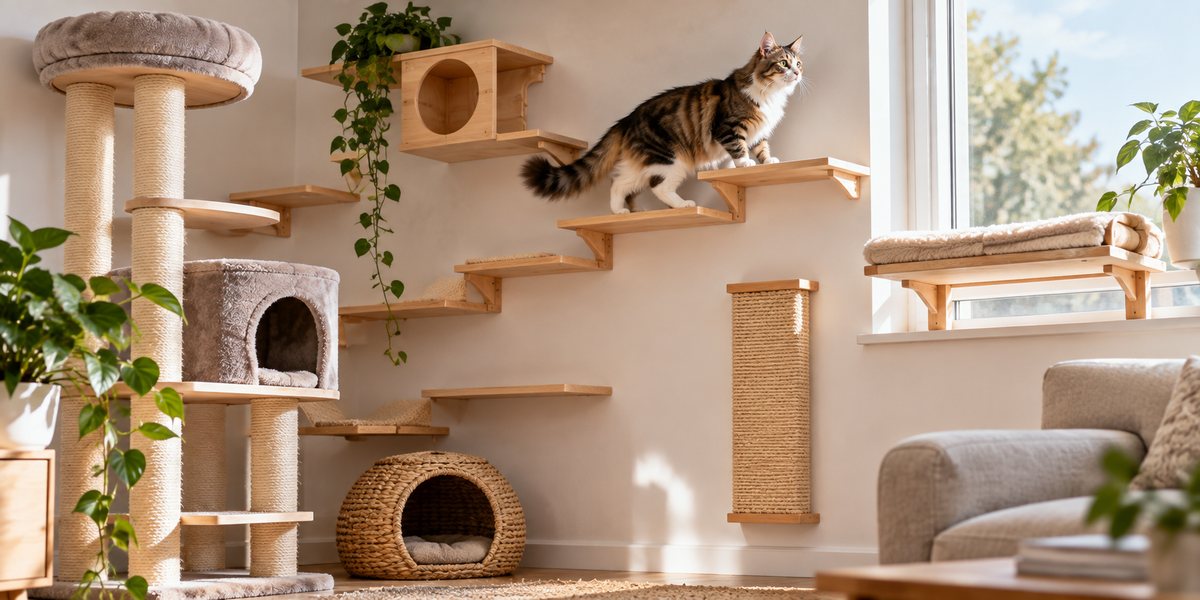
| Climbing & jumping | Moderate to high Kinkalows are lively and curious, but short-legged ancestry can limit large vertical leaps; stepped platforms let them climb without requiring extreme jump height. |
| Enrichment demand | High High enrichment demand: regular playful interaction, puzzles and accessible vertical routes suit its strong curiosity and play drive while accommodating shorter legs. |
| Learning & training | High Kinkalows are intelligent and generally responsive to interactive learning. |
| Curiosity & exploration | High The breed is notably curious and engaged with its surroundings. |
| Hunting & chasing tendencies | Moderate to high Chase motivation is probably moderate to high, reflecting playful Curl/Munchkin ancestry, though short legs may limit the height and duration of pursuit. |
| Personality & social | |
| Sociability with familiar people | High Kinkalows are social cats that generally enjoy close engagement with their people. |
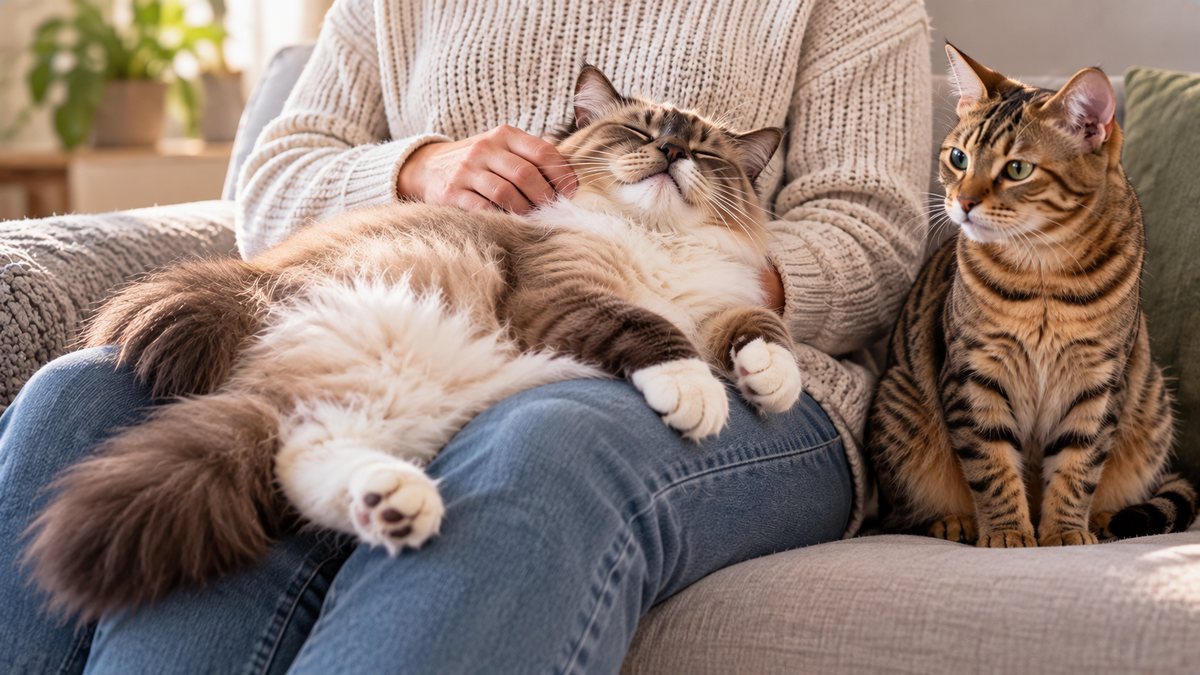
| Affection | Affectionate · cuddly · interactive Affection tends to be open and interactive, and many Kinkalows enjoy cuddling. |
| Lap & cuddling preference | High Kinkalows are generally affectionate companion cats and often enjoy close handling and lap contact, while retaining a playful, inquisitive streak. |
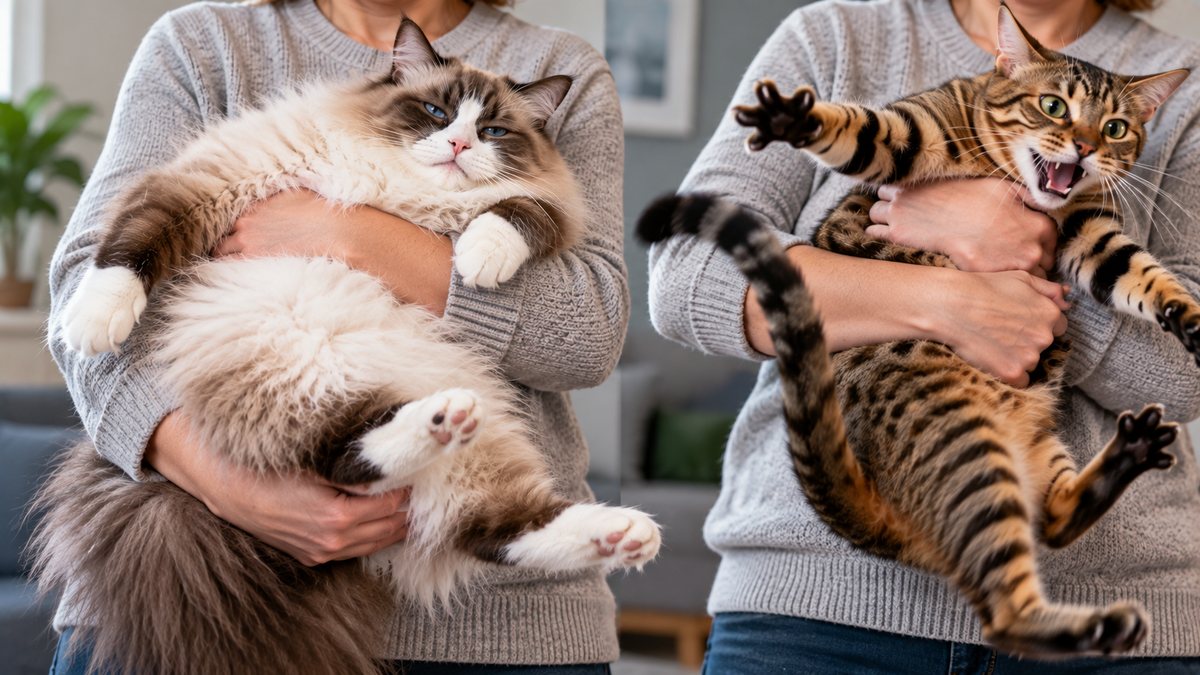
| Handling tolerance | High Bred as a small companion cat, the Kinkalow is generally affectionate and manageable; lifting should support the long torso and short legs rather than placing leverage on the limbs. |
| Independence & social demand | High social demand Kinkalows are typically playful, outgoing companion cats and generally do best with regular social contact rather than prolonged isolation. |
| Vocalization | Low to moderate; individual conversational style varies Moderately vocal is the best estimate from its Curl/Munchkin background: social and attention-seeking, but not usually an extreme caller. |
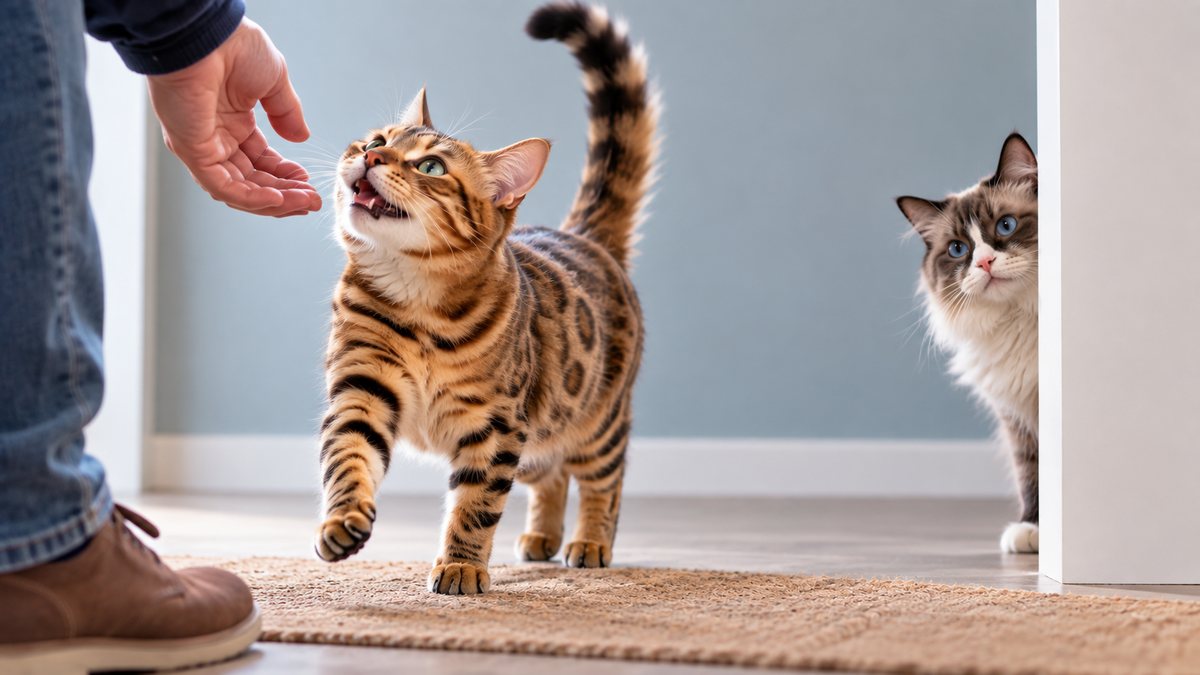
| Response to unfamiliar people | High Kinkalows are generally playful, sociable companion cats; their Munchkin and Curl background supports curious, relatively easy acceptance of unfamiliar people. |
| Adaptability to change | Moderate to high Kinkalows are generally sociable and playful, so ordinary household changes should be manageable when introductions are gradual and familiar interaction is maintained. |
| Noise & busy-environment sensitivity | Low to moderate The Kinkalow's companion-breed background favors sociability and adaptability, so normal household bustle should be manageable with access to secure resting places. |
| Defensive & conflict behaviour | Low Kinkalows are generally intended as sociable companion cats, drawing on the friendly tendencies of Curl- and Munchkin-derived lines. Baseline conflict risk should be low, while respectful handling remains important because short limbs may limit easy escape from unwanted interaction. |
| Household & environment | |
| Living with children | Favorable tendency Kinkalows generally fit well into respectful family households with children. |
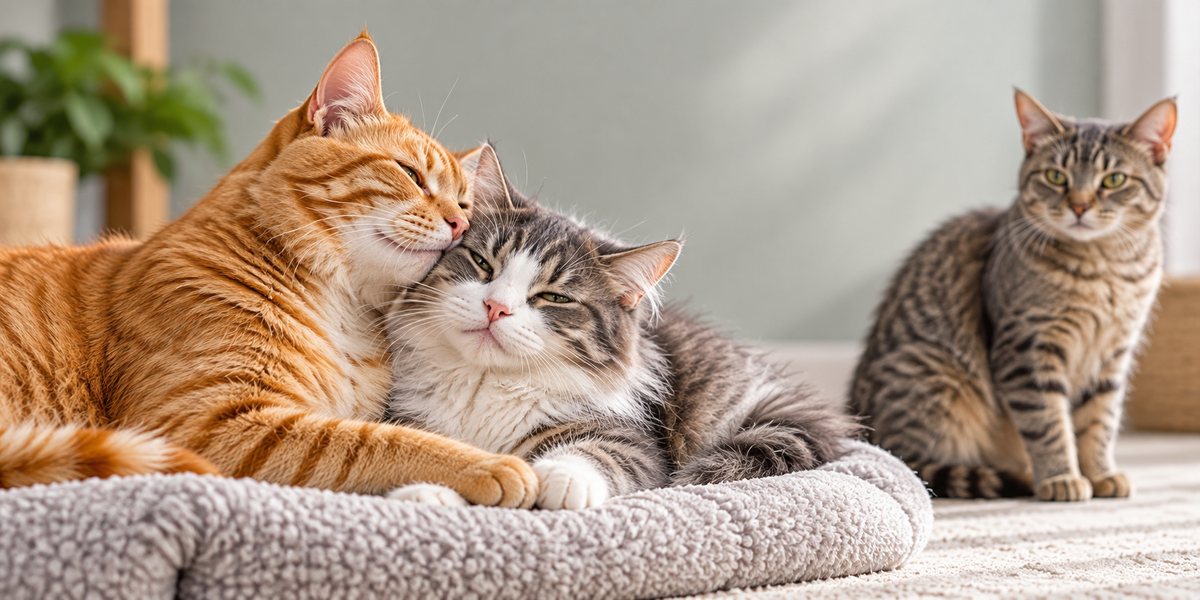
| Living with other cats | Favorable tendency Kinkalows are generally social with compatible pets after appropriate introductions. |
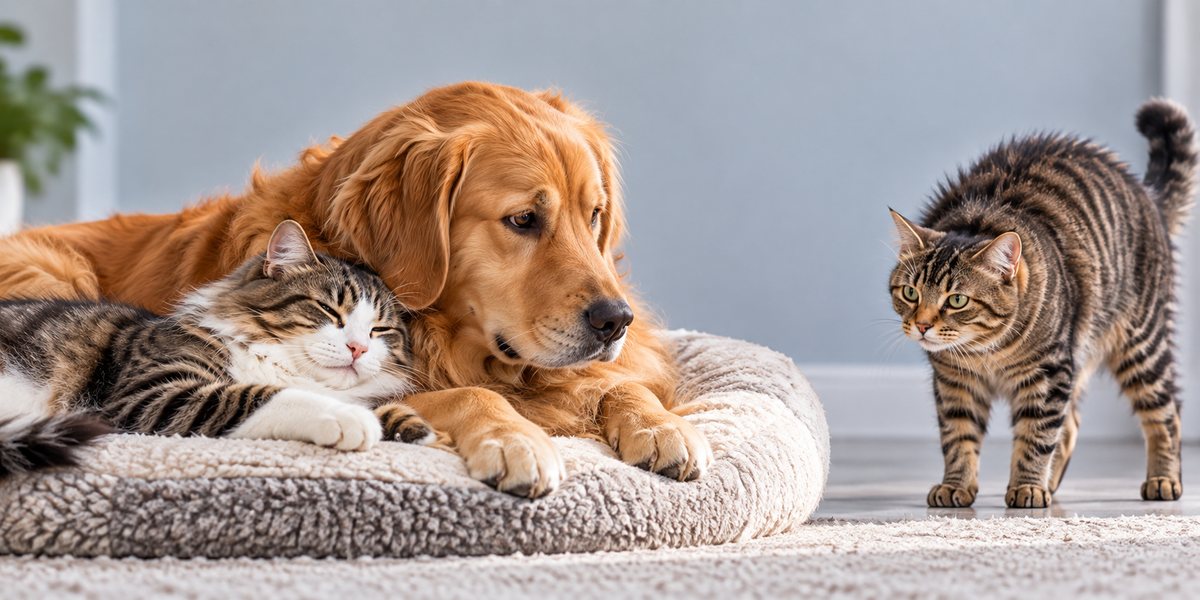
| Living with dogs | Good Kinkalows are generally social with compatible pets, including cat-friendly dogs. |
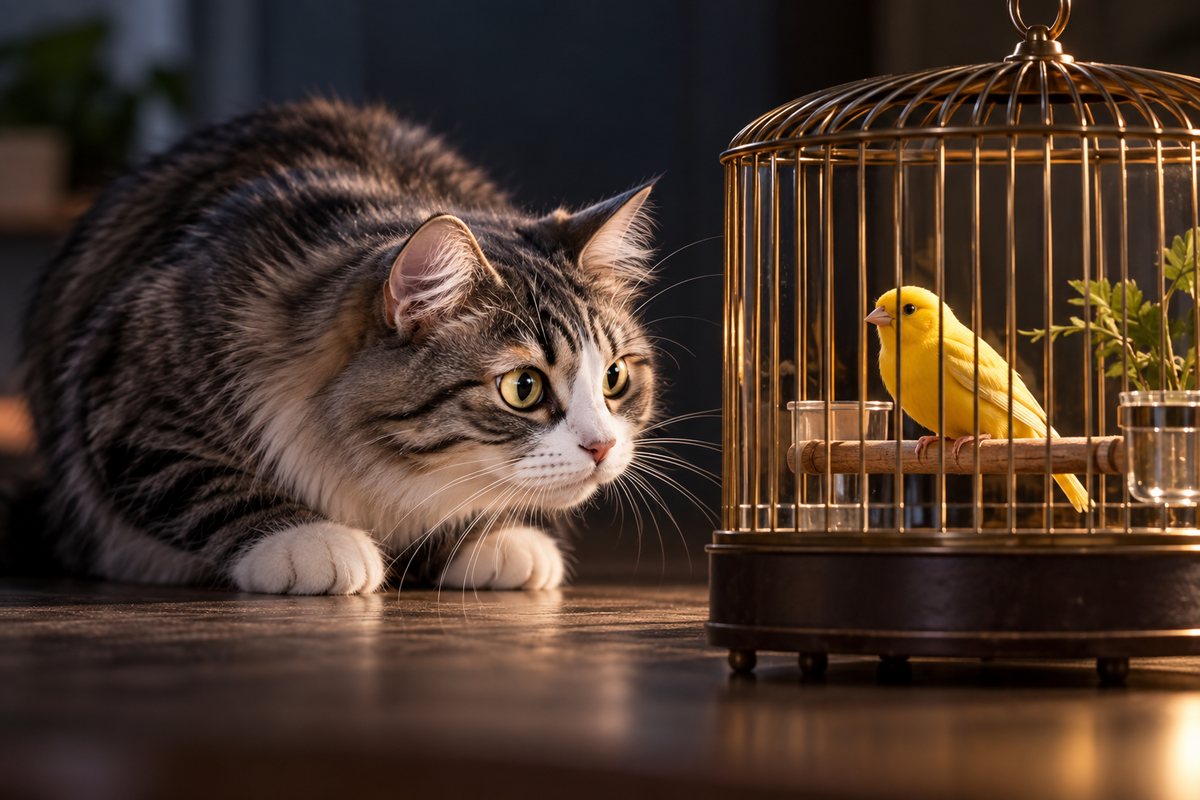
| Living around small pets | Normal predatory caution Kinkalows are playful companion cats whose short legs may alter pursuit but do not remove predatory motivation. Birds, rodents and other small pets should still be housed securely and protected from unsupervised feline access. |
| Indoor & home environment needs | Accessible enriched indoor Kinkalows are playful and curious, but short legs can change how they negotiate height. Use stable stepped climbing routes, reachable perches, scratching surfaces and frequent interactive play rather than assuming they need little exercise. |
| Outdoor access considerations | Secure accessibility Kinkalows can enjoy outdoor scents and observation, but short legs make escape from dogs, traffic or territorial cats less reliable. A secure enclosure with accessible platforms and shelter is preferable to free roaming. |
| Heat, cold & sun considerations | Variable coat adaptable Kinkalows may be short- or longhaired, so insulation varies considerably. Climate management should follow the individual coat: warm retreats for lightly coated cats, extra cooling for fuller coats, and shade and water for all in heat. |
| Caregiver time & experience | Above average Kinkalows are playful companion cats, but short legs and curled ears add practical monitoring needs. Caregivers should provide accessible climbing, prevent excessive ear manipulation and watch mobility and weight while maintaining ordinary daily play. |
| Health & welfare | |
| Documented health predispositions | The breed can inherit structural and joint concerns associated with its dwarfism background; ear health also deserves attention because of the curled-ear ancestry. |
| Screening & breeder questions | Ask for documentation relevant to the breed’s recorded health concerns Ask how the breeder evaluates joints, spine and mobility in short-legged cats and ear health in curled-ear cats. Request information on orthopedic problems in relatives and the examinations used before breeding. |
| Conformation-related welfare | High dwarf ear trait concern Kinkalows combine short-legged dwarfism with curled ears. Welfare selection should prioritize sound spine and joints, comfortable gait and flexible healthy ears rather than intensifying either novelty trait. |
| Nutrition & weight management | Dwarf weight joint control Kinkalows are short-legged, so excess weight creates unnecessary load on joints and spine. Measured portions, active but accessible play and a lean body condition are more important than any breed-specific food. |
| Longevity | 12–15 years Kinkalows combine Munchkin and American Curl ancestry; about 12–15 years is a cautious working range given the breed’s small population and limited long-term data. |
| Cost & availability | |
| Purchase cost | Very high: $1,500–$3,500+ Kinkalow: a practical breeder-market estimate is $1,500–$3,500+. This reflects that it is an rare designer breed combining short legs and curled ears. |
| Adoption & rehoming cost | Very rare in rescue: $100–$600 when genuinely available Kinkalow: $100–$600 when genuinely available. The breed is scarce enough that a verified purebred rescue placement is unusual; transport may exceed the adoption fee. |
| Recurring ownership costs | Typical cat costs Kinkalows need little specialized coat spending unless longhaired, but dwarf conformation makes accessible furniture and a veterinary/orthopedic reserve important. Curled ears need observation, not costly routine manipulation. |
| Availability, waits & import | Very rare and variable Kinkalows are an uncommon experimental dwarf-and-curl type with a small breeder base. Availability is sporadic, and prospective owners should prioritize orthopedic and ear-health practices over the difficulty of finding a kitten. |
| Identity & real-world context | |
| Ownership & import restrictions | No known breed specific restrictions There are no known breed-specific ownership restrictions. Ordinary animal-welfare, identification, vaccination and cross-border import rules still apply where relevant. |
| Registry recognition | No separate current CFA/TICA/FIFe recognition Kinkalow is not a separately recognized current breed identity in CFA, TICA or FIFe within the FSC core registry matrix; recognition by smaller, national or experimental registries can differ. |
| Similar breeds & identity distinctions | American Curl Munchkin Kinkalows combine American-Curl-type backward-curled ears with Munchkin-derived short legs. An American Curl has normal leg length, while a Munchkin need not have curled ears; the paired traits and pedigree distinguish Kinkalow. |
| Reported characteristic quirks | Individual quirks often center on play and exploration Kinkalows can be surprisingly inventive about vertical movement despite short legs, using intermediate surfaces as steps while approaching play with persistent kitten-like enthusiasm. |
Browse all 53 breed characteristics
Open any characteristic to compare all breeds on that dimension.





 English