
Compare Cat Breeds
Compare up to three breeds across all 53 characteristics. Values are shown directly so the differences are easier to scan.
| Characteristic |  Balinese |
|---|---|
| Body & development | |
| Adult size | Medium |
| Adult weight | Females 2.3–3.2 kg (5.1–7.1 lb); Males 2.7–3.6 kg (6.0–7.9 lb) Females are commonly about 2.3–3.2 kg (5.1–7.1 lb) and males about 2.7–3.6 kg (6.0–7.9 lb); the long coat does not make the underlying body heavy. |
| Build & distinguishing morphology | Long slender siamese group Build: long slender siamese group. |
| Maturation | 18-24 months Maturation: 18-24 months. |
| Coat & appearance | |
| Coat length | Semi long Fine, longer coat characteristic of the longhaired Siamese-group phenotype. |
| Coat texture & undercoat | Fine · silky · single coat · no downy undercoat Coat: fine; silky; single coat; no downy undercoat. |
| Colors & patterns | Pointed siamese group Colors/patterns: pointed siamese group. |
| Eye colors | Vivid blue Vivid blue eyes are characteristic of the pointed Balinese. |
| Coat & routine care | |
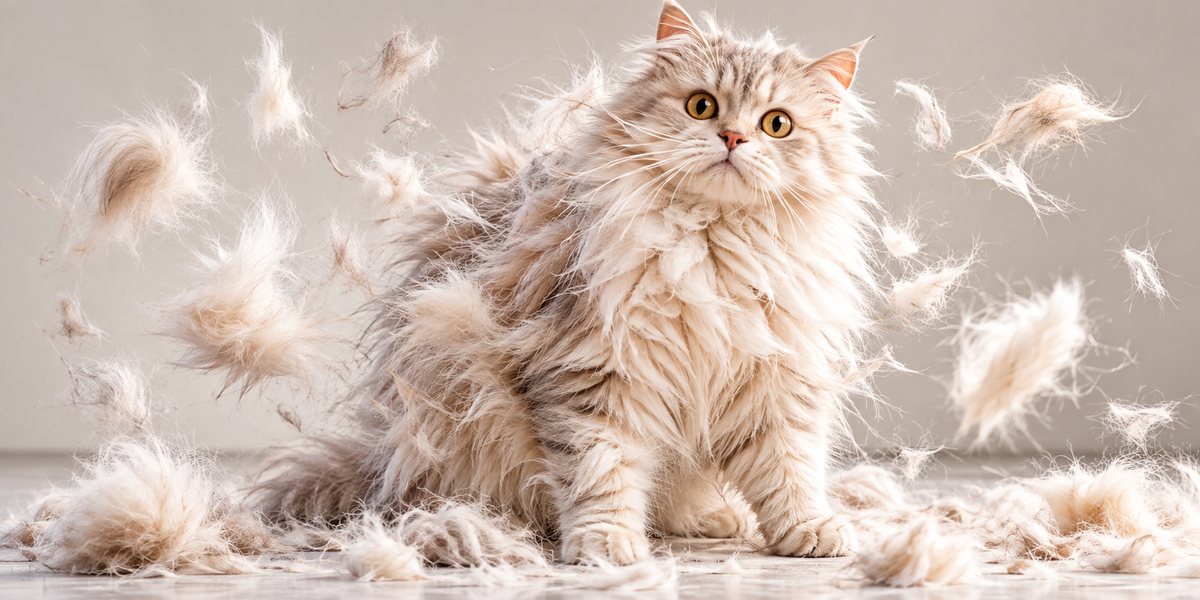
| Shedding | Low to moderate Low to moderate shedding; the fine single-like semi-long coat sheds less heavily than many plush longhairs. |
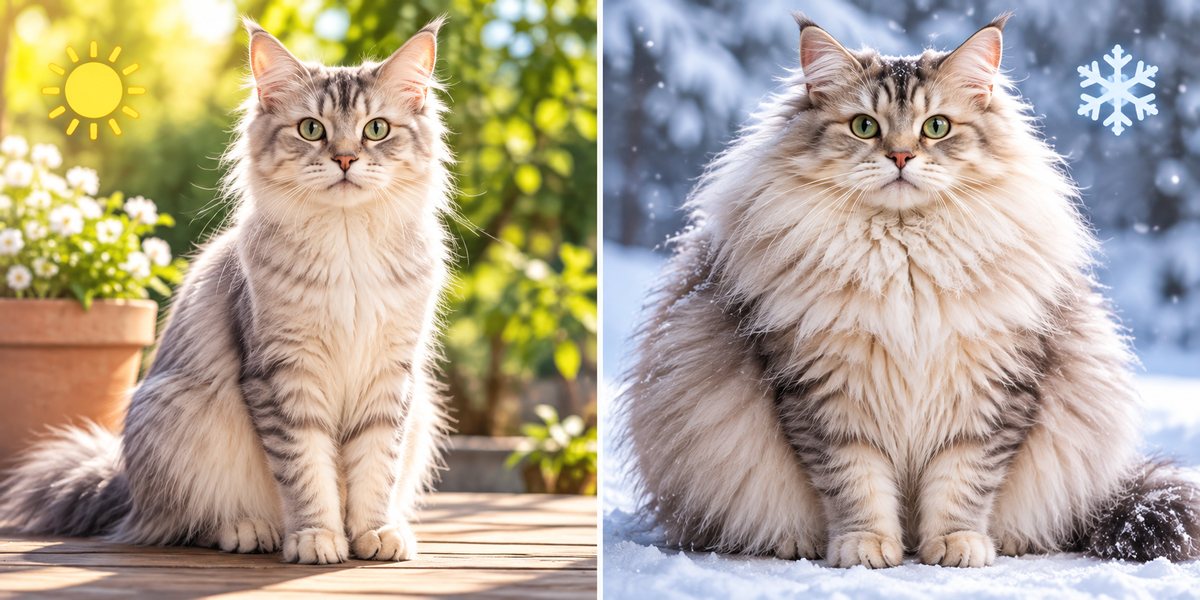
| Seasonal coat changes | Mild seasonal change The Balinese has a fine semi-long coat without a downy undercoat, so seasonal change is relatively mild; spring may bring more loose hair without a dense coat blow. |
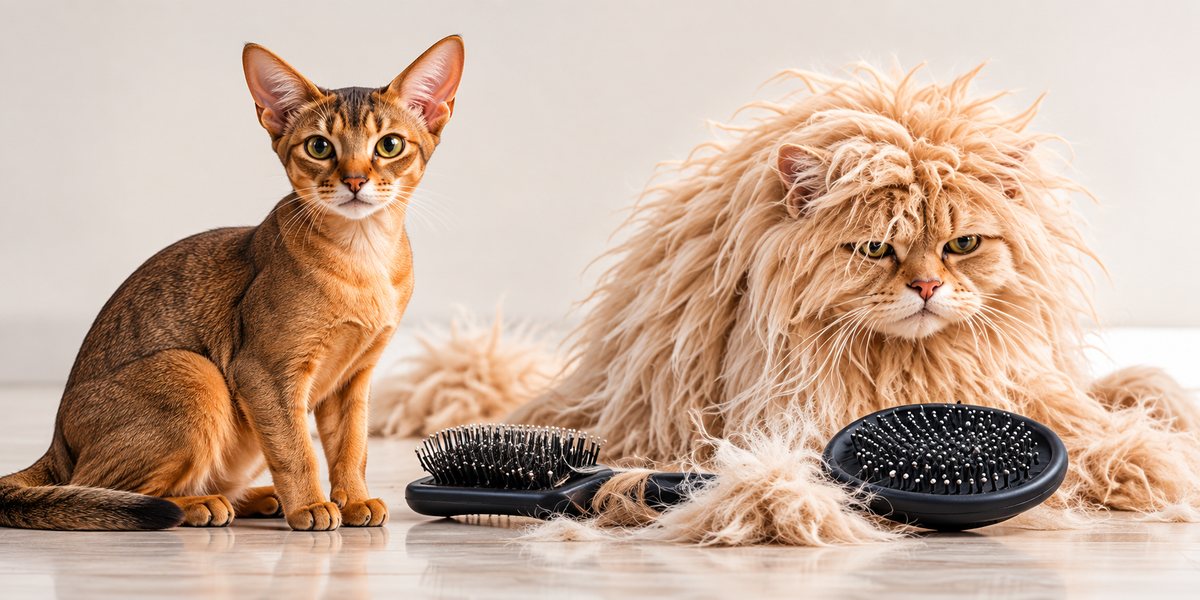
| Brushing & combing | Several times monthly Brushing/combing: several times monthly. |
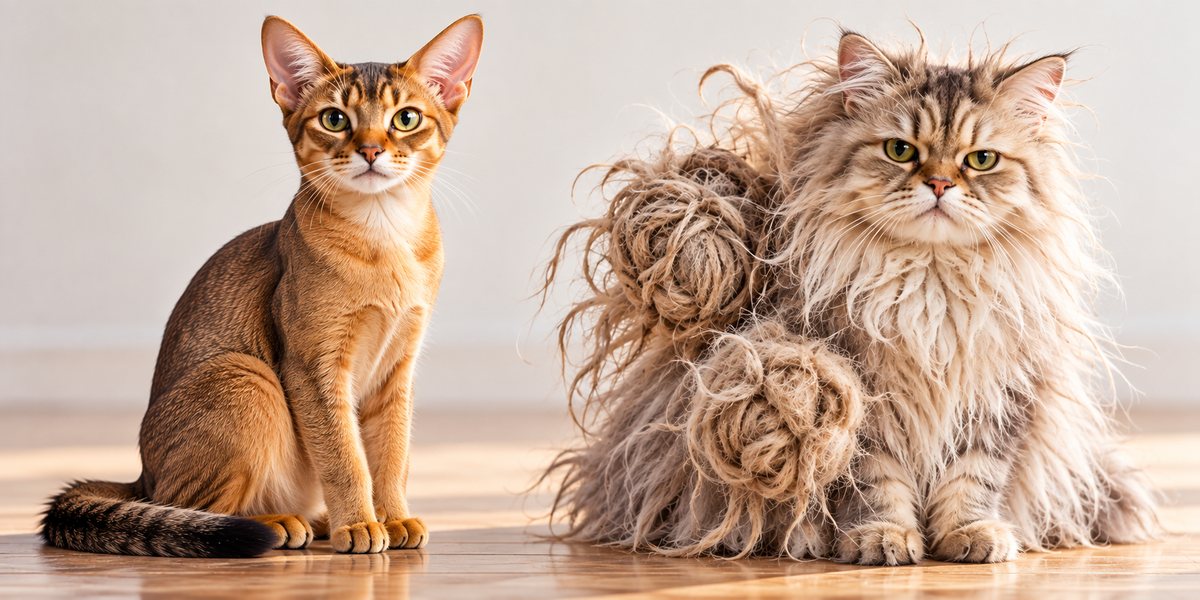
| Tangle & matting tendency | Very low The fine single semi-long coat lacks a downy undercoat, so it is notably resistant to matting for a longhaired cat. |
| Skin & bathing care | Bathing not routinely needed Routine bathing is generally unnecessary; bathe only when the coat is genuinely soiled or for a specific veterinary or grooming reason. |
| Distinctive routine care | Easy longhair coat; weekly combing usually sufficient Despite its length, the silky single coat rarely mats, sheds relatively little and is usually easy to maintain. |
| Allergy & allergen evidence | No breed specific reduction established There is no known reason to regard this breed as hypoallergenic. All cats produce allergens, and coat length or shedding alone does not determine allergy risk. |
| Activity & intelligence | |
| Activity level | Very high |
| Playfulness | Very high |
| Climbing & jumping | Very high |
| Enrichment demand | Very high Very high enrichment demand: combine frequent social play, training, climbing and puzzle challenges for a highly active, intelligent and exploratory cat. |
| Learning & training | Very high Balinese are highly intelligent and readily learn games such as fetch. |
| Curiosity & exploration | Very high Balinese are alert, curious cats that closely involve themselves in household activity. |
| Hunting & chasing tendencies | High Strong chasing behavior is likely. Balinese are athletic, highly playful and inquisitive, making fast-moving wand toys and fetch-like games particularly suitable. |
| Personality & social | |
| Sociability with familiar people | Very high Balinese form strong social bonds and prefer close involvement with their people. |
| Affection | Following · proximity · lap contact Balinese are affectionate, people-focused cats that combine close companionship with lap contact. |
| Lap & cuddling preference | High Many Balinese readily settle on a lap after active play. |
| Handling tolerance | High Very people-oriented and interactive; most socialized Balinese accept handling well, although their lively nature means they may not remain still simply because they enjoy contact. |
| Independence & social demand | High social demand Balinese thrive on attention and company and are poorly suited to being left alone for long periods. |
| Vocalization | Moderate Distinctly conversational and vocal, though generally softer and less insistent than the Siamese. |
| Response to unfamiliar people | High Balinese cats are highly social and inquisitive; most investigate newcomers and often engage readily once they have had a brief introduction. |
| Adaptability to change | High Intelligence, curiosity, and strong social engagement usually help the Balinese adjust quickly, provided a change does not leave it without the interaction and stimulation it expects. |
| Noise & busy-environment sensitivity | Low to moderate Outgoing, intelligent and socially engaged, the Balinese often participates in household activity rather than hiding from it, though sharp unexpected sounds can still startle. |
| Defensive & conflict behaviour | Low Balinese cats are assertive communicators but strongly social. They may protest, vocalize or leave when frustrated, yet ordinary aggression is not characteristic; conflict risk rises mainly when their high interaction needs are repeatedly blocked. |
| Household & environment | |
| Living with children | Favorable tendency Balinese generally suit families with children, particularly children able to engage with their high activity level. |
| Living with other cats | Often workable Balinese cats are intensely social, active and communicative, and many benefit from compatible feline company. A similarly playful companion is usually a better match than a cat that prefers a very quiet household. |
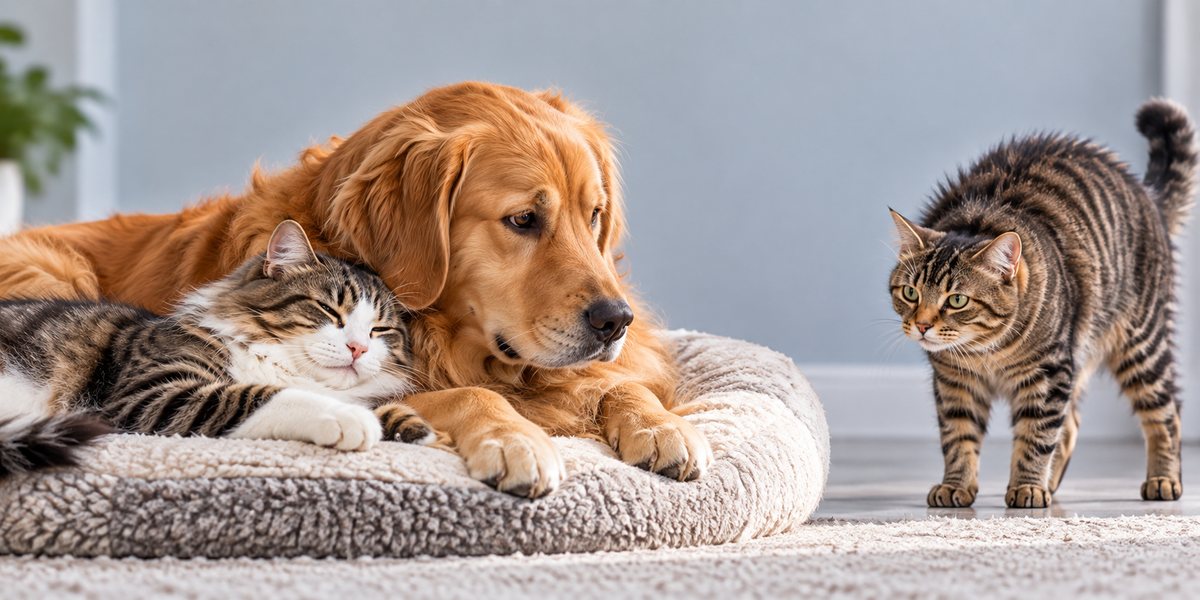
| Living with dogs | Good Balinese commonly coexist well with cat-friendly dogs. |
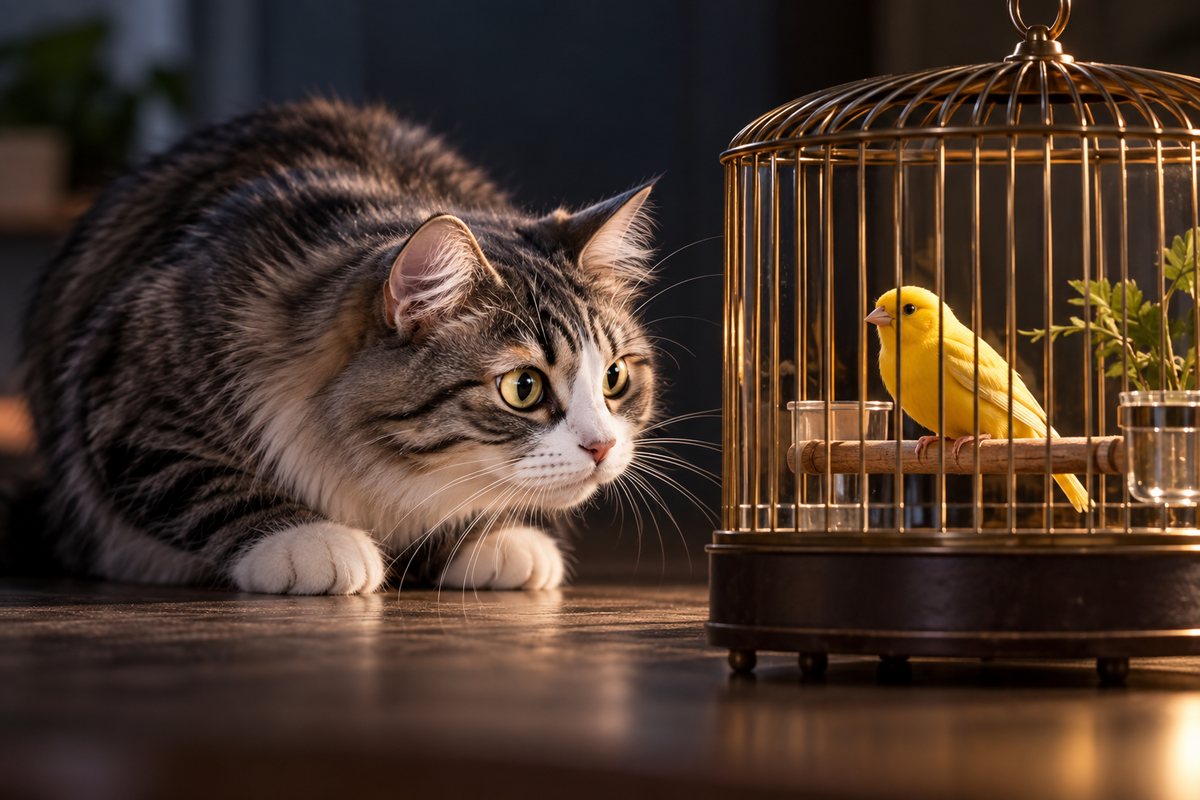
| Living around small pets | Additional caution Balinese are agile, intelligent and highly playful cats with strong responses to movement. Their energetic chasing and pouncing make direct access to birds, rodents and other small pets unsafe despite their affectionate social temperament. |
| Indoor & home environment needs | High activity indoor Balinese are agile, intelligent and intensely social. Indoor homes should provide tall climbing routes, puzzle feeding, frequent chase-and-pounce play and substantial human involvement; a low-stimulation environment is a poor fit. |
| Outdoor access considerations | Secure social Balinese are active, inquisitive and strongly people-oriented. They can enjoy harness walks or a secure enclosure, but unrestricted roaming is unnecessary and may expose a socially confident, exploratory cat to avoidable hazards. |
| Heat, cold & sun considerations | Semilong low undercoat Balinese have a silky semi-long coat with relatively little undercoat, giving less cold insulation than their length suggests. They usually prefer comfortable indoor temperatures and should have shade and water in heat plus warm retreats in cold weather. |
| Caregiver time & experience | Very high This breed is likely to suit a caregiver who can provide substantial daily engagement and keep up with its routine care. |
| Health & welfare | |
| Documented health predispositions | Moderate known risks Balinese share important inherited risks with Siamese-related lines, including progressive retinal atrophy and amyloidosis in some families; hypertrophic cardiomyopathy and asthma are also concerns worth discussing with breeders and veterinarians. |
| Screening & breeder questions | Ask about PRA testing/eye health in the line Ask for DNA results for progressive retinal atrophy where relevant, and ask about amyloidosis and hypertrophic cardiomyopathy in close relatives. Request details of cardiac screening rather than relying on a general health guarantee. |
| Conformation-related welfare | Low conformation concern Balinese have a long, slender Siamese-derived build that should remain muscular and functional. Selection should avoid excessive refinement that leaves cats frail, under-muscled or with exaggerated wedge-shaped heads affecting normal oral or airway function. |
| Nutrition & weight management | High activity condition led Balinese are lean, active cats whose calorie needs can be relatively high, particularly in young adults. Feed a complete diet to body and muscle condition, increasing or reducing intake with activity rather than trying to maintain a stereotypically slender look. |
| Longevity | 10+ years; 20+ occurs Balinese commonly live beyond 10 years, and individuals reaching 20 or more are reported. |
| Cost & availability | |
| Purchase cost | Moderate to high: $600–$1,500 Balinese: a practical breeder-market estimate is $600–$1,500. This reflects that it is an established Siamese-family breed with moderate breeder availability. |
| Adoption & rehoming cost | Uncommon in rescue: $100–$500 typical rescue/adoption fee Balinese: $100–$500 typical rescue/adoption fee. The breed does appear in rescue, but much less often than mixed-breed cats or the most numerous pedigrees. |
| Recurring ownership costs | Enrichment/toy replacement The fine semi-long coat is relatively economical to maintain, but Balinese need substantial social and play enrichment. Routine food, litter and veterinary costs dominate, with some extra spending on climbing and interactive equipment. |
| Availability, waits & import | Moderately available Balinese have an established international breeder community but are much less numerous than Siamese. In larger markets a breeder can usually be located with patience; in smaller countries a regional or cross-border search may be needed. |
| Identity & real-world context | |
| Ownership & import restrictions | No known breed specific restrictions There are no known breed-specific ownership restrictions. Ordinary animal-welfare, identification, vaccination and cross-border import rules still apply where relevant. |
| Registry recognition | CFA: recognized breed/division · TICA: Championship-recognized / current breed identity · FIFe: fully recognized breed / mapped breed identity Currently recognized in all three registries tracked by the FSC core matrix: CFA, TICA and FIFe. |
| Similar breeds & identity distinctions | Siamese Oriental Longhair Balinese are the semi-longhaired counterpart of Siamese, sharing colorpoint, blue eyes and elongated type. Oriental Longhairs have similar structure but occur in non-point colors and patterns; coat length separates Balinese from Siamese. |
| Reported characteristic quirks | May ride on a person’s shoulder Some Balinese enjoy leaping onto a familiar person’s shoulder and riding there. |
Browse all 53 breed characteristics
Open any characteristic to compare all breeds on that dimension.




 English